One year after NYC launched its congestion zone, roads are safer, quieter, faster, and cleaner. What’s not to love—and why can’t the rest of the country follow suit?


One year after NYC launched its congestion zone, roads are safer, quieter, faster, and cleaner. What’s not to love—and why can’t the rest of the country follow suit?
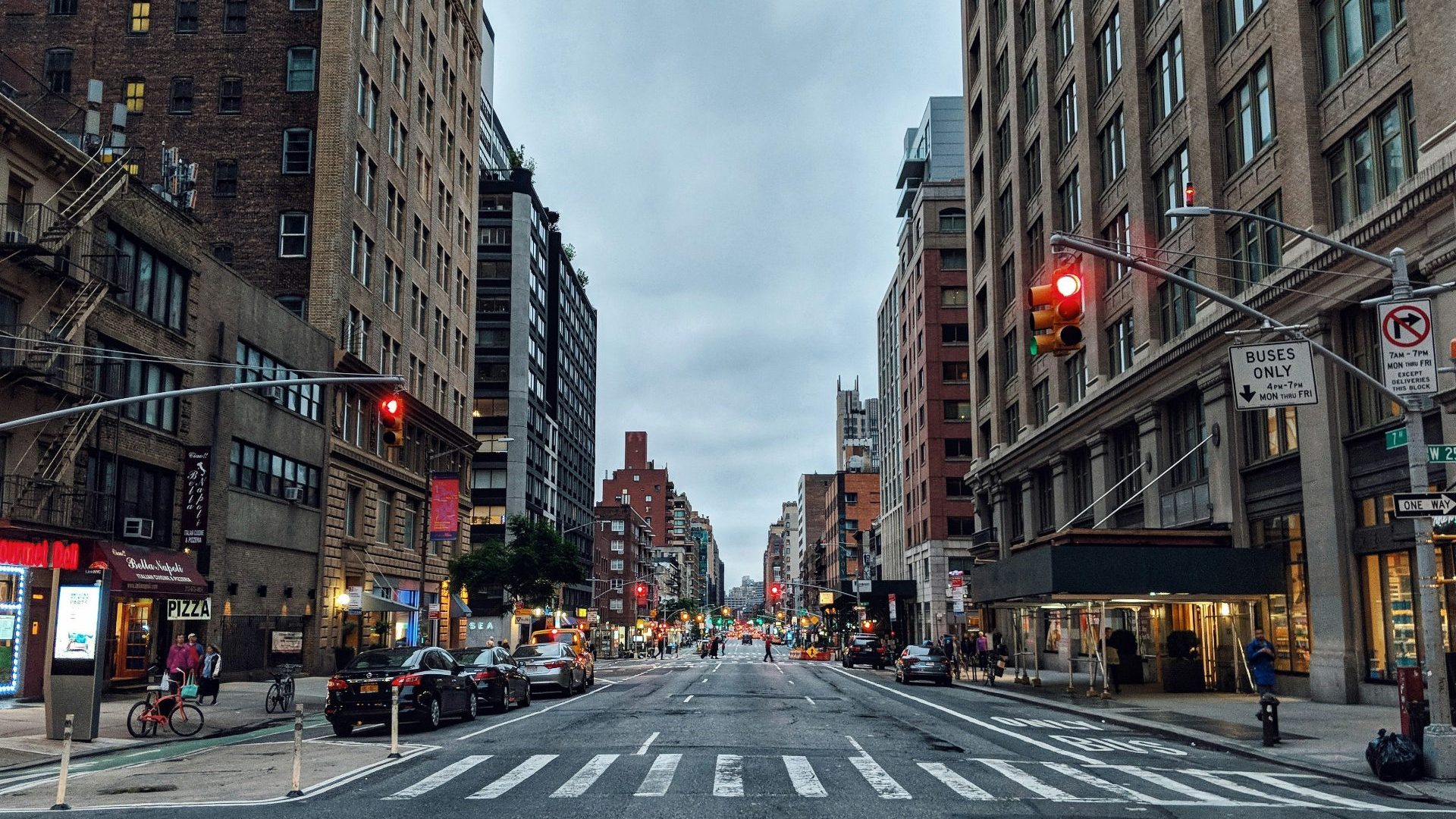
Last year, New York City did something radical: For the first time ever in the US, the city started charging drivers for entering the city’s most-congested zone, charging fees up to USD$9 per day. The toll had enemies all the way up to the White House long before it was launched, but now, a year later, the results are in.
It works.
Almost overnight, about 11 percent fewer cars started entering Manhattan’s busiest district. Streets south of Central Park are quieter and safer for pedestrians and cyclists, buses run two percent faster, speeds through tunnels and across bridges have increased by up to 29 percent, and ridership is up across the underfunded Metropolitan Transit Authority (MTA). The MTA’s congestion toll revenue for 2025 is projected to be over half a billion dollars, making a decent dent on a USD$15 billion to-do list for crucial updates to

Many drivers may not love the new fees, but as a former car owner who has recently returned to the US after six years abroad, I’m a fan. It’s a fascinating case study in finding balance: On one hand, catering to the nine out of 10 Americans whose households have at least one car, and on the other, creating a more efficient, sustainable, and pleasant transit system that makes transportation better for everyone in cities whose streets simply cannot handle one car per resident.
It’s well past time for us to implement similar systems elsewhere in the US, and to finally make it a priority to invest resources into transit systems that are, on balance, embarrassingly underfunded.
In London, I could walk out my front door and go pretty much anywhere I wanted, nationwide, without needing wheels of my own. But in Providence—a remarkably walkable city by US standards—my life is a completely different shape without a car.
Solid public transit systems aren’t just good for those who have no other way to get around, though low-income residents have the most to gain. A shiny metro system and public escalators and gondolas are regularly credited with turning around Medellín, Colombia, for example, once considered the ‘murder capital’ of the world and now a hot spot for remote workers with ample cash to burn on local businesses.
New York may be our most congested city, but it also offers one of the best transit systems you can find in North America, and there’s far too little competition for that title. Other cities that stand to benefit from congestion tolls—and better transit systems—include Boston, Chicago, Atlanta and Los Angeles, the latter two of which are almost completely unnavigable without private wheels.
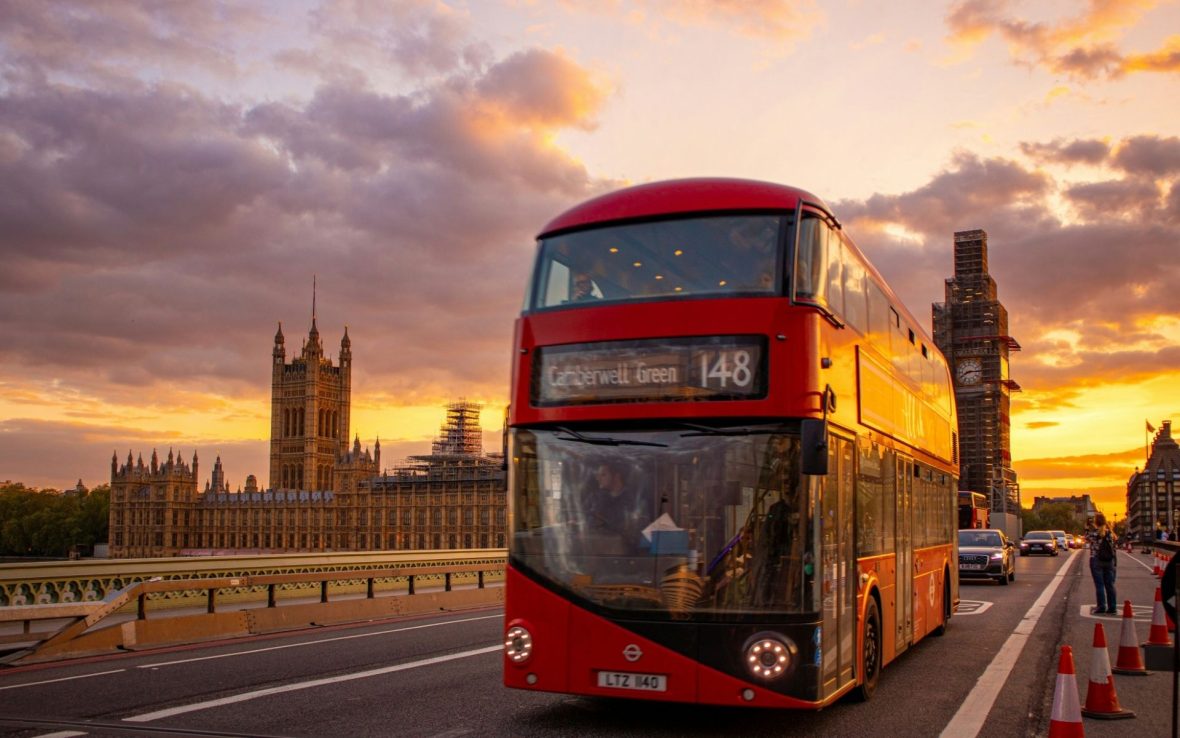
I have lived in some of the most liberal and—theoretically—transit-friendly cities and states in the US, and yet it wasn’t until I moved to London in 2020 that I started to use public transit as a rule instead of a last resort.
When I lived in downtown Boulder, Colorado, I occasionally rode the bus to the airport to avoid parking fees, but I found the network otherwise useless. Washington, D.C.’s Metro and Metrobus are easy to use and navigate if you’re trying to get to the center of the city, but walking is often faster if you’re trying to go anywhere else that’s less than a couple miles away. And the feeble bus network in my home state, Rhode Island, is so insufficient and under-connected that almost no-one chooses to ride it unless they absolutely have to—which only adds to its reputation for offering an unsettling rider experience, at best.
If you’ve ever visited the US from abroad, you’ve probably marveled at how hard it is to get around here without a car. And if you’re from here, there’s a good chance you have no idea what visitors are talking about—only eight percent of Americans rely on public transit, according to the Federal Transit Administration.
I never gave this much thought until I recently became a carless Rhode Island resident. In London, I could just walk out my front door and go pretty much anywhere I wanted, nationwide, without needing wheels of my own. But in Providence, which is a remarkably walkable city by US standards, my life is a completely different shape without a car. I’ve realized that neighborhoods with easily accessible grocery stores and walkable cafes are, by far, the most expensive, and traveling by bus can take three times as long as driving—or more.
I was initially proud of my rejection of car ownership, seeing it as a more sustainable choice for both the environment and my bank account. But I started to feel embarrassed by it when I realized how severely it limits my movement across the state—it often results in me asking my parents for rides or trying to persuade my mom to let me borrow her car. But I don’t think I should have to be embarrassed by this as an individual. I think we should be embarrassed by this, as a nation. Even in Rhode Island, which has hundreds of miles of coastline, it can take over two hours to get to the beach on public transit. Who has time for that?
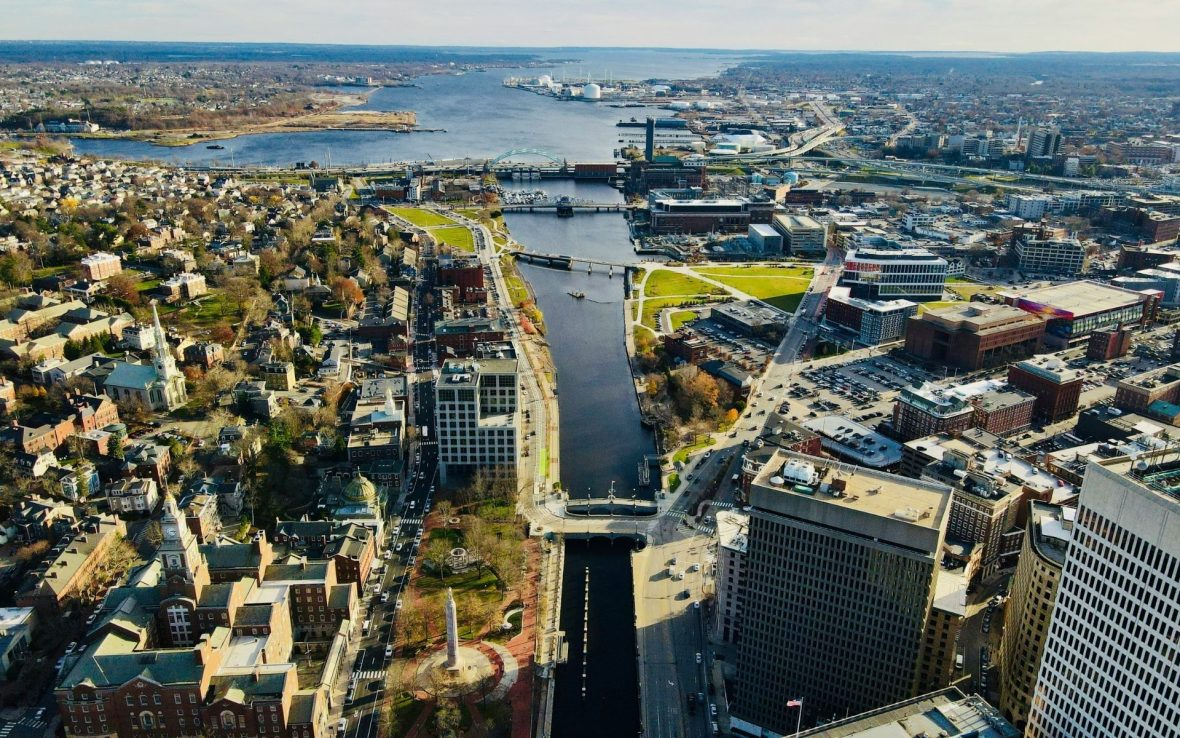
I doubt this will be a popular opinion, but I’d go so far as to say that every urban center in the US would benefit from taxing drivers to support its transit. I say that even though I doubt I’ll make it much longer in the US without giving in and buying a car of my own, despite having very little desire to start making car payments again (I bought my first car in 2014, and sold it to a friend a few years ago). I’d still much rather use trains and trams to get around and save the car for adventures further afield.
In cities where public transportation is ubiquitous, affordable, and reliable, even the wealthy choose to use trains, trams, and ferries to get around city centers over driving their own cars. The result is a transit system that isn’t just effective, but cared for, making a better experience for all parties involved. Just look at Seattle, which redesigned its bus network in 2010 to add express routes. By 2019, ridership was up 42 percent compared to 2005.
I’m certainly not under the illusion that creating and maintaining an effective transit system is easy, but I know we can do better. If Europe can do it, why can’t we?
***
Adventure.com strives to be a low-emissions travel publication. We are powered by, but editorially independent of, Intrepid Travel, the world’s largest travel B Corp, who help ensure Adventure.com maintains high standards of sustainability in our work and activities. You can visit our sustainability page or read our Contributor Impact Guidelines for more information.
Kassondra Cloos is a travel journalist from Rhode Island living in London, and Adventure.com's news and gear writer. Her work focuses on slow travel, urban outdoor spaces and human-powered adventure. She has written about kayaking across Scotland, dog sledding in Sweden and road tripping around Mexico. Her latest work appears in The Guardian, Backpacker and Outside, and she is currently section-hiking the 2,795-mile England Coast Path.