In celebration of World Bee Day, writer Emily Barlow heads to Mexico to learn about a native stingless bee species and discovers a world of pollination that’s integral to Indigenous communities and our planet’s biodiversity.


In celebration of World Bee Day, writer Emily Barlow heads to Mexico to learn about a native stingless bee species and discovers a world of pollination that’s integral to Indigenous communities and our planet’s biodiversity.
There is a legend among Mayan communities that speaks of a man who was once so desperately in need of food and medicine that he turned to the gods. In return, the gods offered the man bees to nurture, but on one condition: “You will have to take care of it, protect it, safeguard it, and increase its population. And in return, it will give you its honey, its pollen, its propolis, and above all, the work of its daily pollination. Because from that, there will be new flowers, new fruits, new seeds, and new trees.”
I’m told this story by Doña Eliza Interián Bojorquez, a Mayan native beekeeper in the rural town of Maní in Mexico’s Yucatán state. Bojorquez, alongside nine other women, dedicates her days to cultivating the melipona beecheii, a native species of stingless bee—just one of 20,000 bee species documented worldwide.
The story is one we can all learn from: Take care of each other and you will have plants, food, medicine, biodiversity.
Bees are considered the most important pollinators on the planet because they directly impact food production and global nutrition. 75 percent of global crops depend on animal pollination, a third of which are pollinated by bees.
We’re often quick to credit honeybees with the majority of agricultural pollination and industrial honey production, but native bees are responsible for ensuring specialized, local ecosystems—including plants, animals and food—thrive.
“Honey for the digestive system, pollen and honey for cancer and anemia, and propolis for the respiratory system. It cures ulcers, gastritis, colitis, reflux and diabetes.”
- Father Luis Quintal, beekeeper and teacher
We are highly dependent on bees. But with our populations declining due to pesticides, deforestation and monocultural agriculture, bees now need us, more than ever. Thankfully, communities across the globe from Peru and Mexico to Tanzania are working to preserve their local species and traditional practices.
I arrive in Maní, the small ‘pueblo magico’ (‘magic town’—a designation from Mexico’s Secretariat of Tourism recognizing a town’s cultural richness, hospitality, historical relevance, cuisine or arts and crafts) on an extremely hot, dry day in April. Maní is located about 62 miles (100 kilometers) southeast of Mérida, the Yucatán capital, in a region marked by its low-lying limestone terrain, deciduous jungle forests and thousands of cenotes (deep limestone sinkholes usually filled with water).
But I’m not here for the cenotes today. I’m here for the melipona beecheii, one of Mexico’s 46 species of native stingless bees.
The ancient Mayans began domesticating the melipona beecheii—or Xunán Kab, meaning ’royal lady’ or ‘lady of the honey’ in Maya—over 3,000 years ago. Father Luis Quintal, an ex-priest turned beekeeper, profoundly respects this history.
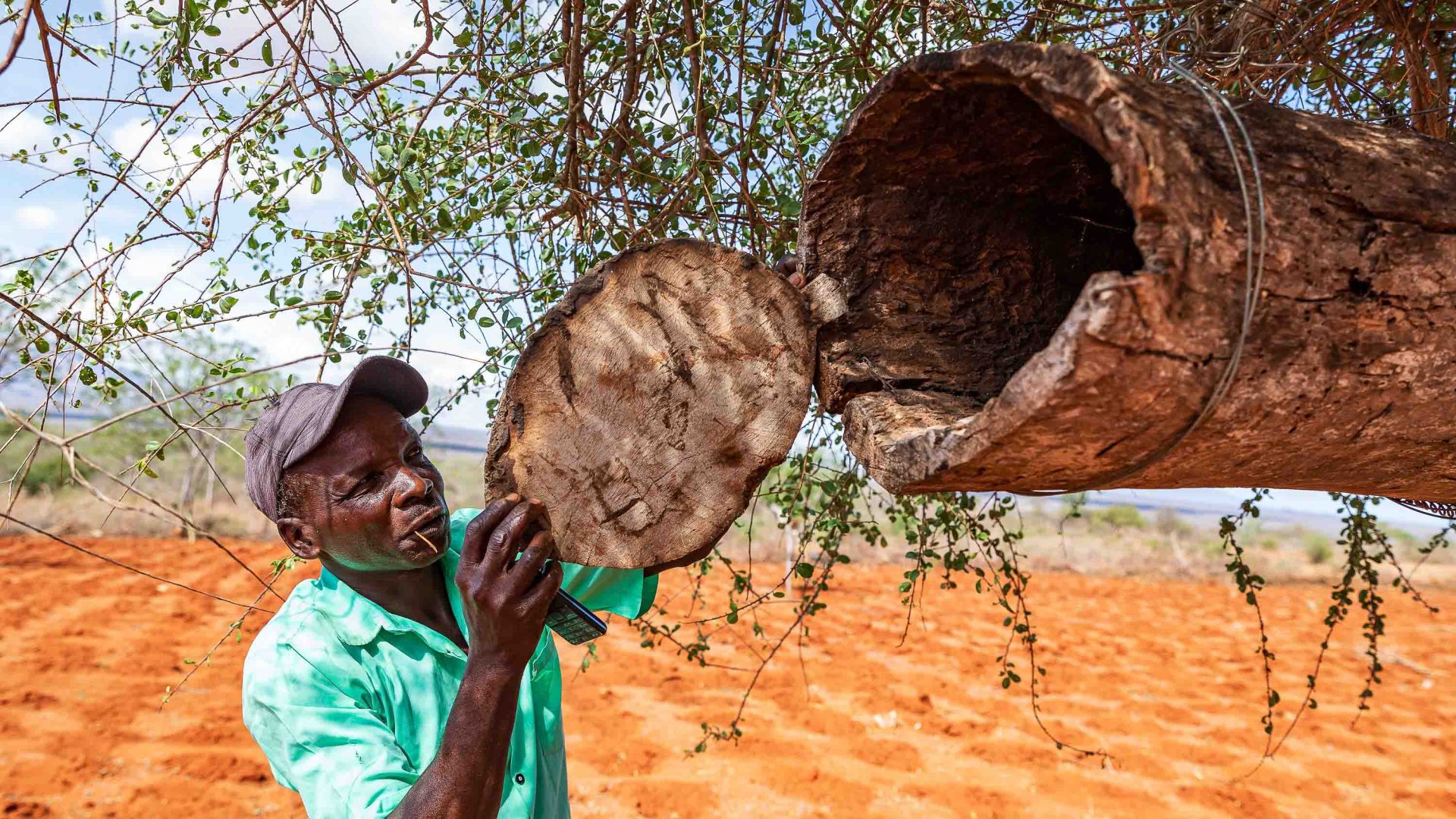
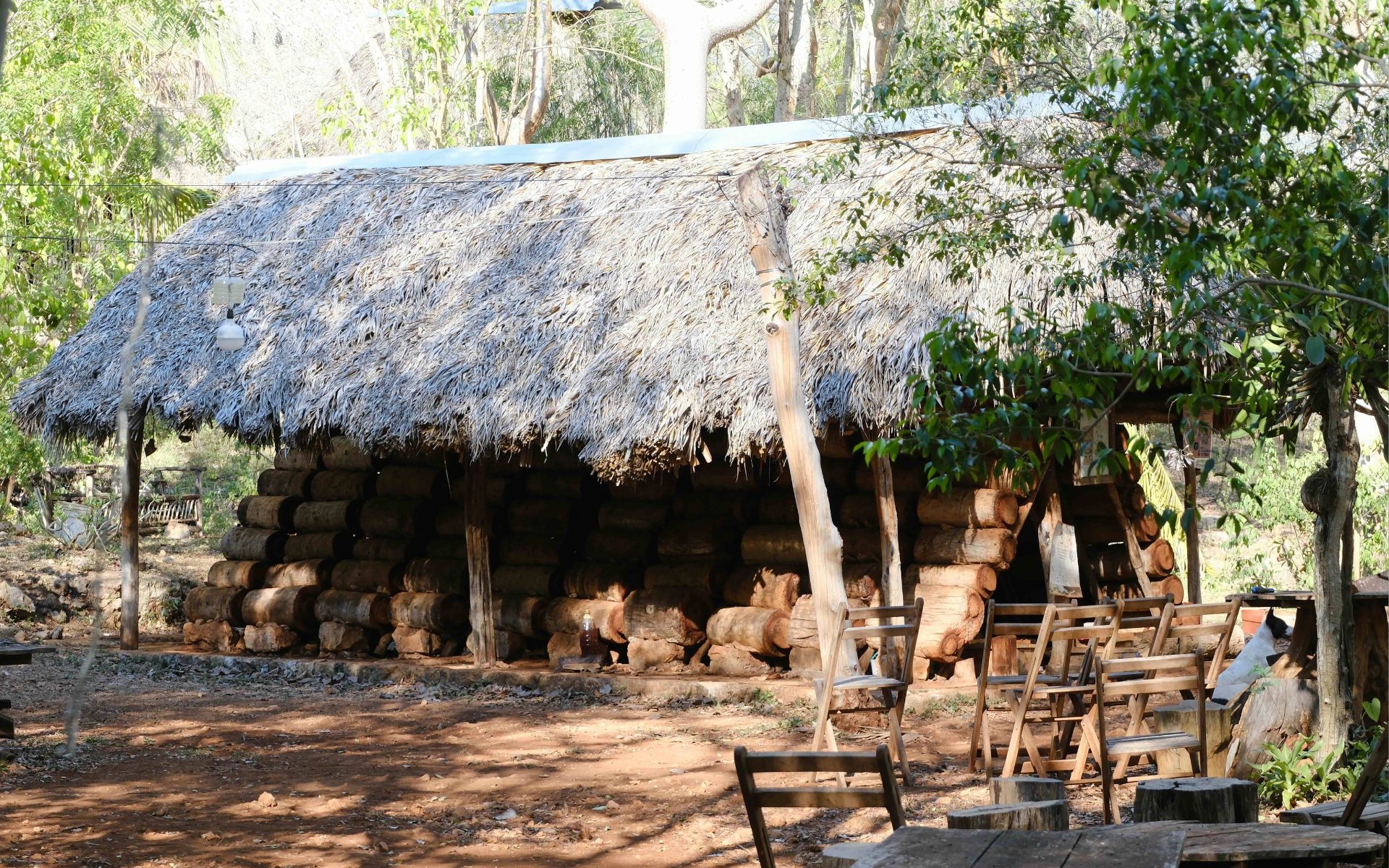
Father Luis cultivates bees the ancestral way—inside hives inside tree trunks, or ‘jabones’—at a stingless bee apiary, known as a meliponary. At a leafy property called U Naajil Yuum K’iin (a Mayan phrase meaning ‘The House of the Father Sun’) on the outskirts of Maní, Father Luis is tending to his jabones when I arrive. His hands are textured and dark from years in the sun, and his eyes shine with a warm grin.
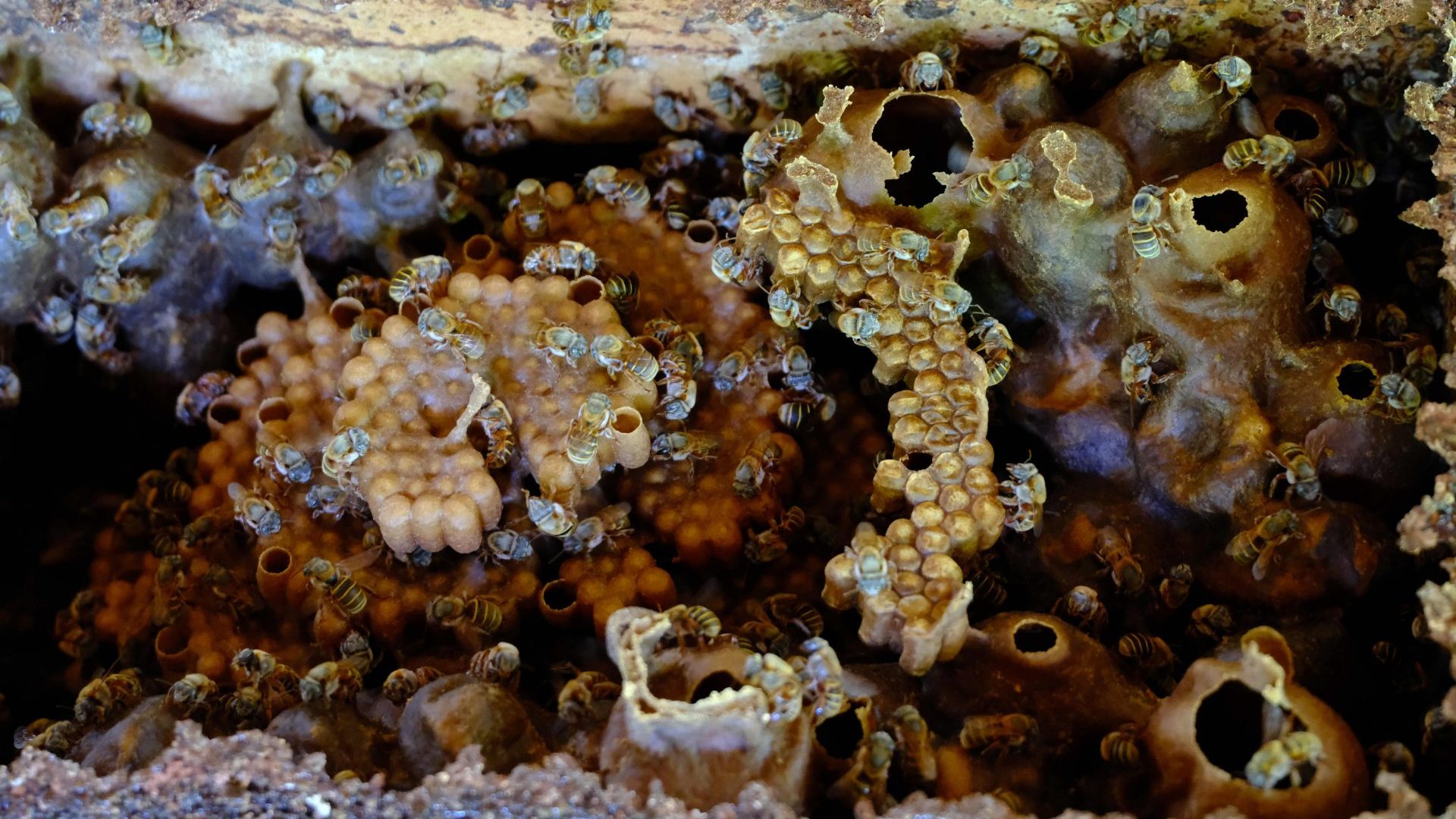
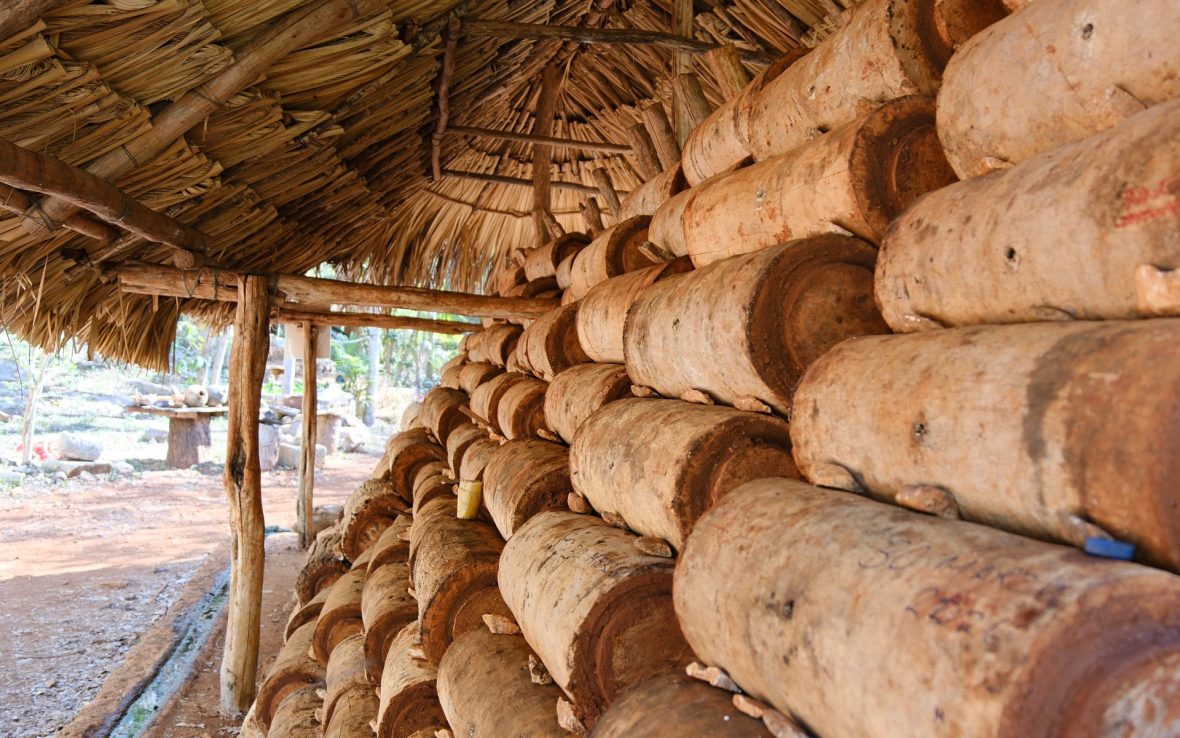
The hives are made from cedar or guano palm tree trunks, and hollowed out to form a cylindrical home for the bees. The ends are closed up with a round plug, like a wine cork, and sealed with clay. They’re all stacked on top of each other in a pyramid and sheltered beneath a guano palm-leaf roof. He opens one to show us his “little baby bees”. Each of his 500 or so colonies contains a queen, two princesses, four males and some 3,000 worker bees.
Father Luis explains that after the arrival of the European honey bee in Mexico in the 1900s, the melipona population started dramatically collapsing. By 1996, only 500 beehives remained. That same year, while working as the local Maní parishioner, Father Luis set up a school of organic agriculture—U Yits Ka’an (‘Dew from Heaven’). The school, in the nearby village of Dzan, teaches men and women sacred Mayan agroecology, a sustainable farming practice.
Ten years after opening the school, Father Luis suffered a near-deadly heart attack. He was taken out of the ministry and decided to dedicate his life to cultivating, educating and healing. “I managed to buy 30 hives for the school,” he tells me. “Then women started attending [the school], which was a great thing because women are very intelligent and creative, and they have done wonders with honey.”
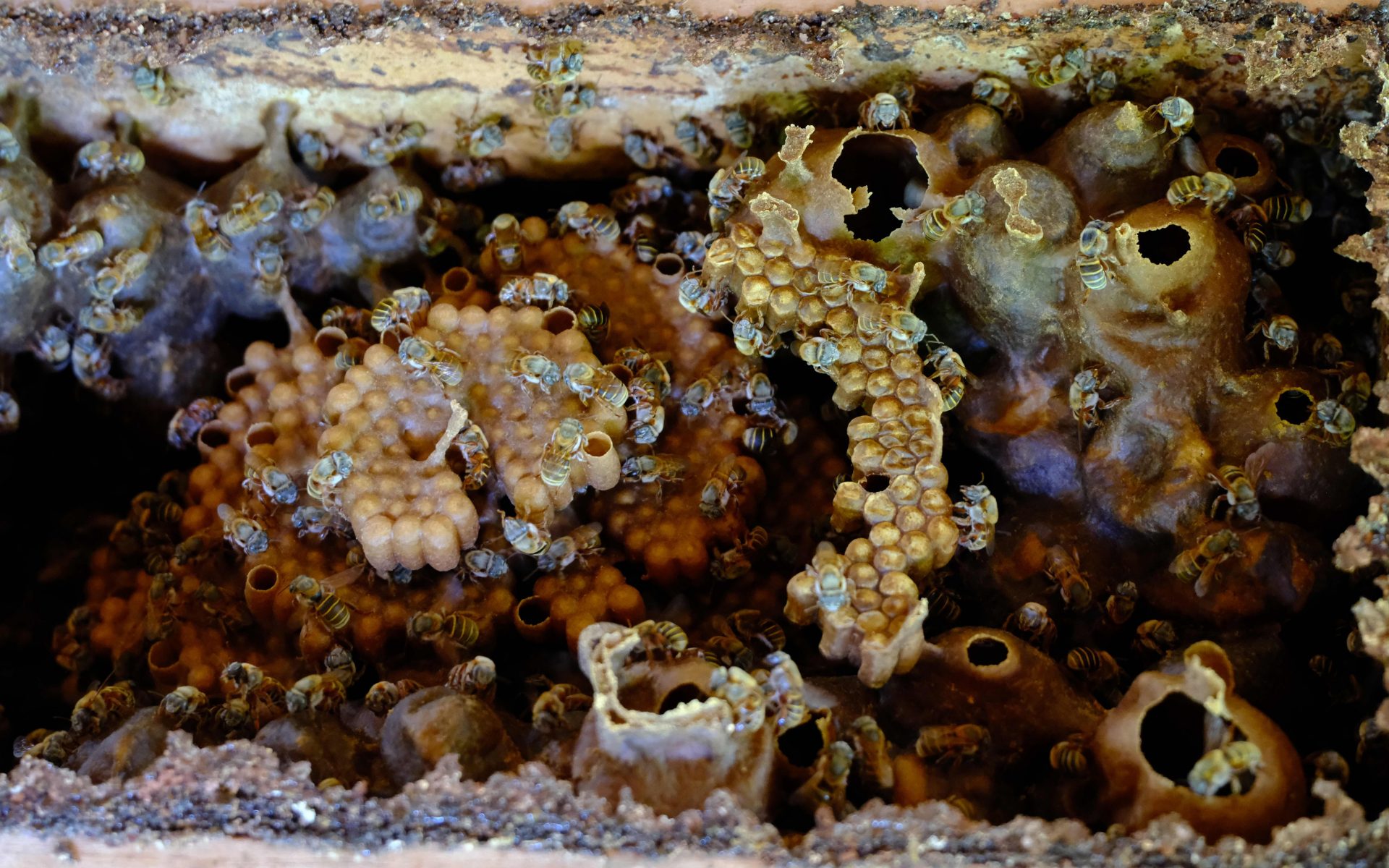
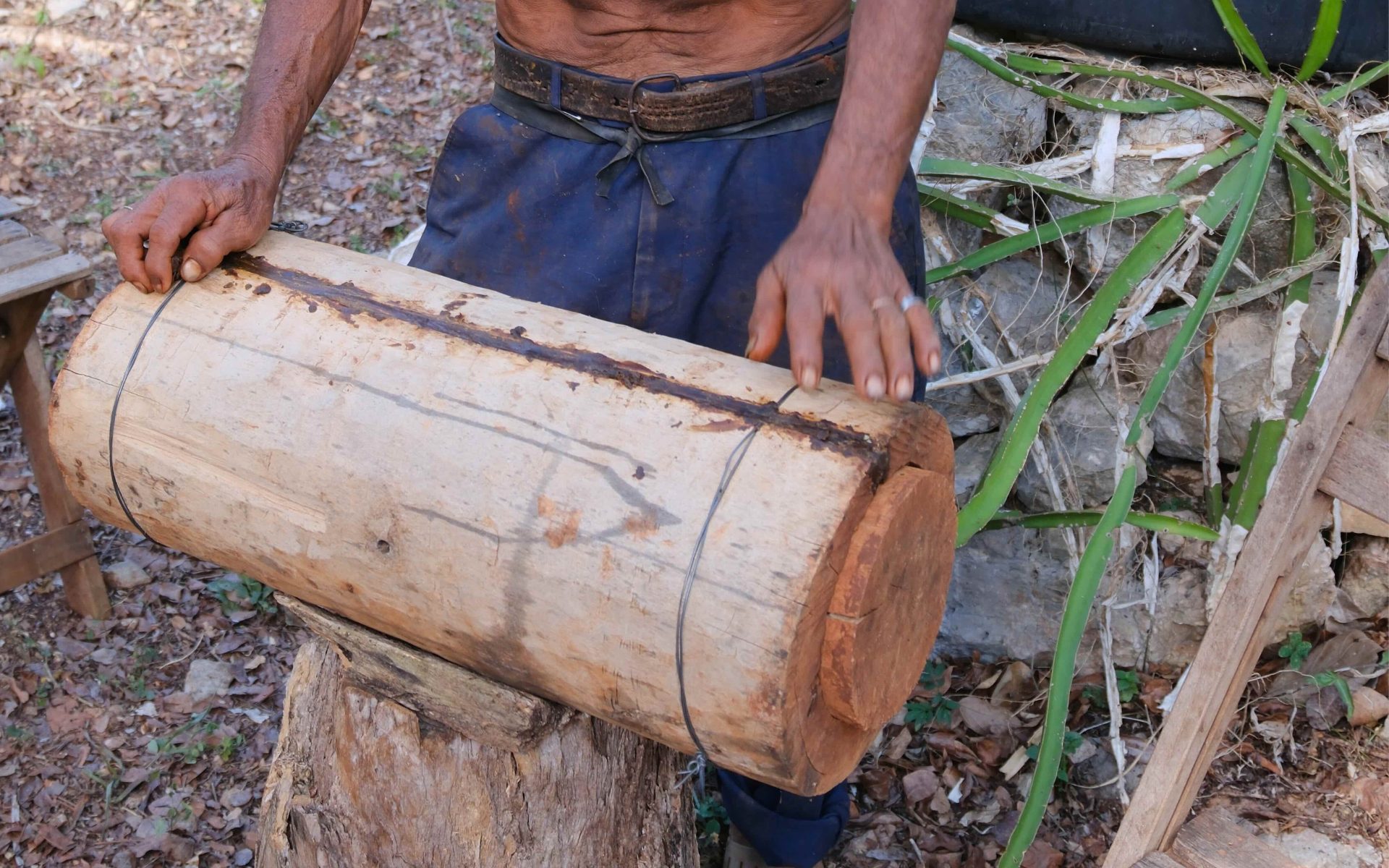
“Every year, like now in April, we are harvesting honey and dividing hives,” Father Luis tells me. Unlike the European honeybee, the melipona is less productive—with a typical hive producing just one liter per year—but melipona honey in Mexico is purely medicinal.
“Honey for the digestive system, pollen and honey for cancer and anemia, and propolis for the respiratory system,” he says. “It cures ulcers, gastritis, colitis, reflux and diabetes.” Father Luis credits women with creating honey-based tinctures, soaps, shampoos, healing creams and exfoliating creams.
“Everyone who arrives, leaves with a different learning experience,” she says. “It’s a natural, cultural learning experience, full of the wisdom of our grandparents.”
- Doña Eliza Interián Bojorquez, beekeeper
Father Luis no longer formally teaches at U Yits Ka’an, but he is widely credited, alongside support from the Yucatan government, the Mayan co-operative Co’ox Mayab and UNESCO, for Mexico’s meliponiculture resurgence: There are now 18 meliponaries in Maní alone.
And he has plans for more. Father Luis wants to build a new meliponary and school that will teach children how to nurture large plants and care for small animals. He also continues to sell hives—he’s sold over 250 to other communities across the states of Yucatan and Quintana Roo.
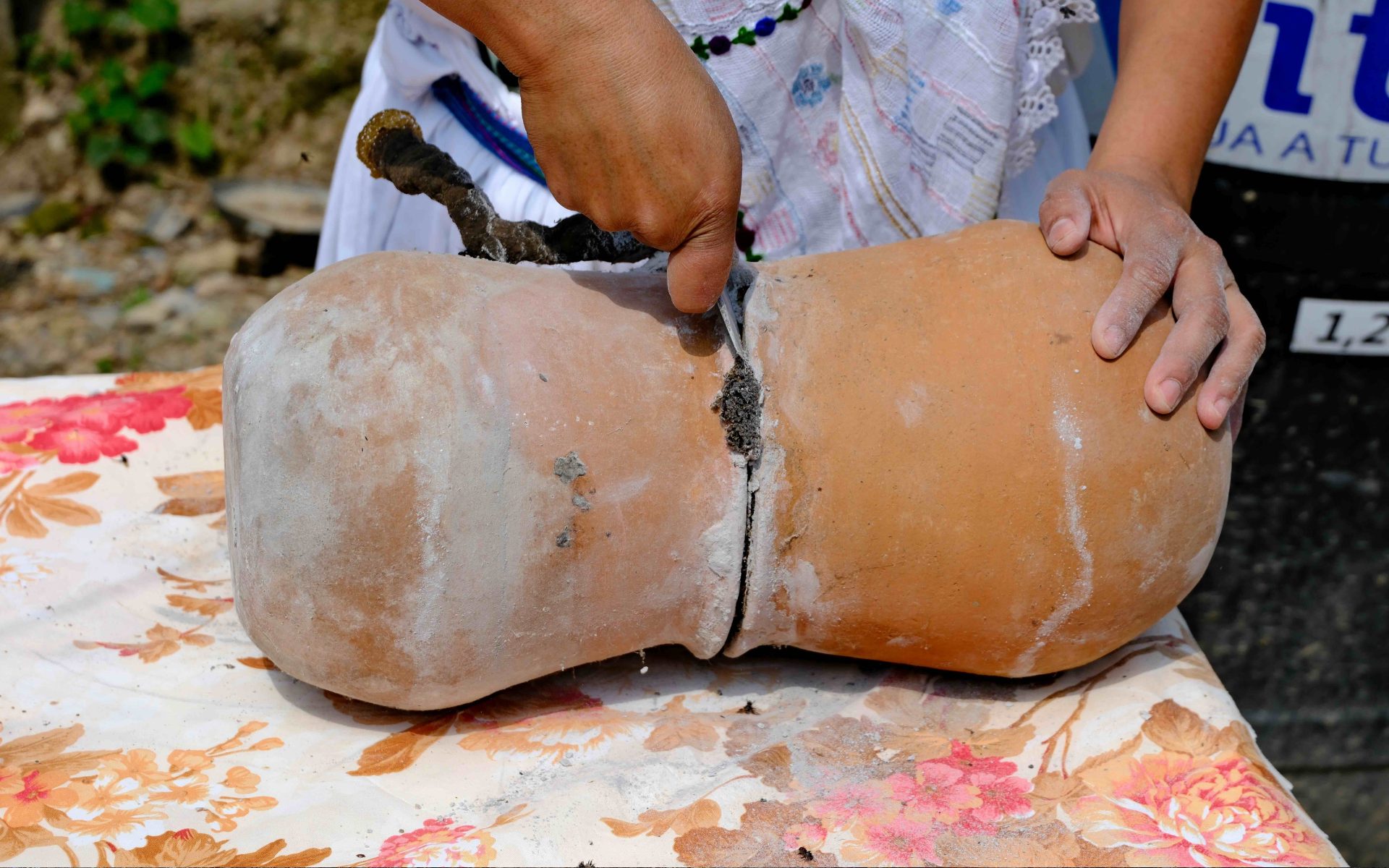
But Father Luis is not alone in his quest to protect our bees. In the misty highlands of Cuetzalan, in the east-central Mexican state of Puebla, I visit a co-operative called Tosepan Kali, managed by the native Nahautl people. Its social enterprise model and tourism experiences provide jobs, ecological security and community support to 35,000 residents across 430 villages. Here, native scaptotrigona bees are housed inside clay pots; their honey is also praised for its medicinal qualities.
In Brazil, the Meli Bee Network is a non-profit organization that unifies 30 communities across the Brazilian Amazon to foster meliponaries. The network has been instrumental in driving protection of the forest.
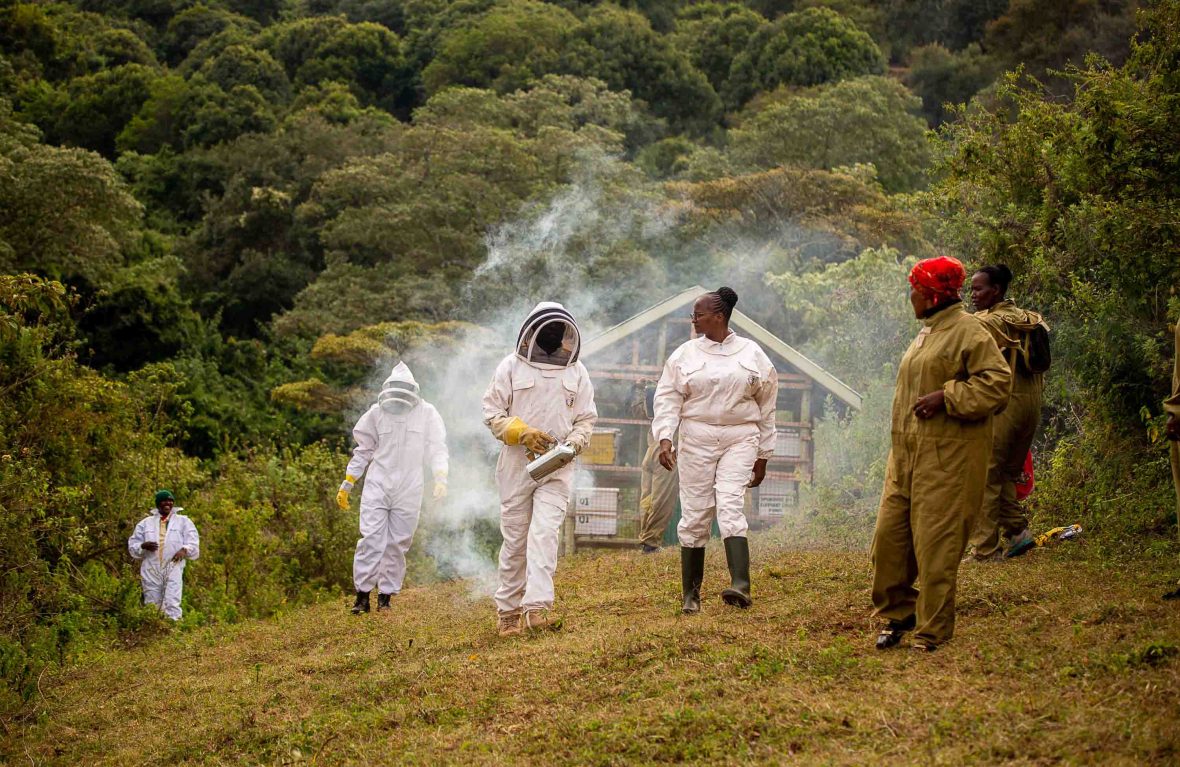
Meanwhile in northern Tanzania, a community of Maasai women beekeepers has been preserving ecological knowledge and providing work to widowed women for the past six years. And other Tanzanian beekeepers from the NARI Women’s Beekeeping Group, like Neema Stephene, have implemented beehives as a way to keep elephants away from essential crops, promote sustainable agriculture, and champion female leadership. All of this from recognizing the significance of our little pollinators.
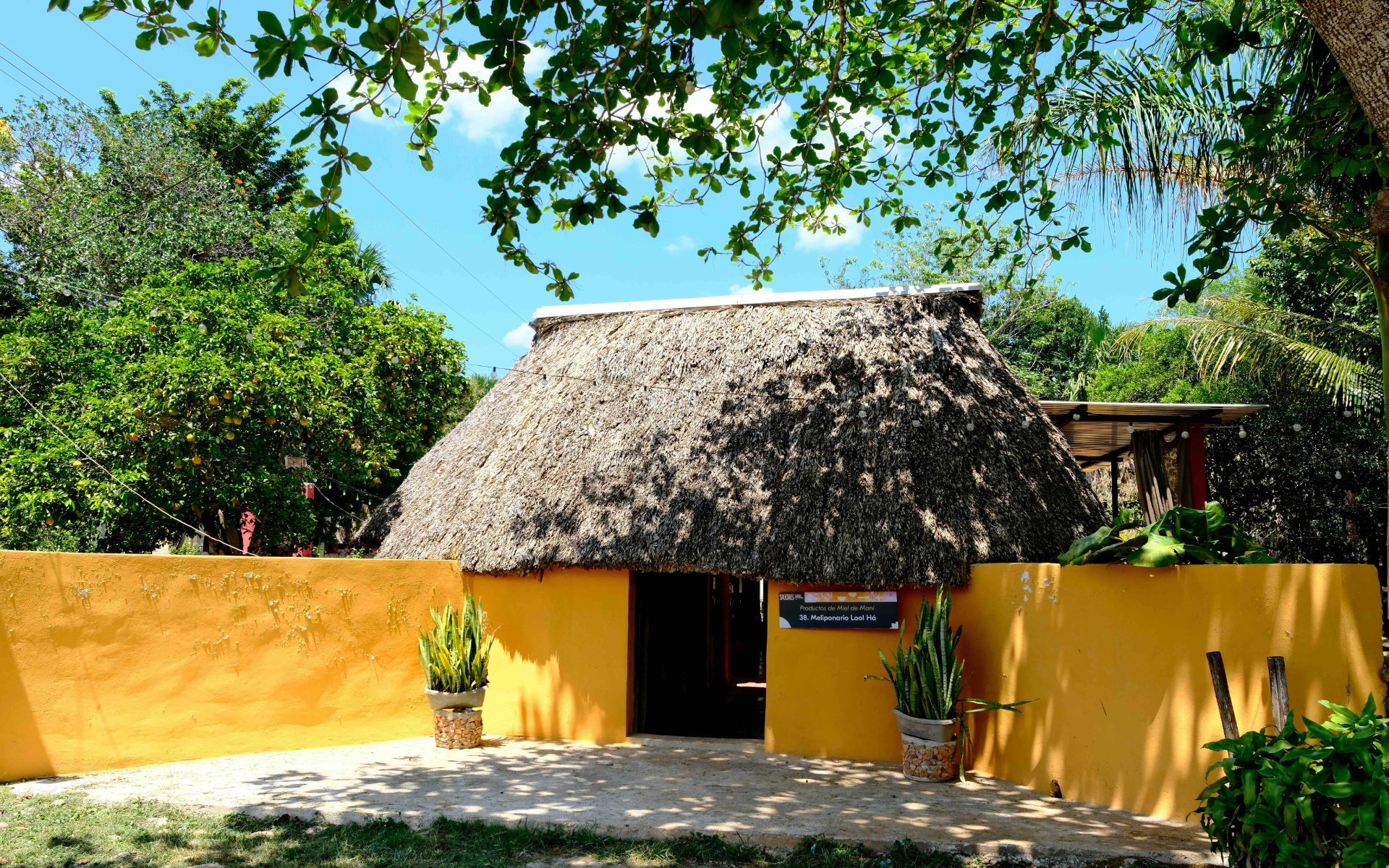
Back in Maní, I head to Doña Eliza’s meliponary, Lool-Ha, which stands in a garden full of native plants and trees like guava, guano palm, mint, zapote, and oaks. The sweet smell of jasmine tickles my nose.
This women-run project, one of the earliest to be supported by the government, has been running for 12 years. Doña Eliza herself is a gentle woman, generous with her time and the knowledge she’s gained from her grandmother. Her approach is led by spirituality (she often practices traditional Mayan ceremonies), but Lool-Ha’s main goal is awareness and education. “Everyone who arrives, leaves with a different learning experience,” she says. “It’s a natural, cultural learning experience, full of the wisdom of our grandparents.”
Like many bee populations worldwide, the melipona are endangered. Doña Eliza believes the way to help the melipona bee species is simple: “One: Constantly plant medicinal and native trees. Two, remove everything that is chemical, like pesticides. And switch to organic products.”
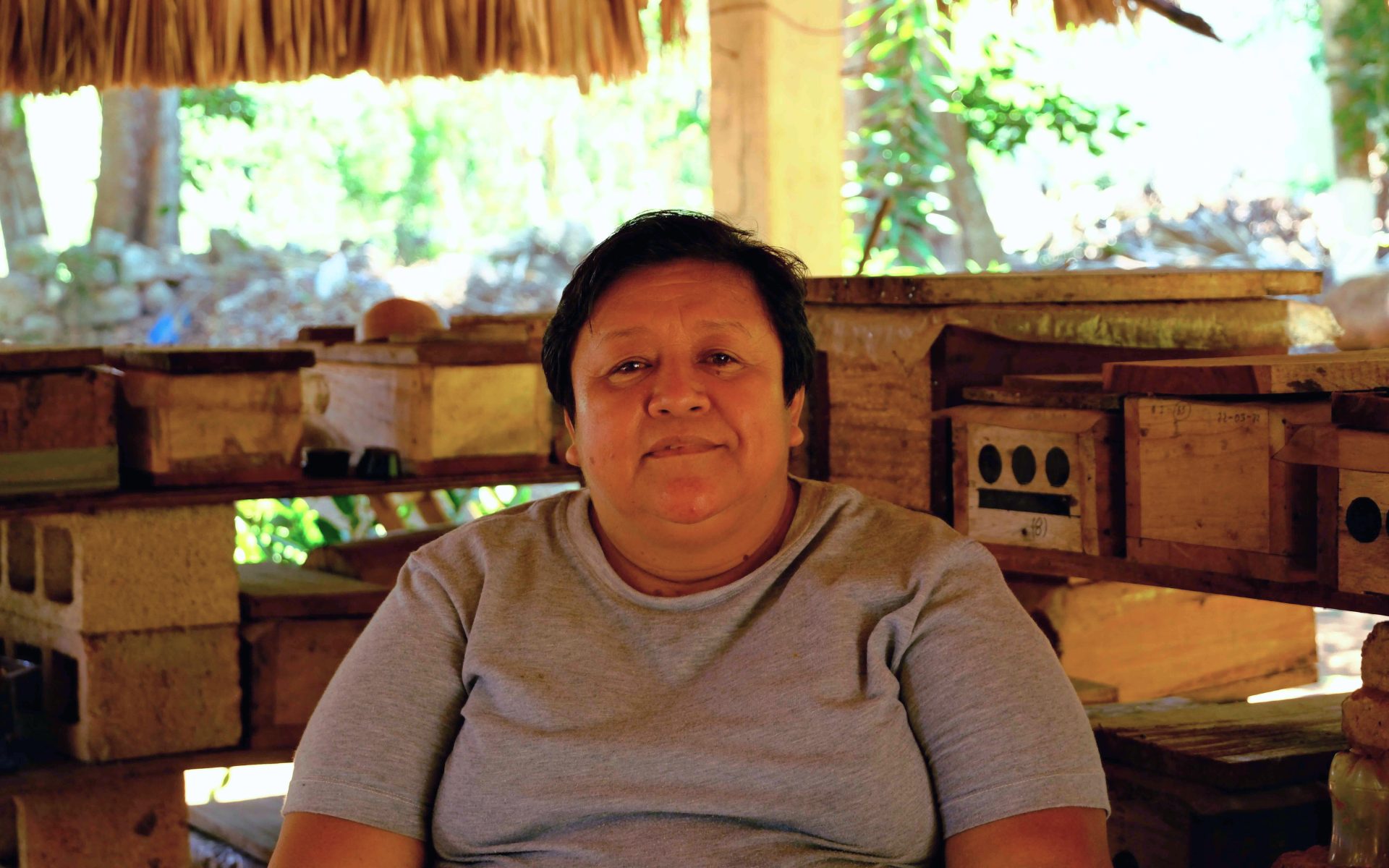
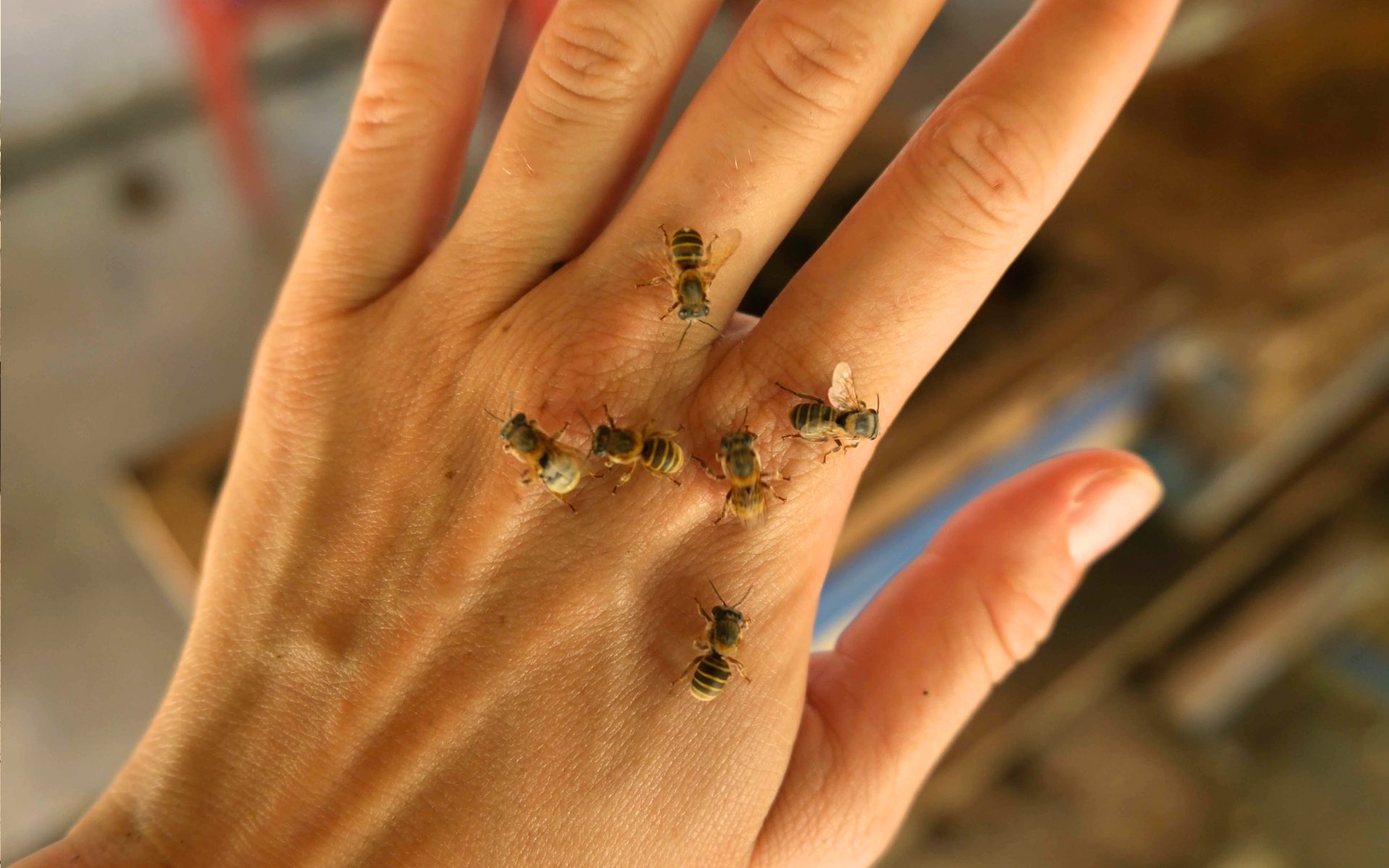
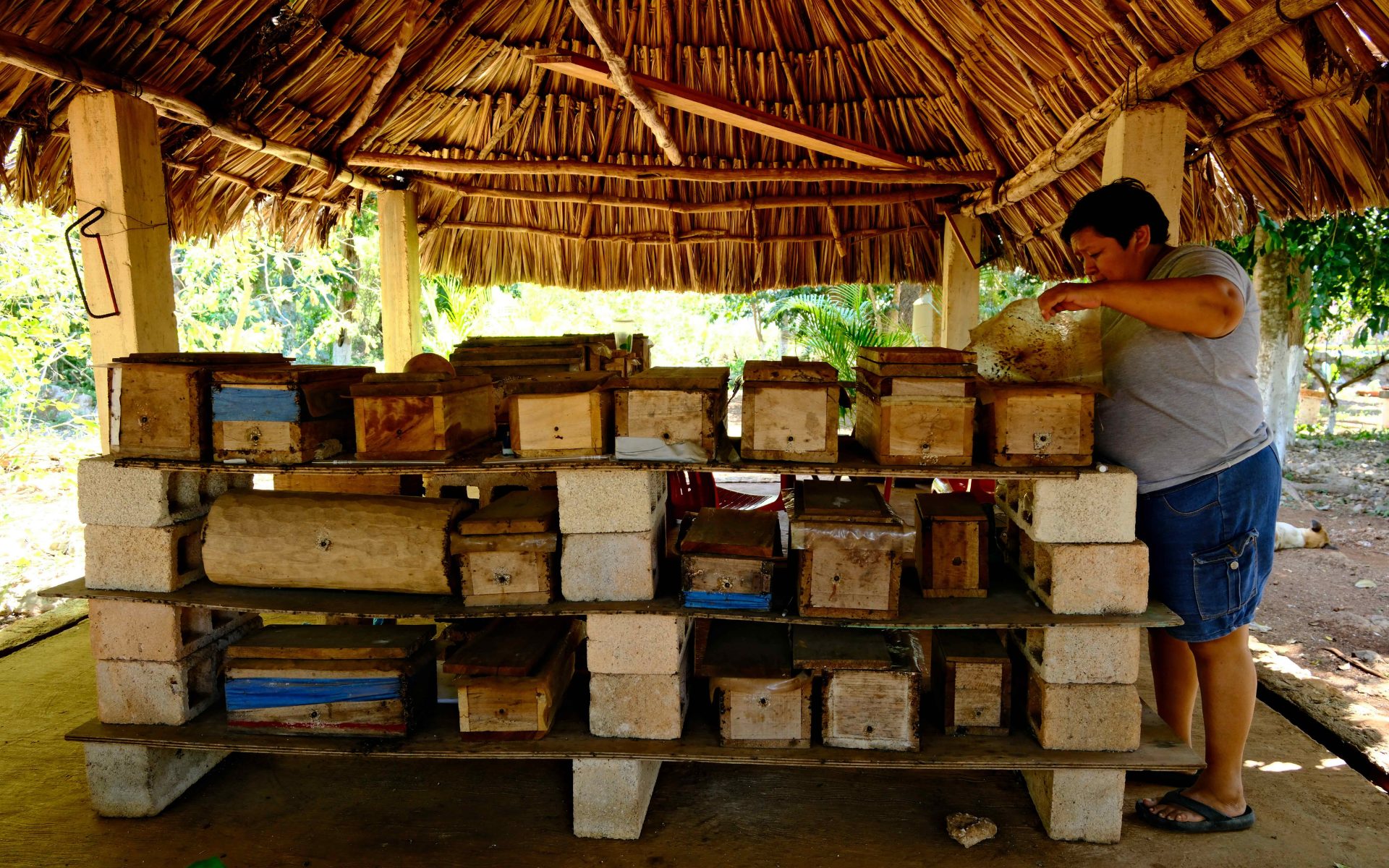
Nowadays, instead of using jabones, many beekeepers like Doña Eliza cultivate melipona inside small wooden boxes. She opens the lid of one such box, which is about the size of a large shoe box. Using a small syringe, she extracts a droplet of honey from the fragile wax bulb and offers it for me to taste—it’s distinctively jasmine. From another box, the rich liquid is sharp with citrus: The flavors of a self-sustaining garden.
She gently takes my hand and places it on top of the bees, then covers it over with a plastic sheet, followed by the wooden lid. Tickling sensations spread across my hand and my heartbeat increases. “How do you feel?” Doña Eliza asks me. At first I feel nervous, then a sense of ease as I remember I’m not in danger. These bees don’t sting—they’re healers.
“Who puts the bee in danger?” she asks. “Human beings. Therefore, a change in consciousness is needed. The change in consciousness is about returning to what our grandparents did: Taking care of them, so that we can take care of ourselves.”
As I’ve learned, this sentiment is echoed in communities all around the world, from Mexico to Brazil, but perhaps the biggest consciousness shift so far has occurred in Satipo, Peru where native melipona bees were recently granted legal rights. This landmark move, made official in late 2025, recognizes the role of Indigenous cultivation and includes the right to habitat and legal protection. This will, hopefully, be the first of many formal actions to help protect these essential bees and support the grassroots work of people like Father Luis and Doña Eliza. Our planet and populations depend on it.
****
Adventure.com strives to be a low-emissions travel publication. We are powered by, but editorially independent of, Intrepid Travel, the world’s largest travel B Corp, who help ensure Adventure.com maintains high standards of sustainability in our work and activities. You can visit our sustainability page or read our Contributor Impact Guidelines for more information.

Emily Barlow is a travel and lifestyle journalist from Sydney, Australia and Adventure.com's Head of Partnerships. She's big on backpacking remote mountains and slow expedition-style travel, skiing, lake-hopping, and trying all the local food.