In a tiny village in northwestern Spain, residents have embraced its misplaced reputation for dark arts and sorcery, by celebrating witches, witchcraft and the power of women.

In a tiny village in northwestern Spain, residents have embraced its misplaced reputation for dark arts and sorcery, by celebrating witches, witchcraft and the power of women.
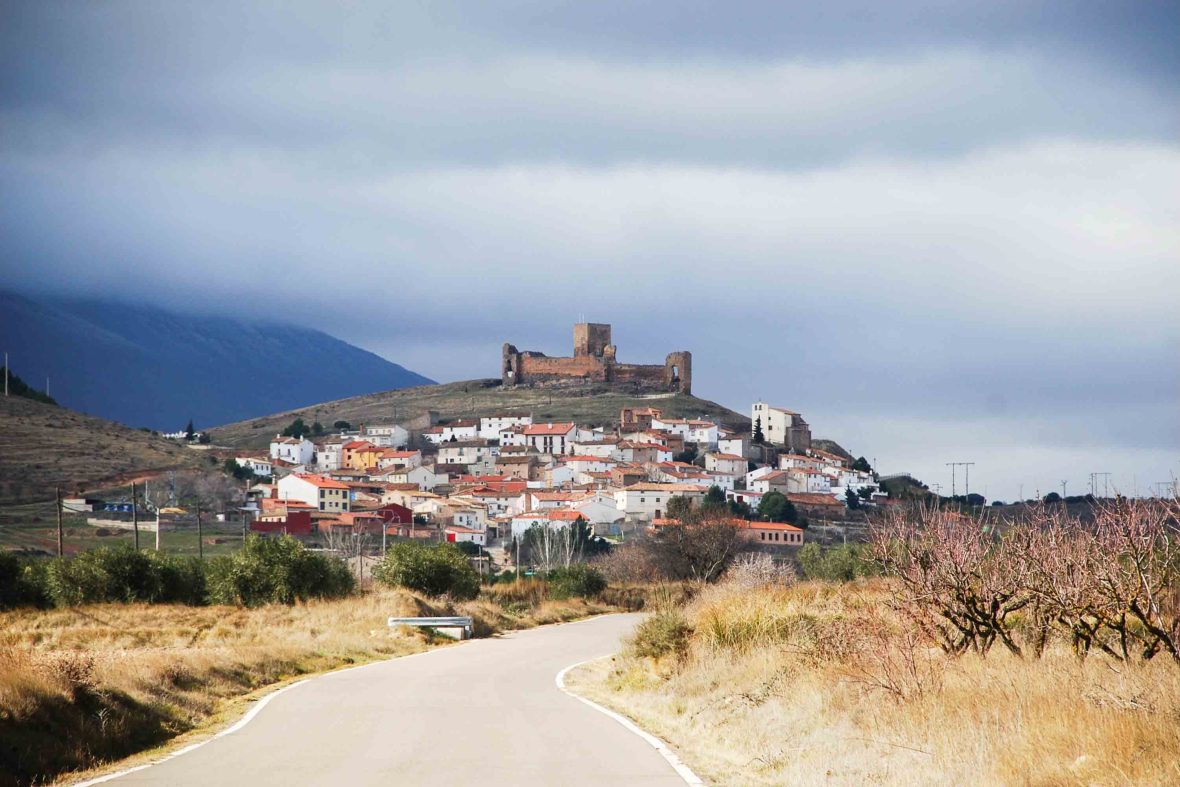
It’s a misunderstanding that brings me to this village. Near the Aragonese town of Tarazona in northwestern Spain is a medieval village which clings to a rocky hill crowned by a castle and backdropped by the snow-capped Moncayo mountain range. Welcome to Trasmoz, home to under 100 people, generations of witches, and the only village in Spain officially excommunicated and cursed by the Catholic church.
I’m en route to Andalucía in southern Spain on a roadtrip to escape the British winter, and have broken my journey in Aragón, a low-density region whose wild mountains and badlands are a world away from the sun-drenched coast ahead of me.
I live in Norfolk, an English county with a history of witch trials, much like Lancashire’s Pendle Hill and the world-famous Salem. I thought Trasmoz had a similar story. But while 19th-century Trasmoz was home to two families of healing women, the Cascas and the Galgas, who were branded as witches, there’s no history of mass hysteria or witch hunts. Instead, as I discover when I start chatting to locals, Trasmoz’s reputation as a witch village stems mainly from rumors, politics and tourism.
Whispers of witchcraft here started in the 13th century, with mercenary rather than magical roots. Legend has it that the residents of Trasmoz’s castle were counterfeiting coins—and, as a diversionary tactic, spread terrifying rumors that the hammering of metal was witches forging cauldrons.
What follows is Trasmoz’s two run-ins with the Catholic church. The first, around 1252, when the Monastery of Veruela, angered by Trasmoz’s witchcraft rumors and disputes over rights to harvest valuable timber, excommunicated the village. The wealthy residents, a mix of Christians, Jews, and Muslims, refused to repent.
“Being a witch of Trasmoz is a source of pride and a title I cherish; I like being called a witch.”
- Lola Ruiz, the ninth witch of Trasmoz
The second run-in with the Catholic church happened over 250 years later, when the Monastery of Veruela was accused of stealing Trasmoz’s water supply. Armed conflicts ensued, Trasmoz won, and the Monastery took revenge in the form of a curse, a rare ritual that only the Pope can lift.
While pretty serious on paper, in reality both the excommunication and the curse were more an assertion of Church authority than an eternal damnation. Although technically banned from participating in communion and the sacraments, Trasmoz’s residents were still baptized, and therefore still Christian. So, despite the excommunication and curse, neither religious activity nor worship ever stopped, and still continues today.
Now, the Church views the excommunication and curse as forgotten relics from long-dead conflicts with Trasmoz; meanwhile, the village has embraced this history of rebellion, transforming this medieval ostracization into a modern witchcraft identity that it wears as a badge of honor and harnesses as a signature asset for economic growth.
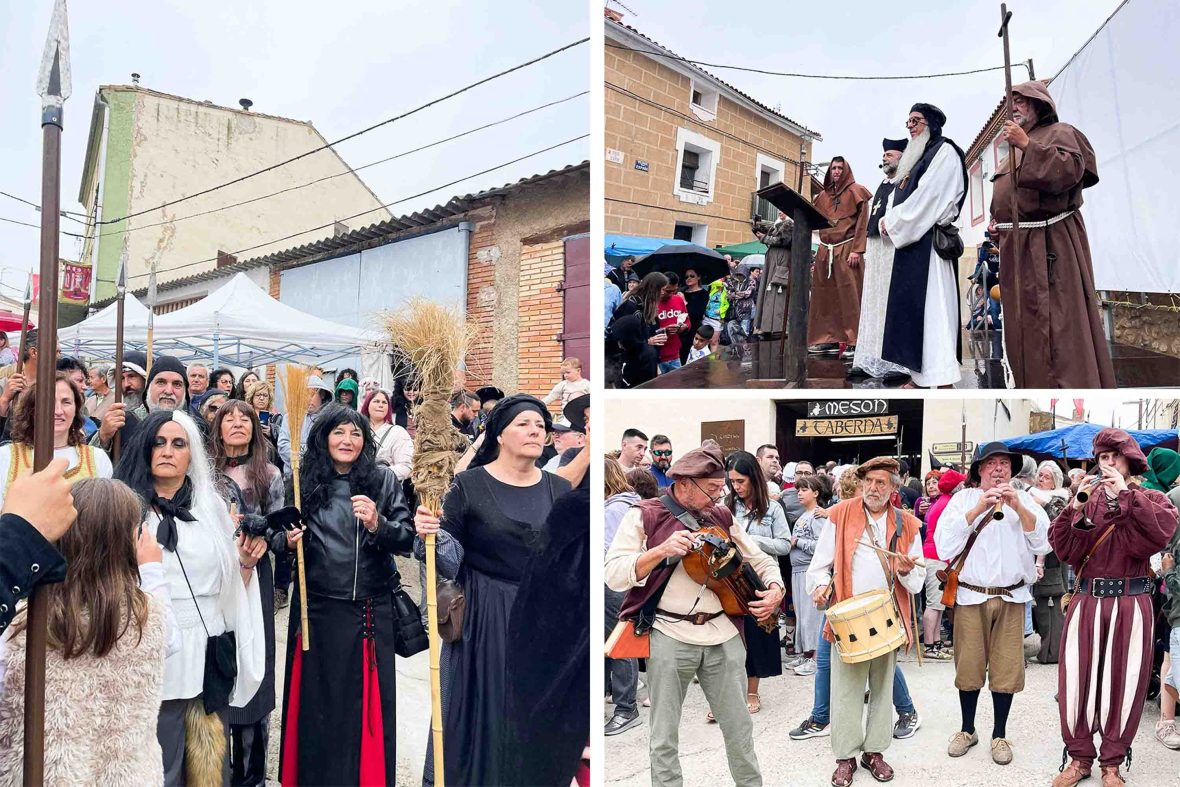
Trasmoz’s connection to witchcraft was formalized in 2000 with the founding of the Asociación Cultural El Embrujo de Trasmoz, an official body that organizes annual events to celebrate the village’s magical history. These include the Luz de las Ánimas (Light of the Souls) on October 31, where pumpkin-carved skulls are placed around the cemetery to guide traveling souls, and, on the first Saturday of July, the Witchcraft Fair.
“Attracting around 6,000 visitors, the medieval-style fair features re-enactments of the capture of witches, witch trials, and the Curse of Trasmoz,” explains Rubén Sola, who runs Trasmoz vacation home Casa Rural El Horno.
During my visit in off-season January, it’s hard to imagine 6,000 people crammed into Trasmoz’s narrow, winding streets that take a matter of minutes to walk through. The plain stone buildings are old and weather-worn, streets unurbanized and traffic-free. If you’re here for dining or shopping, prepare to be disappointed. There’s only one place to eat, Bar El Aquelarre, which serves homestyle dishes, and a retail scene limited to a souvenir shop selling handmade products, and artisanal cheese dairy Quesería El Acebo de Moncayo. The most prominent feature, as well as one of Trasmoz’s popular visitor attractions, is the castle that looms over the village.
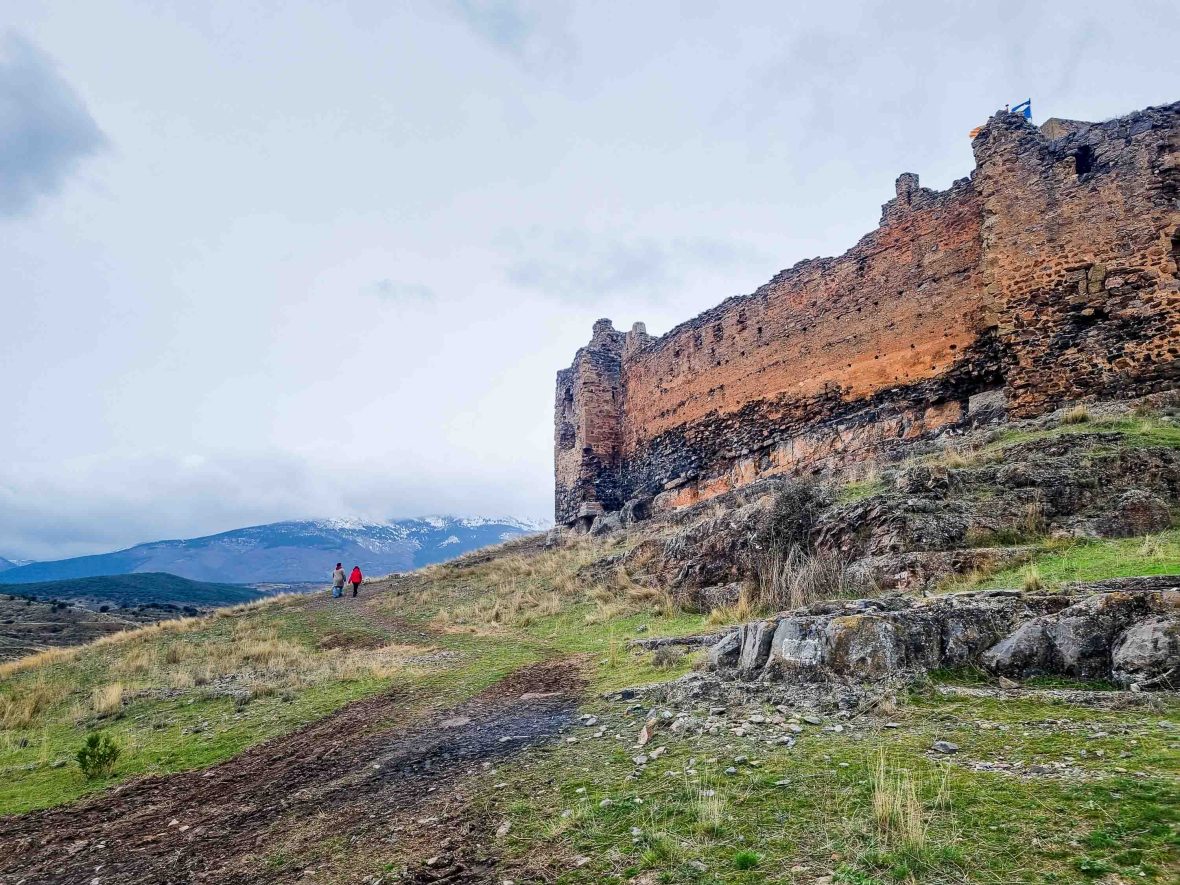
I climb the steep hill to the partially-ruined castle, the heart of both the village and its history. From this 360-degree viewpoint, I can truly absorb the dramatic beauty of the landscape, a contrasting mix of sparse scrubland, rolling hills, and the blue silhouette of the 7,000-foot-high (2,134-meter) Mount Moncayo. Within the castle’s keep is evidence of what makes Trasmoz culturally distinct: Here, I find a Witchcraft Museum dedicated to local history and folklore.
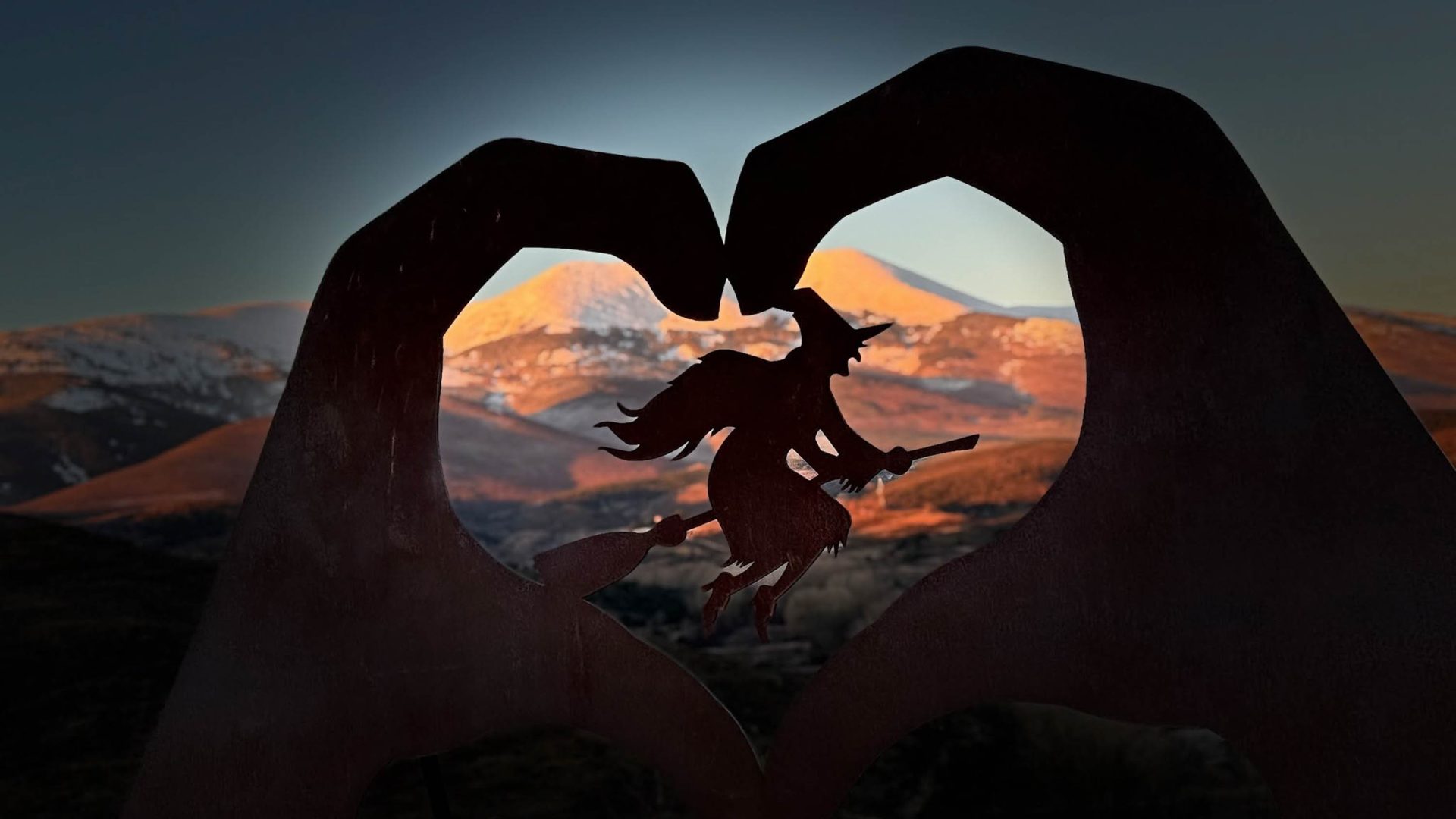
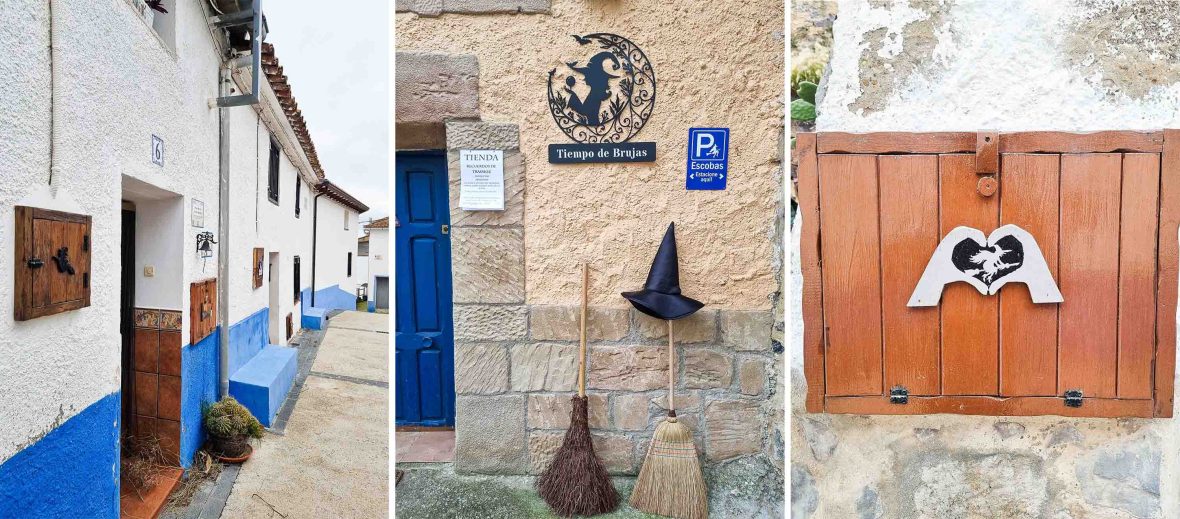
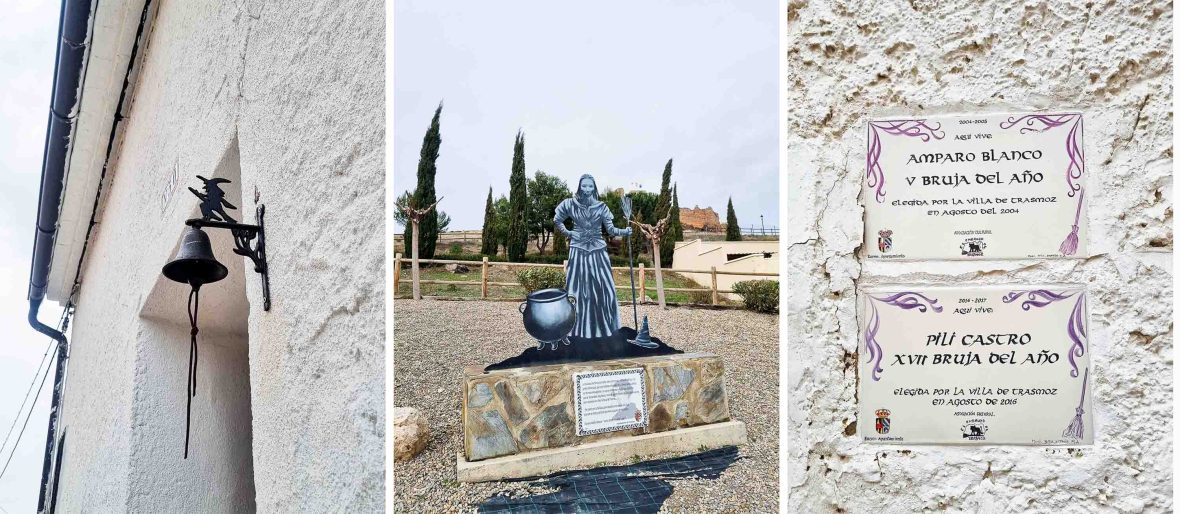
Back in the village, I begin to notice buildings adorned with witch-themed decorations and sculptures. More whimsical than scary, and closer to street art than Halloween props, they transform Trasmoz into a supernatural treasure hunt. Mounted to one rough-hewn wall, a black-and-white drawing of a witch holding a rabbit defies the stereotype of the haggard, hunchbacked, wart-afflicted crone. Reminiscent of a pin-up girl, this stylish witch wears a short, flared skirt that shows off a pinched-in waist, her pointed hat perched on well-coiffed hair. Above my head is a pulley doorbell decorated with the more familiar silhouette of a witch on a broomstick, an emblem repeated on other murals.
On my own explorations, I also spot tiled plaques on various houses. Written on them are women’s names and ‘Bruja del Año’—these plaques commemorate the ‘Witch of the Year’, another annual Trasmoz tradition that started in the same year as the Asociación Cultural El Embrujo de Trasmoz where a woman is awarded this title by popular vote.
In Trasmoz, you don’t need to cast spells to be a witch. Requirements include residency or family roots in the village, and an outstanding commitment to the local community and promoting the village’s heritage and history. The nominated witch holds the title for life, and has the privilege of delivering the welcoming speech at the Witchcraft Fair.
One of these women is Lola Ruiz, the ninth woman to be named ‘Witch of the Year’, whose eldest daughter, Nekane, is also a witch. “Being a witch of Trasmoz is a source of pride and a title I cherish; I like being called a witch,” explains Ruiz, whose souvenir shop, Tiempo de Brujas, draws me in with its playful ‘Brooms, park here’ sign—and sees me leave with a seven-knot bracelet for protection and good fortune.
It’s all too easy to be spellbound by Trasmoz’s unique identity and forget the day-to-day life of its residents, something Castán reminds me of when he shares the real, rather than supernatural, challenges.
“Among the modern-day witches of Trasmoz, I’m the one who most actively practices the craft; I studied chemistry and work with plants—making cosmetics, oils, herbal infusions, and remedies for minor ailments,” she tells me. “That’s what witches did back then: They were healers and midwives who helped people, yet they were punished for it.”
A monument in the castle courtyard is a grim reminder of the history that while there were no witch trials in Trasmoz, there is still a dark history of female persecution that lies beneath the souvenirs and street décor. A silhouette of a stern-faced woman holding a broomstick, cauldron and pointed hat at her feet, remembers La Tía Casca, a 19th-century herbalist, scapegoated for an inexplicable epidemic and murdered by an angry mob.
The ‘Witch of the Year’ award is a powerful way to reverse the narrative. In the past, these women were persecuted for their autonomy, authenticity, and non-conformity; now, Trasmoz celebrates them.
I ask Noelia Macaya, 2026’s ‘Witch of the Year’, what the title means to her. “Being a witch means being different,” she says. “Witches knew about plants, observed the phases of the moon, healed livestock, and did things that were different from what was usual. There is no need to be afraid of being different.”
“In today’s world, there should be more witches,” adds Macaya. “That is, more people who seek knowledge and pursue their goals regardless of conventional expectations. Everyone should set their own goals and work hard to achieve them.”
Trasmoz’s annual events and its year-round celebration of witchcraft have helped the village ward off the spectre of economic decline. From its 13th-century peak as a wealthy fiefdom of 10,000 people, Trasmoz has suffered severe depopulation both due to Spain’s historic expulsion of Jews and Musli,ms and the more recent phenomenon of España vaciada, the emptying-out of the country’s rural interior as people moved to cities and the coast for jobs.
Local services are still lacking too. “We have to go elsewhere for shopping, work, medical appointments,” explains Ruiz—Tarazona, the nearest large town, is around 10 miles away. However, the village is now attracting thousands of tourists annually and even new residents. “In recent years, the population of Trasmoz has increased—we have gone from 68 to 103 registered residents,” explains Trasmoz’s mayor Jesús Andía. “All the houses that were on the market as second homes have been sold. In the summer, our population reaches about 500 people.”
Maybe it’s Trasmoz’s unique reputation that attracts new residents; or perhaps, like Ruiz when she first moved in 2011, they’re spellbound by the peace and quiet, the relaxed way of life, the tight-knit community, or the undeveloped landscape that Ruiz fondly describes as “a real-life Edoras straight out of Tolkien”.
This small but mighty village has survived because it has evolved. From medieval conflict to modern community, where supernatural street decorations peacefully coexist with an active parish church; from scaring away people with occult rumors to cover up secret criminality, and warmly welcoming thousands of visitors to fun, annual events.
And, most importantly, it has transformed the deadly stigma of witchcraft into a celebration of women, creating both a tourism success story, and a source of cultural pride. That is the true magic of Trasmoz.
****
Adventure.com strives to be a low-emissions travel publication. We are powered by, but editorially independent of, Intrepid Travel, the world’s largest travel B Corp, who help ensure Adventure.com maintains high standards of sustainability in our work and activities. You can visit our sustainability page or read our Contributor Impact Guidelines for more information.

Born in Paris and raised in London, Florianne Humphrey now lives and writes on the Norfolk (UK) coast. Her curiosity for new experiences has taken her to five continents and 50 countries, leading to bylines in The National, Going, Intrepid Times, and more. An author of children’s and adult fiction, with published short stories and poetry too, she also loves practicing yoga and walking her Golden Retriever on her local beach.