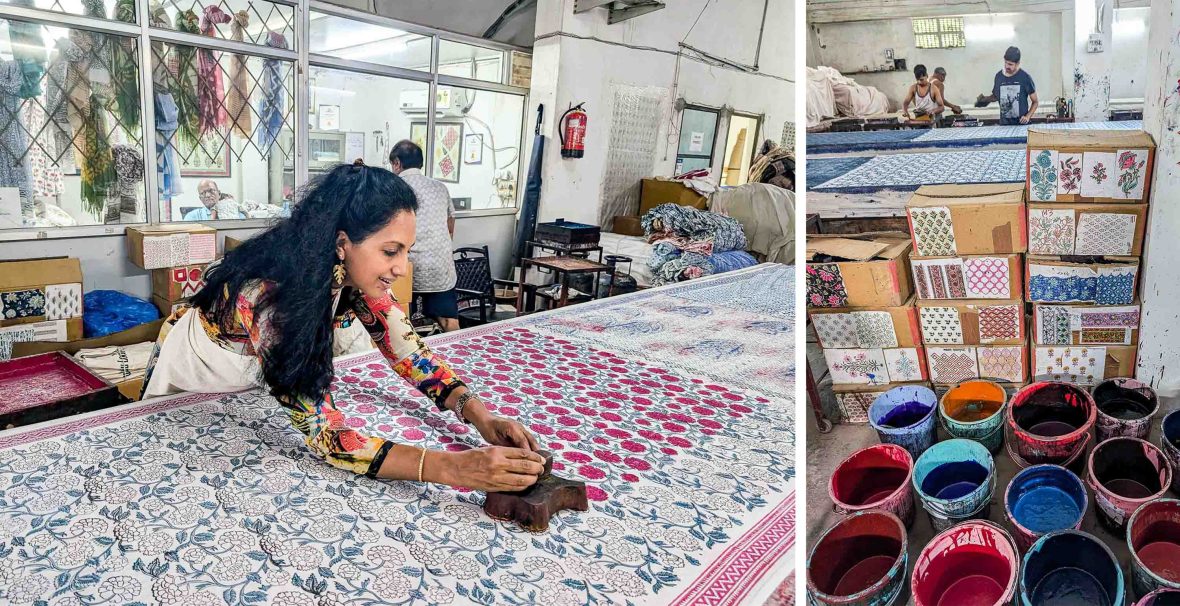
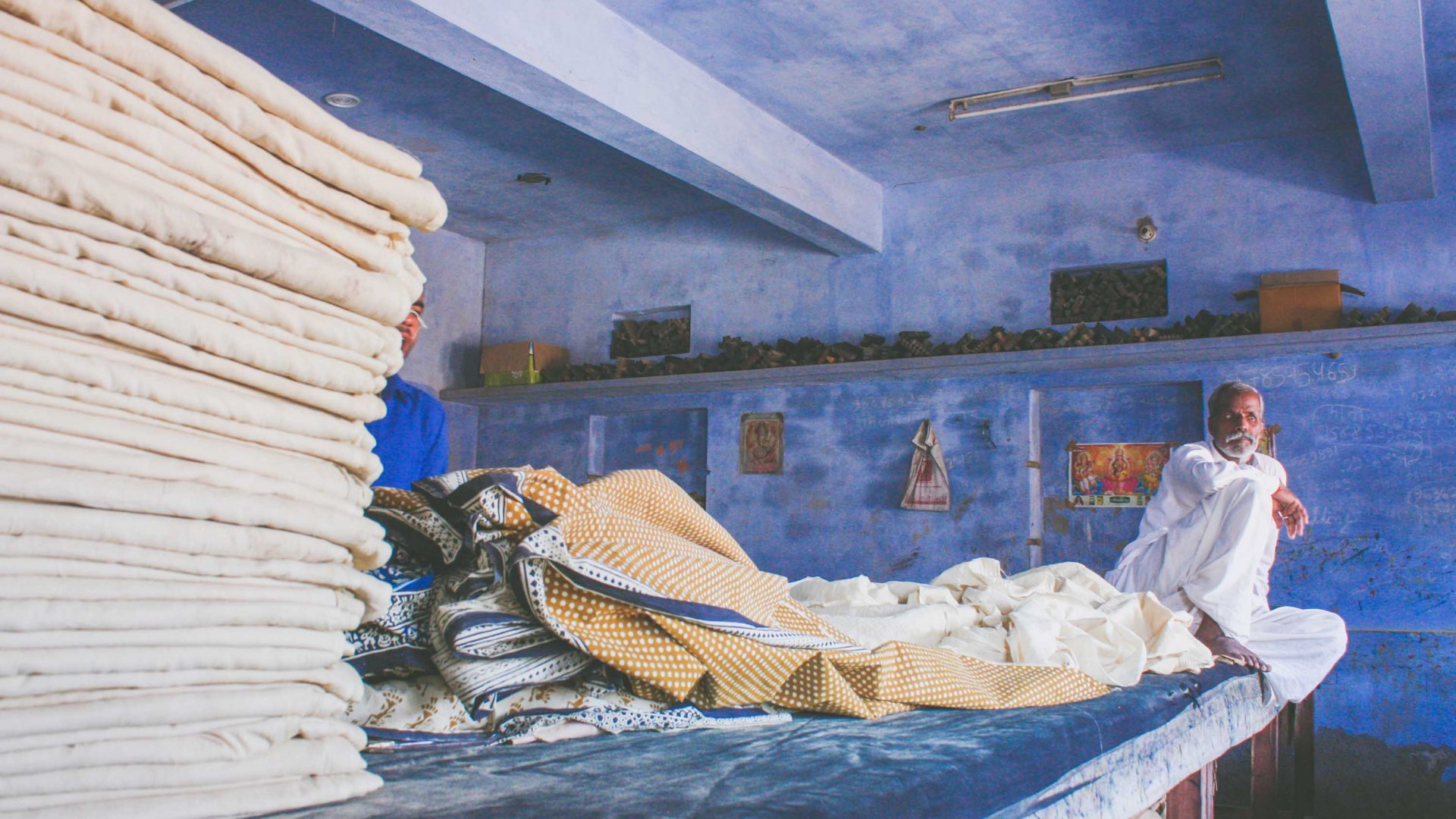
I consider how much of Rajasthani design and architecture is built as a result of skilled, but undervalued, labor. Historically, the Mughal and Rajput kingdoms were both characterized by unparalleled imperial luxury and fine craftsmanship. These could only be supported by a staggering and rigid wealth gap. The men in the factory are extremely talented, building on hundreds of years of block printing experience. And yet, while the artisanry is valued as being part and parcel to Jaipur, the individual artisans feel relegated to the sidelines.
We stop for chai and cookies, and take turns playing with the baby, including our driver and some of the artisans at the factory. Jolly tells us how his father started and grew the business. “What’s in the paint?” I ask. “It seems to stick to the fabric so well.”
His face suddenly turns serious. “That’s a trade secret,” he says. “Our paint formulas are why we are so successful.”
As happens whenever I attempt a new craft, I gain immense respect for artisans. Our arms feel heavy, our eyes slightly crossed, and the smell of paint lingers in our nostrils. Getting the prints to line up is trickier than I expected, and the imperfections in my future tablecloth glare at me. On the drive back, my daughter says how she wants to hang her cloth in her bedroom, while my mother considers making pillows from hers.