Climbing Kilimanjaro is undoubtedly thrilling—but these lesser-visited African summits offer equally epic views, knowledgeable guides and thrilling hikes, without the crowds, says Eibhlis Gale-Coleman.

Climbing Kilimanjaro is undoubtedly thrilling—but these lesser-visited African summits offer equally epic views, knowledgeable guides and thrilling hikes, without the crowds, says Eibhlis Gale-Coleman.
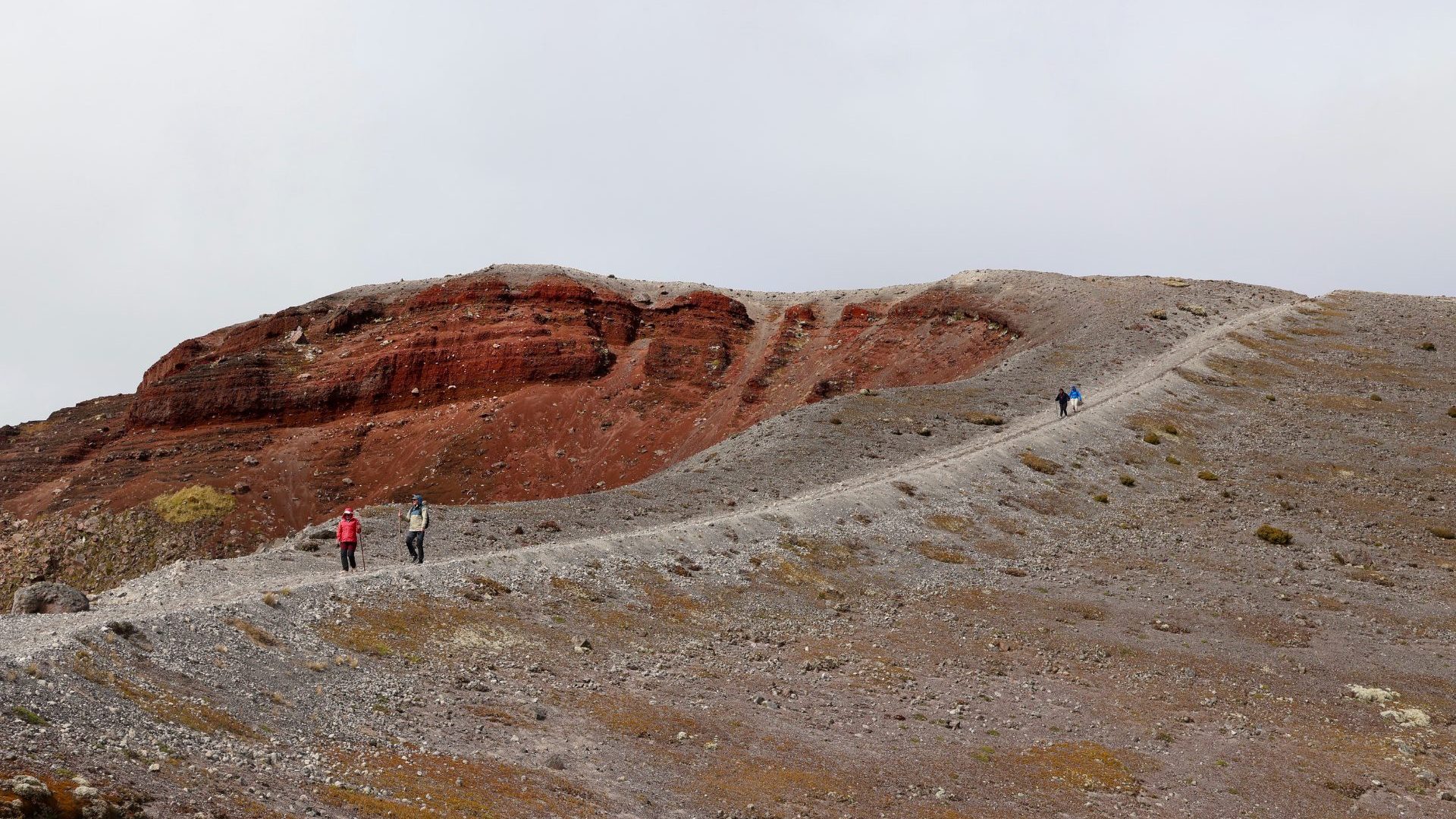
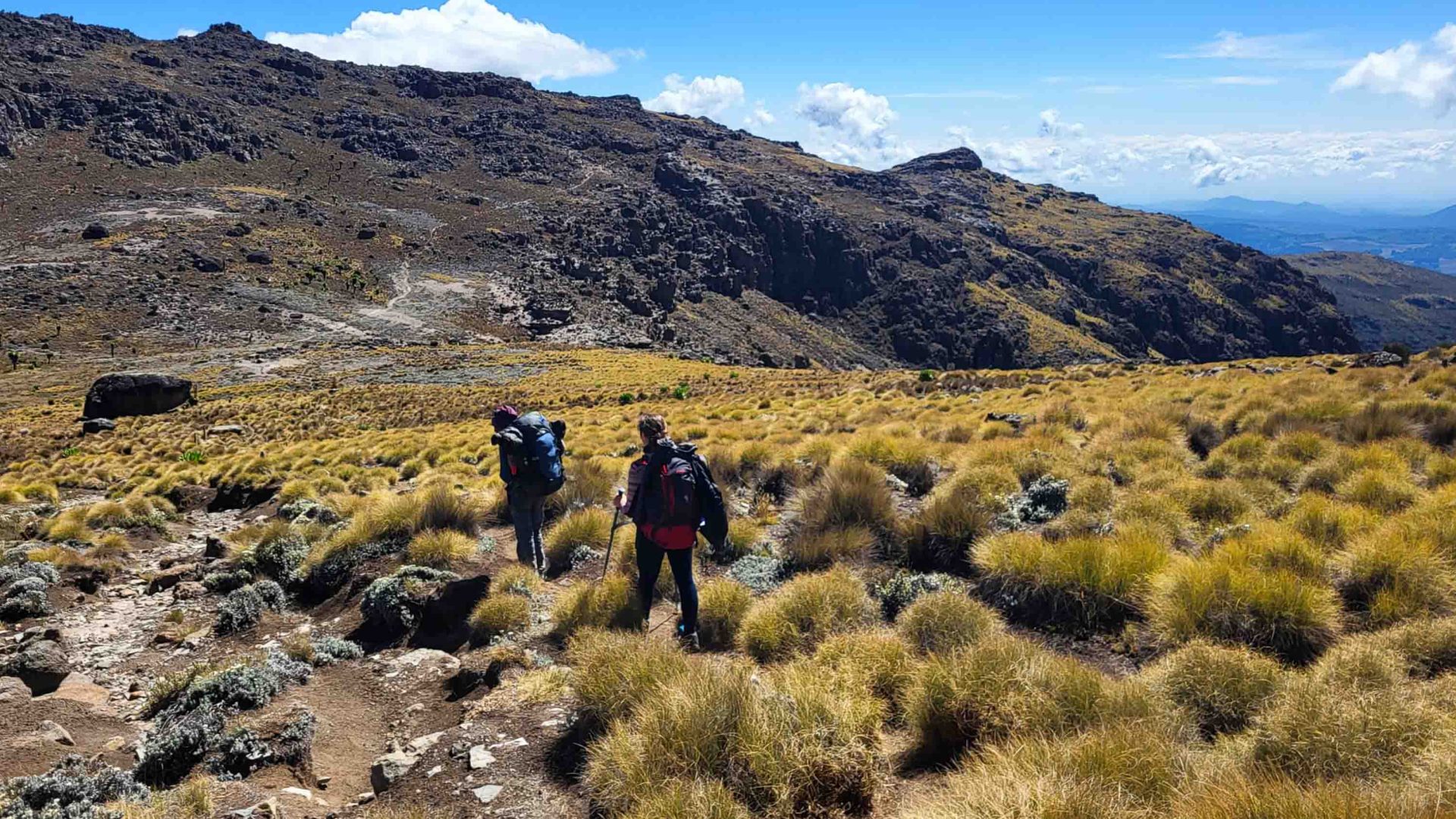
“There are elephants on this trail,” says my guide, Jimmy Chaplin. He hasn’t stopped glancing through the undergrowth since we joined the stone track. Having narrowly evaded a charging bull elephant only a few weeks ago, I scamper a little closer to him. We’re only an hour into our Mount Kenya trek, but it’s apparent the next four days will be rawer than the regimented slopes of Kilimanjaro.
As Africa’s second-tallest mountain, Mount Kenya attracts approximately 15,000 annual hikers, compared to Kilimanjaro’s 30,000 to 50,000. It has three summits: Batian (17,057 feet/5,199 meters), Nelion (17,021 feet/5,188 meters) and Point Lenana (16,351 feet/4,984 meters). The latter is named after the prominent Maasai leader, Lenana, who famously negotiated with British colonial powers, losing ownership of Maasai lands in the process. For tourism operators reliant on Mt Kenya, there is an irony to this namesake. In October and November 2025, the Kenyan Ministry of Tourism and Wildlife increased park fees—driving protestors to the streets as they argued against impacted business. It’s a reminder of how precarious access to nature can be.
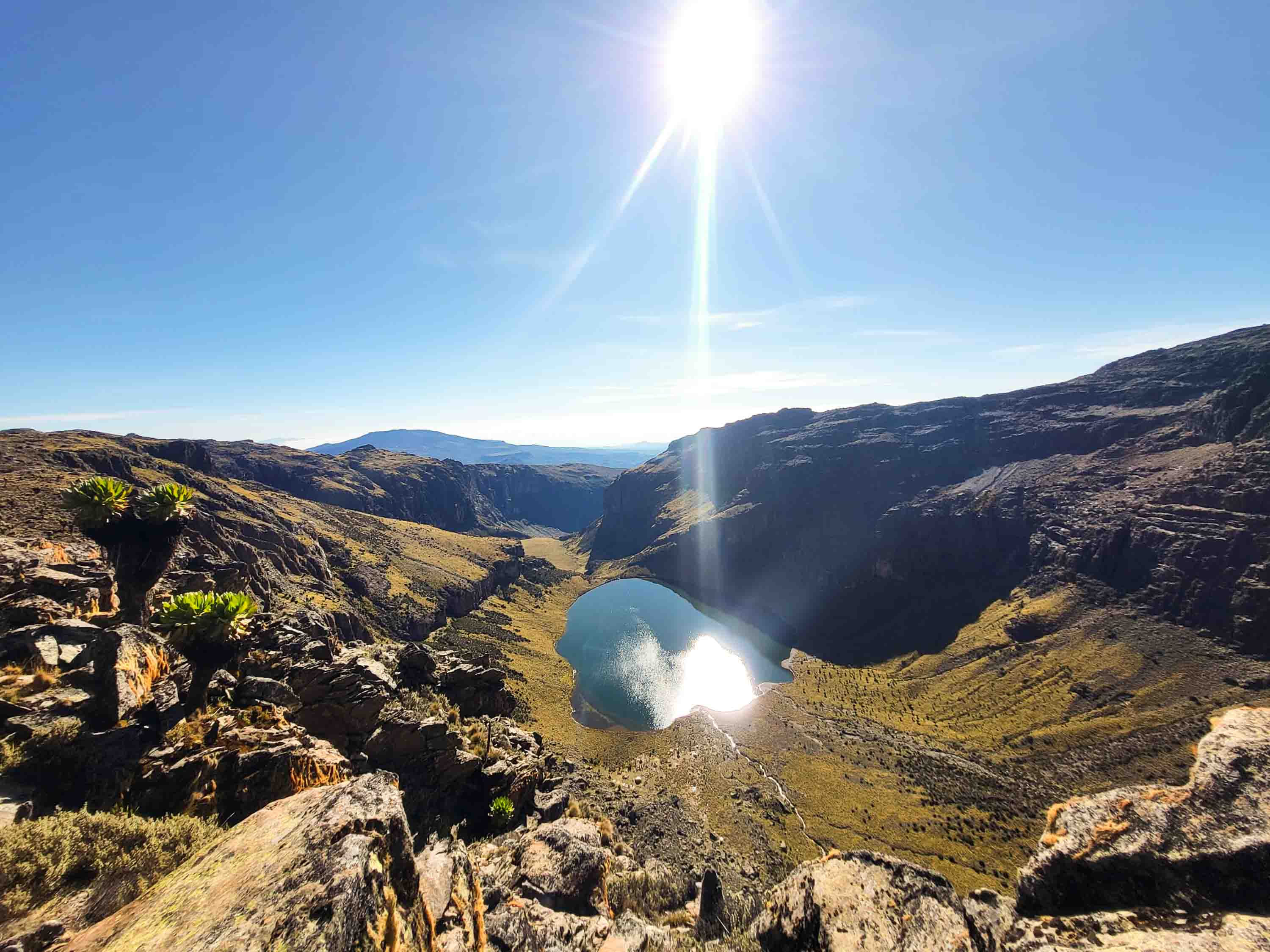
After learning that Point Lenana is hiker-accessible, I wanted to experience its legacy for myself. Dangling on rockfaces is outside my remit, but steep slopes, I can handle. My itinerary is a blended trail: Climbing via the Sirimon route and returning on the scenic Chogaria path, famed for its waterfalls and glistening glacial tarns.
One rucksack. USD$280 paid in national park fees. What could go wrong?
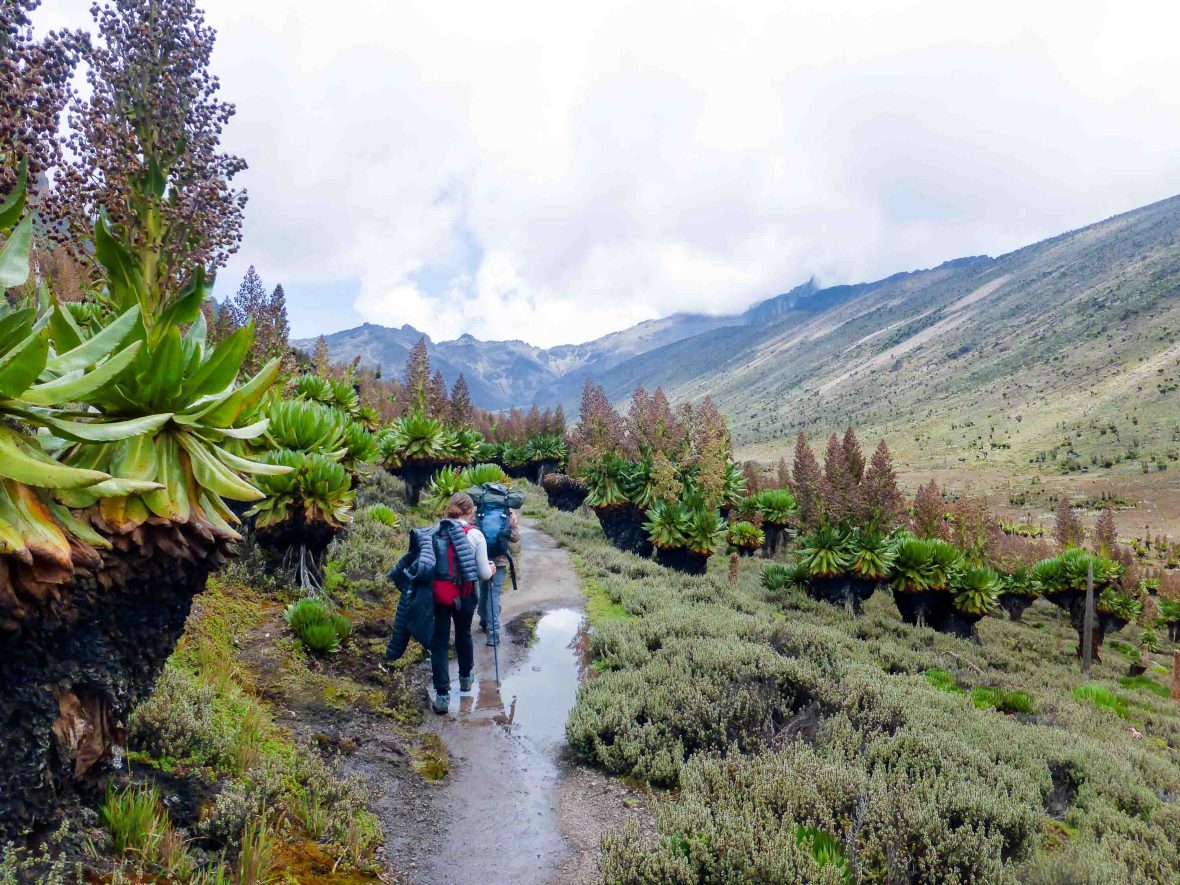
Within 48 hours, the scenery changes from humid forests to Afro-alpine moorland scattered with giant groundsels, their rosette-topped branches protectively thickened with dead leaves. Having grown up herding animals in the southeastern lowlands of Mount Kenya, an area traditionally inhabited by Kikuyu communities, Jimmy is on hand with sharp insights.
“I used to tell the time using insects,” he says. “The butterflies were more active between 12pm and 2pm, and between 2pm and 4pm, that’s the time when the bees were very active.” He points out flora adaptations as we trudge through boggy grass, reminiscing on stories of leopards, hyenas, and even roaming lions. For Jimmy, adolescence brought enough exposure to big predators. Instead of training as a safari guide, he’d chosen the mountains, pursuing snow and a more peaceful co-existence with Kenyan wildlife.
I’ve stood at Kilimanjaro’s summit, Uhuru, and now stand at Mount Kenya’s, Point Lenana. The experiences are worlds apart.
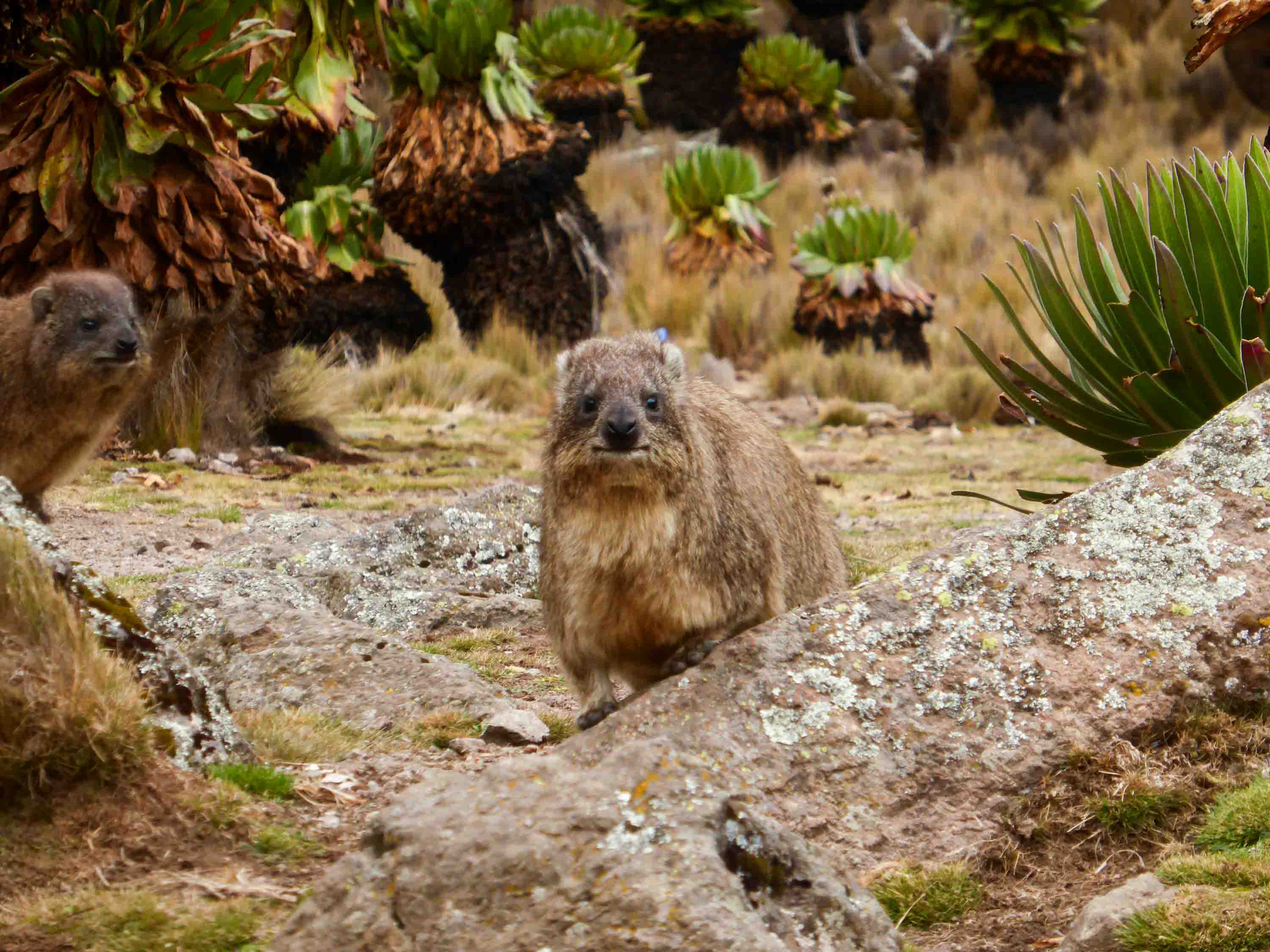
As we approach Shipto—effectively base camp for the Sirimon route—I learn that the local wildlife are great time keepers too. I squint at the rocks ahead; at 13,780 feet (4,200 meters) of elevation, I’m either hallucinating with altitude sickness, or there are half a dozen capybaras standing, like curious sentinels. Jimmy notices and laughs: “Those are hyrax,” he explains. “They are waiting for us to cook dinner.”
Seemingly bigger than your average cat, their still, beady eyes peer out beneath shaggy brown coats, their heads hopelessly small for their bodies. Sure enough, the creatures turn and spin, ungraciously tumbling over rocks to beat us to the green-corrugated outline of the Shipton Camp Mountain Hut. Clearly, they’ve been keeping tabs on timings; we arrive to see the camp chefs chasing them out the kitchen.
Assisted by our two porters, Michael and Brian, chef Maron has cooked up a storm: A multi-course affair of steaming soup, vegetable casserole, and chopped fruit. There is a unity in the corrugated dining hall; shared stories of viewpoints, equipment checks, and sympathetic distribution of altitude medication as we eat. Fed and ready to rest, I collapse into my tent, lulled to sleep by the scattering sounds of animals and scuffing footsteps.
The summit attempt begins at 3am; headtorches and thermal layers on, ice-covered scree underfoot. The first two days involved 10 hours of hiking and an animal whispering (Dr. Doolittle-style) immersion in rugged Kenyan terrain. In contrast, this third morning is a baptism of fire, or rather ice, given the shivering temperatures of -6° Celsius (21° Fahrenheit).
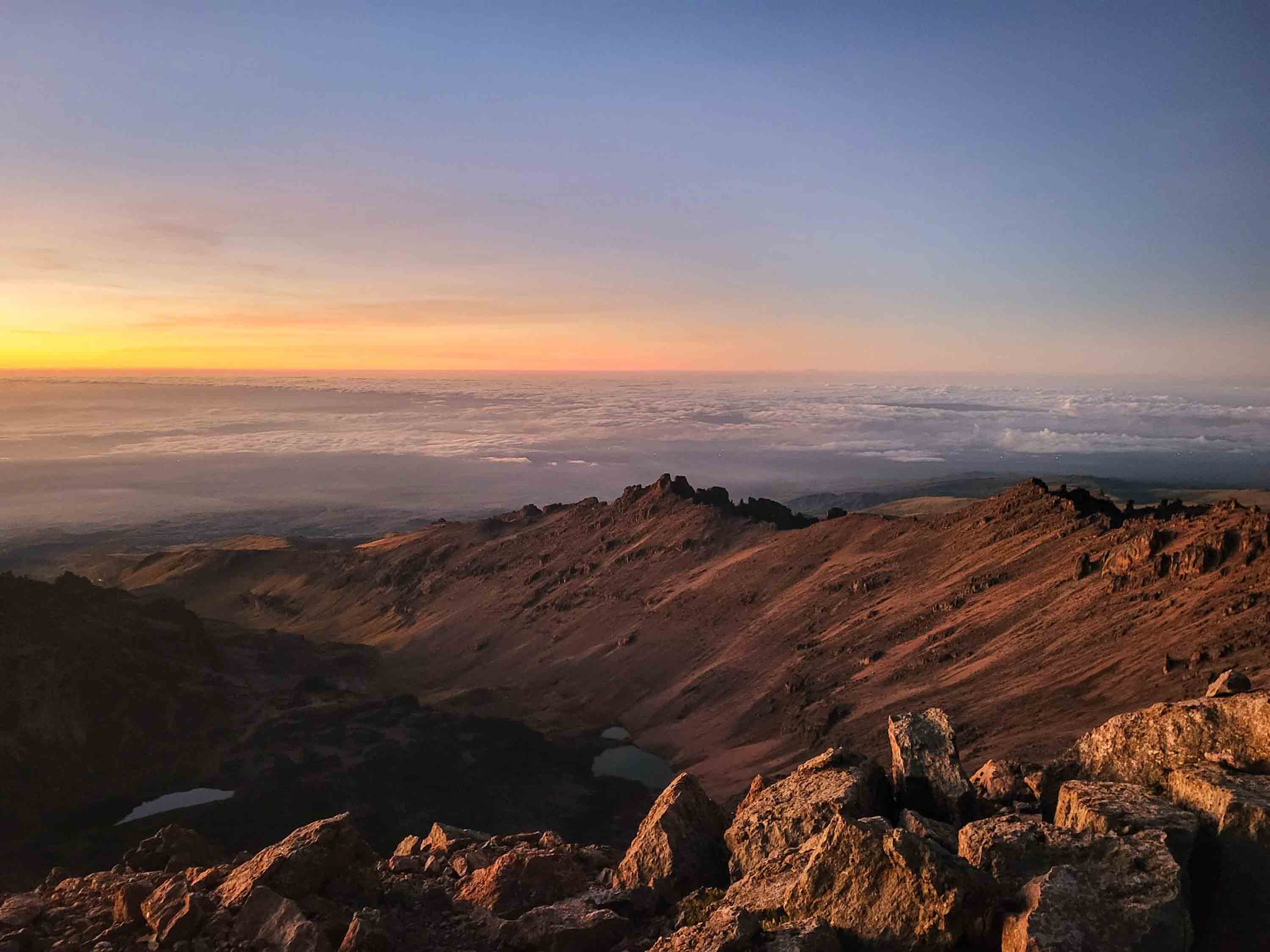
I’d been too tired to appreciate the starry skies earlier, but senses sharpened by cold air, the expanse feels electrifying. A perceptive squint reveals faint outlines of black ridges against the dark-blue sky, and sometimes, glancing up, I catch the tail-end flash of a shooting star. To my relief, slow and steady really does win the race. Lulled into a determined rhythm by crunching gravel and the bobbing beam of my headtorch, by sunrise, we’re basking in Lenana’s peacefulness. No more than 10 people—guides, summit porters, and hikers included—are watching sunlight peel over an amber horizon.
As jagged ranges and undulating divots appear in the spreading orange light, Brian, who has kept a watchful eye throughout the ascent, points out Kilimanjaro, a distant tip poking inconspicuously through clouds. Closer to home, Batian, Mt Kenya’s highest point, sits opposite, reserved solely for a handful of rope-wielding scramblers. It’s separated by the ever-shrinking Lewis Glacier, which, having lost 95 percent of its ice since 1900, forms a silently forlorn presence in the valley below. Everything is still. Jimmy reminds us that we should probably get a picture.
I’ve stood at Kilimanjaro’s summit, Uhuru, and now stand at Mount Kenya’s, Point Lenana. The experiences are worlds apart. At Uhuru, a physical brawl, a hundred camera clicks, and a proposal had erupted in under five minutes—not too shabby for a dormant stratovolcano. Lenana is comparatively meditative.
Having climbed Mt Kenya, I’m inspired to look into other hikes, beyond Kili, in Africa. The following mountains are best climbed in their respective dry seasons and should be attempted with a licensed guide.
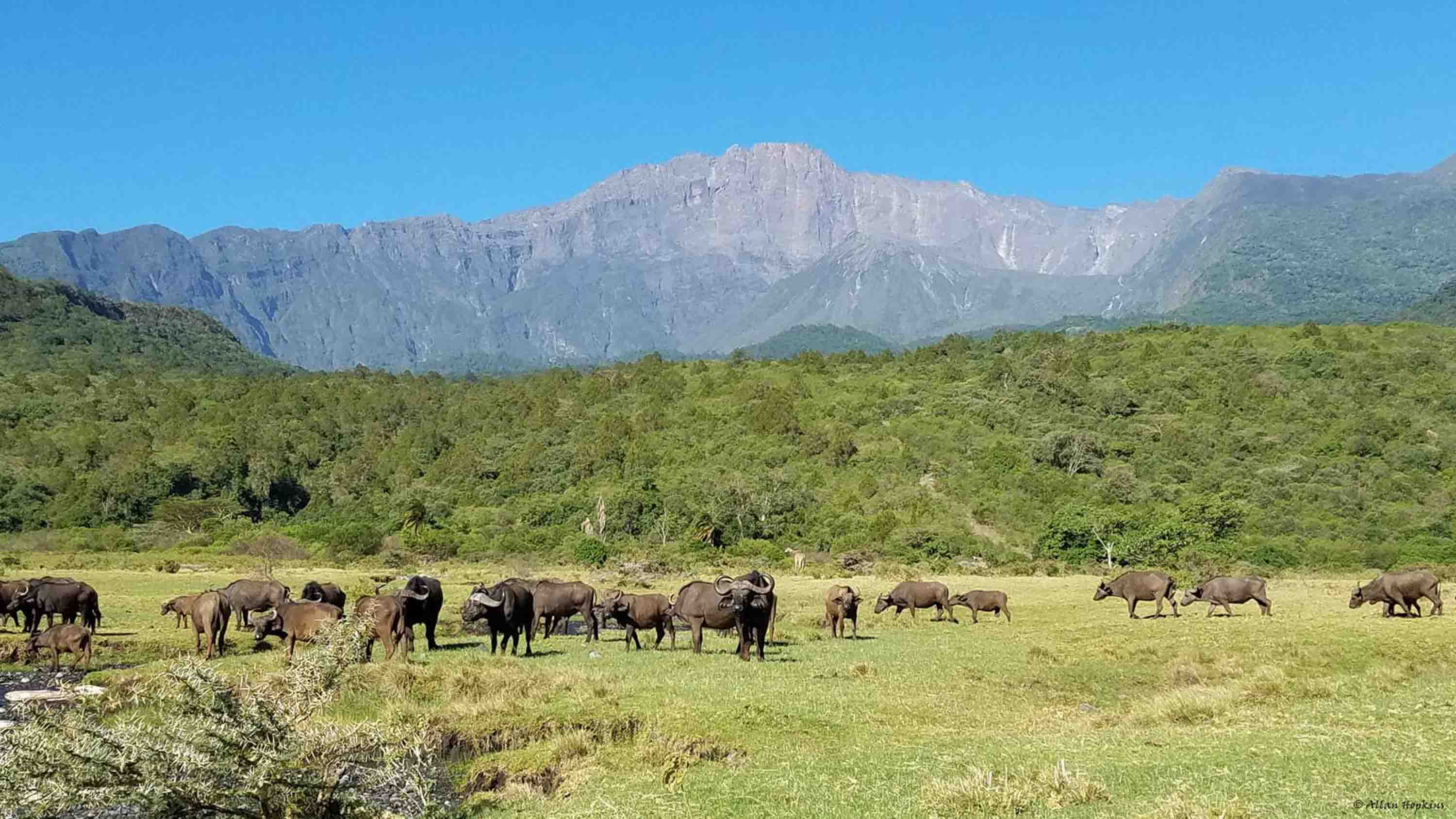
Kilimanjaro isn’t the only summit to scramble in Tanzania. Located in Arusha National Park, Mount Meru is the country’s second-tallest peak. Its lower slopes are shrouded in rainforest, with a chance of spotting wildlife, like giraffes and buffalo. Hikers typically tackle this dormant stratovolcano over four days, reaching a respectable elevation of 14,977 feet (4,565 meters)—more than enough to justify a Diamox or two.
Given that the trailhead is only 25 miles (40 kilometers) from Arusha, adventurous travelers can easily wriggle Mount Meru into their Tanzanian itineraries. As far as mountain accommodation goes, its camps are fairly luxurious, forgoing flapping tents for wooden huts with bathroom blocks. Meru is an exciting way to stretch your legs before bundling into a Serengeti-bound jeep—and could even serve as a Kilimanjaro pre-acclimatization hike.
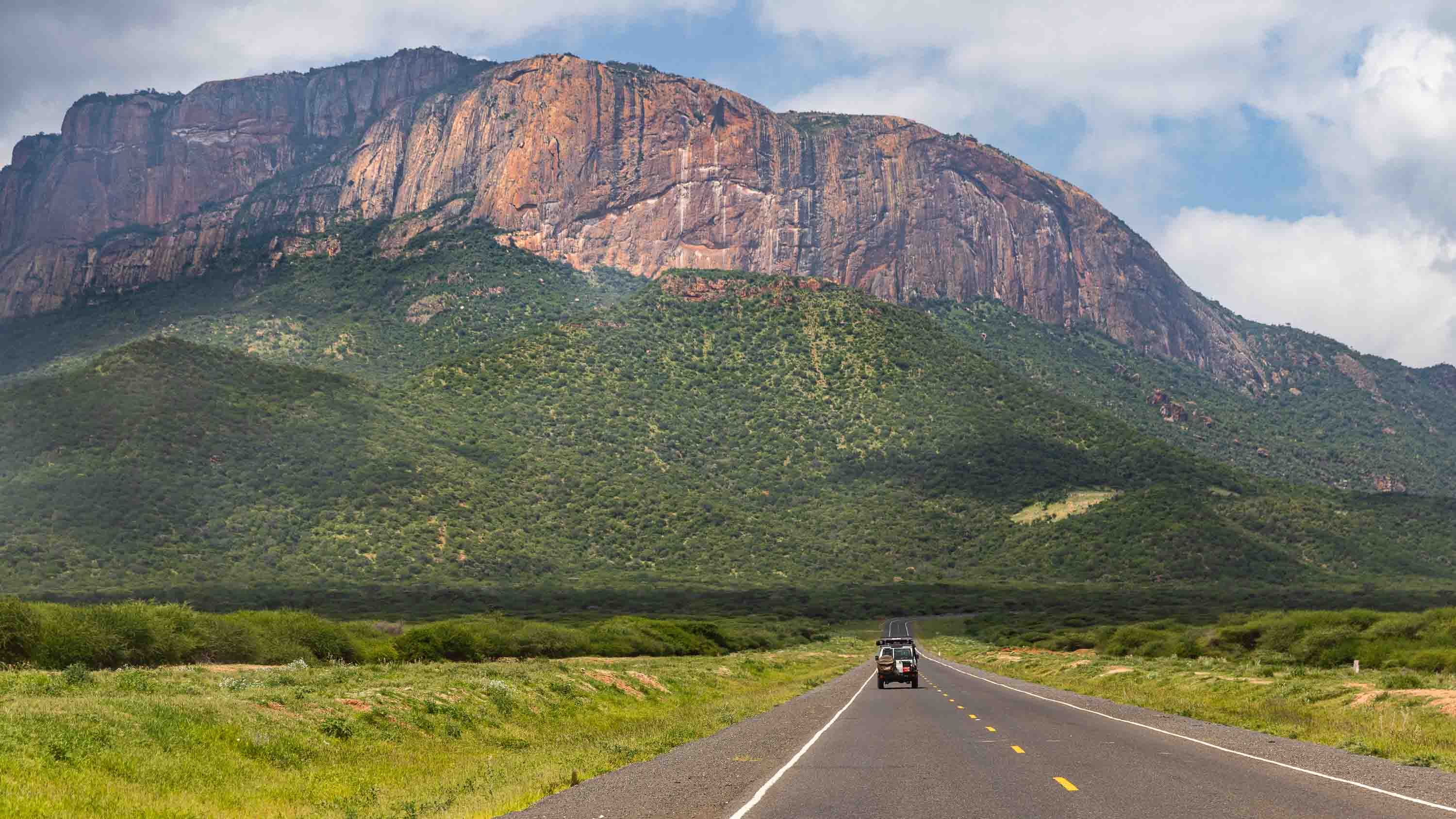
Northern Kenya is turning heads as one of Eastern Africa’s quieter but wildlife-rich destinations—but shake those safari associations and dust off your hiking boots. For anyone craving a mountainside camp-out, the Samburu region is home to the beloved Mount Ololokwe. At approximately 6,561 feet (2,000 meters), this summit pairs an overnight experience with the physical demands of a day hike. Guided tours run over two days: A strenuous hike up, overnight camp at the summit, and a leisurely walk down.
For the Samburu people, Ololokwe’s slopes are a place of generational rituals and prayer, and an opportunity for sacred connection to nature. Soak up that reverence, and enjoy a spectacular sunrise from your lofty camp, gazing over an arid horizon.
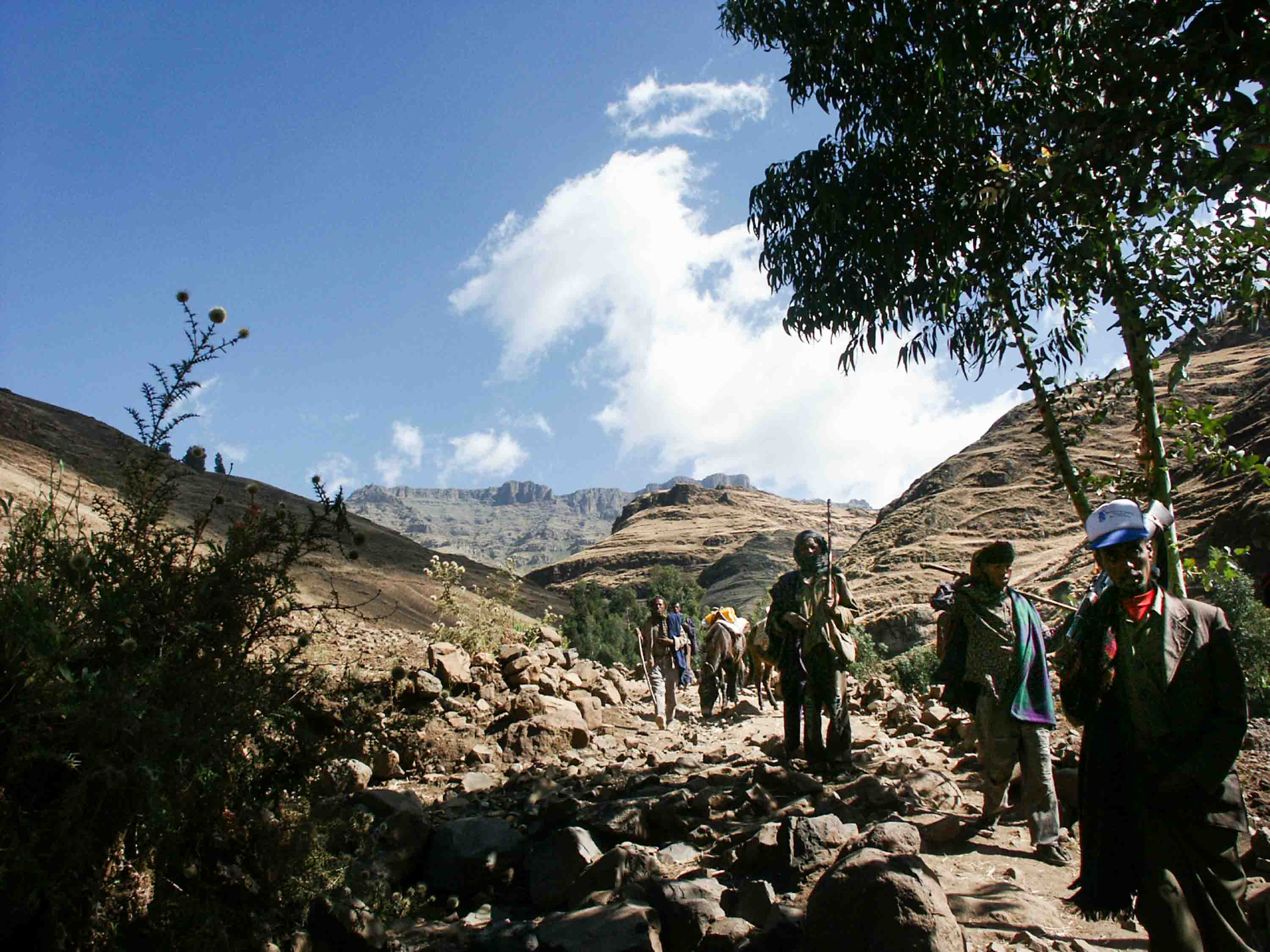
Mount Ras Dashen is situated in Simien National Park, a beautiful cradle of wrinkled ridges and wandering Ethiopian wolves. At 14,872 feet (4,533 meters), it’s a respectable climb, only marginally smaller than Mount Meru.
The Simien Mountains are also UNESCO-listed for their biodiversity; if spotting rare wildlife will fuel your hike, Mount Ras Dashen has inspiration in bundles. Wolves aside, its slopes are ruled by grazing Walia ibex and troops of Gelada baboons. Guided tours typically depart from Debark, a northern Ethiopian town just 71 miles (114 kilometers) northeast of Gondar Atse Teodros Airport. Hikes last approximately six days, allowing gradual acclimatization to avoid altitude sickness.
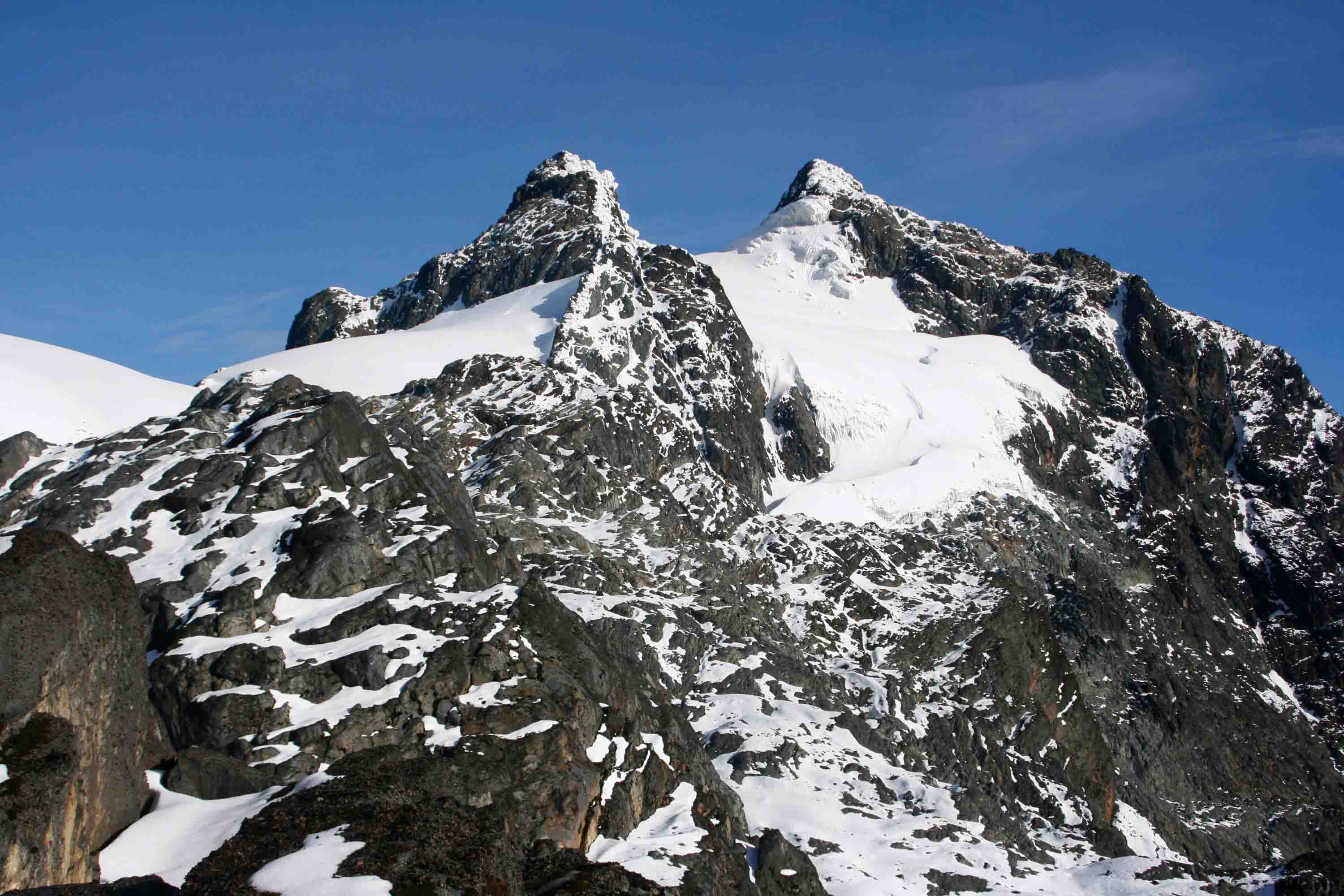
Climbing Mount Stanley, the highest mountain in Uganda and Democratic Republic of the Congo (known as Mount Ngaliema in the DRC), and the third-highest peak in Africa, is no mean feat. With twin summits and perched in the Rwenzori Mountains National Park, its highest summit is Margherita Peak on the Uganda side at 16,761 feet (5,109 meters), The terrain begins in rainforest and ends with a glacier traverse that necessitates crampons: Arrive expecting a pole-assisted trudge, and you’ll be overwhelmed.
As a glaciated peak, this technical route navigates crevasses and leans towards advanced mountaineering; summit attempters should feel comfortable using climbing ropes and wielding an ice axe. Up for the challenge? It’s possible to reach Margherita Peak via a week-long guided tour, although some companies allow for eight or more days on the mountain.
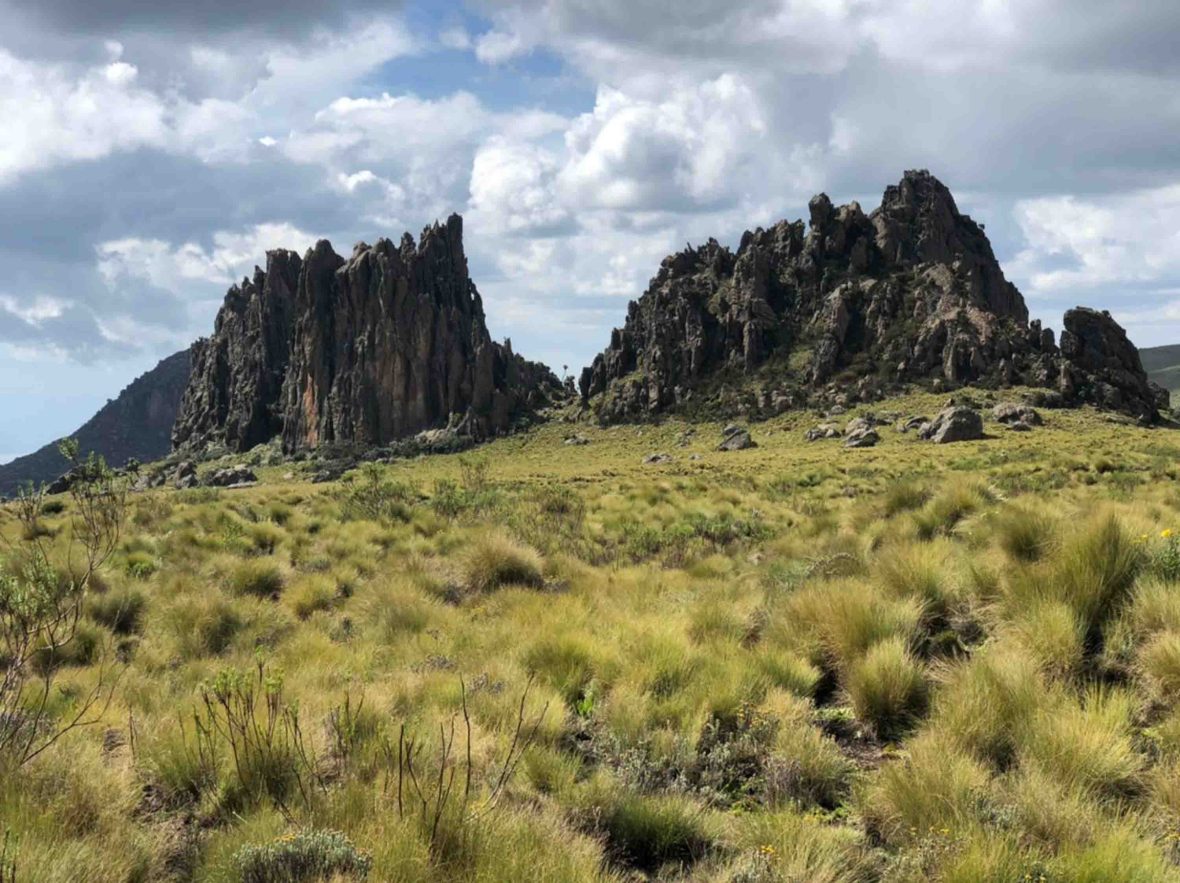
I like to quip that Kenya’s alpine meadows could have jumped straight off a screensaver; this route keeps that joke running. Oldoinyo Lesatima which means ‘mountain of the bull calf’ is the tallest peak in Kenya’s Aberdare Range and the third-highest in Kenya. It offers a similar experience to Mount Ololokwe in the north: Hike to the summit, camp in the highlands overnight, and return the following day.
Hikers cross marshy grasslands, bypassing the distinctive rock formation, Dragon’s Teeth, before reaching a final elevation of 13,126 feet (4,001 meters). Aberdare National Park is just 93 miles (150 kilometers) north of Nairobi, so given that most travelers fly into Jomo Kenyatta International Airport, this two-day peak is easily incorporated into itineraries.
As for my future hiking, could Mount Stanley be on the cards? I’d like to think so, although my footloose scrambling down Point Lenana’s scree slopes could say otherwise—forget Bambi, I embodied a hyrax on ice. For now, I’m grateful for the options: East Africa could make a mountaineer of me yet.
****
Adventure.com strives to be a low-emissions travel publication. We are powered by, but editorially independent of, Intrepid Travel, the world’s largest travel B Corp, who help ensure Adventure.com maintains high standards of sustainabiaulity in our work and activities. You can visit our sustainability page or read our Contributor Impact Guidelines for more information.
Eibhlis Gale-Coleman is a UK-based travel writer, hopelessly cursed with a bucket list of ‘everywhere.’ She writes at the intersection of travel and culture, seeking distinctive voices and eye-opening perspectives. Sometimes this means lacing up hiking boots; often, it means plating up with delicious food. Her work has appeared in the likes of BBC Travel, National Geographic, and Conde Nast Traveler.