Mount Fuji is one of the most iconic peaks on the planet, but it is also one of the most overtouristed. According to Tokyo-based writer Philip S. Kay, Japan’s most beautiful, dramatic, and rewarding high-altitude hikes are waiting elsewhere.


Mount Fuji is one of the most iconic peaks on the planet, but it is also one of the most overtouristed. According to Tokyo-based writer Philip S. Kay, Japan’s most beautiful, dramatic, and rewarding high-altitude hikes are waiting elsewhere.
If you want to see overtourism in action, you only need to look at what’s happening at Mount Fuji. Standing at 12,389 feet (3,776 meters) and dominating the surrounding landscape with its graceful symmetry, it’s easy to understand how Japan’s iconic stratovolcano and UNESCO World Heritage Site has earned its reputation. But a closer inspection of its trailhead towns and sacred slopes reveals a different story—a tale of disrespectful tourists, irresponsible climbers, and local environmental damage.
Japan received a record high of 42.7 million international visitors in 2025, many of them taking advantage of the weak yen to explore Tokyo’s beguiling streets and Kyoto’s cultural treasures. Some may have been driven by social media-fueled viral trends, on a quest to seek out the holy trinity of influencer-inspired experiences: A steaming bowl of ramen, the perfect cup of matcha, and a close-up photo of Mount Fuji. Though a boost for the economy, the skyrocketing popularity of these culinary and cultural Japanese staples has strained supply chains and led to severe overcrowding.
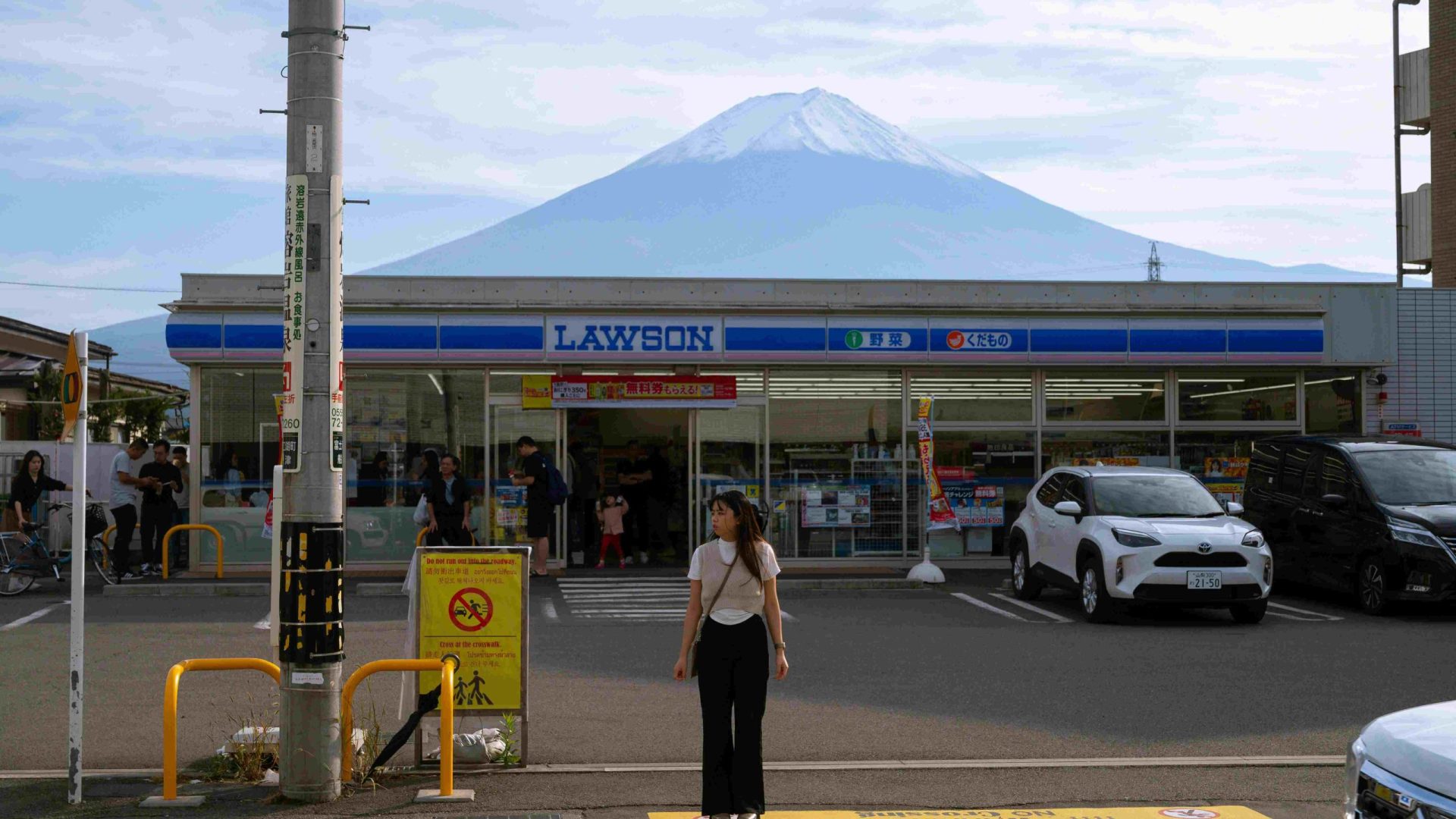
The epicenter of Fuji’s tourism explosion has been the town of Fujikawaguchiko in Yamanashi Prefecture, where hordes of marauding sightseers jostle to get snapshots of the volcano overlooking what has become (for local residents) an inconveniently placed convenience store. In 2024, the tourists’ antics caused so much traffic disruption that officials had to erect a black mesh fence to block the view. Earlier this year, in neighboring Fujiyoshida, authorities resorted to the drastic measure of canceling a decade-old cherry blossom festival because its citizens couldn’t cope with the thousands of daily visitors.
Mount Fuji’s trails have also suffered under the constant footfall. During the July to September climbing season, approximately 200,000 people ascend the volcano. For comparison, Mount Kilimanjaro only hosts up to 50,000—annually. This human onslaught has resulted in extensive littering, soil contamination, and trail erosion. But it doesn’t have to be this way. For Mount Fuji is not the only spectacular peak in Japan.


Expert bilingual mountain guide Motoyuki Harasawa, who staffs Mount Fuji’s 5th Station information center during the hiking season, points out another issue. “We welcome [people] for challenging the hike to the top from all over the world,” he says. “However, troubles and incidents increase due to inappropriate clothing and equipment.”
To combat the influx of climbers who underestimate the rigors of Fuji’s altitude—and reduce accidents, injuries, and emergency evacuations—authorities have introduced gear checks and a curfew. They have also introduced a 4,000 yen (USD$25) trail fee, advance registration, and an etiquette guide to address overcrowding and protect the environment.
Ascent complete, I pay my respects to the mountain gods, then gaze out towards Mount Fuji and let my mind wander: What would its goddess think about the legions of people that now line its slopes every year?
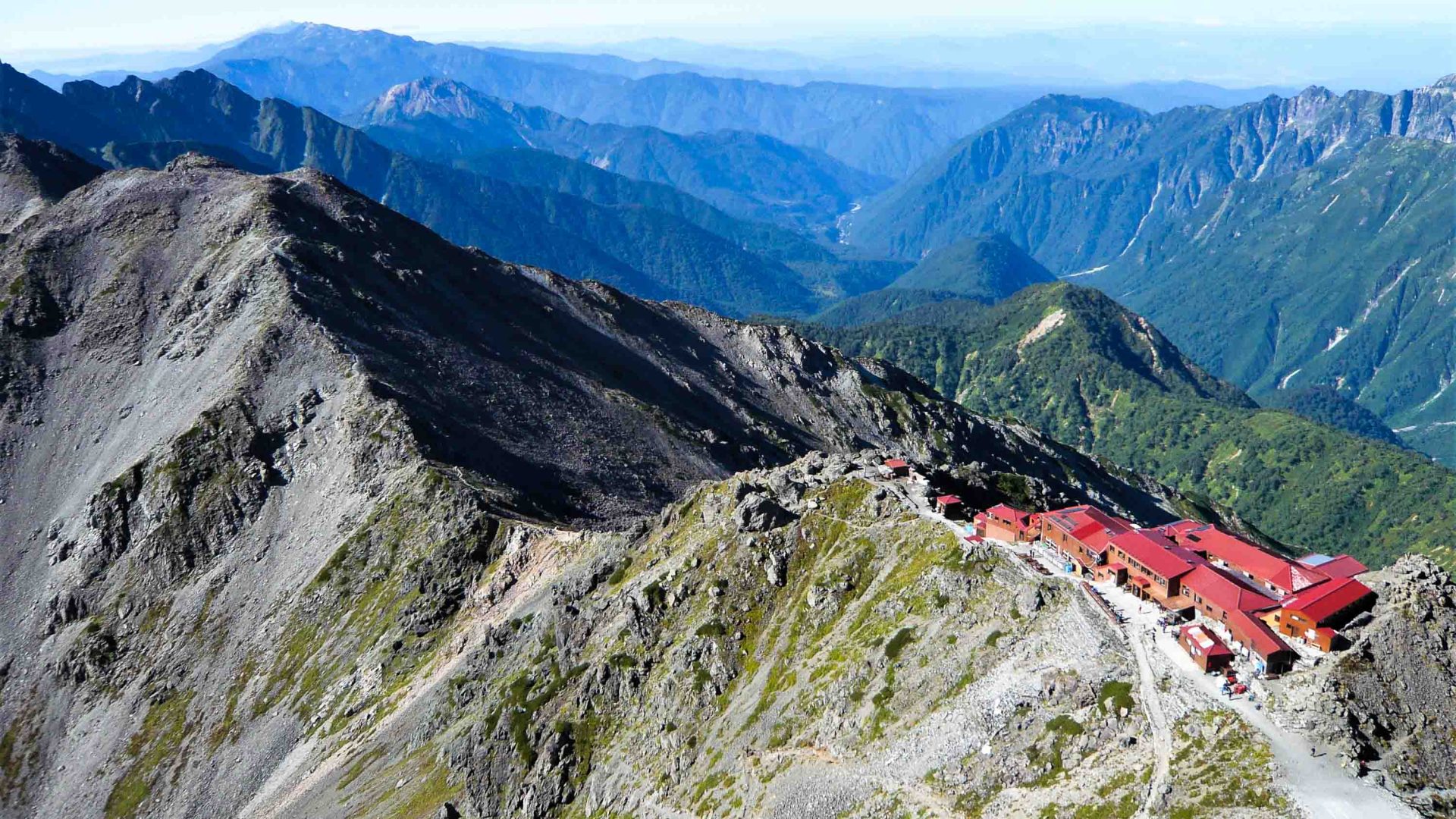
Despite the measures, overcrowding on Mount Fuji is likely to continue this summer. The good news is that you can avoid it without missing out because Japan has some of the most easily accessible big-mountain trails in the world, with the Japan Alps and Yatsugatake ranges offering outstanding alternative multi-day adventures that put the noisy, monotonous procession up Mount Fuji to shame. “Mountains in those areas are completely different from Mount Fuji,” Harasawa tells me. “A variety of activities can be offered, such as long traverse[s], rock climbing, river trekking, etc… In those mountains, hikers can experience the diversity of Japanese mountains.”
After trying out four of Japan’s lesser-visited high-altitude hikes, I agree. And on these mountains, you can find a few other things that are in short supply on Mount Fuji: Peace, space, and moments of solitude.


All the routes below take you above 9,300 feet (2,835 meters) and involve considerable daily altitude gains, requiring good fitness and stamina. Apart from the Oku-hotaka to Mount Yari traverse, the hikes aren’t technical, but some scrambling is necessary. You can do them independently, but a knowledgeable guide will help you get the most out of your adventure and ensure a safer experience.
Mount Kita and Mount Aino, Southern Japan Alps
Japan’s second- and fourth-tallest peaks are in Minami Alps National Park, accessible by a seasonal bus service (late June to early November) from Kofu City, a 90-minute train ride from Tokyo.
Reaching Mount Kita’s summit (10,476 feet/3,193 meters) usually involves a strenuous two-day hike from the Hirogawara trailhead, but it’s more rewarding to take an extra day to combine it with an incredible ridgeline traverse to Mount Aino (10,463 feet/3,189 meters).
A summer ascent takes you past wildflowers and blooming herbs, while in fall, fiery foliage decorates the slopes.
The 360-degree views from both peaks are unbeatable, and watching Mount Fuji float on an early morning sea of clouds 28 miles (45 kilometers) to the southeast is a phenomenal way to start the day. It also helped me confirm the volcano is best appreciated from a comfortable distance.


Mount Houou is the collective name of three striking white granite peaks—Mount Kannon, Mount Yakushi, and Mount Jizo—that lie one ridge to the east of Mount Kita.
You can cover them in two or three days from several trailheads, but the route up the Dondokosawa Valley from Aoki Kosen stands out for its beautiful forest and powerful waterfalls.
Each of Houou’s mountains venerates a Buddhist divinity: Mount Kannon (9,318 feet/2,840 meters) is dedicated to the Buddhist goddess of mercy and compassion—two things I was hoping for during my climb; Mount Yakushi (9,121 feet/2,780 meters) to the Buddha of healing and medicine (which I was grateful not to need); and Mount Jizo (9,068 feet/2,764 meters) to the protector of travelers and children—to whom I credit my safe return.
At its highest elevations, the peaceful hike features unusual sandy slopes and surreal rock formations. Close to Mount Jizo’s strange obelisk-like pinnacle is an area populated by an atmospheric collection of small, stone guardian-deity statues that personify the peaks’ spiritual significance.


Mount Oku-hotaka (10,466 feet/3,190 meters) and Mount Yari (10,433 feet/3,180 meters)—Japan’s third and fifth highest—are in the rugged Northern Japan Alps, straddling Nagano and Gifu prefectures, west of Tokyo. Most climbers scale them from the seasonal resort of Kamikōchi, a pristine valley gateway to adventure on the banks of the Azusa River that’s open from mid-April to mid-November.
After crossing the Kappa Bridge, a steep ascent up the Dakesawa route leads to Mount Oku-hotaka, which stands like an ancient citadel commanding an army of other giant peaks. From its summit, imposing outcrops and jagged spurs stretch away to the horizon.
To reach Mount Yari’s spear-shaped spire on the same three-day circuit, hikers have to risk an extended scramble (2-3 hours) across the Daikiretto—a notorious knife-blade section of ridgeline whose sheer drops claim lives almost every year. Though classed as an extremely technical hike that can be done without a guide or specialized equipment, loose rocks and slippery handholds taught me that a helmet and grip gloves should be essential. Under no circumstances should you attempt the exhilarating challenge without experience, confidence, and the ability to concentrate intensely for a long period—even with a guide. And never try it in bad weather.
If you’d rather climb Mount Oku-hotaka and Mount Yari without taking on the Daikiretto, you can split the hike into two and approach the peaks separately.


According to ancient Shinto folktales, the deities of Yatsugatake and Mount Fuji once fought over which mountain was taller. It’s said that Mount Fuji’s goddess smashed Yatsugatake into eight smaller peaks in a fit of rage, leaving 9,511-foot (2,899-meter) Mount Aka as the volcanic range’s highest. Today, a two-day hike leads to its summit, which has excellent views of the Japan Alps and Mount Fuji.
The trail starts at Minotoguchi, a 40-minute bus ride from Chino City in Nagano Prefecture, which is just over two hours from Tokyo’s Shinjuku Station by train. It heads up a valley beside a crystalline stream strewn with moss-covered boulders before reaching the Gyoja Goya mountain hut. Similar lodges exist on all four hikes. Open until around the end of October, they offer a choice of staying in their cozy confines or camping on their grounds outside. The arduous climb from Gyoja Goya ends at a small shrine on Mount Aka’s red-hued summit.
Ascent complete, I pay my respects to the mountain gods, then gaze out towards Mount Fuji and let my mind wander: What would its goddess think about the legions of people that now line its slopes every year? Yatsugatake may have lost the legendary battle, but it seems much better off than its old adversary.
**
You can find out more about Japan’s national parks here
****
Adventure.com strives to be a low-emissions travel publication. We are powered by, but editorially independent of, Intrepid Travel, the world’s largest travel B Corp, who help ensure Adventure.com maintains high standards of sustainability in our work and activities. You can visit our sustainability page or read our Contributor Impact Guidelines for more information.

Philip S. Kay is a Tokyo-based writer who specializes in stories that combine travel, adventure, history, and mythology. Fascinated by inspiring journeys, he believes that escaping the ordinary and embarking on an adventure opens the door to new possibilities, insight, and knowledge. He's a regular contributor to All About History magazine and also writes travel features and guides. His online home is www.escapeandadventure.com