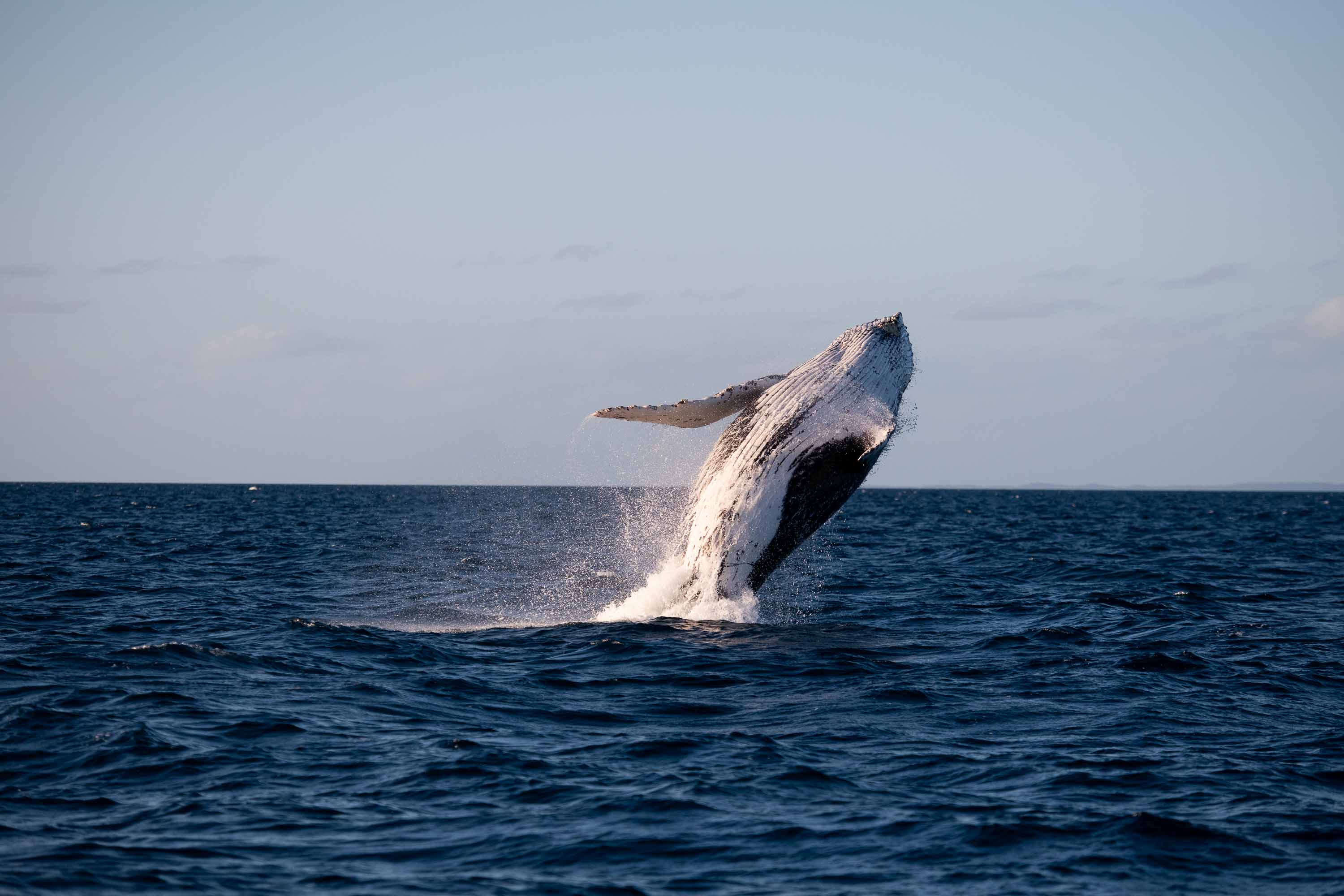
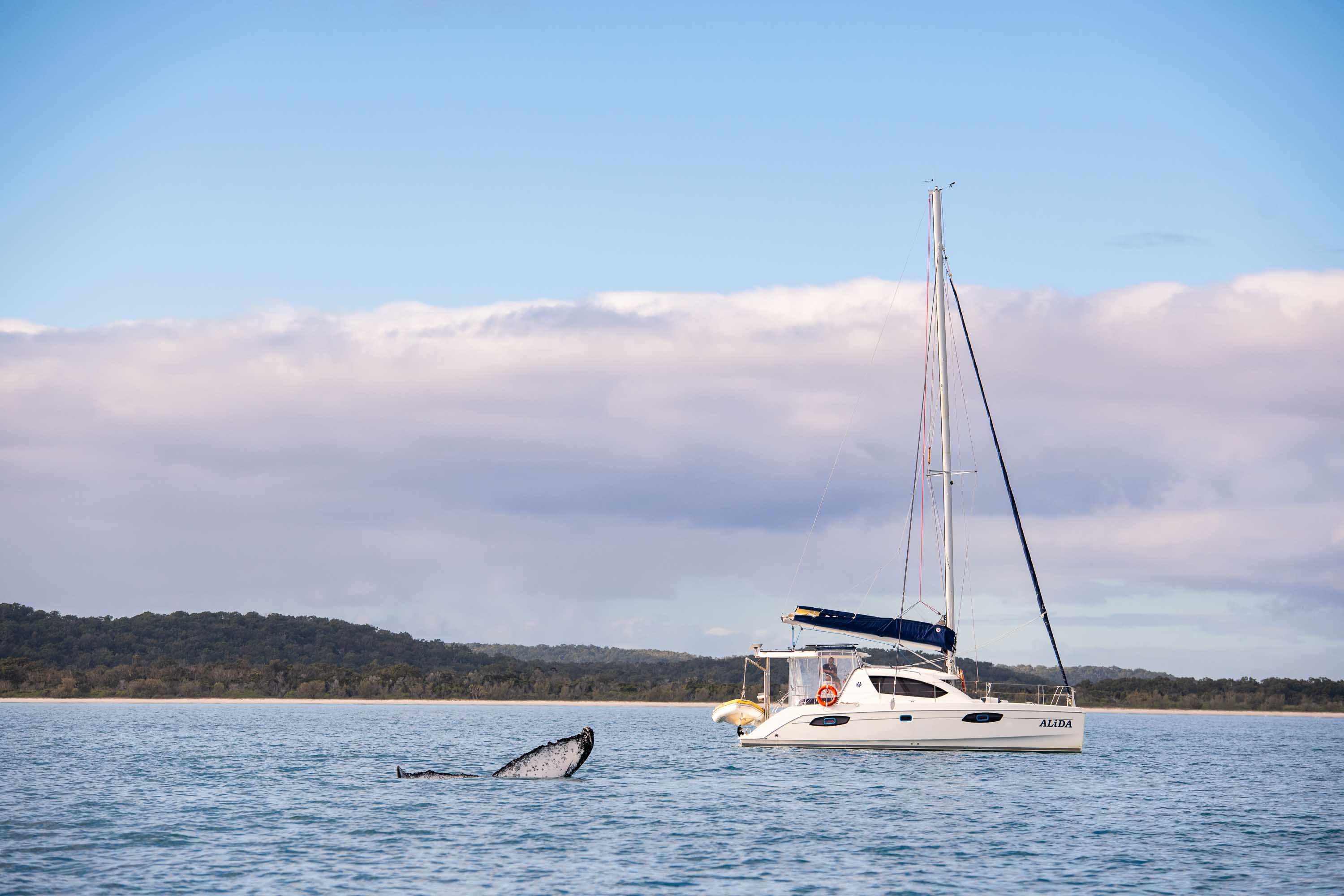
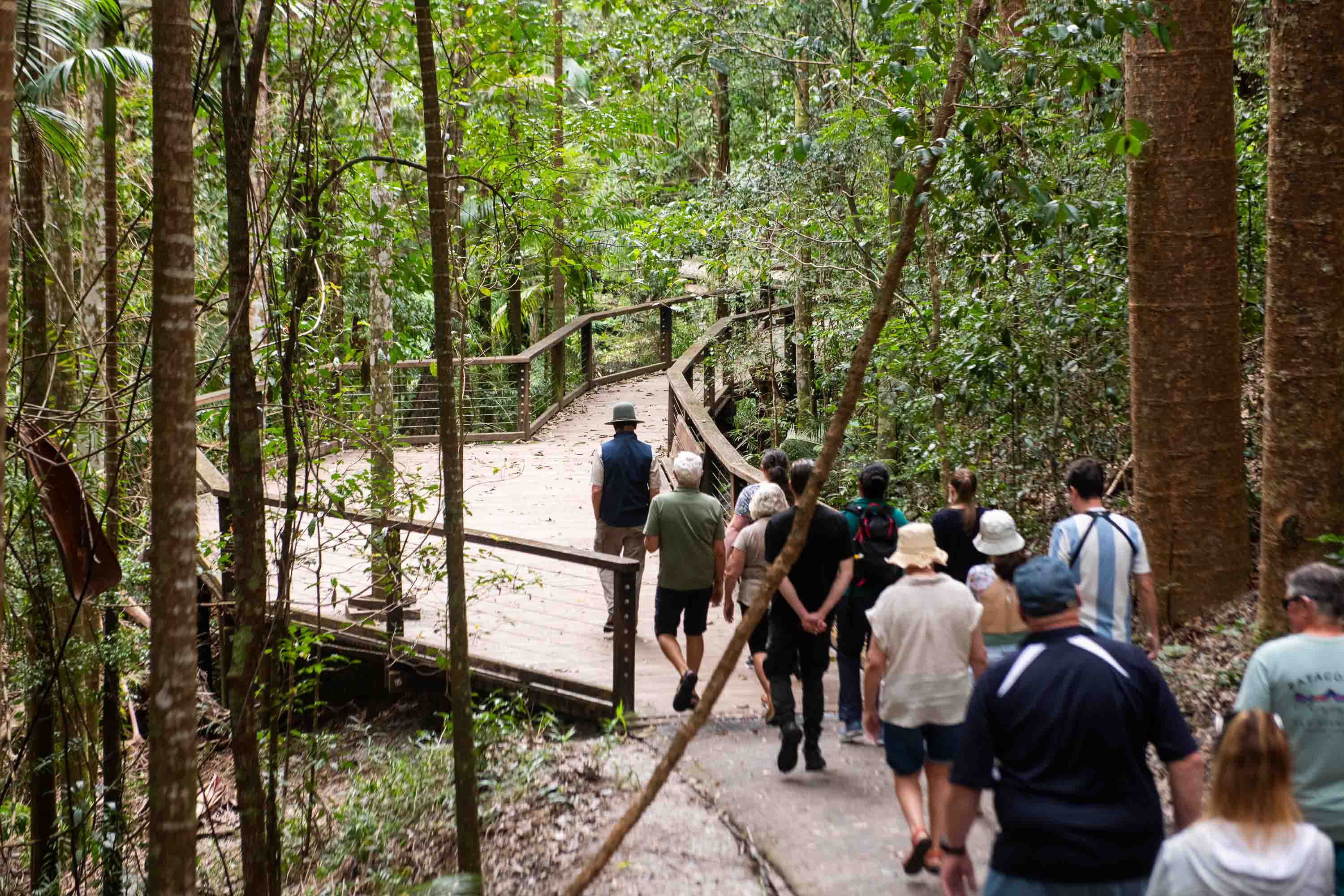
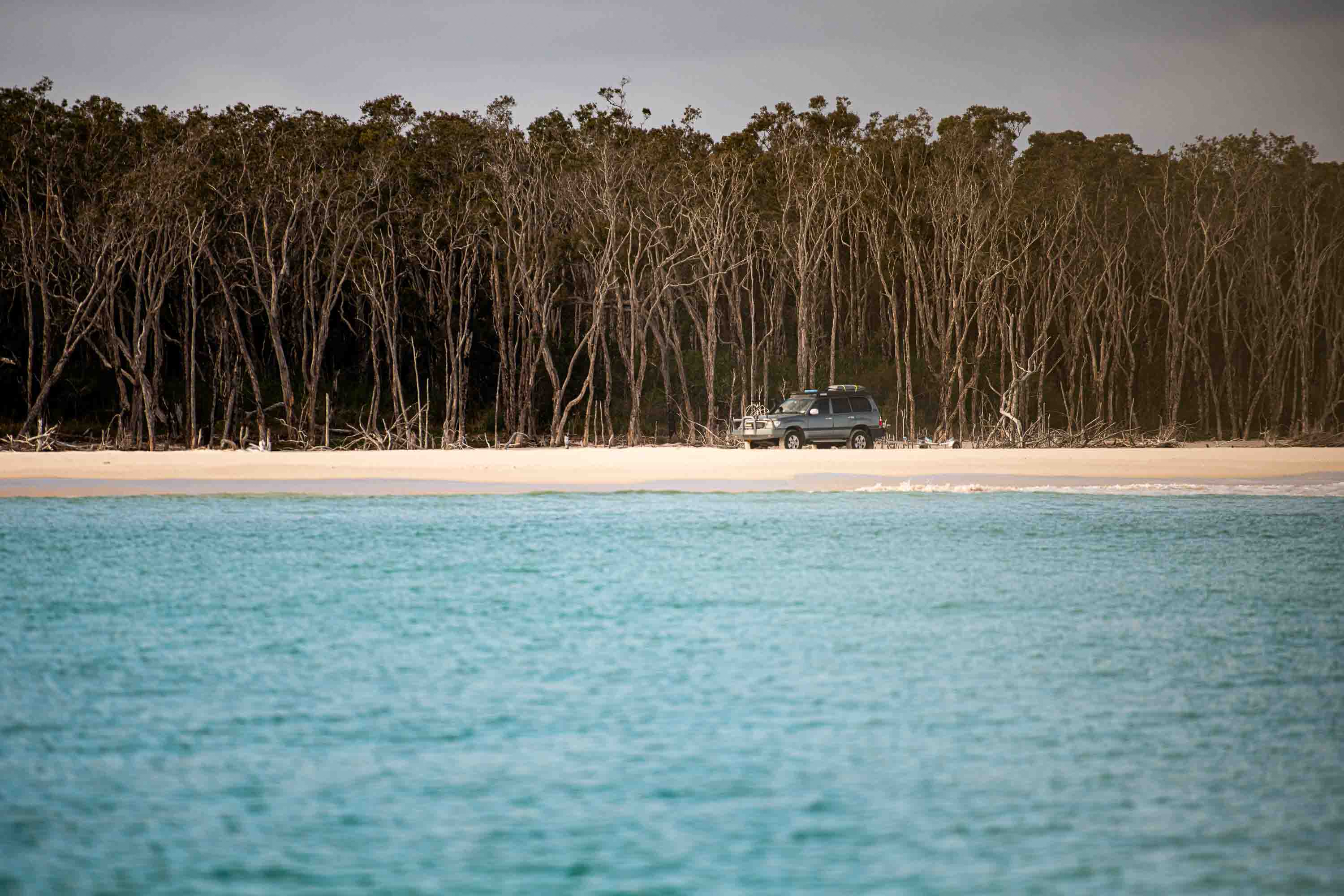
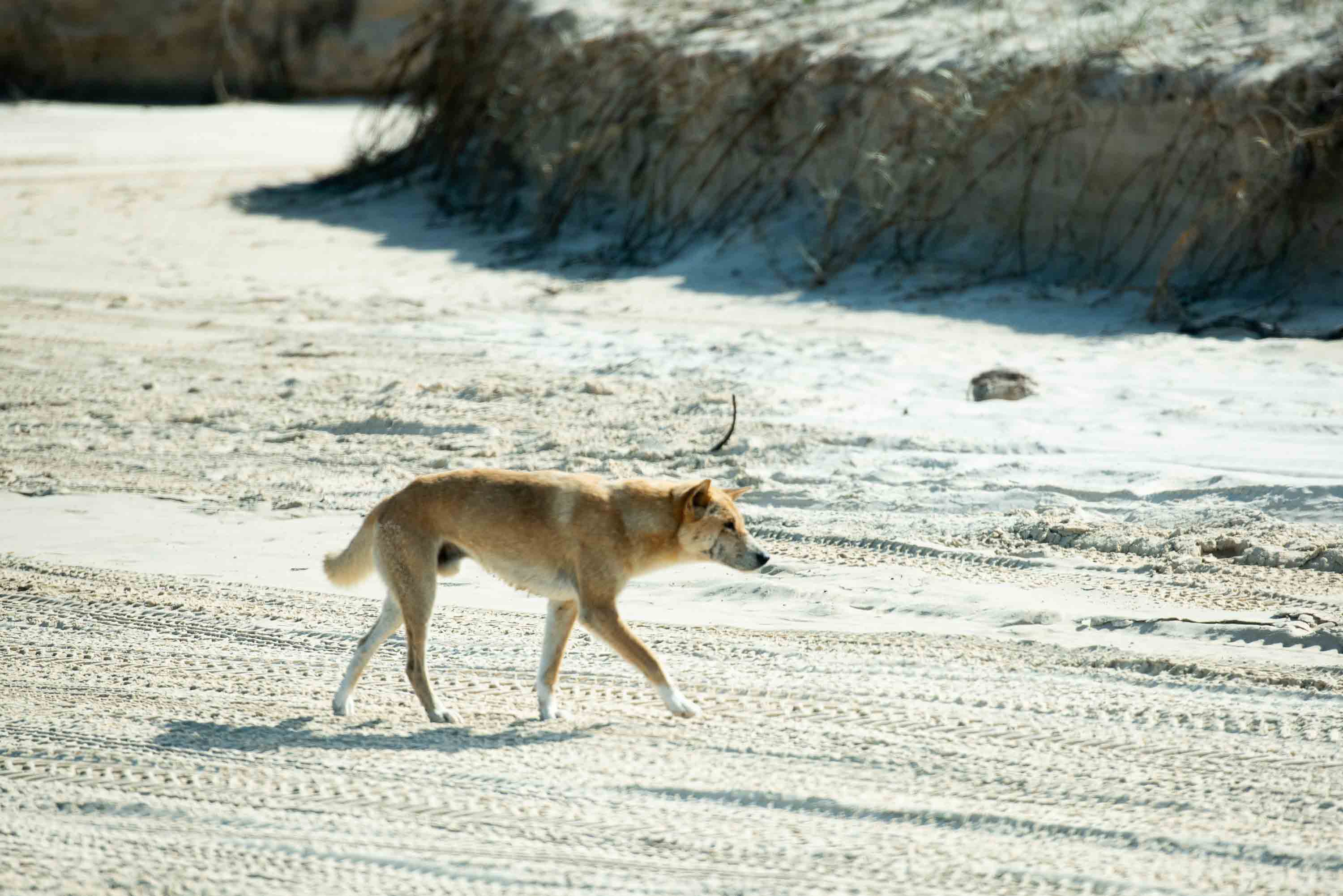
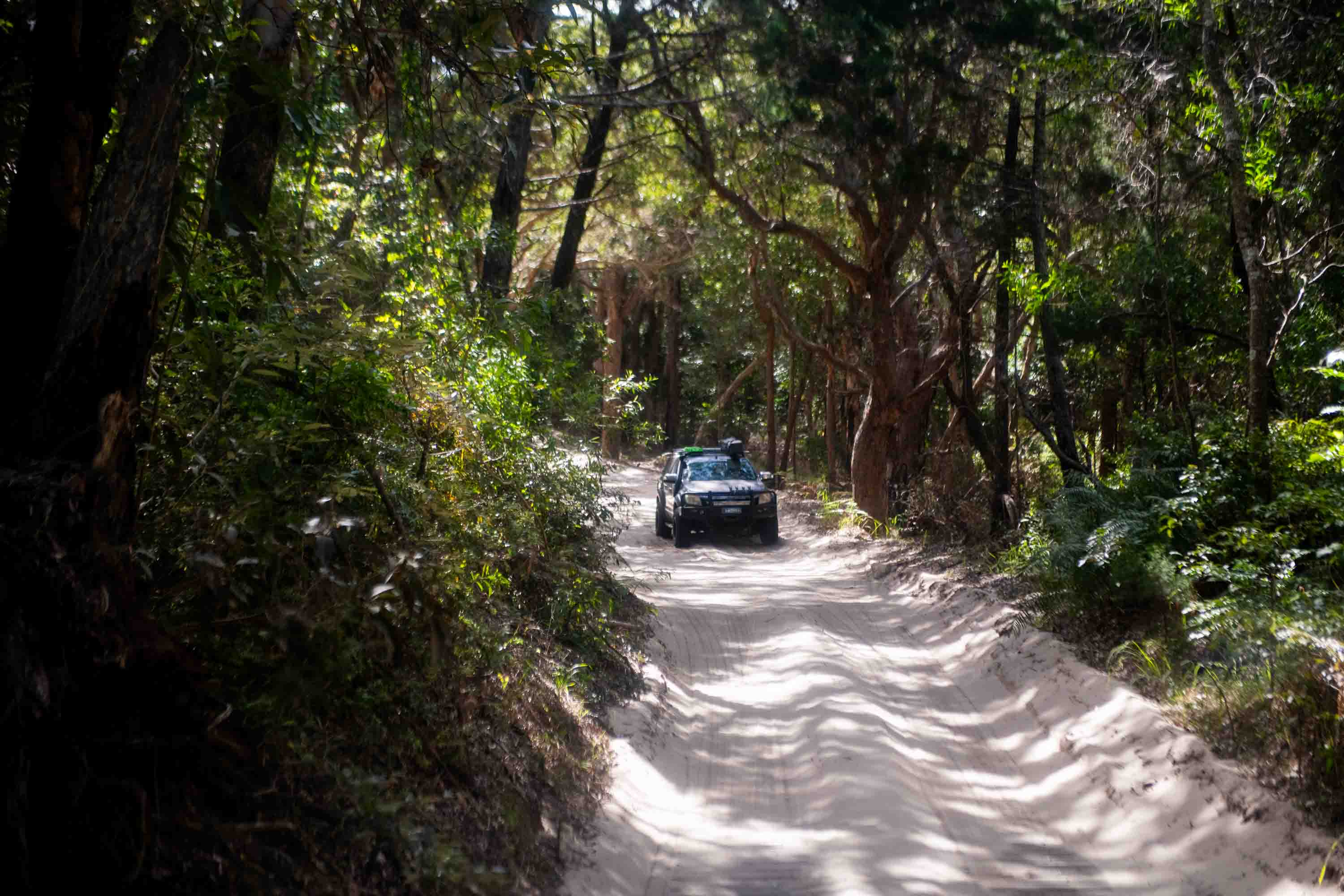
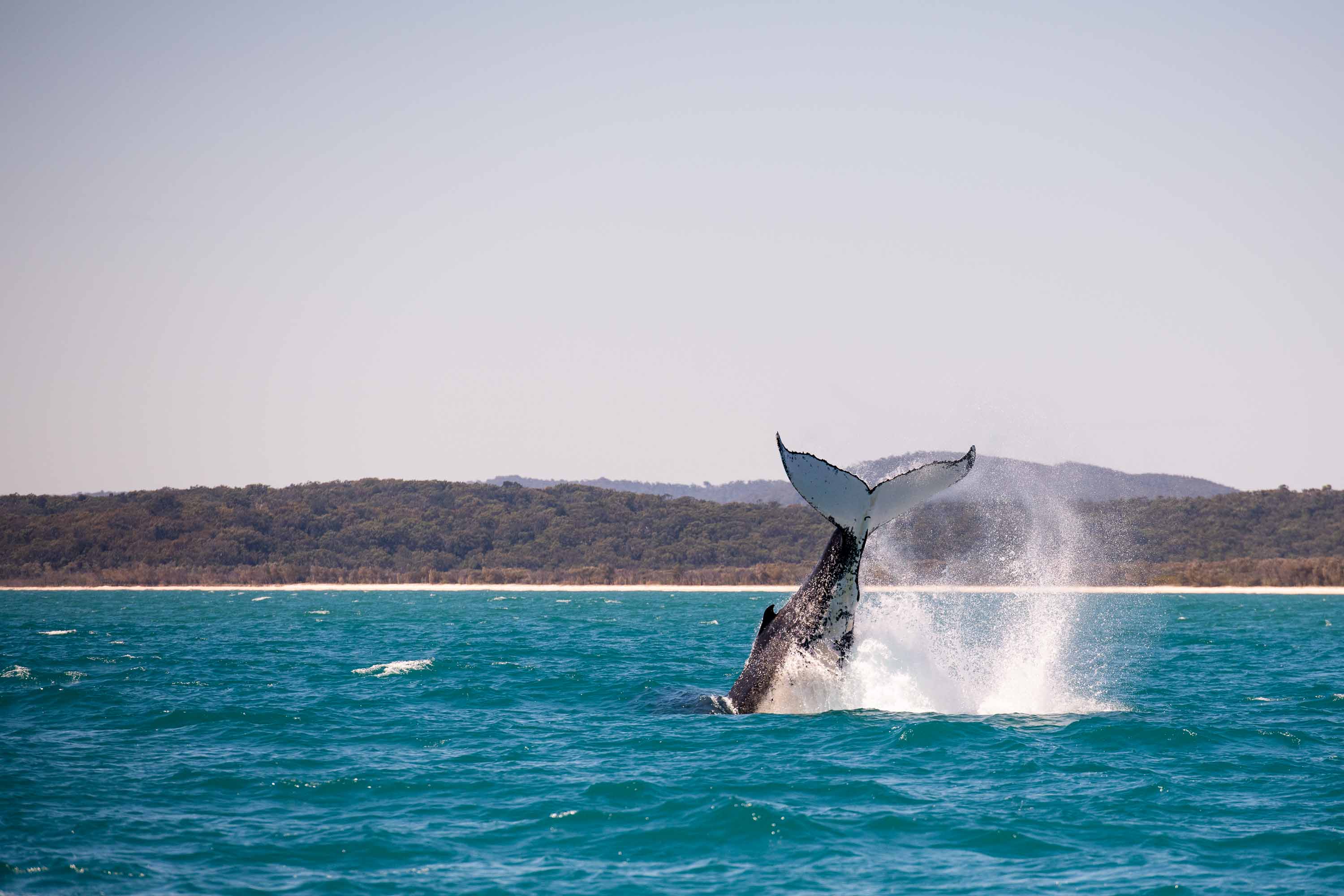
As we walk along a rainforest boardwalk with our guide Martin Goldsbury, I ask what he loves most about the island, “I love driving along the beach—there’s the whales, the dingoes, and then you’ve got the eagles, hawks and falcons,” he says. “You know, people, they get off the barge when they land here and it’s like, ‘Wow, we made it’. There’s no bitumen, no signal in some areas—it’s still a bit of a frontier.” I see what he means. As we hurtle along the ‘roads’ made entirely of sand, there’s a sense that despite a robust tourism industry, this is where nature and wildlife reign supreme.
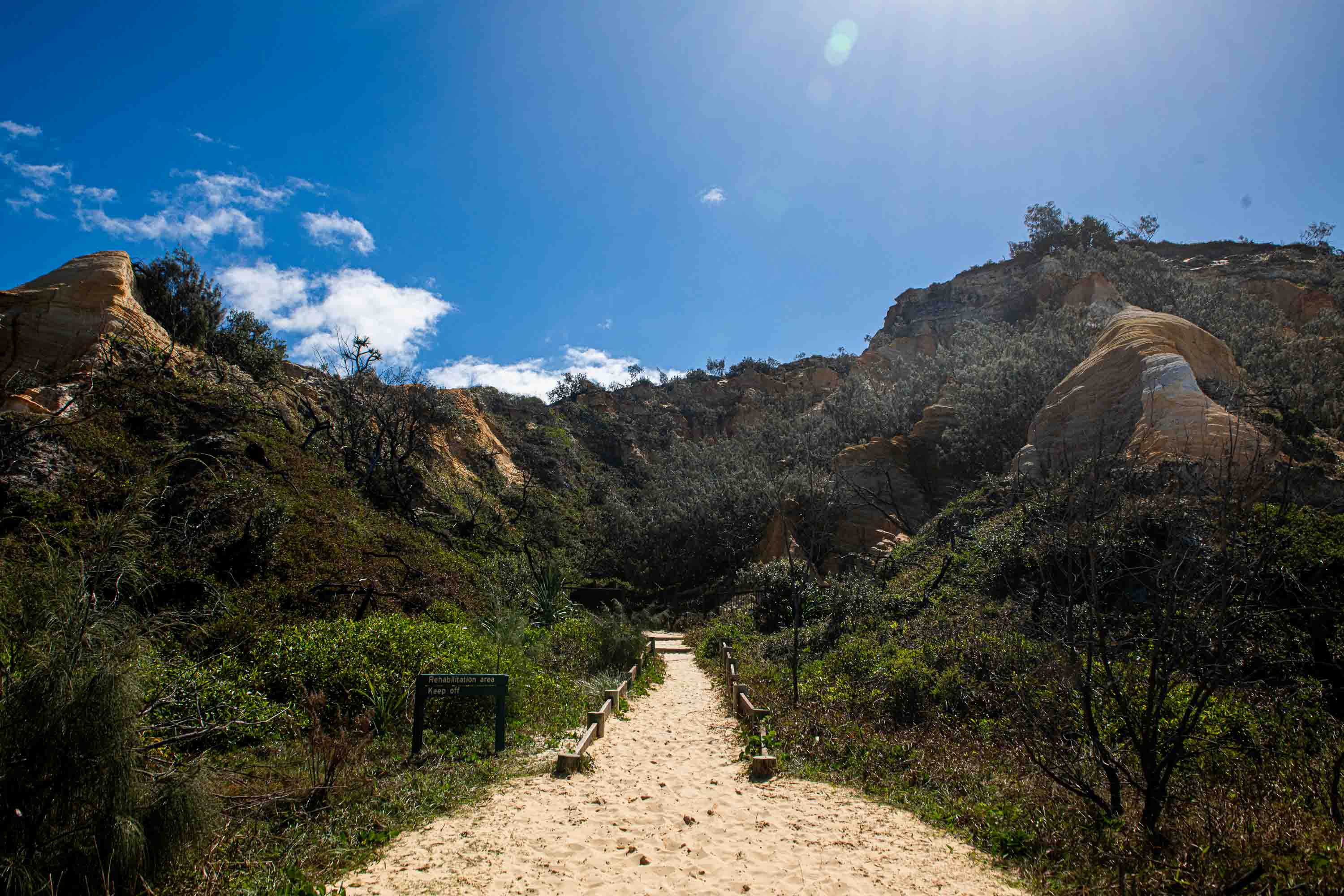
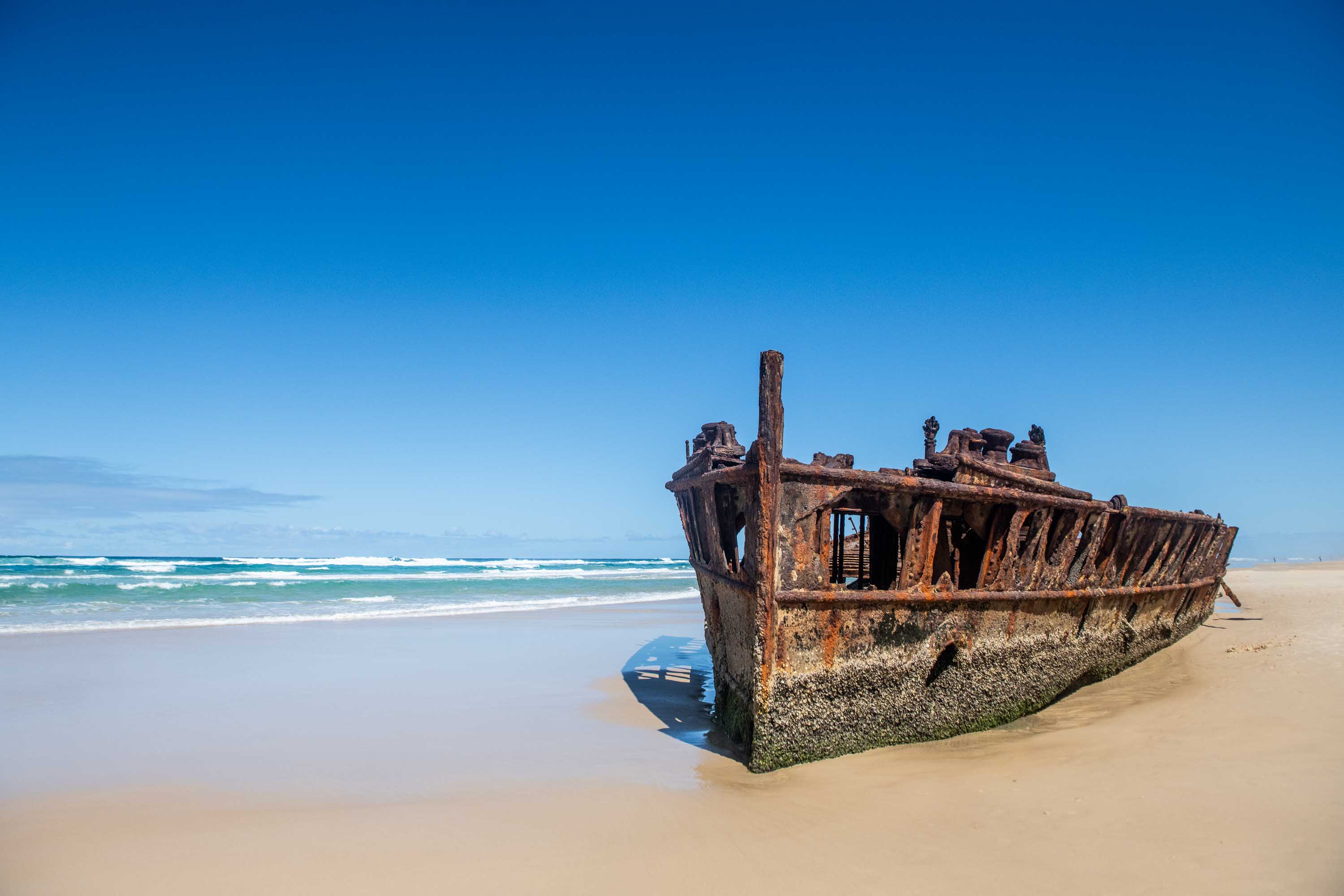
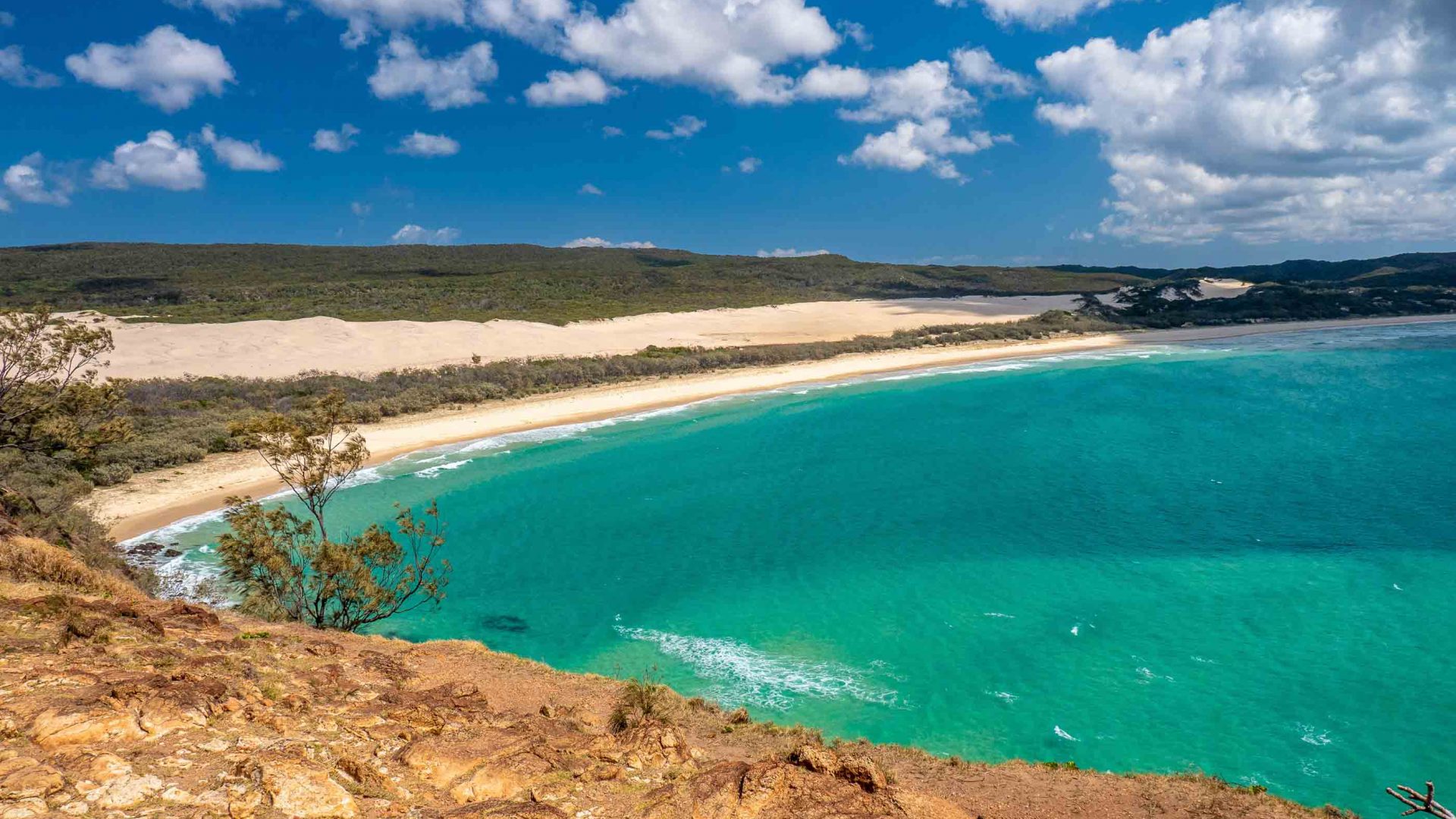
After an electrifying drive across 75 Mile Beach, we stop to admire the rusting yet hauntingly beautiful hull of the shipwreck SS Mahone, which ran aground during a cyclone in 1935, and the sand dunes, believed to be some of the oldest in the world, he explains. Dating back some 900,000 years, they’re formed of ancient sands that originated in eroded Antarctic mountains, later transported through ocean currents over milennia. In some areas, iron rich minerals have formed layers of color—red, orange, brown and yellow—a striking design against the blue sky.