On a recent visit to southeastern India, journalist and photographer Nicola Zolin finds himself at Auroville—an experimental, international township established in the late ‘60s. But is it the utopia once dreamed of?

On a recent visit to southeastern India, journalist and photographer Nicola Zolin finds himself at Auroville—an experimental, international township established in the late ‘60s. But is it the utopia once dreamed of?
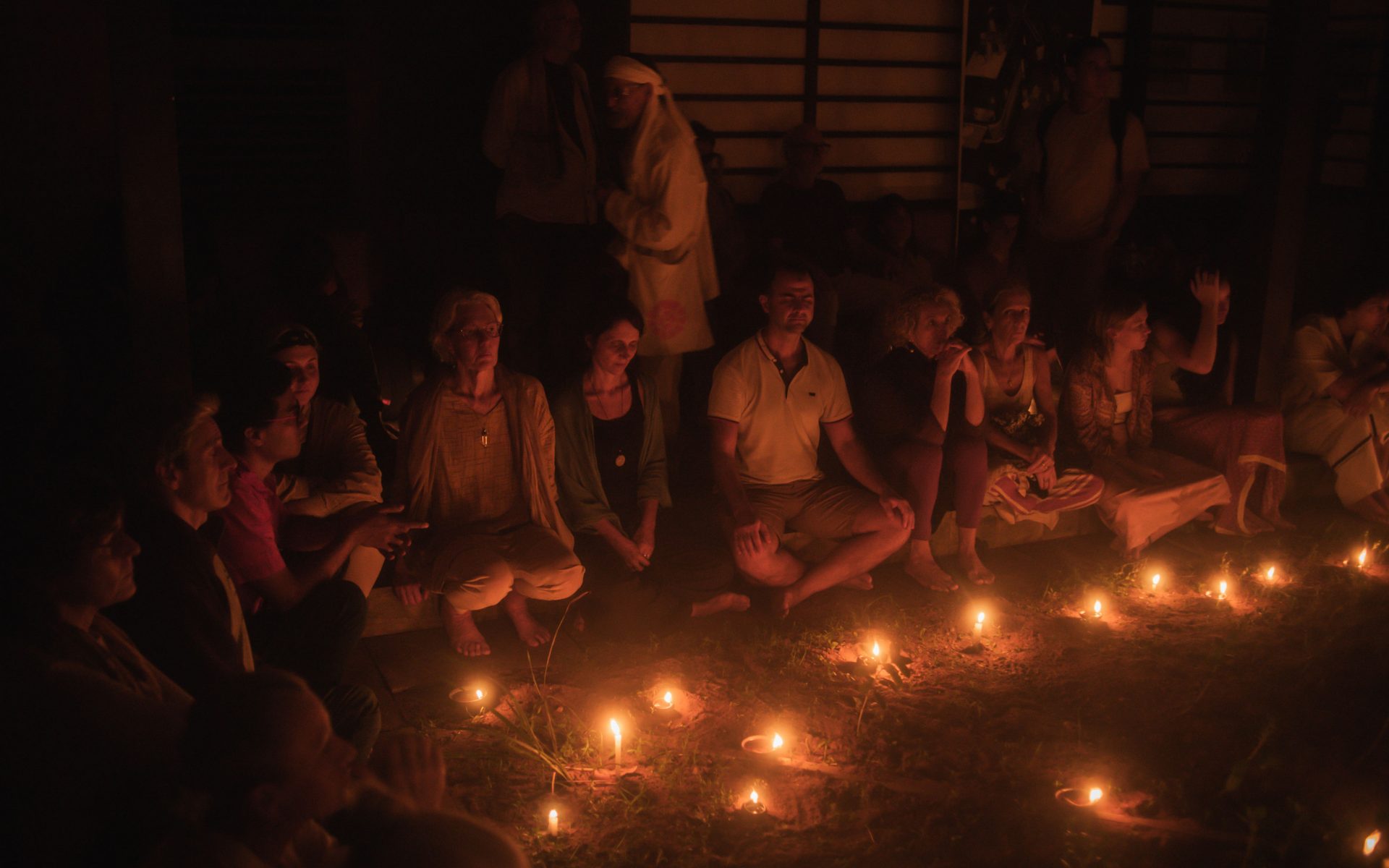
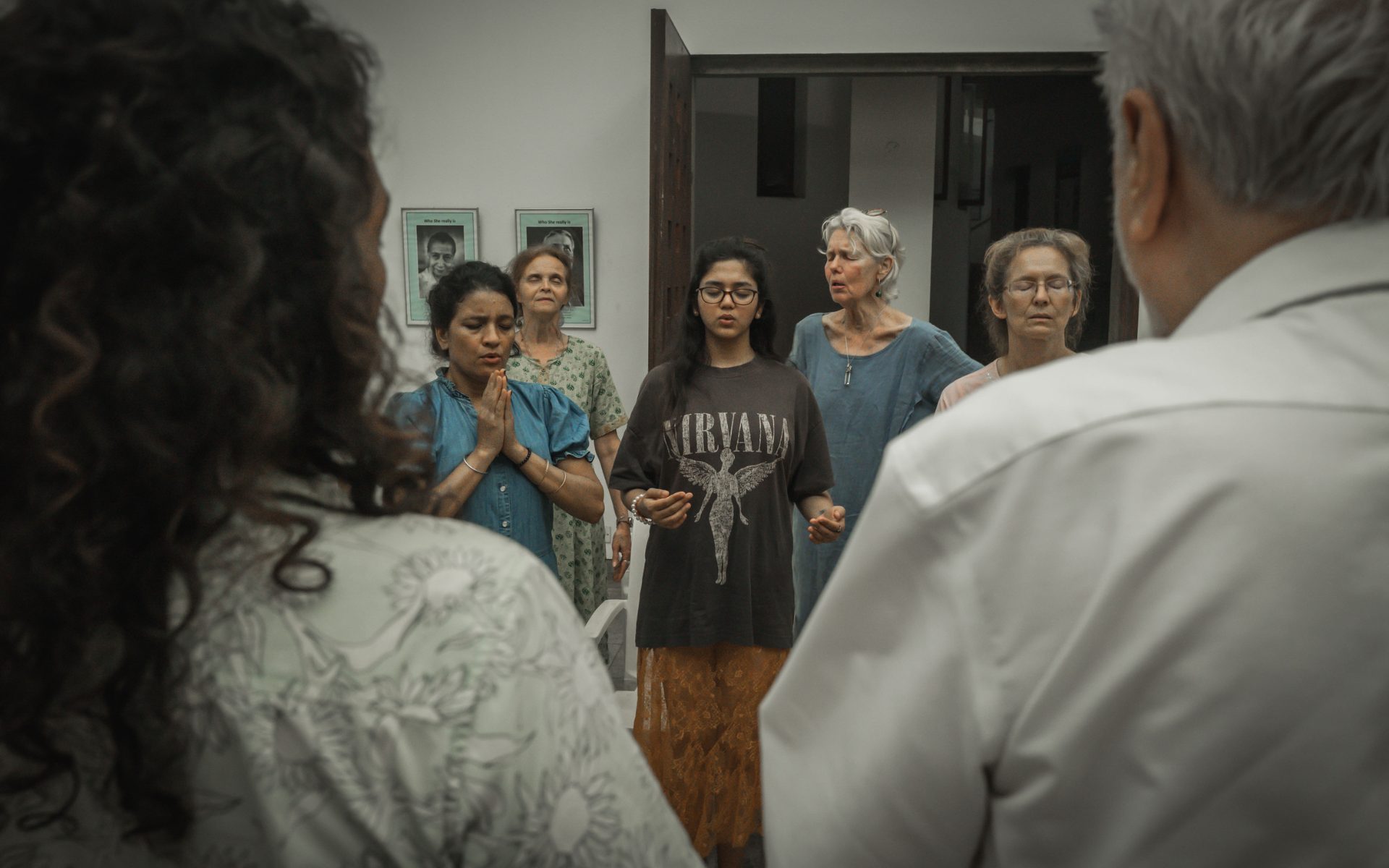
It’s New Year’s Eve when I arrive in Auroville. Hundreds of candles flicker in concentric circles around silent bodies seated in meditation. In the shifting light, I recognize an old friend who embraces me with the fervent warmth particular to spiritual enclaves. “It’s wonderful you arrived tonight,” he says with prophetic certainty.
He tells me there’s a beach gathering happening outside Puducherry (Pondicherry), the neighboring town. We ride through southern India’s darkness on motorbikes, past banyan trees and busy alleys, until we reach a wild stretch of beach facing the Indian Ocean. Someone has built a bonfire from driftwood. Flames illuminate young travelers with disparate stories and destinations, speaking in a blend of languages. Many have traveled across the country through yoga retreats, meditation centers, and ashrams. They speak with near-mystical enthusiasm about India, and about Auroville itself.
Then a thin, cross-legged young man voices: “This place is actually falling apart.” Around the fire, smiles stiffen. Nobody comes to Auroville searching for conflict. Everyone arrives looking for utopia.
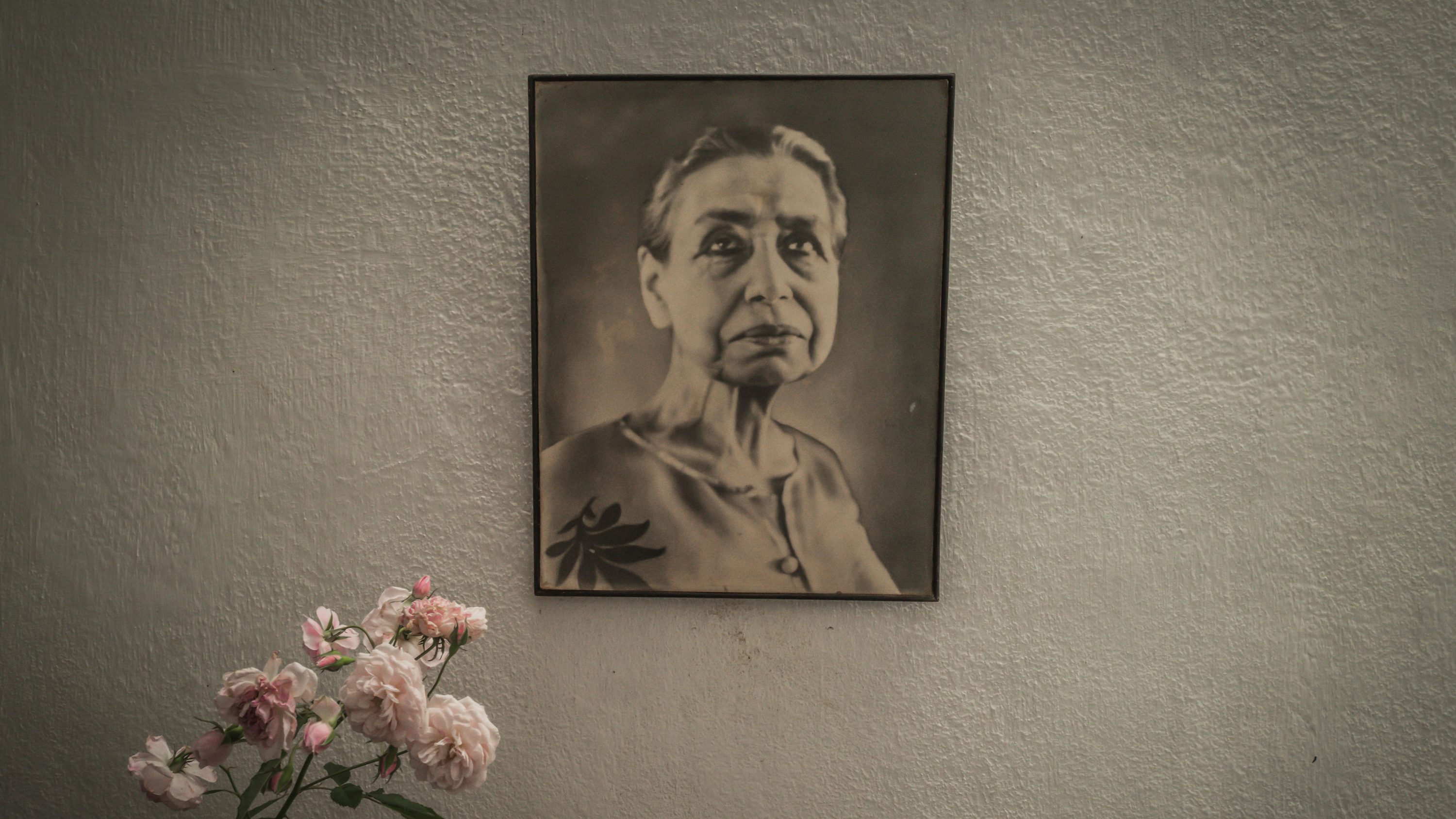
In 1968, French-born spiritual teacher Mirra Alfassa, also known as ‘the Mother’, inaugurated an experiment unlike any other: A universal township beyond borders, religion, ownership, and nationalism.
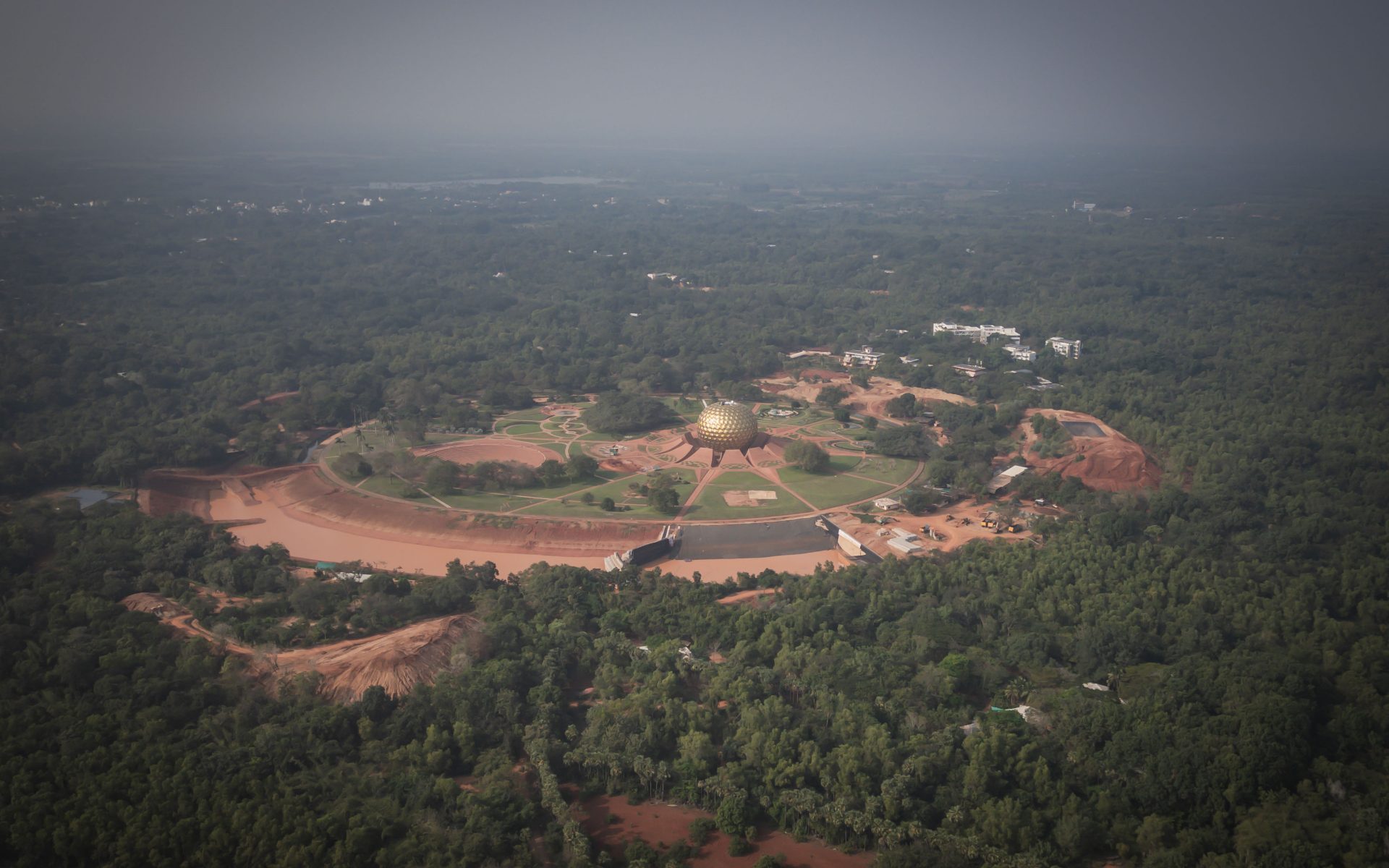
Soil from countries around the world was poured into a ceremonial urn. Humanity, symbolically, became one organism. What emerged was not a futuristic city, but a sprawling 7.7 square mile (20 square kilometer) forest eco-community scattered with experimental homes, meditation spaces, workshops, farms, and dusty pathways. The land and assets of Auroville are held by a Government-appointed body, the Auroville Foundation. But all is considered collective property, with no private ownership existing within Auroville.
The project emerged from the spiritual philosophy of Sri Aurobindo, one of the most influential Indian philosophers of the 20th century, and the Mother, who together believed humans capable of evolving beyond greed, ego, and division. The city itself was to become a laboratory of consciousness. But did it succeed?
“Water was scarce, so we built rainwater harvesting tanks, earthen dams, and groundwater recharge systems. Seeing water return to the wells felt like witnessing a process of healing. We live with the forest, not separated from it.”
- Natasha Storey, Auroville resident
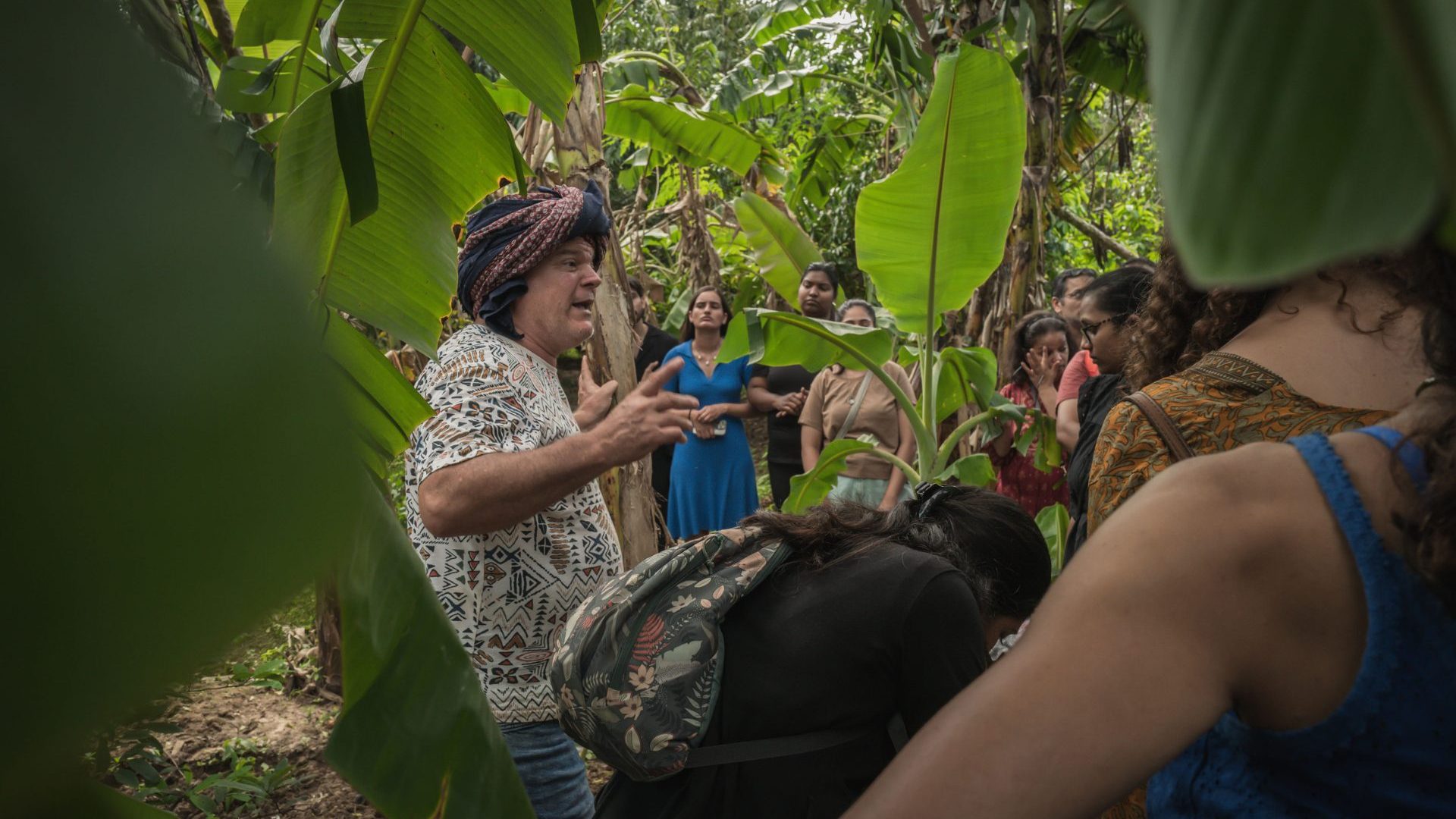
In the following days, I try to learn more by talking with one of Auroville’s last surviving pioneers, Frederick Schulze Buxloh. In 1959, as a restless young German obsessed with German writers Hermann Hesse and Arthur Schopenhauer, Buxloh boarded a cargo ship bound for India. He arrived in Puducherry, and soon met the Mother at the Sri Aurobindo Ashram.
“When she looked into my eyes, everything collapsed,” he says. “I thought I feared nothing. I was arrogant. Then suddenly all the masks disappeared.”
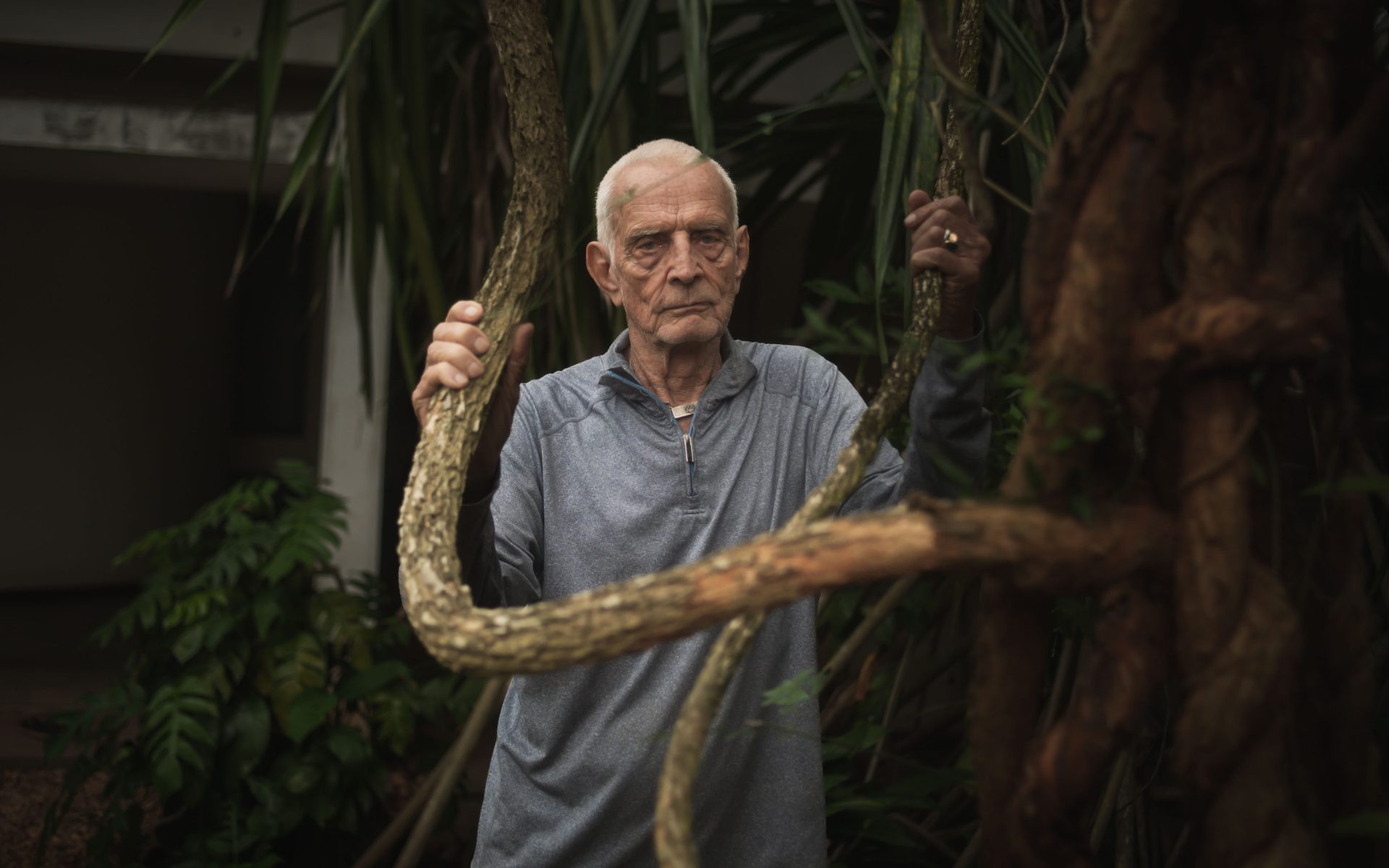
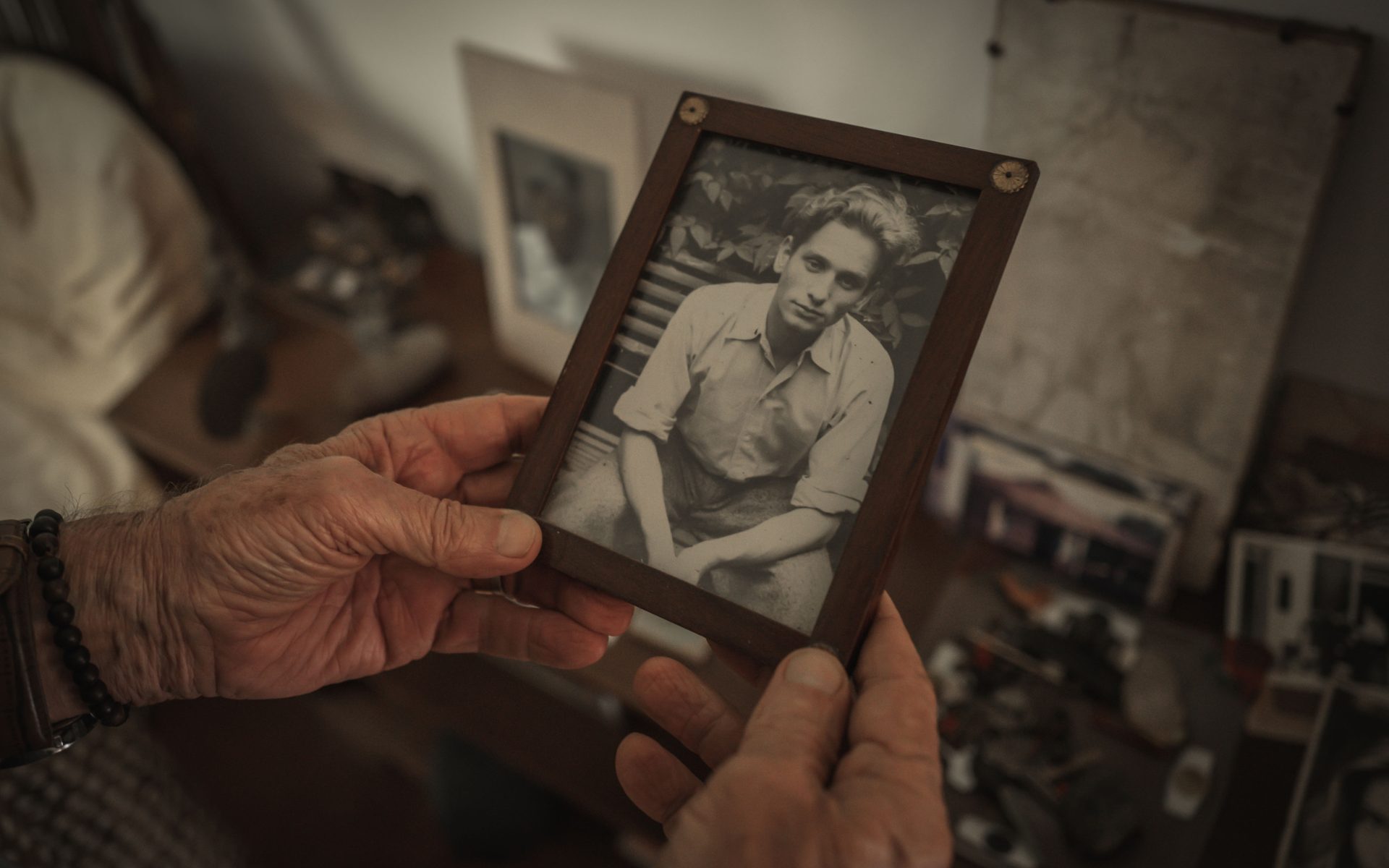
Buxloh built Auroville’s first house. “We were idealistic wanderers, hippies, and spiritual seekers who arrived with little money and almost no practical skills,” he tells me. “But we had fire inside us. Back then we knew who the enemy was. Today, some young people carry it within themselves. We transformed a land that was dry, almost lunar.”
Today, Auroville houses around 3,500 residents, from hundreds of different nations—significantly less than the 50,000 envisioned by French architect Roger Anger, who drew up the township’s original master plan.
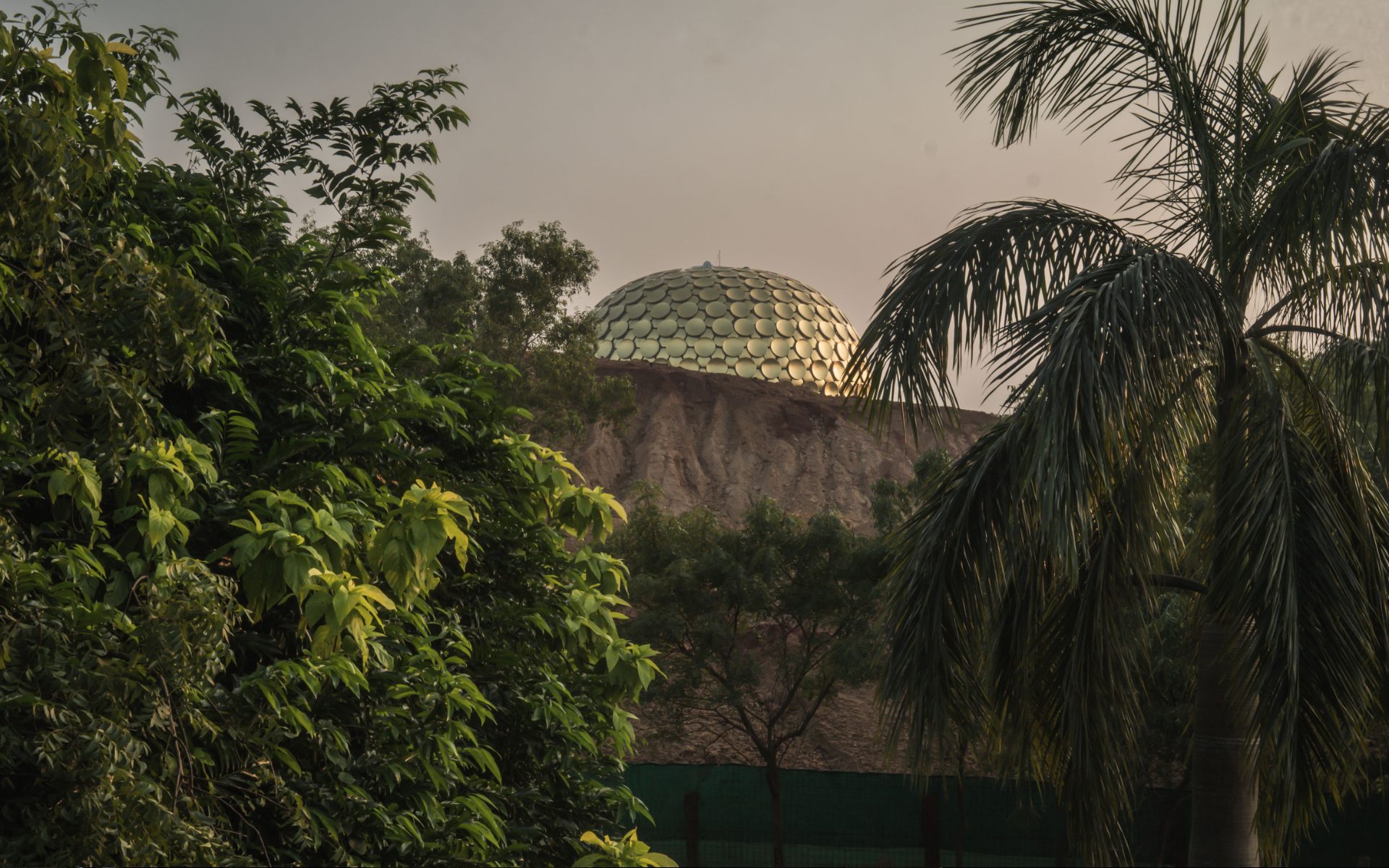
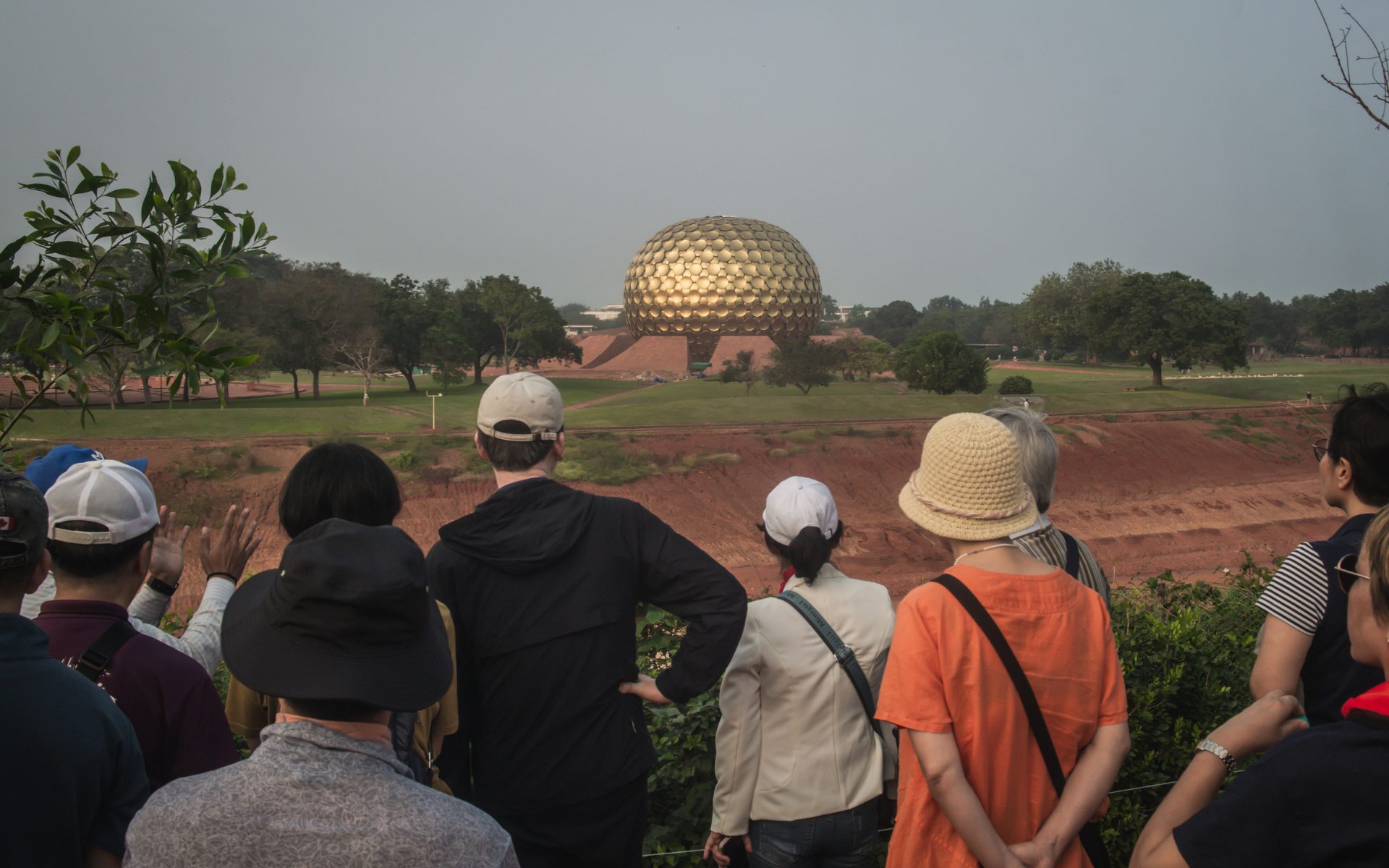
Construction began in 1971 and continued for decades. At the town center stands the Matrimandir, Auroville’s golden sphere, surrounded by concentric zones resembling a galaxy. There’s the 12 gardens, each dedicated to a different ideal, such as peace, harmony, and light; the white marble meditation center with its crystal globe suspended from the roof’s center; the residential, cultural, industrial and international zones span outwards; and then there’s the green belt, a forest planted by Auroville residents in the early ‘70s.
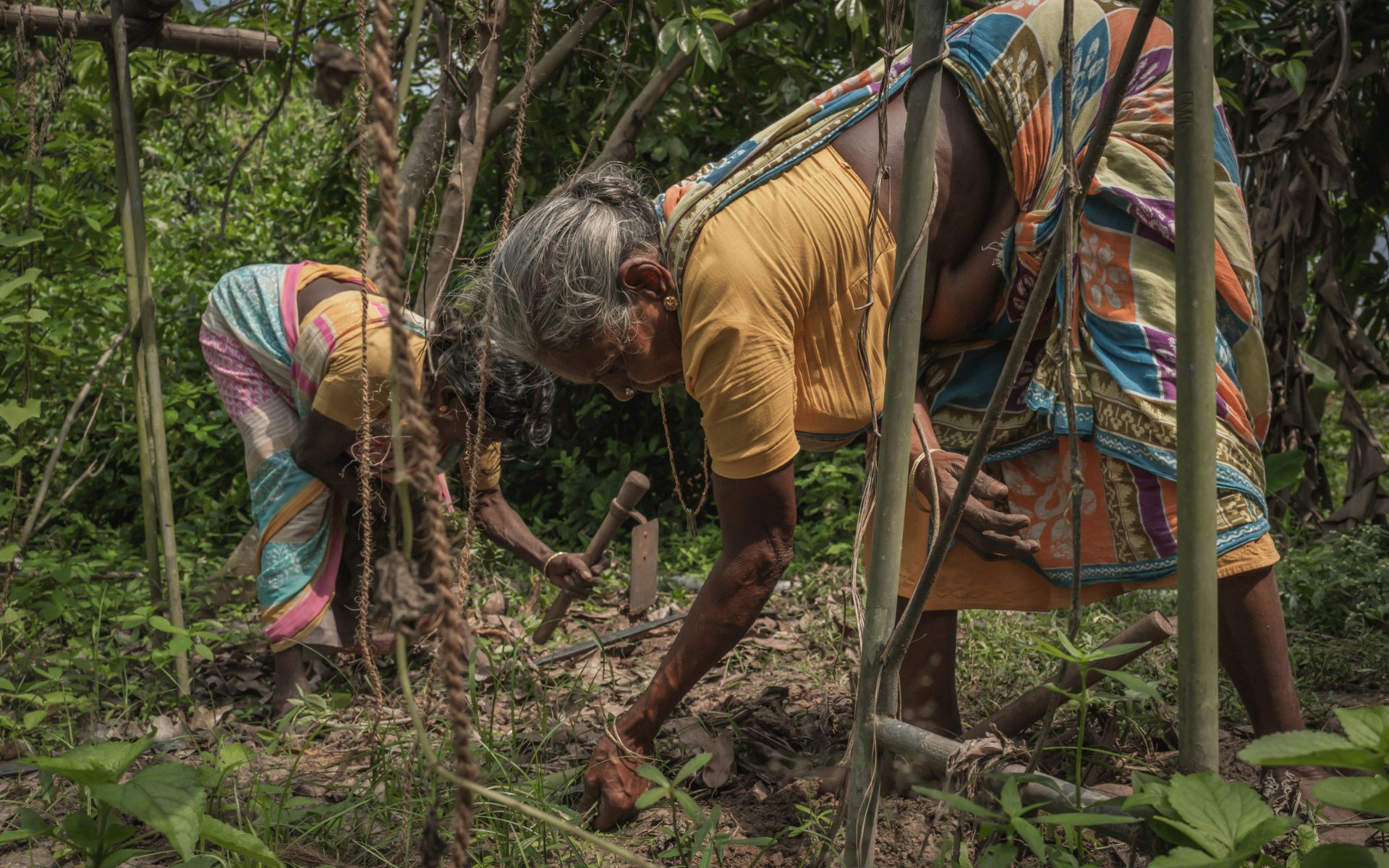
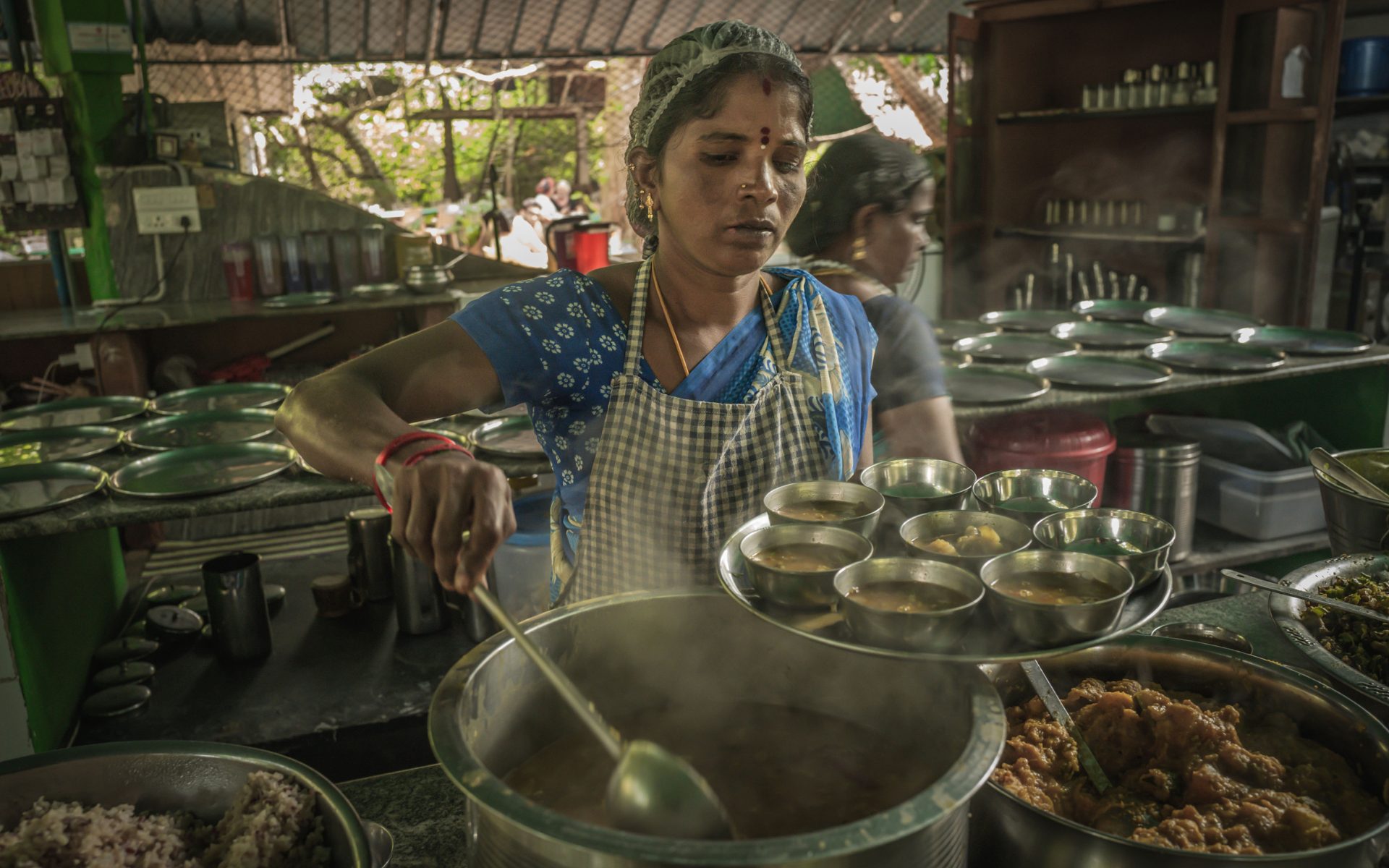
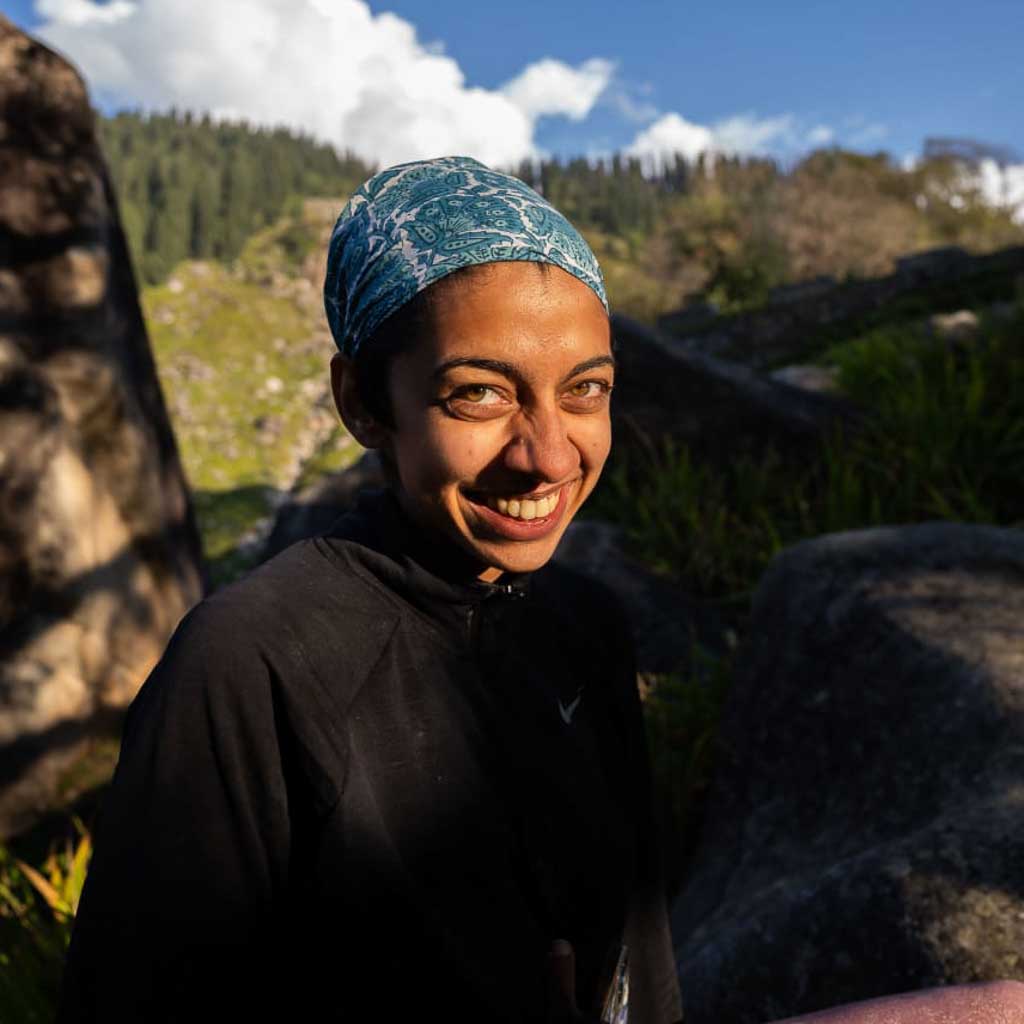
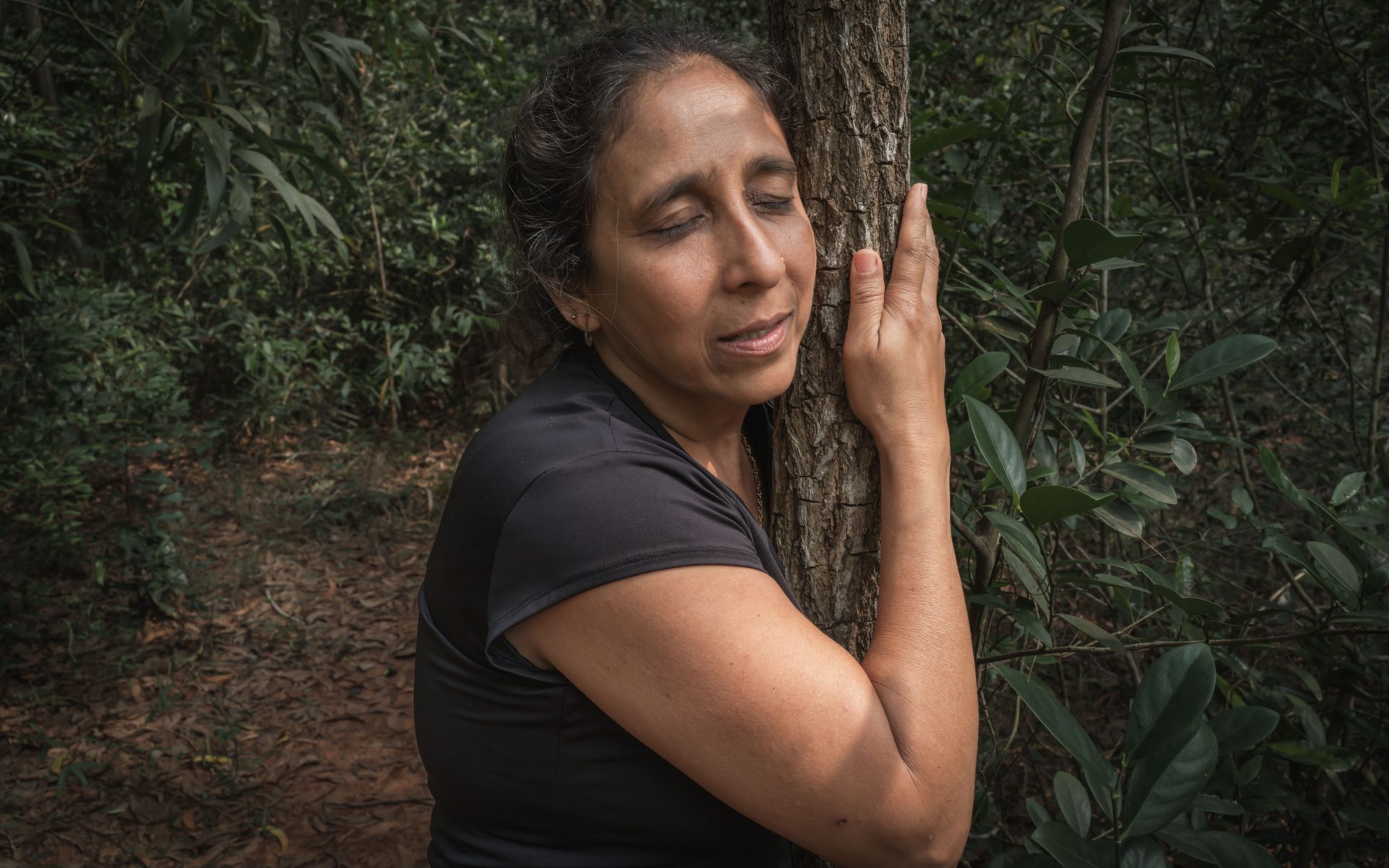
According to Natasha Storey, a resident of Auroville’s ‘Evergreen’ community named for the ‘Evergreen Forest’, the land indeed became a living forest. “At the beginning, people planted hundreds of trees every day. Water was scarce, so we built rainwater harvesting tanks, earthen dams, and groundwater recharge systems. Seeing water return to the wells felt like witnessing a process of healing. We live with the forest, not separated from it.”
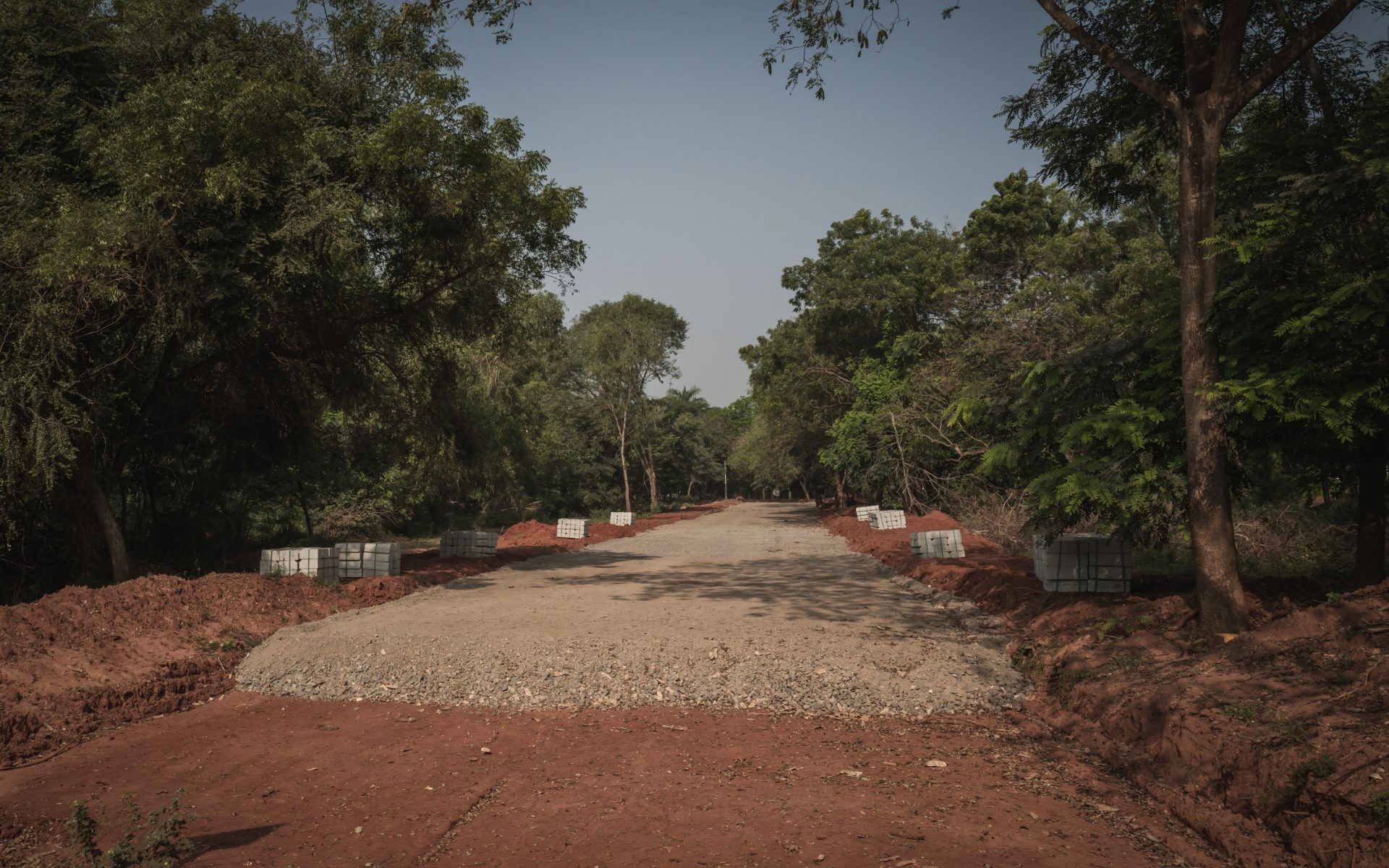
Then, one morning in December 2021, bulldozers forcibly entered forested areas to begin construction on a new radial road intended to expand the city. “I stood in front of the bulldozers asking that the decisions of the residents’ assembly be respected,” Storey tells me. “But the process had clearly been bypassed.”
The demolitions continued over the following days. It turns out the greenlight had come from public servant, Dr. Jayanti Ravi, who had been appointed as the new Secretary to the Governing Board of the Auroville Foundation earlier that year.
“Every crisis can be useful. These are precisely the moments that accelerate evolution. We learned not to possess anything and to understand a form of love that is not possession but unity.”
- Frederick Schulze Buxloh
The Auroville Foundation was created as an autonomous body corporate in 1988 by an Act of Parliament. Referring to the Auroville Foundation Act, there are three bodies that are expected to work together to develop the project of Auroville: the Residents’ Assembly (consisting of residents 18 and above); the Governing Board (appointed for a 4-year term by the Central Government of India); and the International Advisory Council (eminent scholars and elders from across the globe, also appointed by the Indian Government). This construction, approved by Dr. Ravi, sidelined the community’s well-established decision-making bodies.
Inside the offices of the Auroville Foundation, few people are willing to speak openly on the new ring road project. “We don’t have the right to talk about these matters,” a European official whispers while accompanying me to the door, visibly unsettled by my questions. “We can’t say anything against the Foundation.”
Some residents have denounced increasing control over internal communications—I’m told email accounts have been changed and administrative access stripped without explanation—and a growing centralization of power, which includes influence over the visa application process. Auroville has a special visa category for those wishing to live or volunteer there. While the visa is issued by India’s immigration authorities, it requires a recommendation letter from the secretary of the Auroville Foundation. There are accounts of this letter being withheld.
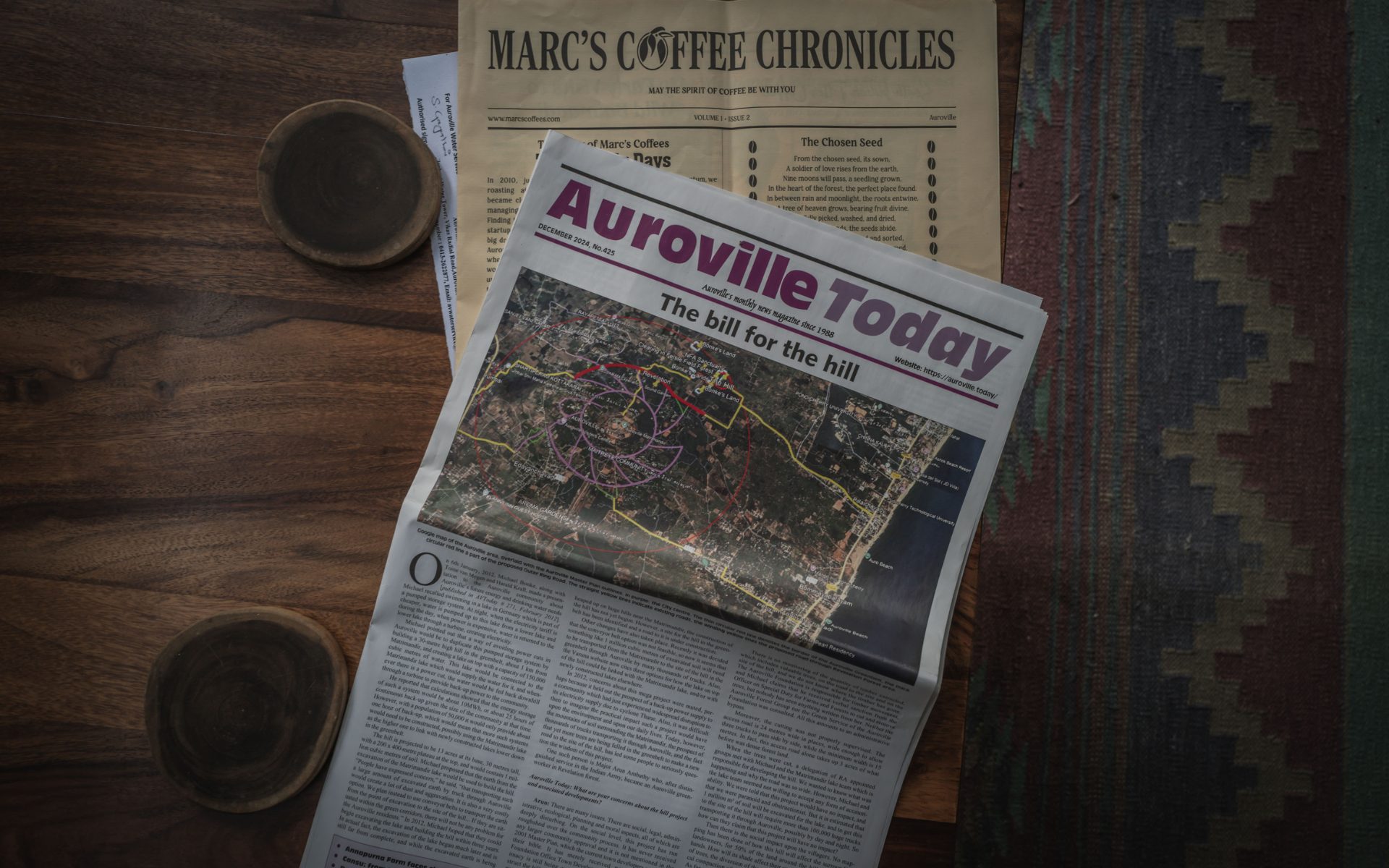
Leafing through the community’s monthly newspaper, Auroville Today, I find appeals for reconciliation alongside warnings against polarization. Supporters of the expansion argue that the developments merely fulfill the Mother’s original urban vision for Auroville being a community for 50,000 residents.
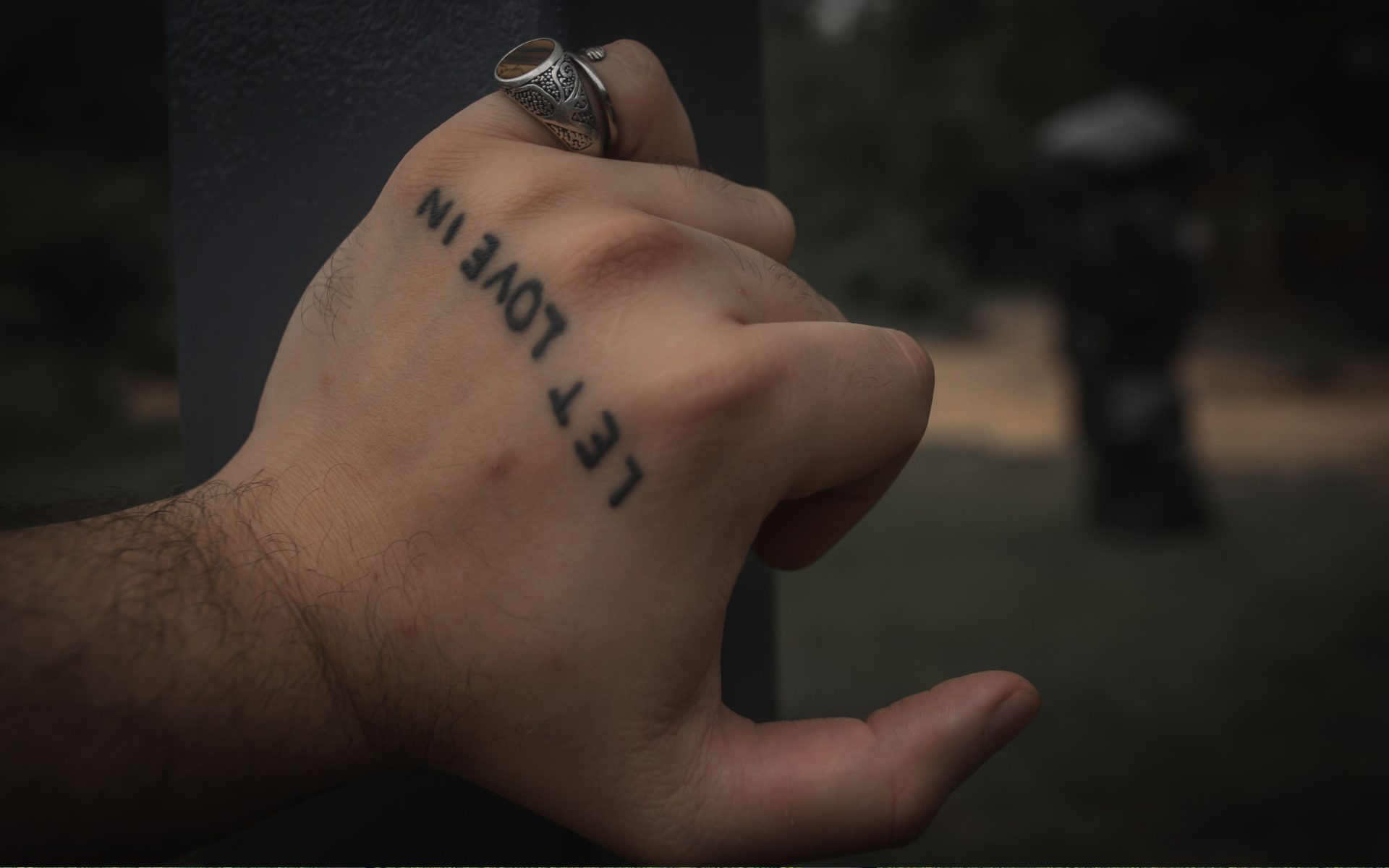
“Every crisis can be useful,” muses Buxloh. “These are precisely the moments that accelerate evolution. We learned not to possess anything and to understand a form of love that is not possession but unity. Here I learned to let everything go.”
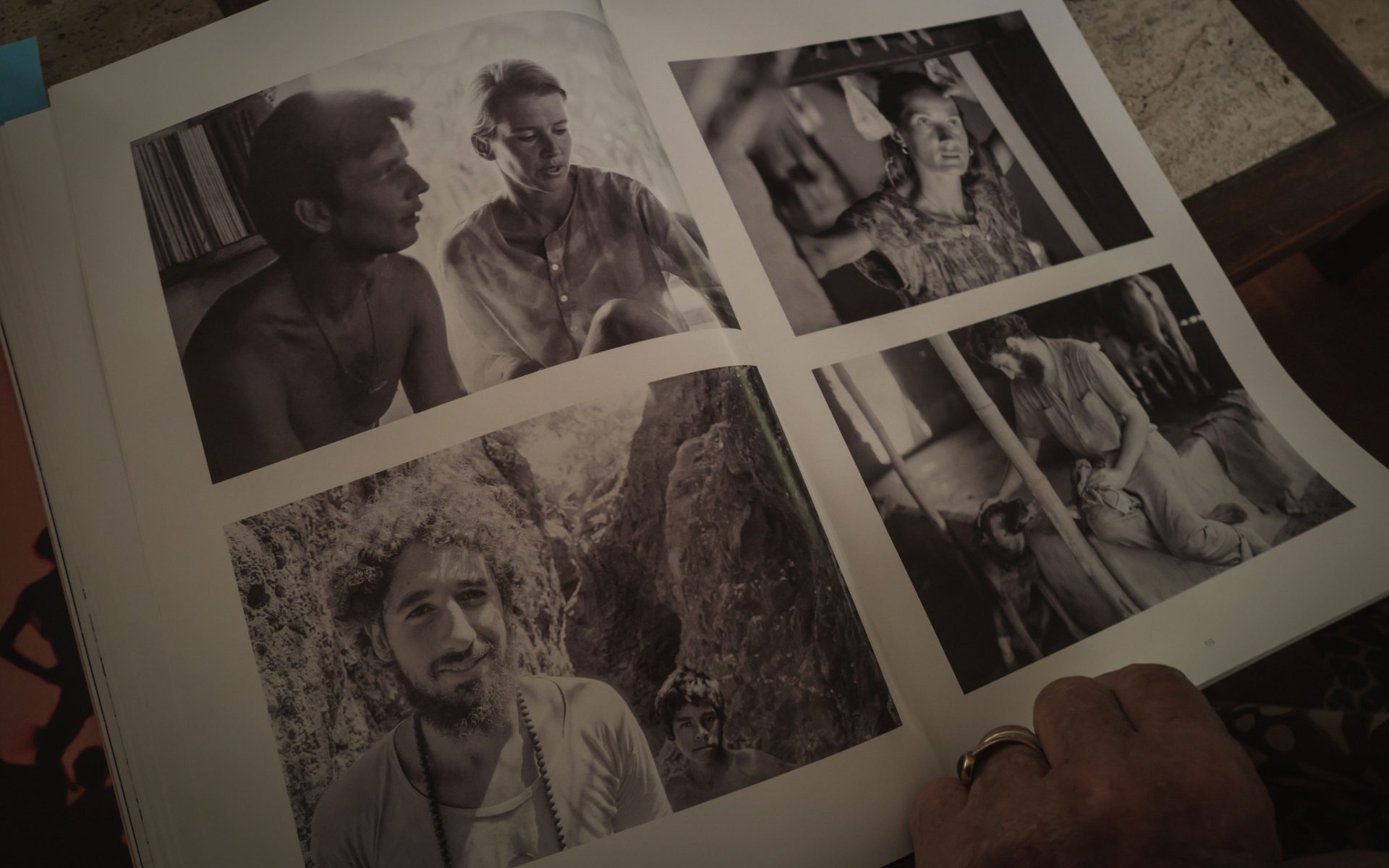
Then, while browsing the archival photobook AUROVILLE 1968-2018 he adds: “Today I see Auroville differently. Maybe the time has come to carry this experience beyond Auroville itself. Many other utopian places like this one are emerging all around the world. The experience of what we have done here will never be lost.”
His words resonate deeply within me. Spending time in Auroville, I have come to recognize this township as a powerful symbol of how a new humanity could live together. Yet the current situation also highlights the difficulties inherent in nurturing such an ambitious vision. And still, I see a growing number of people finding the courage to live in alignment with their beliefs, creating small projects that become foyers of an emerging world.
****
Adventure.com strives to be a low-emissions travel publication. We are powered by, but editorially independent of, Intrepid Travel, the world’s largest travel B Corp, who help ensure Adventure.com maintains high standards of sustainability in our work and activities. You can visit our sustainability page or read our Contributor Impact Guidelines for more information.

Nicola Zolin is a photojournalist and writer, interested in the social and environmental transformations at the borders of Europe, Middle East and Asia. His stories deal with the idea of freedom and liberation from society's structures.