Writer and dark sky advocate Megan Eaves visits a remote community in northern Namibia to see how they are using virtual reality technology to save their Indigenous knowledge of the night sky.


Writer and dark sky advocate Megan Eaves visits a remote community in northern Namibia to see how they are using virtual reality technology to save their Indigenous knowledge of the night sky.
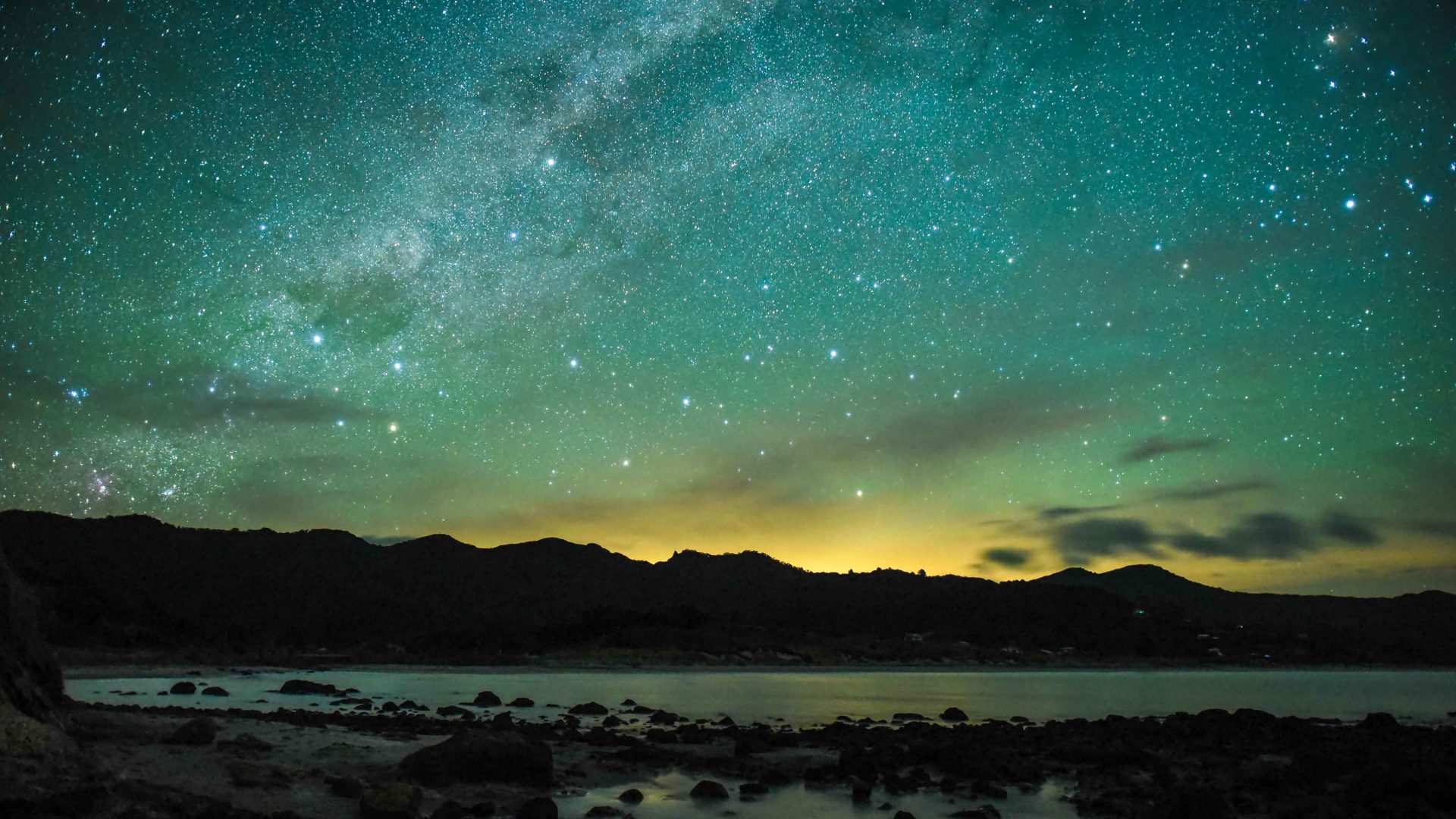
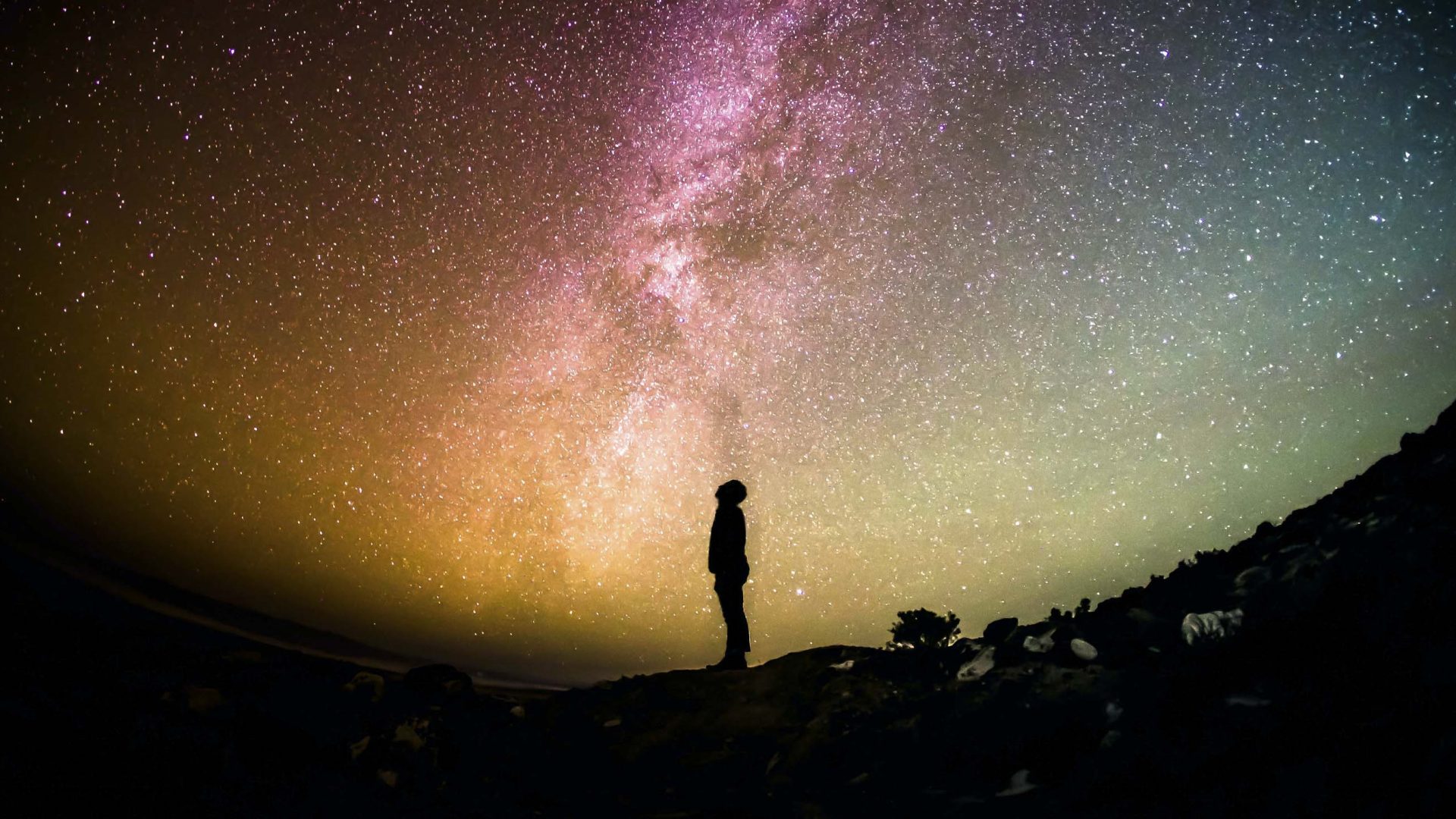
On an inky night, I stood in a wide clearing of Namibian sand and stubby dry grass. The Kalahari Desert spread out into the blackness, and overhead, the sky was blanketed in stars, punctuated by a cross-shaped constellation and two smudges. I recognized them as the constellation Crux and two galaxies, the Magellanic Clouds—night sky objects visible only in the Southern Hemisphere. Above me, the Milky Way traced a bright arc.
Nearby, a man whose face was illuminated by the orange glow of a small fire motioned for me to sit down, as he spoke in clicks—the language of the Indigenous San people. Suddenly, a translator spoke from somewhere above or behind me: The man was telling a story about the creation of the night sky.
“A long time ago, before there was day or night, two powerful gods—one of Light and one of Dark—created a special flying ostrich,” the voice relayed, “which flew around the unlit world, each day dropping one feather. The gods tied these feathers to a kite that showed if the bird was feeling hopeful or sad. After many years, the ostrich’s last feather flew high into the sky, glowing so brightly that it transformed into the Moon and stars. That’s how the sky was lit up, and the ostrich found its home among the stars forever.”
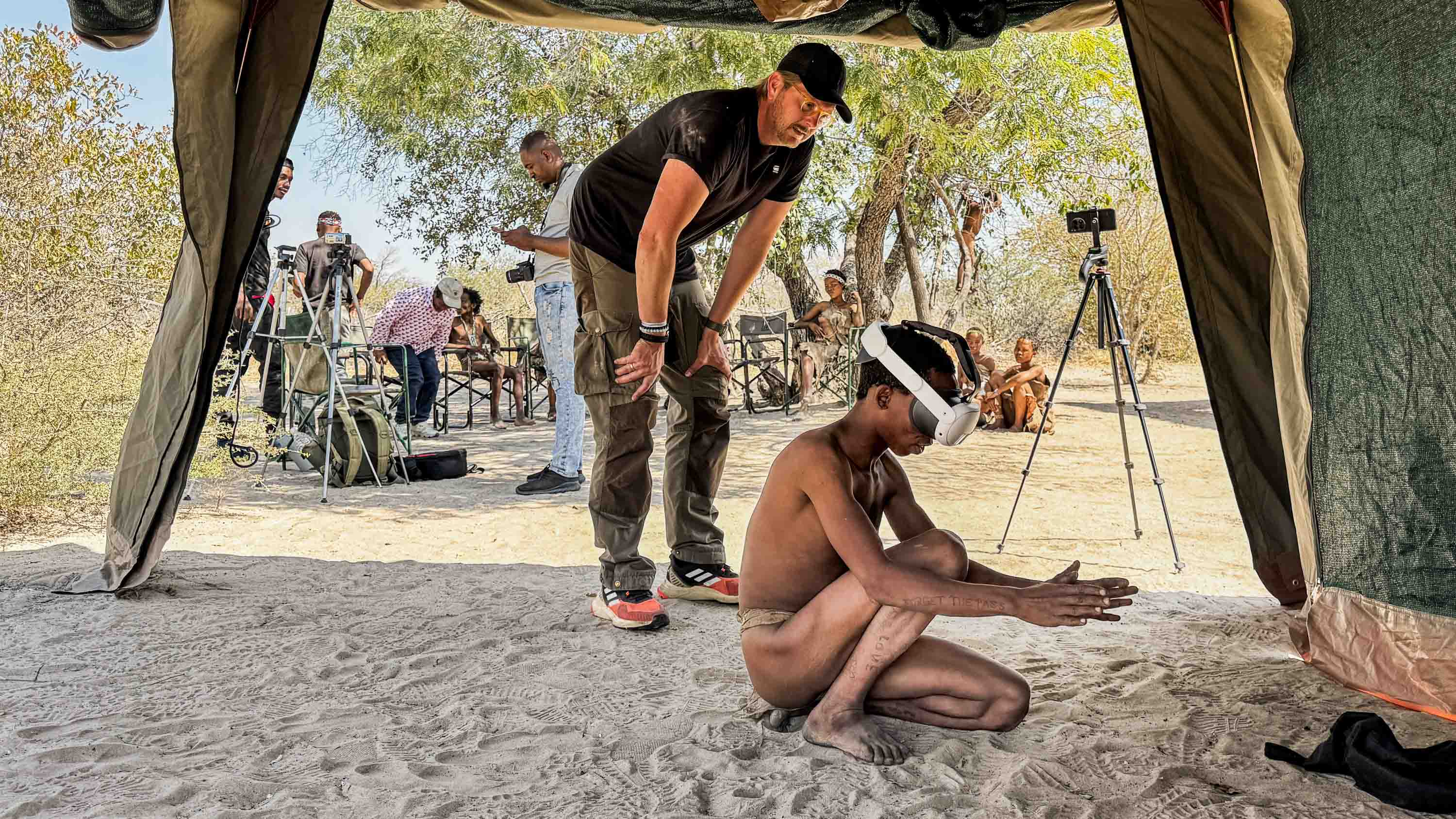
Suddenly, the night sky had disappeared. It was daylight, and I was standing in the reception area of the lodge where we were staying. I’d been using a virtual reality experience of San Indigenous skylore co-developed by tech researcher Kasper Rodil and his students at the Namibia University of Science and Technology (NUST) and Aalborg University in Denmark.
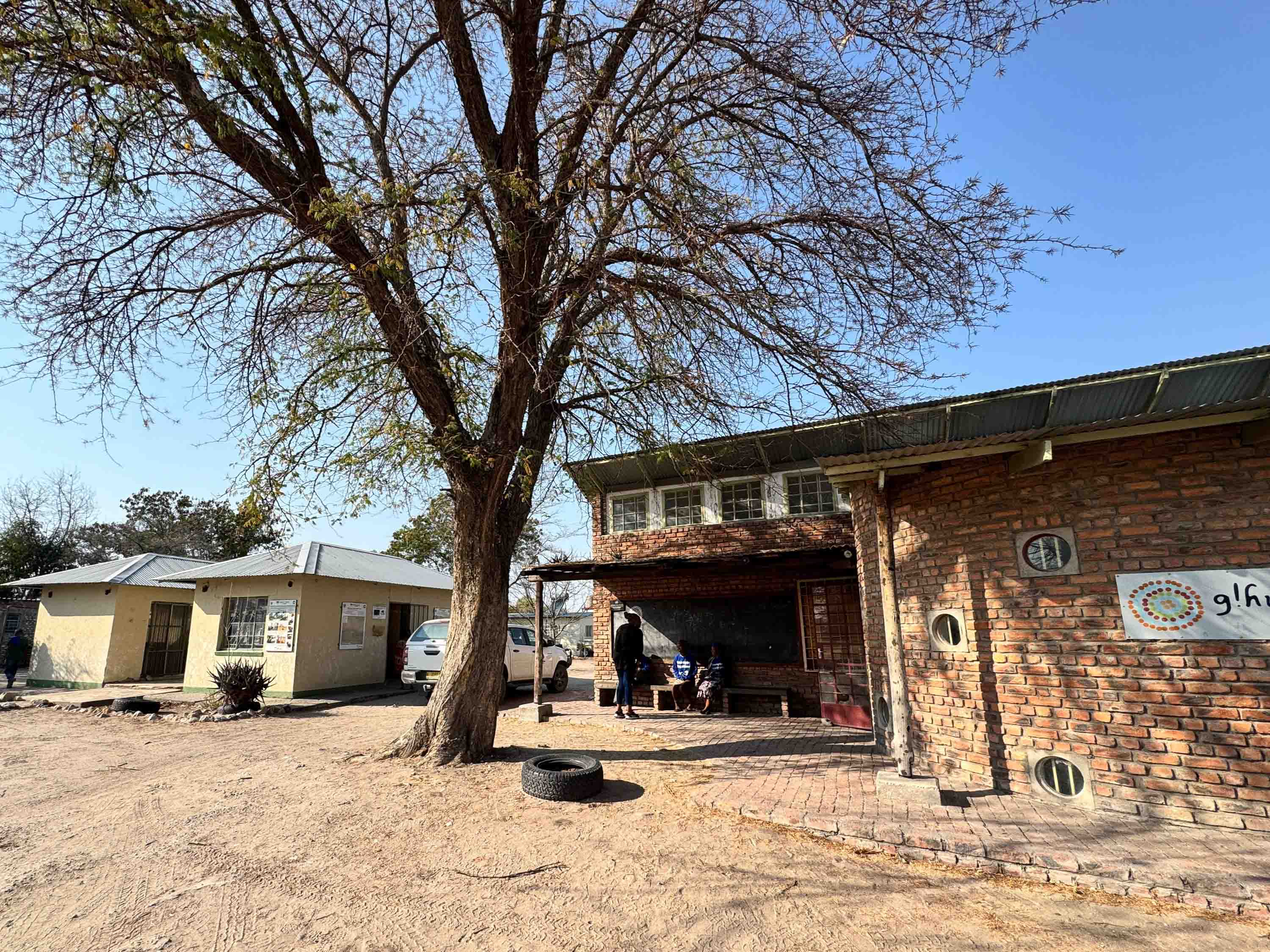
The San peoples have been living in southern Africa for around 60,000 years and are one of the oldest surviving modern societies. The term ‘San’ though is an exonym—a name outsiders have applied to a group of communities, mostly in what’s now Namibia and Botswana. The San have no collective term for themselves; instead, they refer only to their own localized communities. Rodil and I were visiting the Ju/’hoansi (or ǃKung) community, who live around Tsumkwe.
The Ju/’hoansi, and the San broadly, have been depicted many times in Western media, most notably in the 1980 film, The Gods Must Be Crazy, made by a white South African director, funded by apartheid government money, which spread numerous racist myths about the San peoples, including calling them by the colonial term, ‘Bushmen’. It’s also one of the few cultural reference points that many people, myself included, have for the San.
The film’s plot revolves around a Ju/’hoansi village thrown into chaos when a Coca-Cola bottle falls from a plane. Shot on location in Tsumkwe and starring a Ju/’hoansi man named Nǃxau ǂToma, it depicts the village chief on a zany journey to the ‘end of the world’ to restore their good fortune by returning the bottle to the gods. The film starts with a paternalistic voiceover narrating the culture of the Ju/’hoansi, or ‘Bushmen’ as he calls them, depicting them as a community of simpletons who live a ‘utopian’ life beyond the modern world, relying heavily on the stereotype of the ‘noble savage’. Depictions like this ignore the San’s (and Indigenous peoples’ more broadly) rich and complex knowledge of nature, including animal behavior, weather, geology, and sky knowledge—all of which are now being recognized worldwide as science.
“The problem with technology is that it is not made for Indigenous knowledge or values. Indigenous people are rarely consulted on the basic concepts behind any piece of big technology.”
- Kasper Rodil, Danish researcher
As a specialist in dark sky travel and astrotourism, and an advocate against light pollution, I’ve spent the better part of a decade visiting night sky locations around the world. Namibia is known for its well-preserved dark skies and has the first and, so far, the only certified Dark Sky Reserve on the African continent. It had long been on my travel wish list.
I’d started my trip 10 days earlier, driving solo around the south-central part of the country in the Namib Desert, visiting the NamibRand Dark Sky Reserve, sleeping in star beds under the night sky, and admiring the famed red dunes around Sossusvlei. Though Namibia is far from over-touristed (in 2023, Namibia received 863,872 international tourists; compare that to Venice which saw 5.6 million visitors that same year), this southern region is a well-beaten tourist path.
I’d met Rodil a couple of days ago in a car hire lot. We’d picked up two 4x4s to drive a group of researchers the 435-plus miles (700-plus kilometers) northeast from Namibia’s capital city, Windhoek, to Tsumkwe, a tiny settlement of about 600 people, consisting of a few houses, a school, and a two-room conservancy office on San land in the Kalahari Desert.
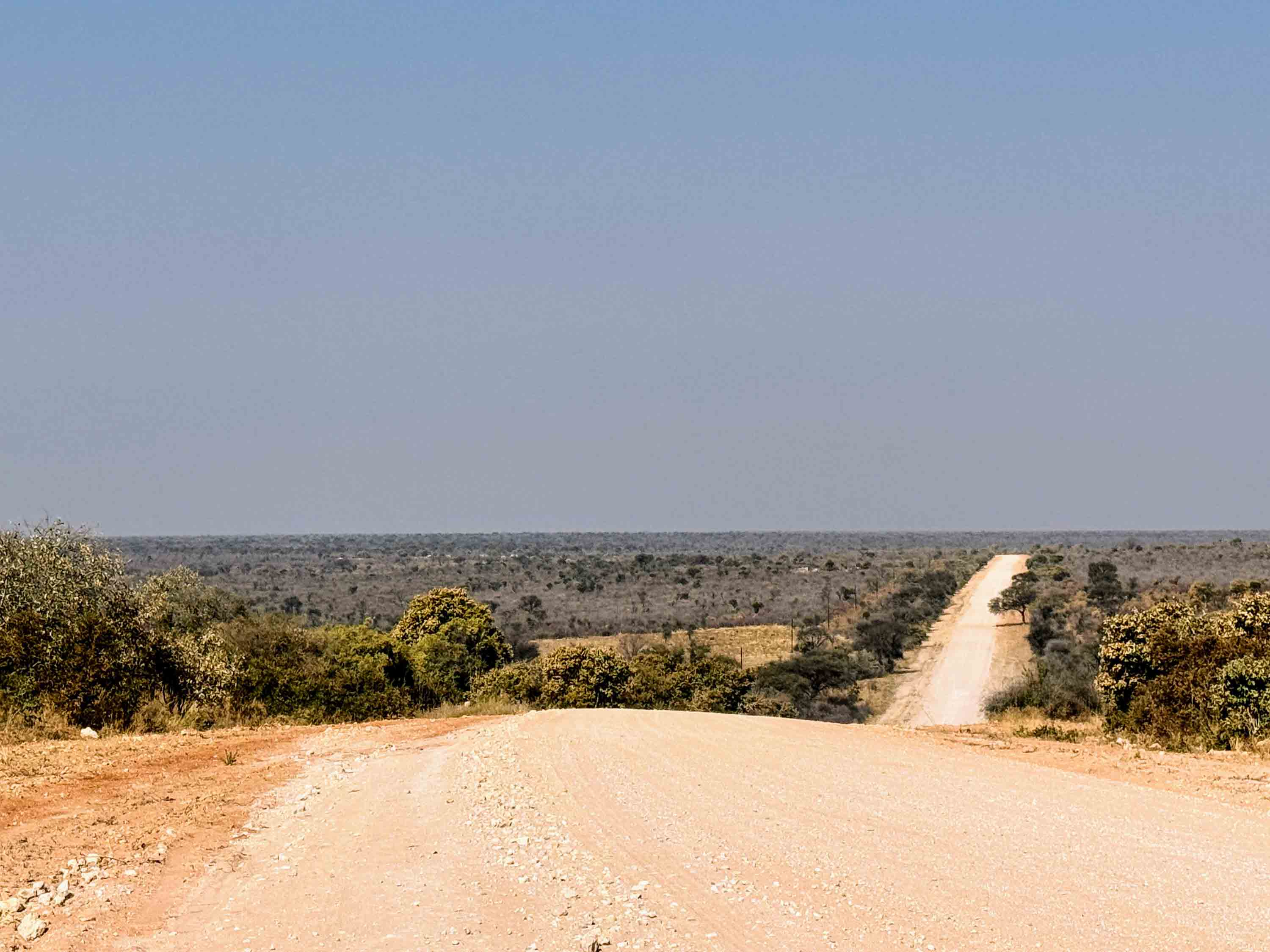
We’d left Windhoek just after dawn, driving north along the paved A1 highway, passing arid mountains and open bushland where springbok, zebra, and the antenna-like tails of warthogs bounced through yellow grass. After Otavi, where most travelers veer west to Etosha, Namibia’s premier big game safari park, we instead headed east into the wilderness along an unpaved road that ran in a straight line towards Botswana.
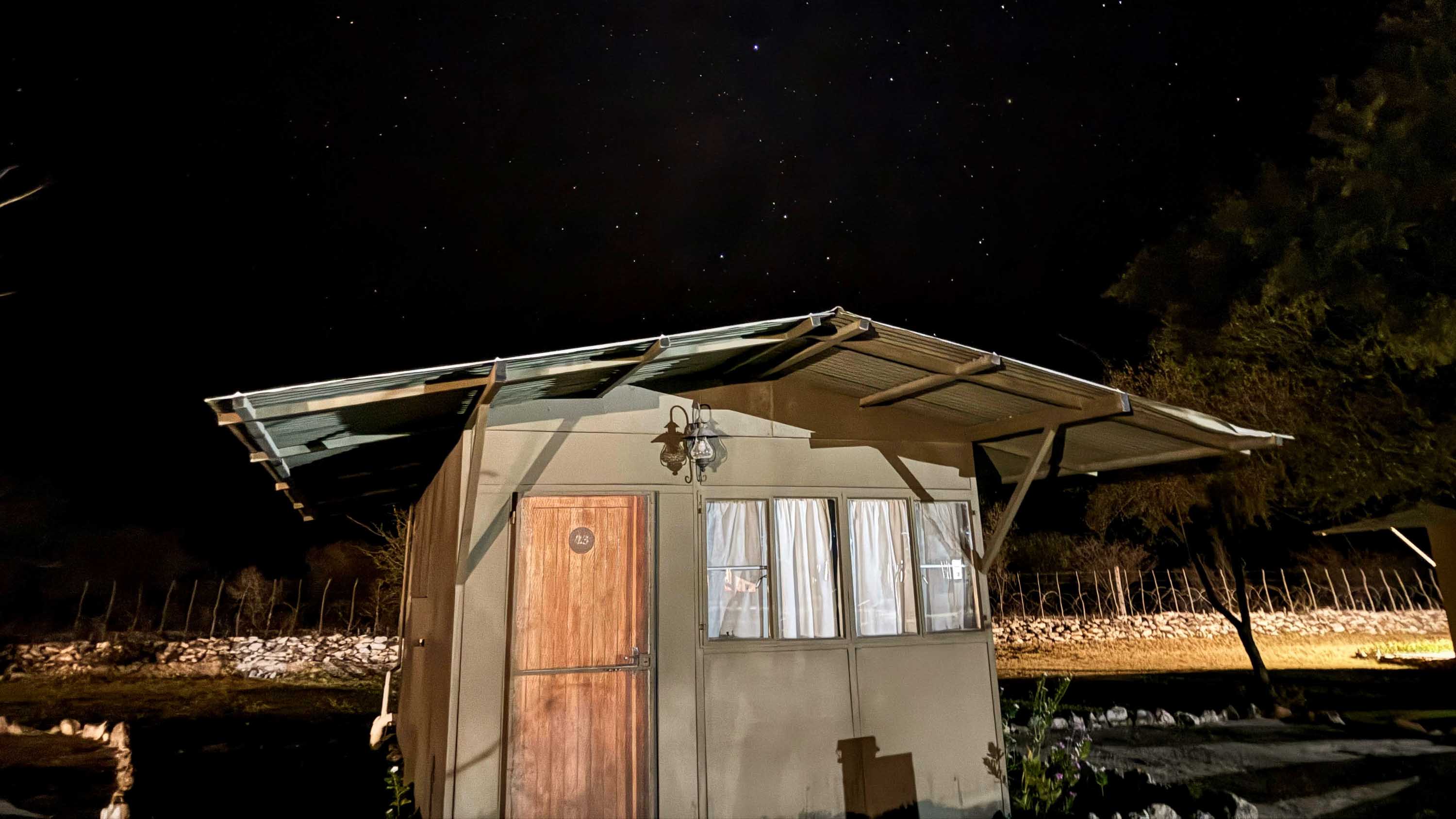
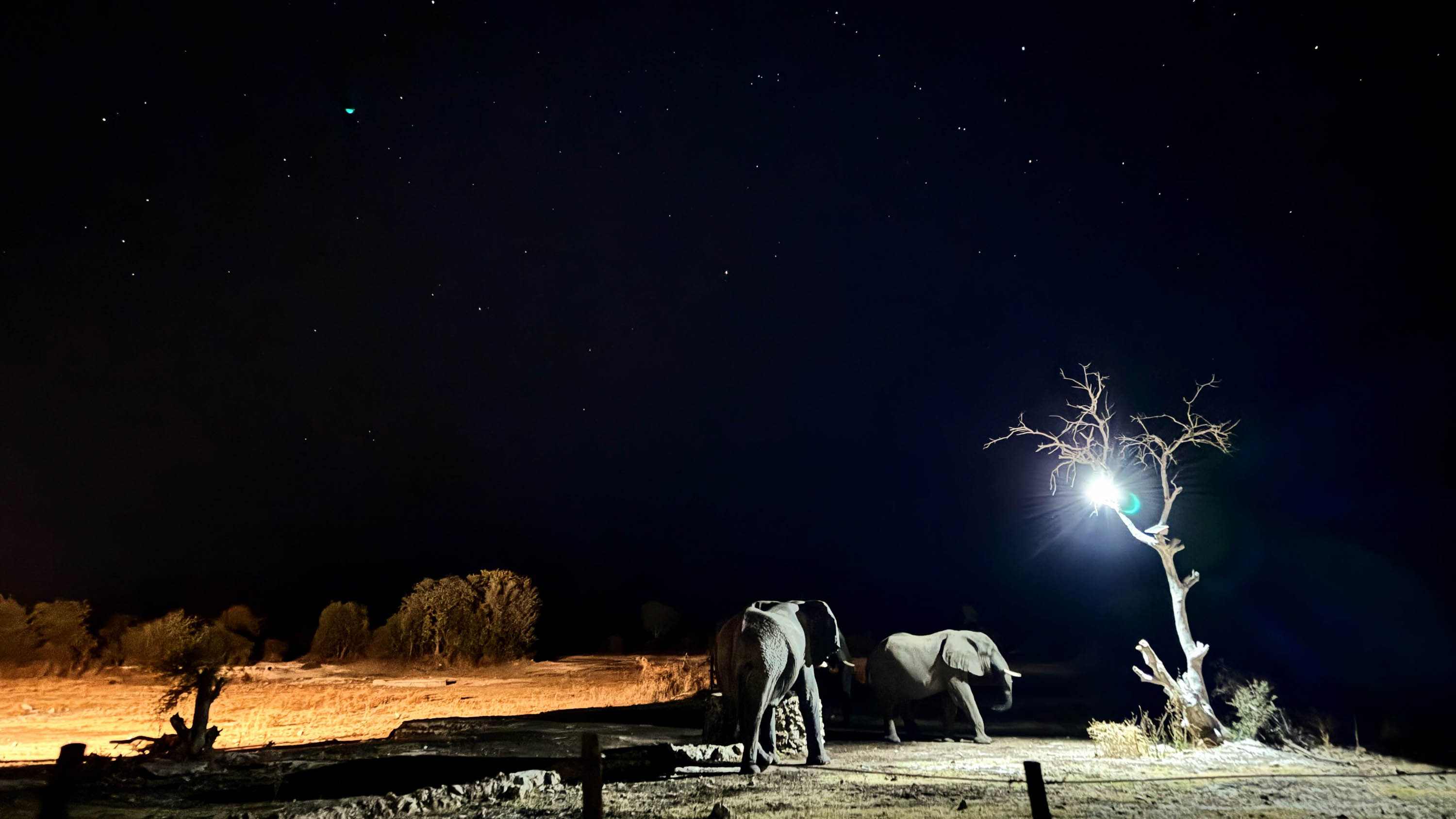
When we finally reached Tsumkwe some 12 hours later, we were on Ju/’hoansi land within the boundaries of the Nyae Nyae Conservancy—one of the first community-owned protected areas on the African continent. There’s just one place to stay here, Tsumkwe Country Lodge; basic but tidy cabins set around a thatched reception and a few campsites. A water hole just outside the lodge’s fence attracts wildlife—on our first night, we jumped up from dinner to catch a family of desert-adapted elephants stopping for a drink.
Tsumkwe couldn’t be further from, well… anywhere. Sitting in the opposite direction from all of Namibia’s other tourist sites, the road in is not even a well-traveled route to Botswana. Nyae Nyae is, quite literally, on the way to nowhere.
I’d been invited by Sisco Auala, a senior tourism researcher at NUST, who has been working with the Ju/’hoansi to develop astrotourism since 2019. The community has a rich astronomical tradition that includes ‘star stories’—a type of wisdom that forms part of many Indigenous peoples’ knowledge that helped in navigation, farming, and sacred medicine.
Auala explained to me that Ju/’hoansi’s stories are often rich with animal science, landscape information, and star knowledge that imparts information useful for life in Tsumkwe. For example, the ostrich feather that Rodil and his students used in their VR story explains the origins of the world and why the ostrich cannot fly—because its lost feathers became the stars. Another story is of an old man who appeared among the First San people—then living without fire—who secretly began cooking his food, drawing the villagers’ curiosity. When they chased him to uncover his secret, he threw his pouch into the sky, placing Venus in the heavens as the morning star.
A storyteller named Coma Cgaesje explained the importance of Venus: “In the morning, when you’re moving from home to the field in the east direction, there is a star that will always face your chest. And when you turn back to the direction of home, it will be on your back. These are dark sky things that will get you back home, even if you have gone too far in the bush.”
Auala told me that astrotourism in Namibia has been developed largely without Indigenous input. “That knowledge of Namibian Indigenous astronomy is at risk of being lost, as only a few elders still hold it.” She told me about one of her research participants, who recounted that his father could perform traditional dances and “connect with the stars, and if you’re very ill and sleeping, he will dance until you wake up.”
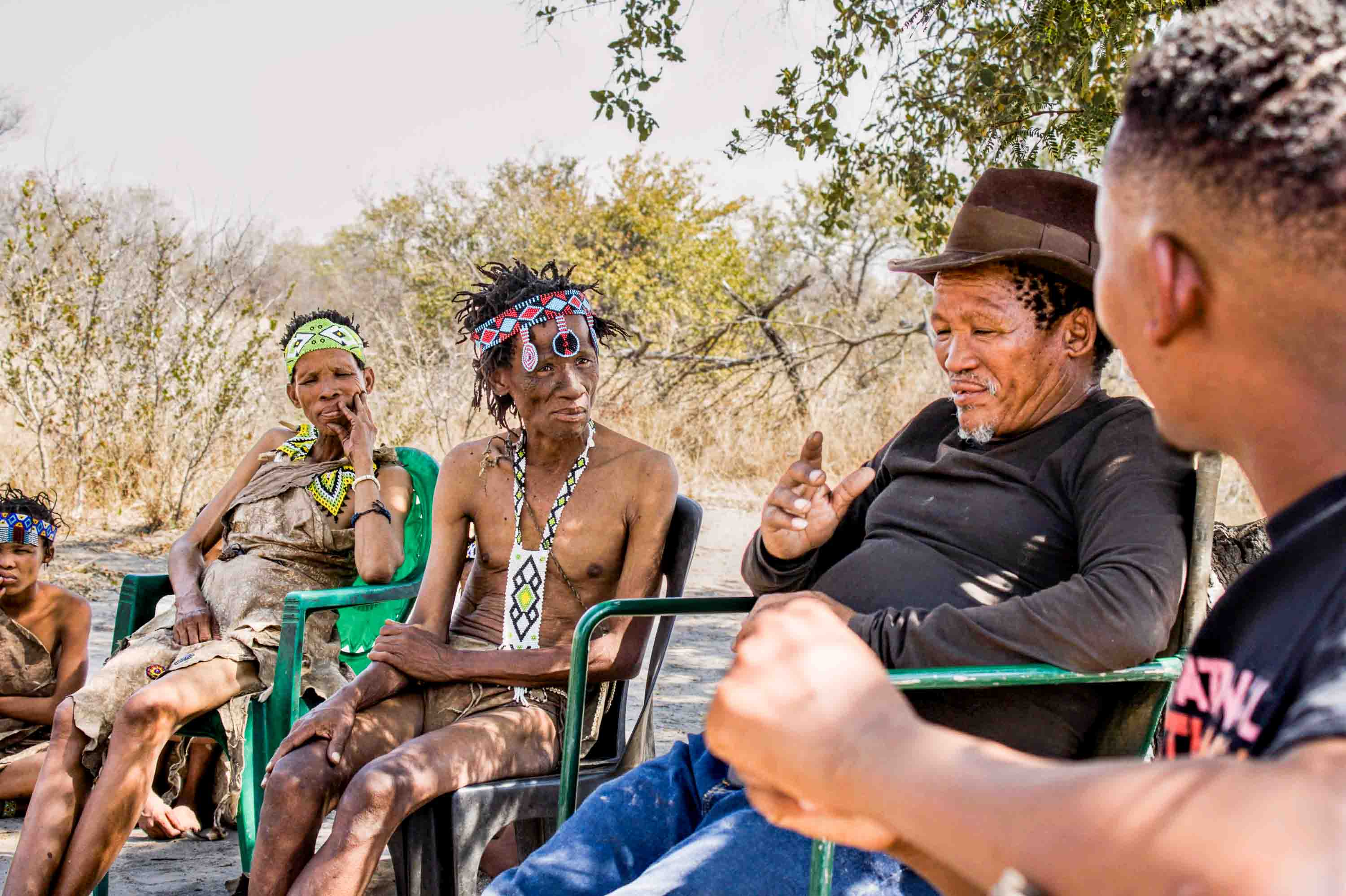
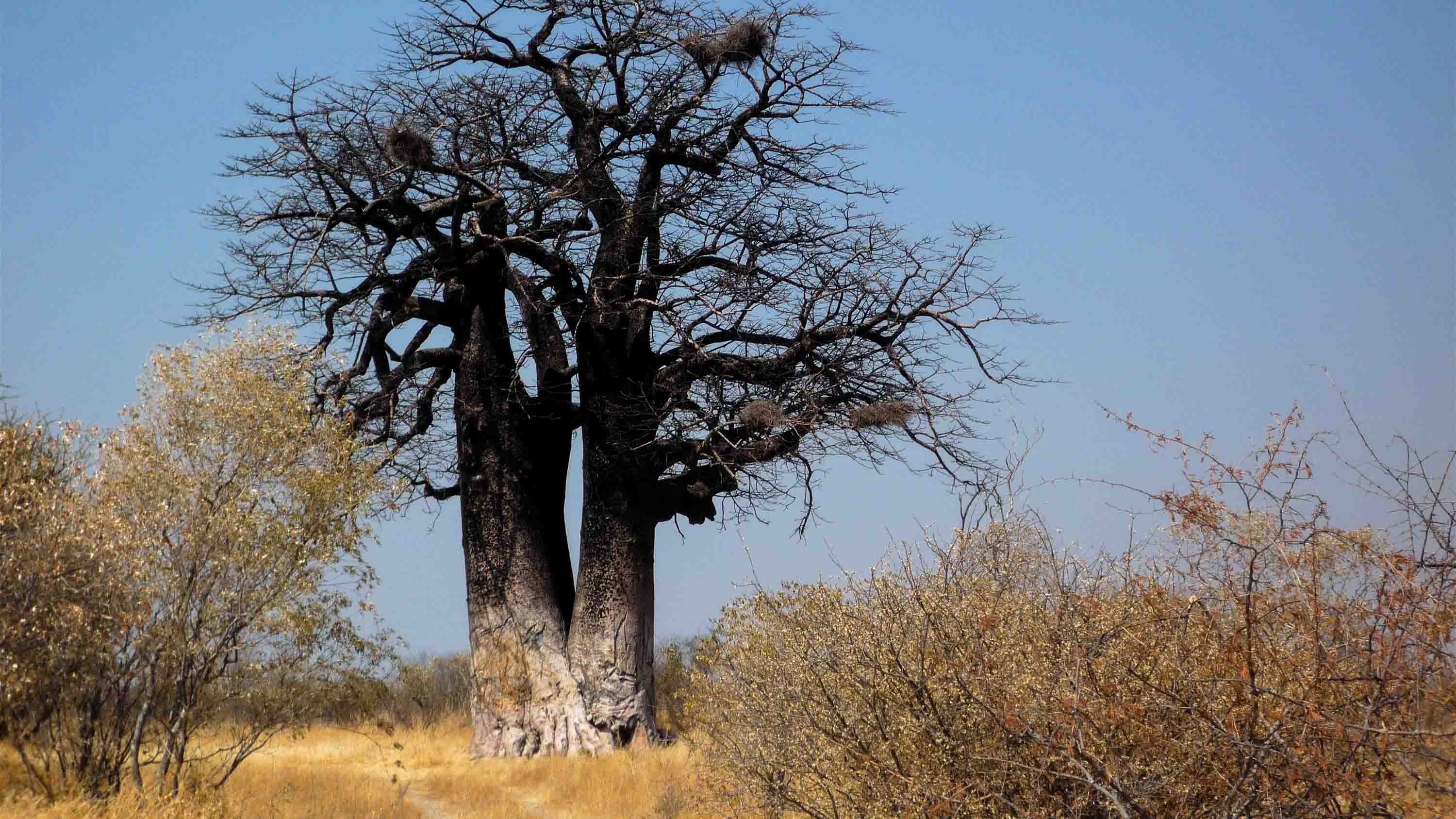
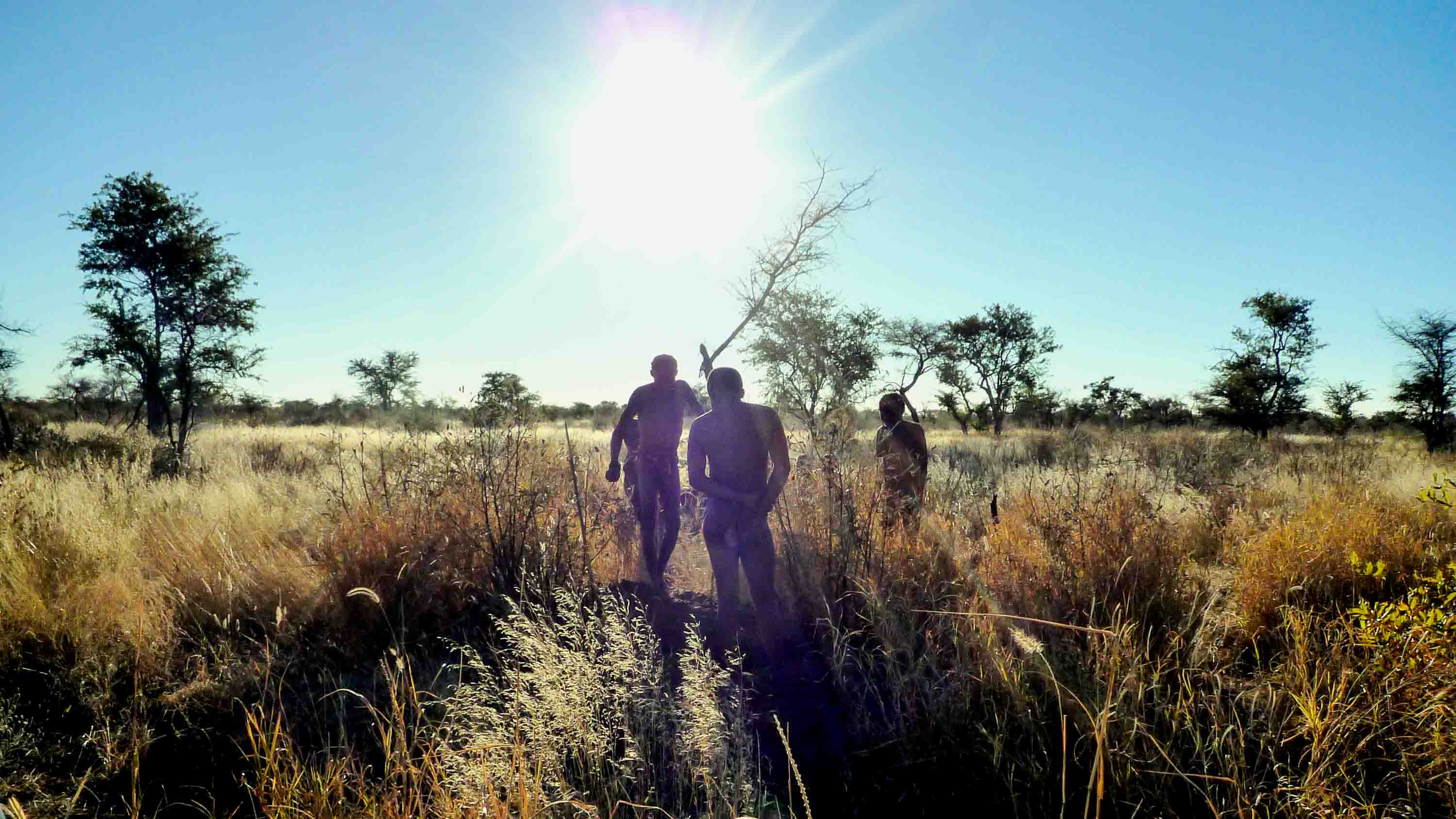
The San are known for their intimate connection to nature and maintenance of a traditional hunter-gatherer lifestyle, including grass and wood homes, leather clothing, and hunting tools made from reeds. Rodil had been telling me about his research background, working in Namibia for over a decade, and his participatory design methods which bring Indigenous perspectives into tech structures and systems. In fact, Rodil’s previous work with another San community further to the south had resulted in a VR game that taught users traditional San tracking and hunting methods.
“The problem with technology is that it is not made for Indigenous knowledge or values,” he told me. “Indigenous people are rarely consulted on the basic concepts behind any piece of big technology.” Rodil studies how new technologies are developed and is particularly interested in who gets a say in the way technologies like virtual reality and AI are created, how they are set up, and what they are used for. He then works together with Indigenous groups to ensure their ways of knowing, ideas, and values are part of that technology from the outset.
“Young people don’t know these stories anymore. So maybe they can watch the VR and quickly learn the star stories. Even students in Windhoek could learn them.”
- ≠Oma/Kunta, San elder and storyteller
As in many Indigenous communities, San star knowledge is being lost as members of the older generation, who acted as conservators of this ancient knowledge, pass away. In one case, Auala found there was only a single elder still holding on to traditional astronomy knowledge.
On our first morning in Tsumkwe, we went to the conservancy office to meet with community elders and a representative from the Nyae Nyae Development Foundation, which supports the conservancy financially and administratively.
They told me astro-guide training would begin in October this year, through the support of the Community Conservation Fund of Namibia, and there are plans for a visitor center, craft shop, café, storytelling huts, and digital exhibits, potentially using Rodil’s VR tech. Visitors will be able to take excursions with a Ju/’hoansi guide, such as astronomy night safaris, fireside storytelling, or nocturnal game-viewing.
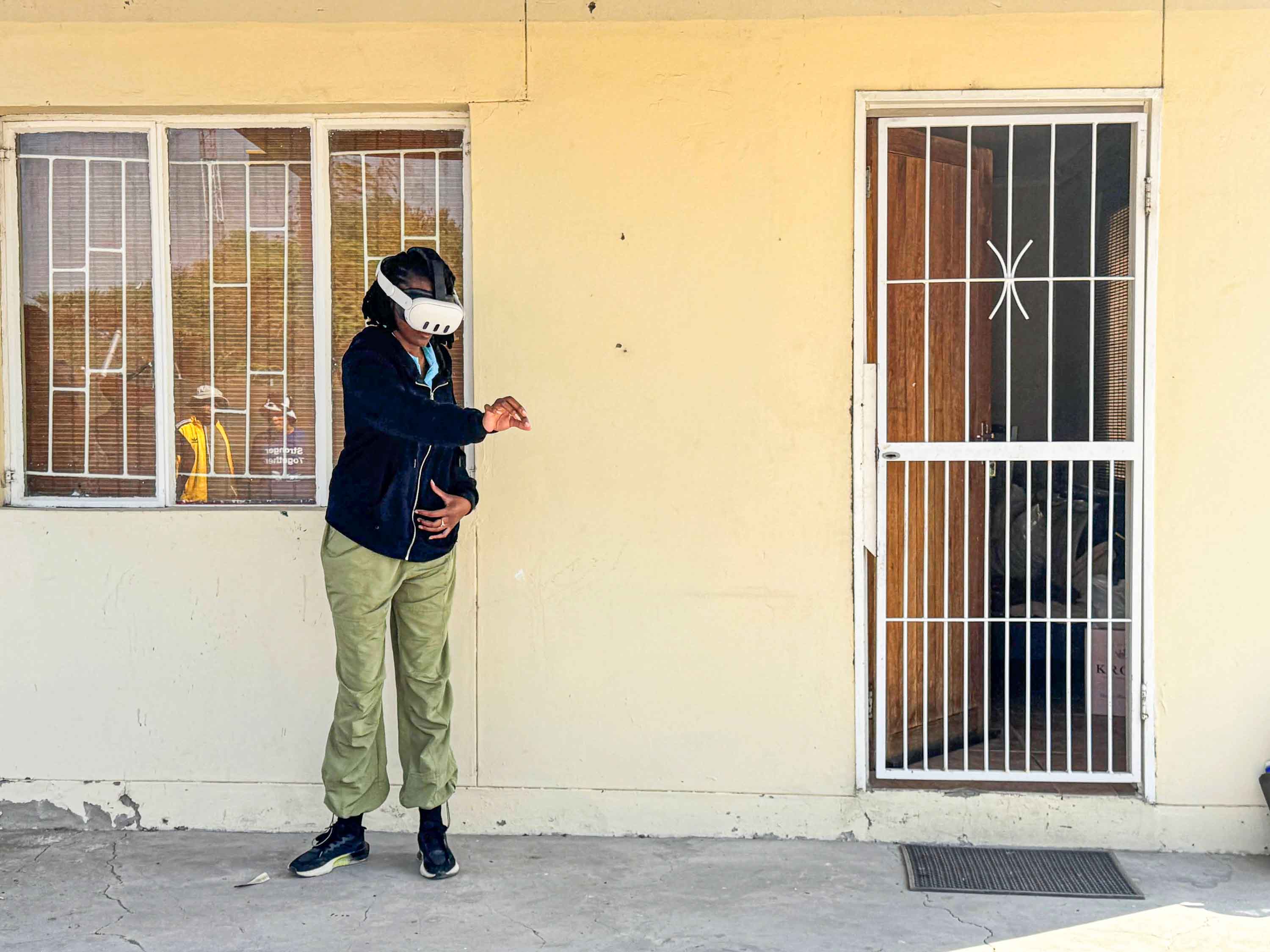
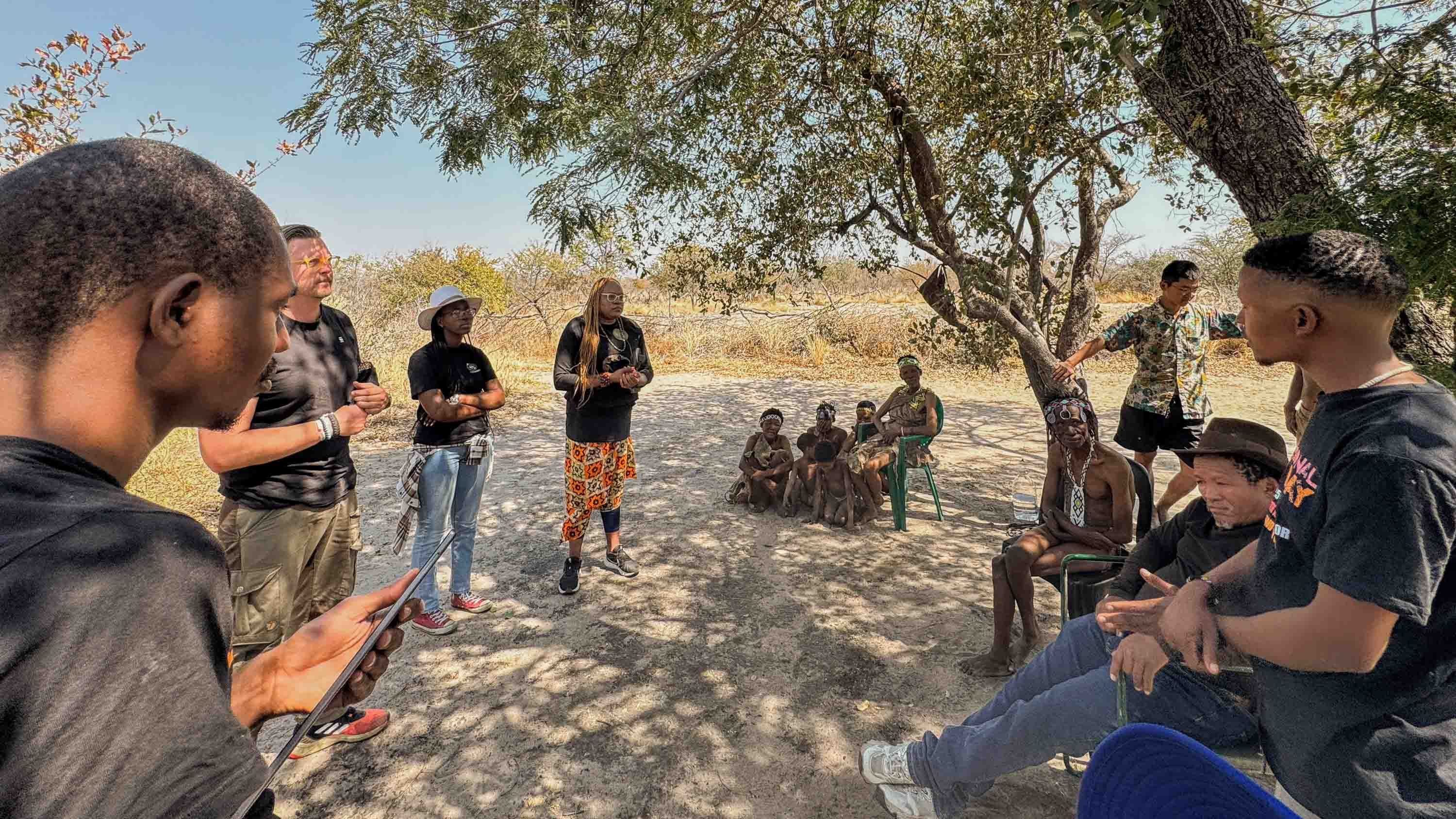
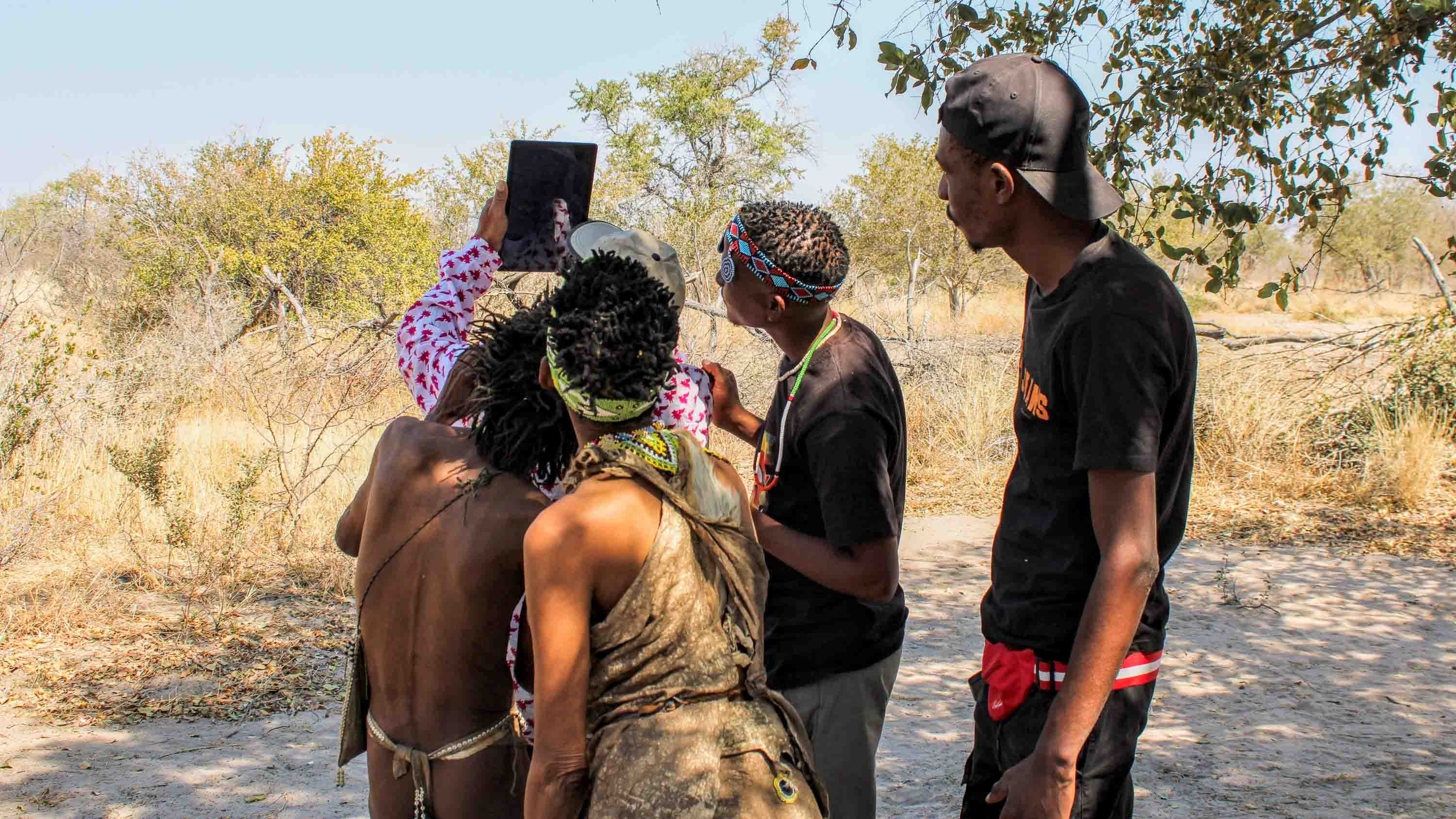
Traveling with us was Joyful Mdhluli, the flagship coordinator for the Office of Astronomy for Development (OAD), a branch of the International Astronomical Union. One of the OAD’s main programmes is a grant scheme for astrotourism development.
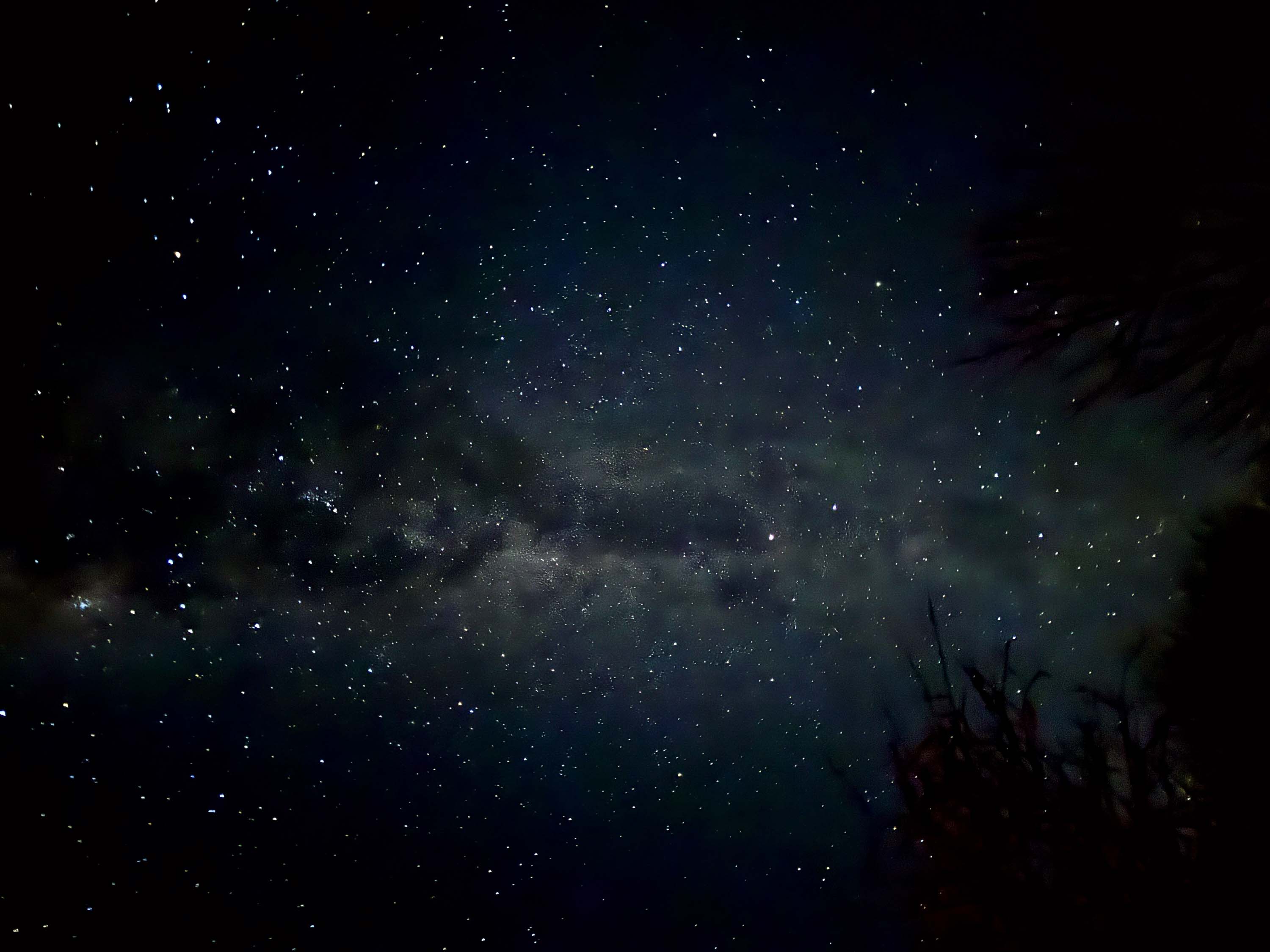
One evening at the lodge, we asked to have the outdoor lights turned off and stood staring at the wash of stars overhead, taking pictures of the Milky Way. I asked Joyful why tourism was such a big focus for the OAD, and she told me how astrotourism can be a tool for social connection. “What’s powerful about astrotourism is that it uses the universal language of the stars to connect people,” she said. “By learning about how others understand the sky in their cultures, we can bridge divides. And it becomes a way for Indigenous peoples to preserve and share their knowledge and celestial traditions.”
We stood quietly admiring the sky for a few minutes. Though it looked like the sky in the VR experience, the presence of bright artificial light from the lodge’s outdoor lights and spotlights on buildings in the village cast a glare around the property—a stark reminder that the loss of night is happening quickly everywhere. A study published in the journal Science in 2023 found that light pollution is growing 10 percent every year. That rapid loss of the sky makes it ever more important for communities to preserve and pass on their traditional knowledge of the night sky—while the stars are still visible.
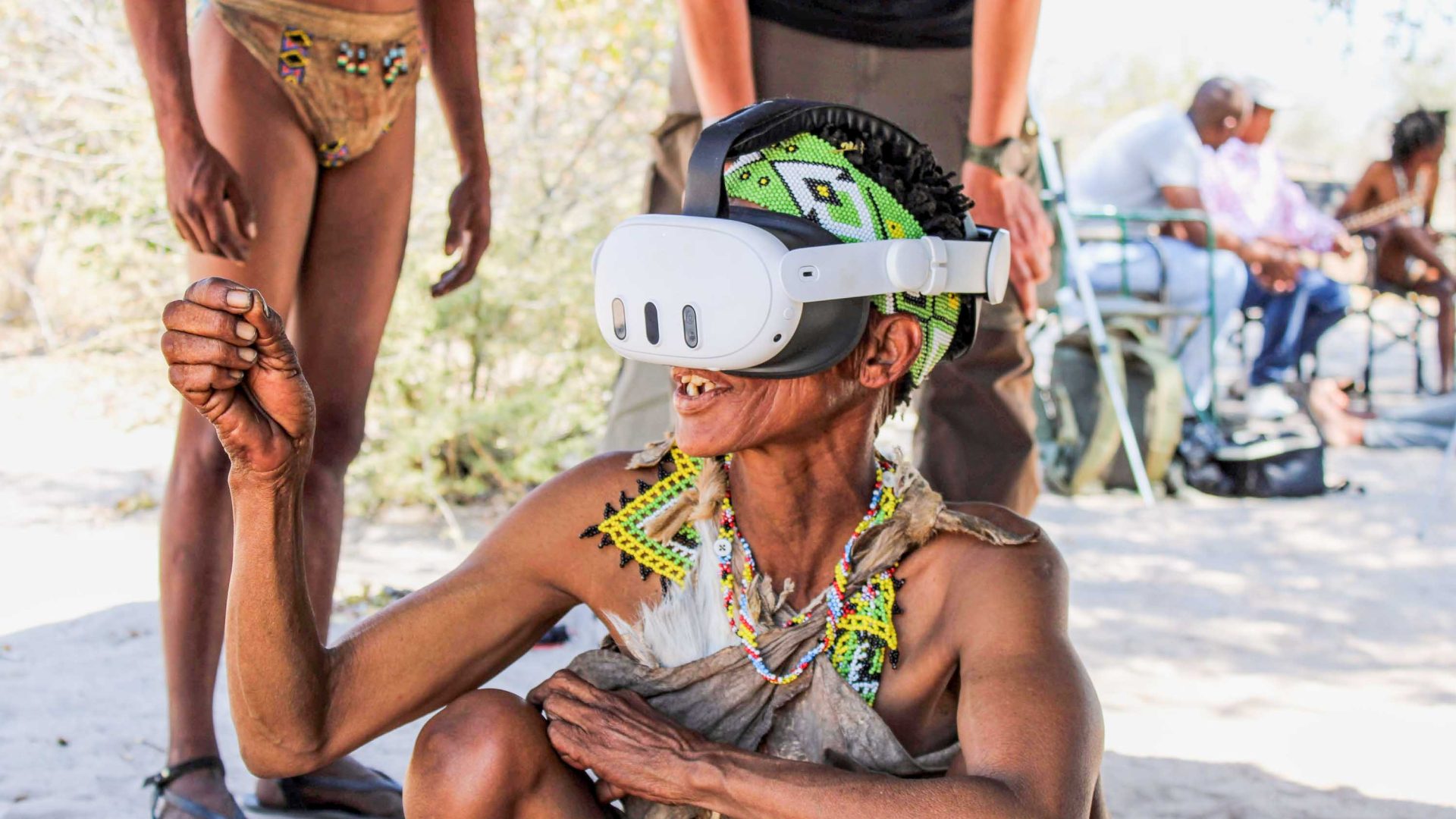
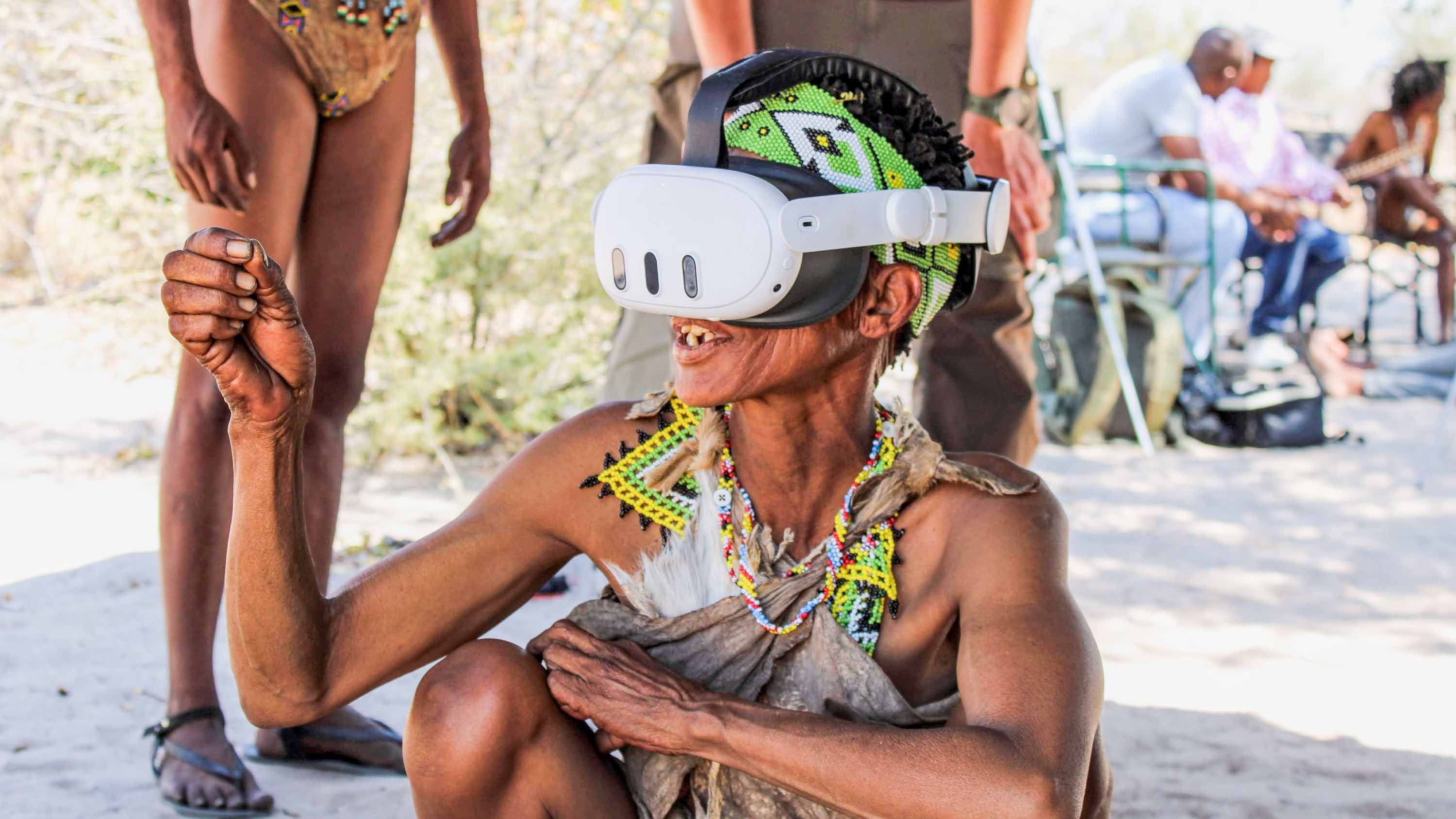
The next day, I accompanied Rodil and three NUST graduate students to a meeting point near the community—a patch of desert and grass with a shady tree—where we spent two days allowing every community member to try the VR experience, starting with an elder and storyteller named ≠Oma/Kunta. It was his first time trying VR, and as soon as the headset was on, his body language shifted. First he looked around slowly in awe, and then sat down cross-legged, gazing upwards, grabbing at thin air for the virtual ostrich feathers he was seeing inside the headset, and occasionally mumbling to himself in Ju/’hoansi.
“He’s telling the narrator that the story is correct and also naming the different stars he can see,” explained our translator, Simson Kepembe. It took about 15 minutes for ≠Oma/Kunta to play the entire experience, and when the headset came off, he got dizzy, and Rodil had to steady him. One by one, each of the community members took turns trying the headset as others watched on with strict concentration, shouting instructions for how to interact with the scene, and giggling as each attempted to maneuver the technology.
In his 1995 book The Demon-Haunted World, American astronomer and cosmologist Carl Sagan referred to the San people when introducing the idea that science is a universal human activity, not confined to laboratories or modern Western culture. Sagan wanted to highlight how the observational skills of the San are a sophisticated, empirical, and indeed scientific way of reading nature’s patterns.
“The !Kung San can tell from footprints whether [an] animal was lame, whether it was running, how long ago it passed,” he wrote. “They notice how depressions erode, how their edges slump, how particles collect in the hollow. In just the same way, planetary astronomers read the ages of craters on the Moon and Mars.”
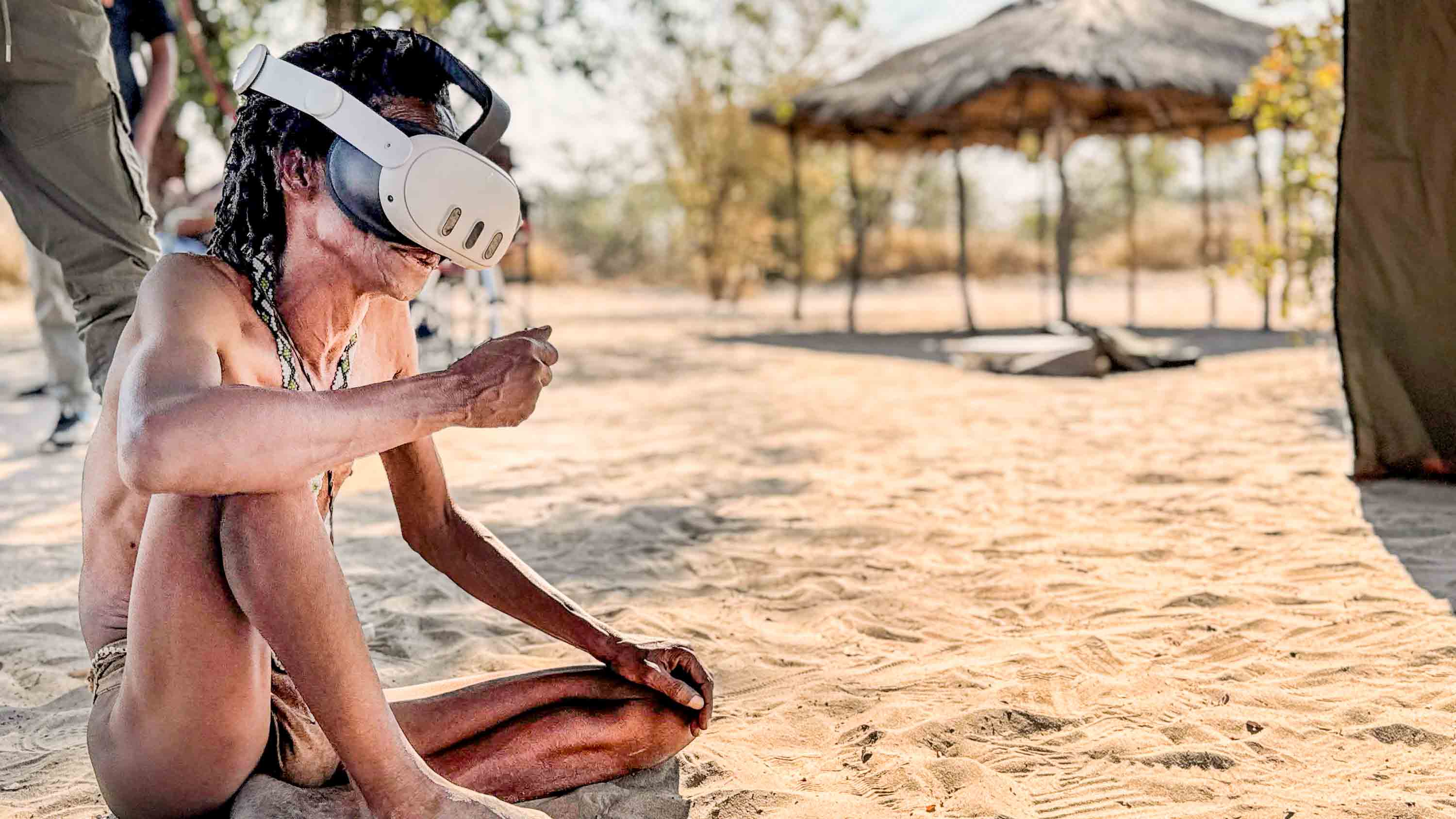
On our final day, we sat under the tree to discuss with the community how they felt about the prototype. Rodil explained that his students had developed the VR, but that it must come from the community to represent the people of the area ethically and respectfully. The community members then took turns giving feedback. “The trees are not like here; you need to change them,” said one. “The sky is very good, it looks just like our sky,” another told us. “The sand is too much like the sand in the south,” said another member.
But it’s not just about visitors. “We don’t only want to attract tourists. It’s also about educating,” said ≠Oma /Kunta. “Young people don’t know these stories anymore. So maybe they can watch the VR and quickly learn the star stories. Even students in Windhoek could learn them.”
It became apparent then that the Ju/’hoansi’s effort to preserve and share their star knowledge through the VR project was not about novelty; it was also about safeguarding and passing on an Indigenous form of science that connects the sky with their heritage and survival. “I have been to London before,” ≠Oma continued, showing his phone and a picture of himself meeting King Charles. “I know that, because of development, with a lot of artificial light, people can’t see the stars there anymore. But if you go to a remote place like here, you can see a lot of stars. Some people have never seen that kind of sky.”
He then pointed at me and smiled. “When she goes back to Europe, she can inform her friends: ‘I was in Namibia, the area is very wide open. You see stars and the Sun.’ And other people might also feel like they want to come and visit us.”
The experience of spending time with the Ju/’hoansi people, learning their ancient knowledge, and supporting their way of life reinforced my understanding of how the night sky connects us all, no matter our language, culture, geography, or climate. As the night sky is disappearing around the world, so too is Indigenous knowledge of it. But it gave me great hope seeing Rodil’s technology in action and the possibility of using such tech for good, to preserve and share that knowledge. By traveling to places where we can still see the stars, we not only support those communities but we experience for ourselves the importance that the starry night sky has played in human life for thousands of years.
**
This trip was funded by the writer who stayed at Tsumkwe Country Lodge, which can also arrange activities with the San community, such as bush walks, craft making, or learning traditional tracking and hunting methods.
The writer traveled from Windhoek to Tsumkwe by 4×4 with the research group from Namibia University of Science and Technology. The journey takes about 12 hours following the A1 and B1 highways to Grootfontein, and then the C44 gravel road to Tsumkwe. Vehicle hire is available from Gondwana Collection or Advanced Car Hire.
****
Adventure.com strives to be a low-emissions travel publication. We are powered by, but editorially independent of, Intrepid Travel, the world’s largest travel B Corp, who help ensure Adventure.com maintains high standards of sustainability in our work and activities. You can visit our sustainability page or read our Contributor Impact Guidelines for more information.

Megan Eaves is a travel writer, advocate for sustainable travel and dark skies, and the author of 'Nightfaring: In Search of the Disappearing Darkness' (2026). For many years, Megan was the North and Central Asia Editor at Lonely Planet, and she has written about travel and place for the BBC, National Geographic, AFAR, The Times, The Telegraph, The Independent, and others.