
Long-term travel can be incredible—and incredibly tricky to plan. These apps and subscriptions can help you save time, stretch your budget, and consume less.


Long-term travel can be incredible—and incredibly tricky to plan. These apps and subscriptions can help you save time, stretch your budget, and consume less.
As a travel writer, it’s rare for me to spend just four consecutive weeks in the same city. In the last few years, I’ve traveled a lot for work, left the US where I grew up, and tried my hand at digital nomading, in North and South America, and the UK; now, I’m splitting my time between London and my Rhode Island hometown.
In that time, I’ve experimented with a lot of ways to make logistics less painful. These apps and subscriptions are a few of the tools I’ve used to access high-end experiences, meals, apartments, and even travel-friendly clothing at a fraction of the sticker price.

What if you could pack just your clothes and check out of your apartment whenever you want to try out life in a new city? That’s Landing, in a nutshell; a network of fully furnished apartments across the US with leases so flexible, you can move units with as little as just three days’ notice.
Most Landing guests book flex (rolling/indefinite) or fixed-term stays (think short-term rental bookings). I recently tried out Landing’s lesser-known Standby subscription, which allows you to book the gaps between other reservations for a flat fee of USD$1,495 per month, plus a USD$299 annual membership fee and a USD$150 cleaning fee every time you request to move units. All utilities and wifi are included, and they’ll even pre-stock the apartment with essentials like dishwasher tabs, laundry detergent, toiletries, and a few snacks.
The trade-off is that your plans are never fully guaranteed. If someone else books your place for a flex or fixed reservation, you could be asked to leave with as little as three days’ notice, at which point you can move to any other available apartment in the network, in any Standby city. The good news is that you don’t get charged a cleaning fee when you get bumped, so if you never personally request a move, you only pay that USD$1,495 monthly fee (plus annual membership) regardless of how many units you stay in. In the event there aren’t any other units available in the same market, you’ll get Landing credits to make up for the nights you can’t use.

If you’re wondering who this is best-suited for, you’re not alone—I got this question a lot when I told friends about staying here. Some people think it sounds like an epic way to live, always having the chance to try somewhere new and getting it for a relative steal of a price compared to a typical short-term rental. Others hate the uncertainty of not knowing how long you can settle in somewhere.
Standby was a perfect solution for me while I was looking for a place to call home amid a big trans-Atlantic transition, as it required almost zero effort. I picked a city (Washington, D.C.) then chose an apartment in the most pedestrian-friendly neighborhood available near friends and family. I didn’t have to slog through Airbnb reviews or hunt down viewings on Craigslist-style listings websites.
Before I moved in, I spoke with Landing to ask about the Standby program and how often people have to move, and here’s the gist: In markets where there’s no shortage of apartments, you may get bumped once a month or less; in cities where there’s far more interest than availability, you might be lucky to get a week. Cities in the Northeast tend to be more competitive in the fall, while warmer destinations in the South have more demand in winter.
Since you can move to any other available apartment if you get bumped—whether it’s on the same floor or in a different state—I’d say Standby is ideal for people who want a great deal on housing in one city; minimalists and travelers comfortable with a bit of excitement and/or uncertainty; aspiring digital nomads who don’t want the admin of vetting new places to live; and medium-term travelers who have a ticklist of places to see but don’t want to pay hotel prices.
When I tried out Standby in both Washington, D.C., and Bayonne, New Jersey, a commuter suburb outside New York, I had a great experience. There were a couple of hiccups at check-in, but they were taken care of quickly: The first unit had a chirping smoke alarm and a dead battery on the unit door, so the key fob didn’t work until maintenance came to fix it. When I moved to New Jersey, I had to call customer service to set up an account for the building’s keyless access system, which felt like an unnecessary hassle. Landing has since told me that they’re working on a new check-in process to avoid that in the future.
Overall, however, I loved it. The two-bedroom apartments I stayed in were comfortably and stylishly furnished, and they were in buildings with luxury amenities like rooftop lounges and fitness centers.
After a few weeks in D.C., I decided I wanted to try out New York. There aren’t any Standby units in the city, but I found a unit in Bayonne, New Jersey, a commuter suburb about half an hour from downtown. I simply selected the unit, made the reservation, cleaned out my fridge, got on the train, and then checked into my new place through the app, which had keyless entry.
Unlike Airbnbs which are often full of other people’s stuff, I found my Landings felt much more like ‘mine,’ more like home, than any other short-term rentals I’ve stayed in (and I’ve stayed in a lot). There were no extensive lists of oddly-specific ‘house rules’ to remind me I was not at home, and I didn’t have to ask anyone for permission to have friends and family over for dinner. It felt relaxing to stay somewhere designed to really settle into.
I’m already plotting another Standby trip.
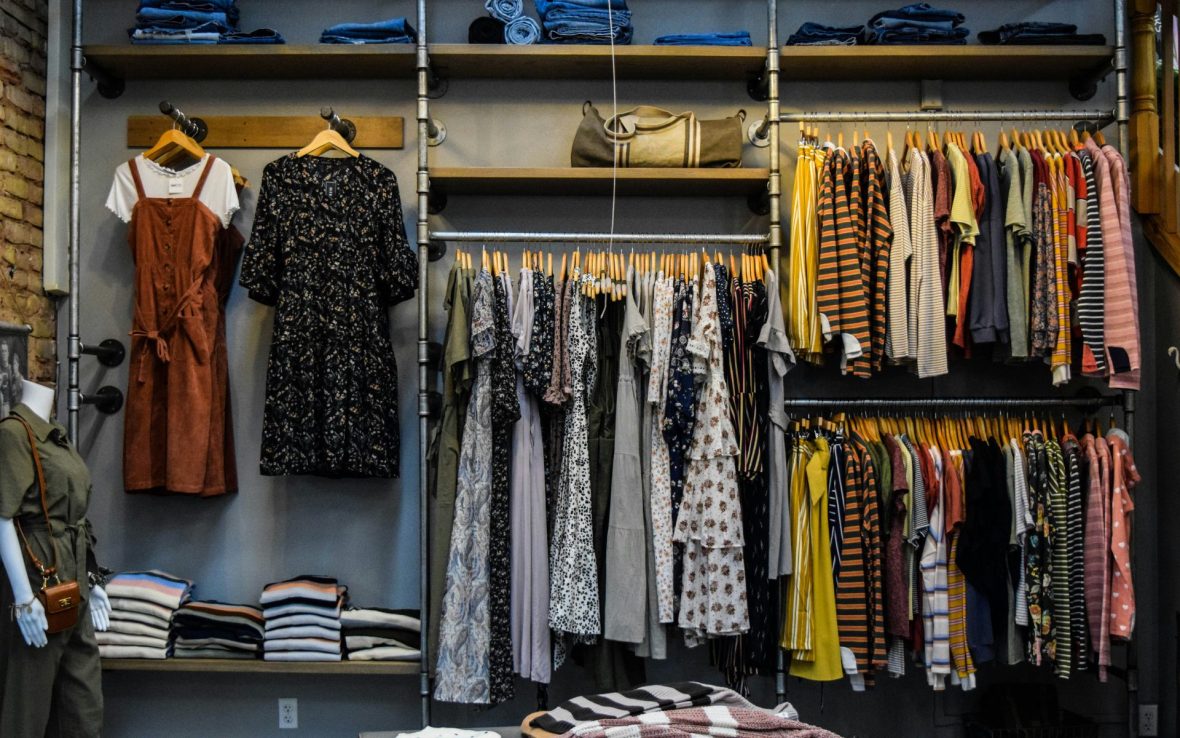
I think it should be illegal to charge for a carry-on bag, and I consider it against my religion to pay for such nonsense. That’s why Rent the Runway, a US women’s clothing subscription service, has been my savior.
During five extended trips to the US over the last 18 months, I used a monthly RTR subscription to rent outfits for speaking engagements, weddings, Christmas dinners, family reunions, international travel, and everyday life. Instead of shopping, I rented what I needed and occasionally had it shipped directly to my destination, saving on both hassle and luggage fees in the process.
My subscription fees have averaged USD$75 to $150 per month (sales are frequent and discount codes ubiquitous), for five items at any given time which I can swap out up to twice per month. The app has a sophisticated size guide that predicts fairly accurately whether something will fit you well, and I’ve had far more hits than misses.
I haven’t yet found a version of RTR that crosses oceans (and that probably wouldn’t be very sustainable anyway), but there are a number of companies in the UK that offer similar services, including HURR, By Rotation, and Hirestreet, though the first two are intended for one-off rentals rather than rotating closets. The US-based Taelor claims to be the ‘RTR for men.’
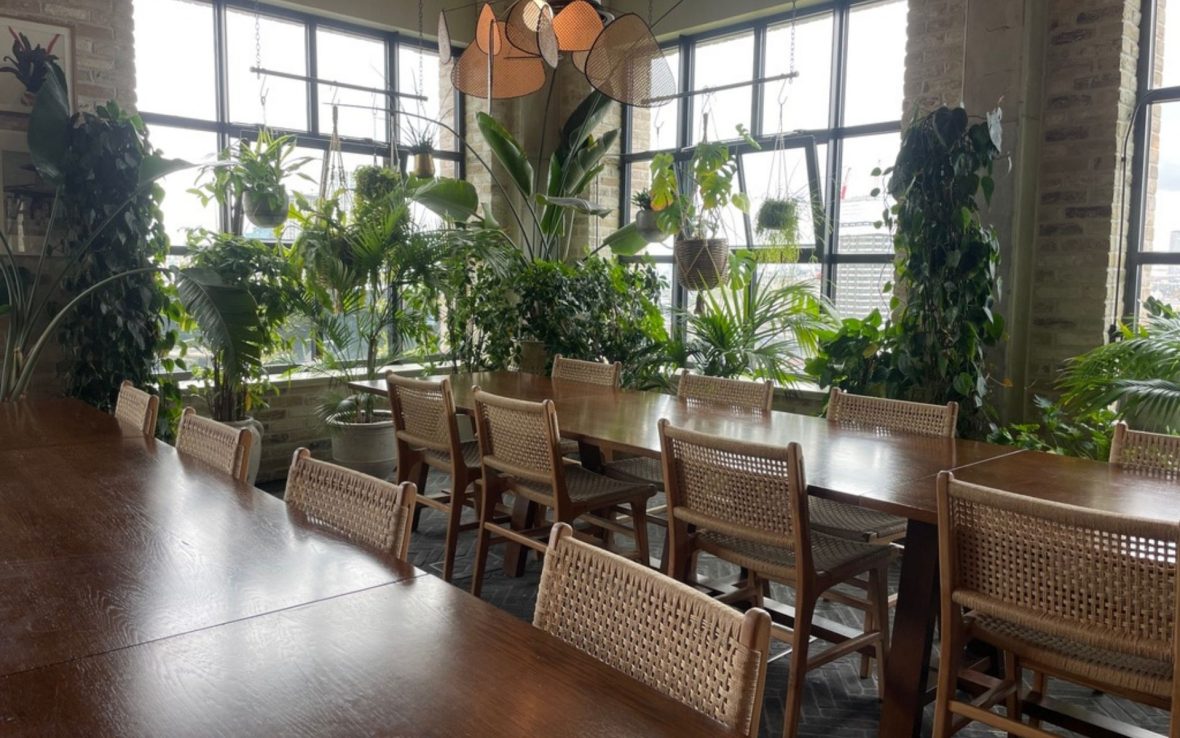
Cafés are terrible places for Zoom calls, but coworking memberships can be exorbitant if you’re only around for a few weeks, and daypass prices often feel extortionate. I’ve found two solutions:
Werksy: This London-based app allows you to pay hourly for coworking spaces rather than buying a full day pass, which can often cost upwards of GBP£50 (USD$68) per day in the center of the city. The app lets you search for features like dog-friendly, free coffee, and kitchen space, and has plenty of photos so you can take a peek at the ambiance before trying somewhere new.
I recently subscribed to Werksy’s £99 ($135) per month Pro subscription, which gives me unlimited hours at a handful of London coworking spaces, plus a limited number of free hours per month at a variety of other spaces. Three spaces I’ve enjoyed recently are Laundry Studios in East London, which rents for £3.75 ($5) per hour; the Permit Room at the famous Dishoom in Notting Hill, which offers unlimited free chai to Werksy users for £1.50 ($2) per hour; and Missionworks, a gorgeous office space in a historic former church in west London, which offers unlimited free hours on Werksy Pro.
Deskpass: For a one-off day pass or a private office for a team meeting, Deskpass allows you to easily compare prices for day passes to office spaces in 22 countries across North America, Europe, Australia, and Asia.
You can book meeting rooms by the hour, or private offices and hot desking by the day. In bigger cities, there are typically dozens of places to choose from. You can easily peruse the map to choose locations near your most convenient transit links, and you can also search by opening hours, amenities, and ‘mood’, if you’re looking for a specific vibe, such as professional, quiet, or luxe.
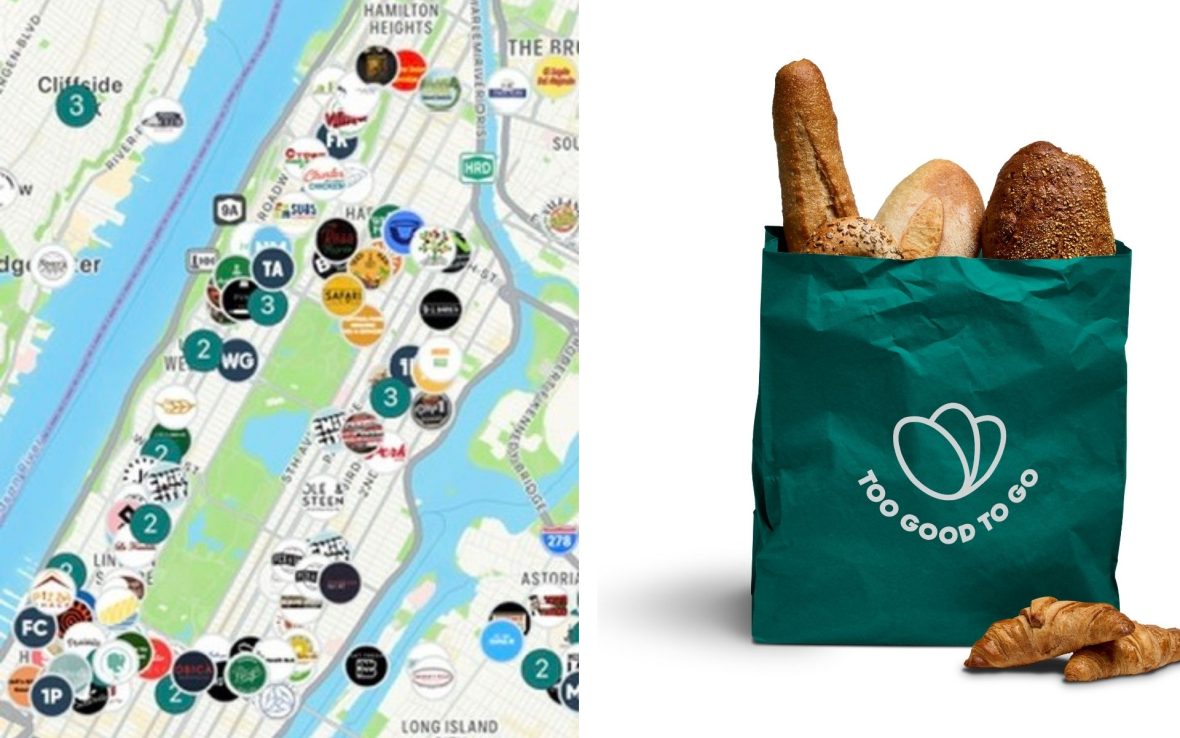
Too Good To Go is an app that works with over 180,000 restaurants and grocery stores around the world to rescue their surplus meals, selling them as ‘surprise bags’ at dirt-cheap prices at the end of the day. It’s a brilliant way to eat great food without paying restaurant prices, and to grocery ‘shop’ without needing to make any decisions.
You’ll find a wide range of cuisines and venues on the app, from independent cafés to world-famous chains like Eataly and Costa. In London, I’ve ‘rescued’ sushi, sandwiches, pastries, pizza, and baked goods, usually spending a third or less than the menu prices of these items.
Recently, I got a GBP£3 (USD$4) surprise bag from a pizza place called Circle & Slice that included two massive sandwiches (including an incredible ham and burrata), two large squares of pizza, and a hearty salad. The next day, I rescued fancy treats from Wa, an upscale Japanese patisserie. For £6 ($8), I received a curry bun, small quiche, a creamy, peanut-y dessert, and a roll filled with yakisoba noodles. I almost felt like I was stealing.
Too Good To Go is all over New York City, too, with hundreds of bakeries, pizza joints, bagel spots, and even Whole Foods and Krispy Kreme. You can search any city from wherever you are if you want to get an idea of what’s around. Once you arrive, you can use location services to see what’s available close to you. Let the feast begin.
What if you could pay for luxury amenities only when you used them, and get a discount on your hotel stay in exchange? That’s kind-of what Resort Pass offers you: Everything but the actual overnight stay.
Through Resort Pass, you can book daytime access to five-star pools, spas, and fitness centers at hotels across the US, for far less than what it costs to stay at these places overnight. It can cost over USD$270 to stay at Virgin Hotels New York City, for example, but Resort Pass charges just USD$40 for access to their spa with sauna and steam room.
You can also find standalone spas on the platform, which is how I recently discovered Spencer’s SoHo, a New York spa with two stunning relaxation rooms full of sweets and analog diversions like chess— a delightful way to spend a screen-free evening amid a hectic city visit. Prices were the same on Resort Pass as going through the spa directly, but I wouldn’t have found the spa otherwise.

I haven’t yet tried it, but I’ve been intrigued by Flexcar, a US-based service which seems like a cross between a rental and a long-term car lease. With a month-to-month ‘subscription’ you can cancel at any time, signing up allows you full-time access to a car of your choice until you choose to swap it out for a new model or cancel your subscription.
Monthly fees start around USD$500 per month (plus tax), and include insurance and car maintenance, which is less than the average US car payment for both used (USD$532) and new (USD$748) vehicles. The biggest catch seems to be that your mileage is limited—850 to 2,000 miles (1,367 to 3,218 kilometers) per month, depending on the package you choose. If you go above your allotment, you’ll have to pay extra for each mile.
One other downside is that the service is available only to drivers with US- or US territory-issued licenses, so unfortunately it’s not an option for international visitors. Otherwise, however, I struggle to see a disadvantage for short-term or medium-term use.
Landing, Resort Pass, and Deskpass provided the author with credits to try out their services. You can find out more about Too Good to Go here; Werksy here; Rent the Runway here; and Flexcar here.
***
Adventure.com strives to be a low-emissions travel publication. We are powered by, but editorially independent of, Intrepid Travel, the world’s largest travel B Corp, who help ensure Adventure.com maintains high standards of sustainability in our work and activities. You can visit our sustainability page or read our Contributor Impact Guidelines for more information.

Kassondra Cloos is a travel journalist from Rhode Island living in London, and Adventure.com's news and gear writer. Her work focuses on slow travel, urban outdoor spaces and human-powered adventure. She has written about kayaking across Scotland, dog sledding in Sweden and road tripping around Mexico. Her latest work appears in The Guardian, Backpacker and Outside, and she is currently section-hiking the 2,795-mile England Coast Path.