The Irish language—Gaeilge—is experiencing a cultural revival in Ireland. Éalú Aran is one of a wave of retreats and courses that teach the language in an informal setting outside the classroom, keeping it alive for generations to come.

The Irish language—Gaeilge—is experiencing a cultural revival in Ireland. Éalú Aran is one of a wave of retreats and courses that teach the language in an informal setting outside the classroom, keeping it alive for generations to come.
“Up onto the toes. Na méara coise, as they’re called. The ‘fingers of your feet’.”
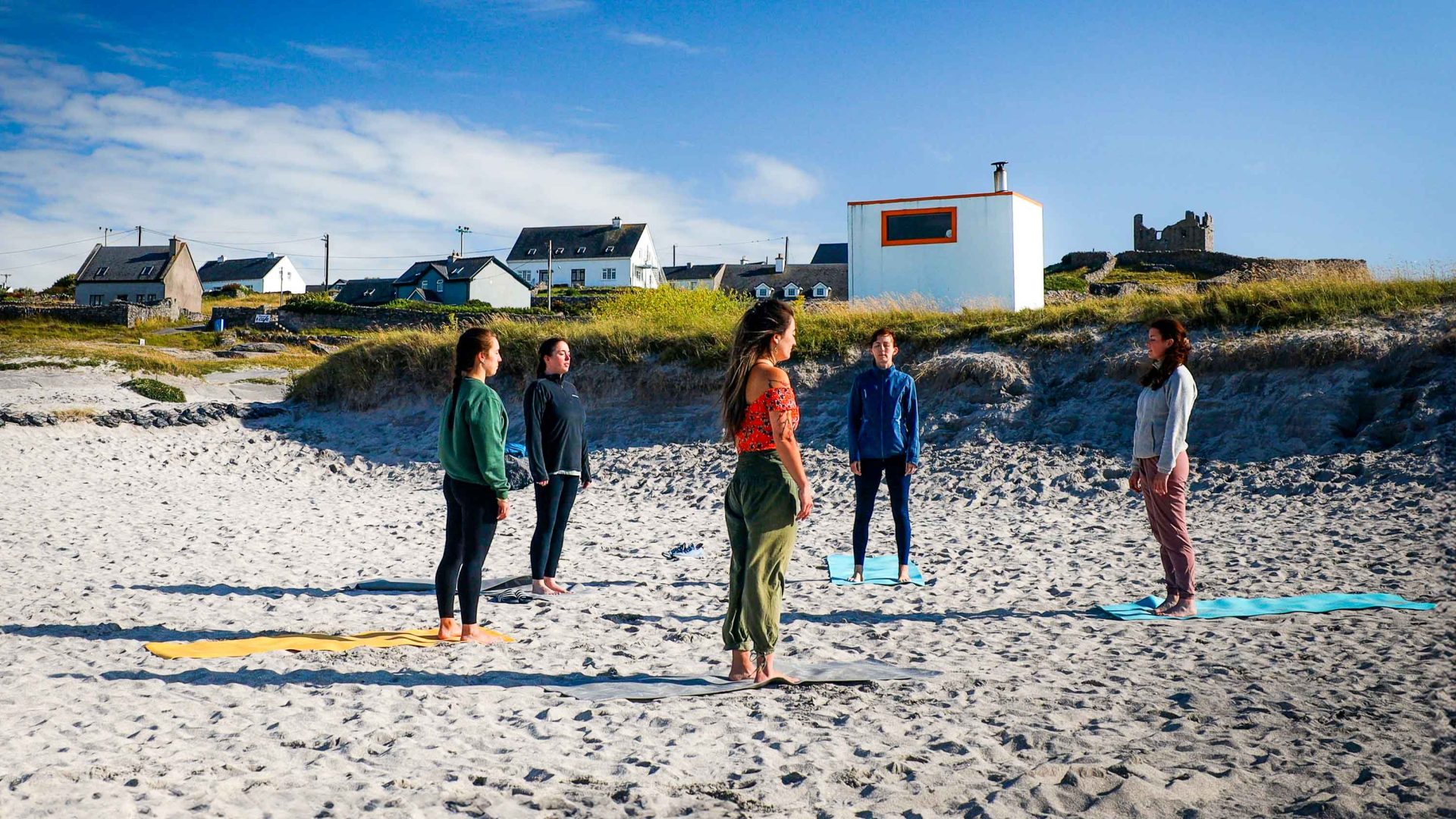
Weaving between Irish and English phrasing, Áine Seoighe is directing a yoga and breathwork session. We’re on Inis Oírr, the smallest of the Aran Islands off Ireland’s western coast. This is a Gaeltacht region, where Irish, or Gaeilge, is the dominant language.
We’re a few hours into an Éalú Aran day retreat, a bilingual wellness program run by native islander Seoighe since 2023. Through activities such as meditation, nature walks, basket-making and sea swimming, participants are gently immersed in the language. It’s one of many Irish-language-focused events cropping up all over the country, propelled by a resurgence of interest in the vernacular.
Now a mandatory subject in the Irish education system, Gaeilge is Ireland’s first official language, followed by English. It seems more people are embracing this aspect of Irish identity that was historically marginalized under British colonial rule. However, despite enjoying it in school, I rarely had cause to use it in my hometown, Dublin, afterwards. But when I recently returned to Ireland after living overseas, I realized attitudes to the language had shifted. Peers are doing re-immersion courses, Irish-speaking cafés have opened, and I’ve started to hear more families speaking ‘as Gaeilge’, a colloquial turn of phrase that means ‘in Irish’.
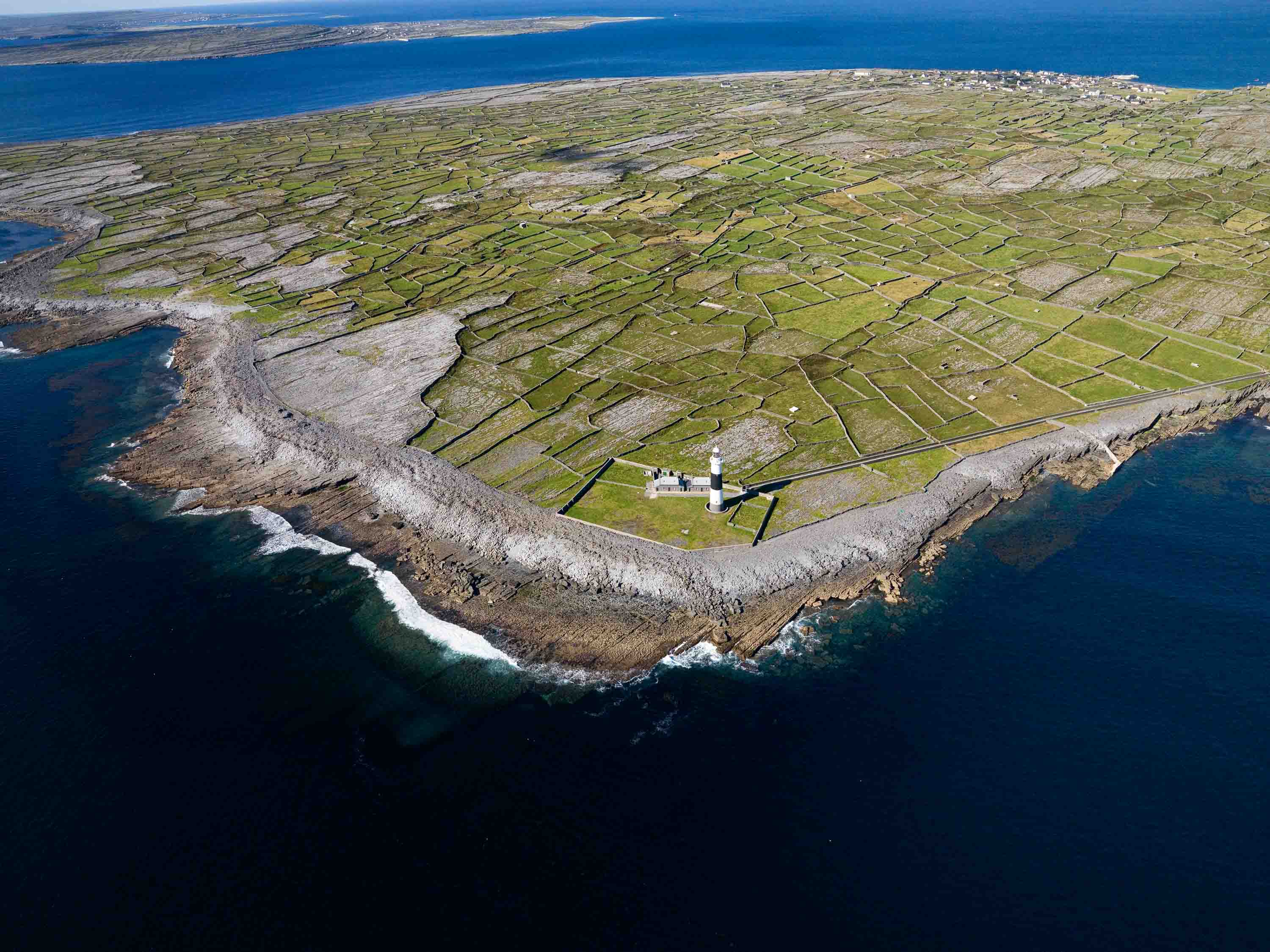
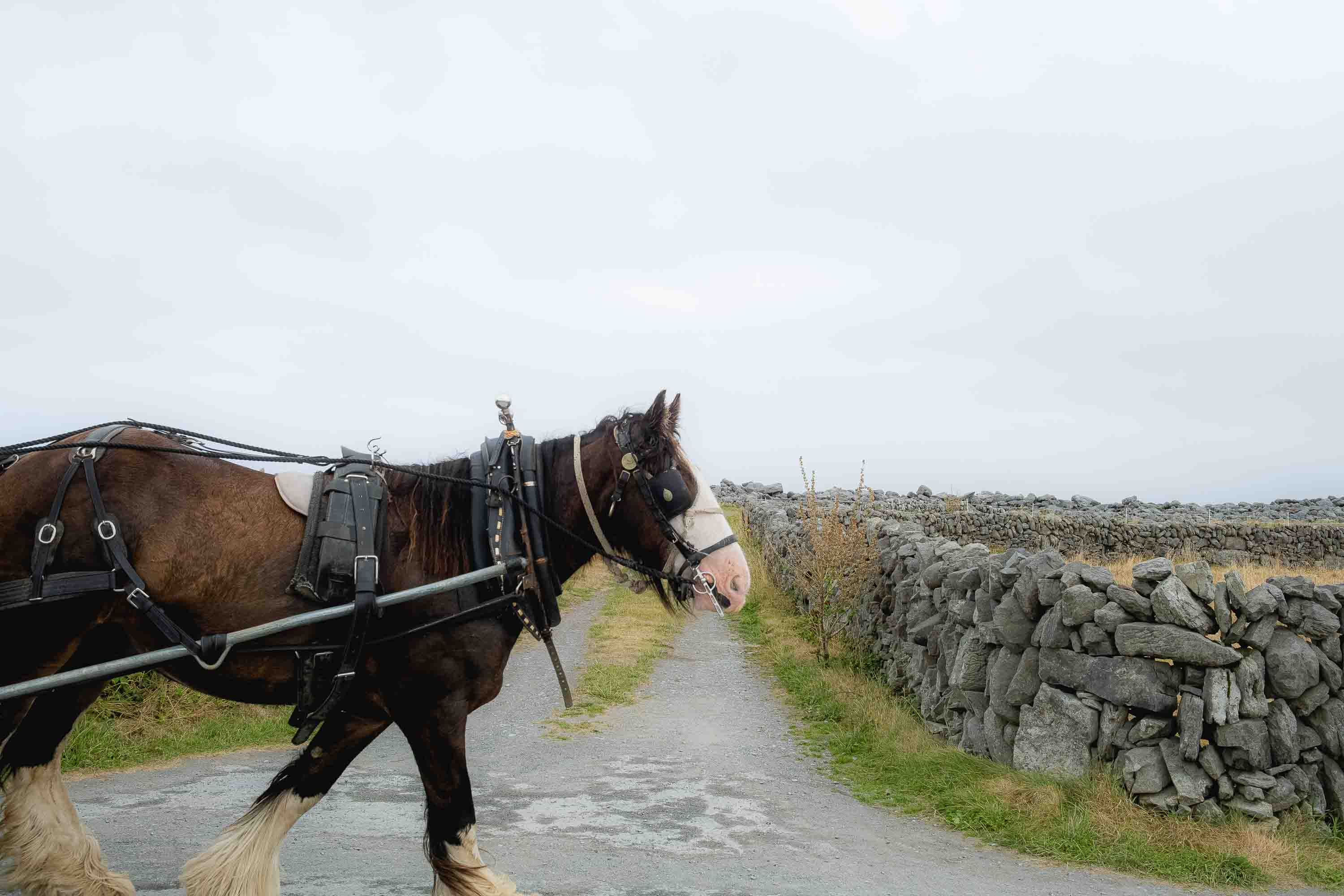
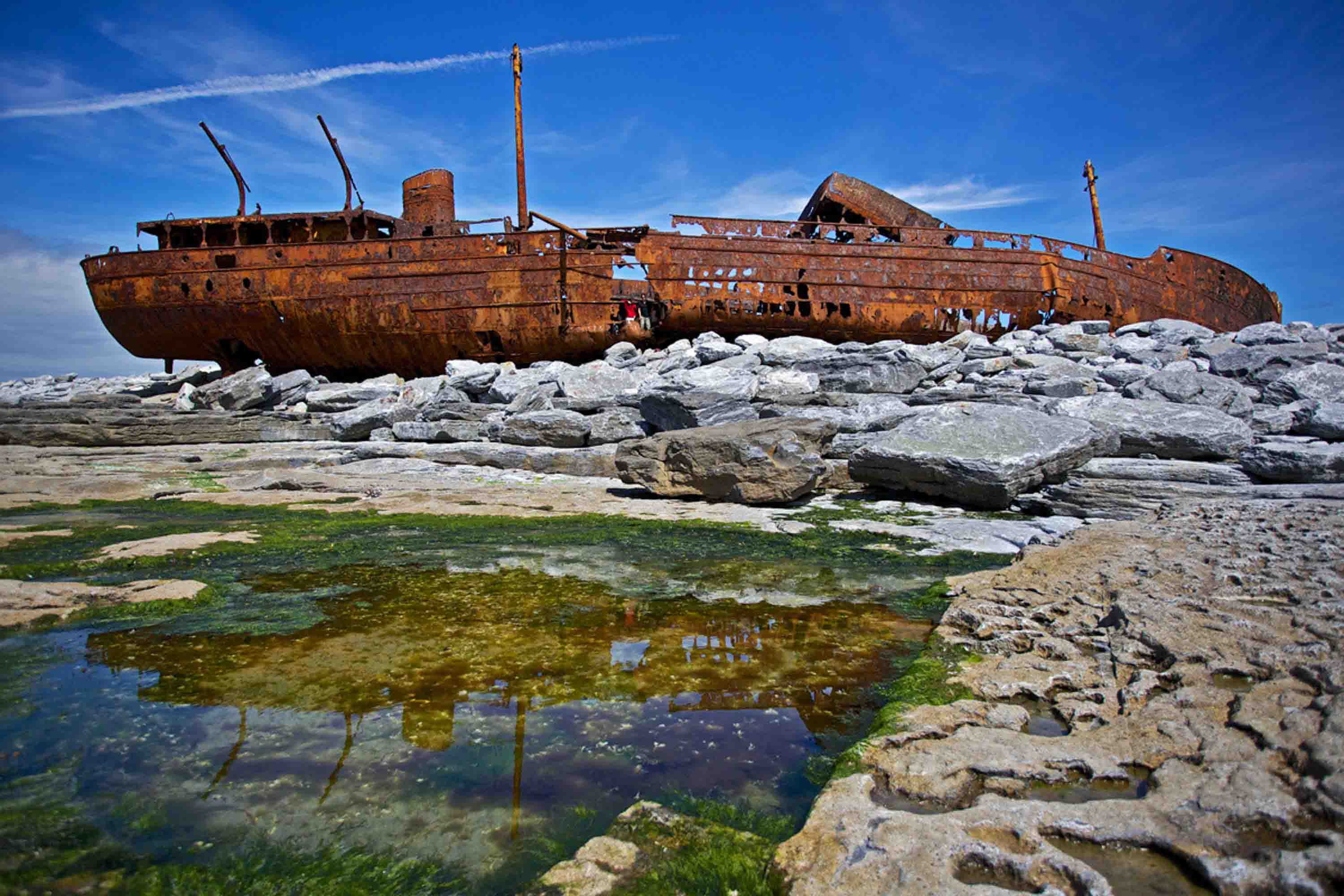
A short ferry ride from Doolin village brings us to the island, with the Cliffs of Moher looming in our rearview as we sail west. On the approach, Inis Oírr’s waymarks emerge: The rusting MV Plassy shipwreck, striped Fardurris Point Lighthouse, O’Brien’s Castle. By the pier, horse-drawn carriages and bicycle rental shops await visitors—the few cars on the island belong to its population of roughly 340 residents.
Meeting us by the harbor, Seoighe launches into a welcome ‘as Gaeilge’ before guiding us on a walk around the island’s wind-whipped perimeter. Limestone forms Inis Oírr’s foundations, ground down into white-sand beaches along the shore. Generations of islanders spread seaweed across the land to render it tillable. Miles of dry stone walls crisscross the island’s 2.3-square-mile (5.9 square kilometer) expanse.
“The language is such an important part of the island, of the community, of our past and present. Doing anything here on the island has to incorporate the language.”
- Áine Seoighe, Éalú Aran retreats
An ancient Celtic language, Irish was gradually excluded from legal proceedings, classrooms and state affairs when Ireland was under British rule. Clandestine educators (known as ‘hedge schools’) and rural communities quietly kept the language alive, but it was threatened with extinction by the Great Famine of the 1840s, when Irish-speaking rural areas were plagued by high death rates and mass emigration.
When the Irish Free State was founded in the 1920s—giving independence to 26 of Ireland’s 32 counties—its status was restored. English nevertheless remains more widely spoken, but 40 percent of the Republic of Ireland’s population reported that they could speak Irish in the latest census, recorded in 2022.
Gaeltacht regions are pivotal to the language’s survival. Seoighe, now 36, was raised speaking Irish at home on Inis Oírr. “When I was growing up, island life was still quite slow,” she tells me. “Irish was very much the only language really spoken in the community.”
Though still fluently spoken on Inis Oírr, its use on the island has waned somewhat in recent decades for a number of reasons, including societal changes, social media and TV, Seoighe admits. Bringing Gaeilge into Éalú Aran retreats, which vary in length from a day to a week, was instinctual. “The language is such an important part of the island, of the community, of our past and present,” she says. “Doing anything here on the island has to incorporate the language.”
Fionnuala Ní Uallacháin, multimedia officer for Scéal.ie, which catalogues Irish-language events around the country, confirms there has been a surge in their number and variety, from “ciorcal comhrá” (conversation circles) and park runs to stained glass workshops and hillwalking meet-ups. Language courses are “increasing in popularity exponentially,” she says.
High-profile Irish artists such as Kneecap, the Belfast group that lyricize in Irish, are partially to credit for the resurgence, and widely seen as a “cool band doing new things with Irish,” Ní Uallacháin tells me. A fresh wave of Irish-language podcasts, such as How to Gael and Beo Ar Éigean, and content creators (among them, Cúán de Búrca and Mollie Guidera) is also driving renewed interest.
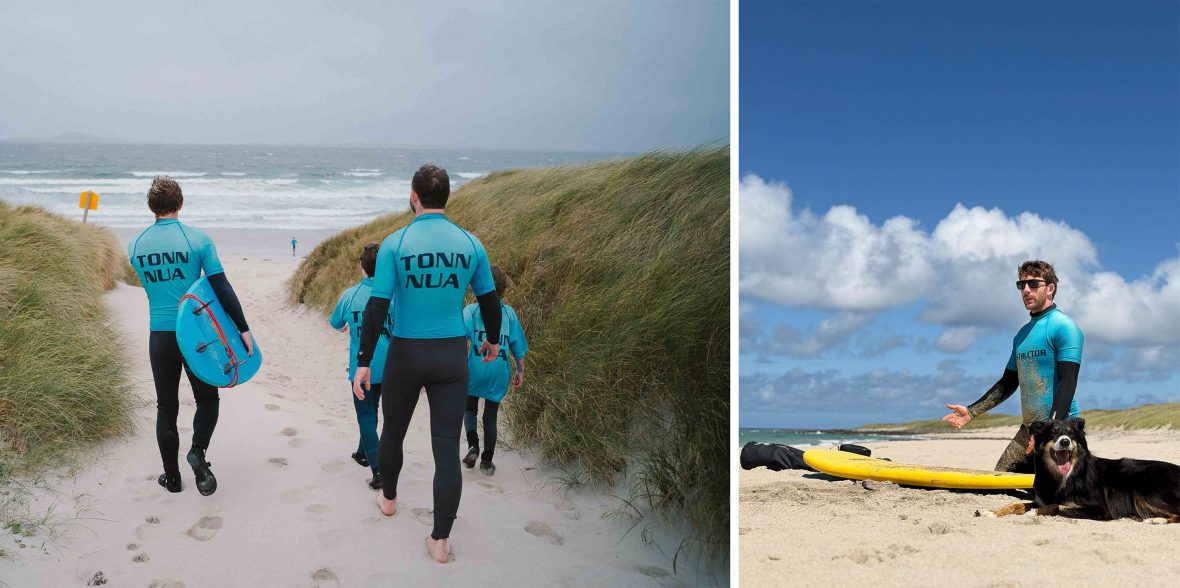
This grassroots revival is something Declan O’Connor, who teaches surfing through Irish and English at Tonn Nua Surf School in County Mayo on Ireland’s west coast, has observed. “There’s definitely been a resurgence. I’ve noticed it with the surf school, but also I’ve noticed it outside at festivals and in random meetings with people.”
This year, he started hosting bilingual surf and yoga retreats on the Mullet Peninsula in the northwest of the county, in collaboration with Irish-language surf group Surfála. “The informal setting, it just loosens [people] up and gives them the opportunity to give it a try,” he says.
On the yoga mat, the vocabulary I studied in classrooms of my childhood resurfaces. I’m surprised by how much I remember.
A recent study by Irish language course provider Gaelchultúr found nearly 70 per cent of adults want to improve their grasp of the language while almost half of those aged under 25 reported using Irish when socializing. Its research also showed that close to half of people under 44 would send their child to a Gaelscoil, where subjects are taught through Irish—a 20 percent increase on a similar 2015 study.
Older generations feel a “wistfulness” for the language, Fionnuala observes. “You see a lot of people going back to [learn] Irish when they retire,” she says.

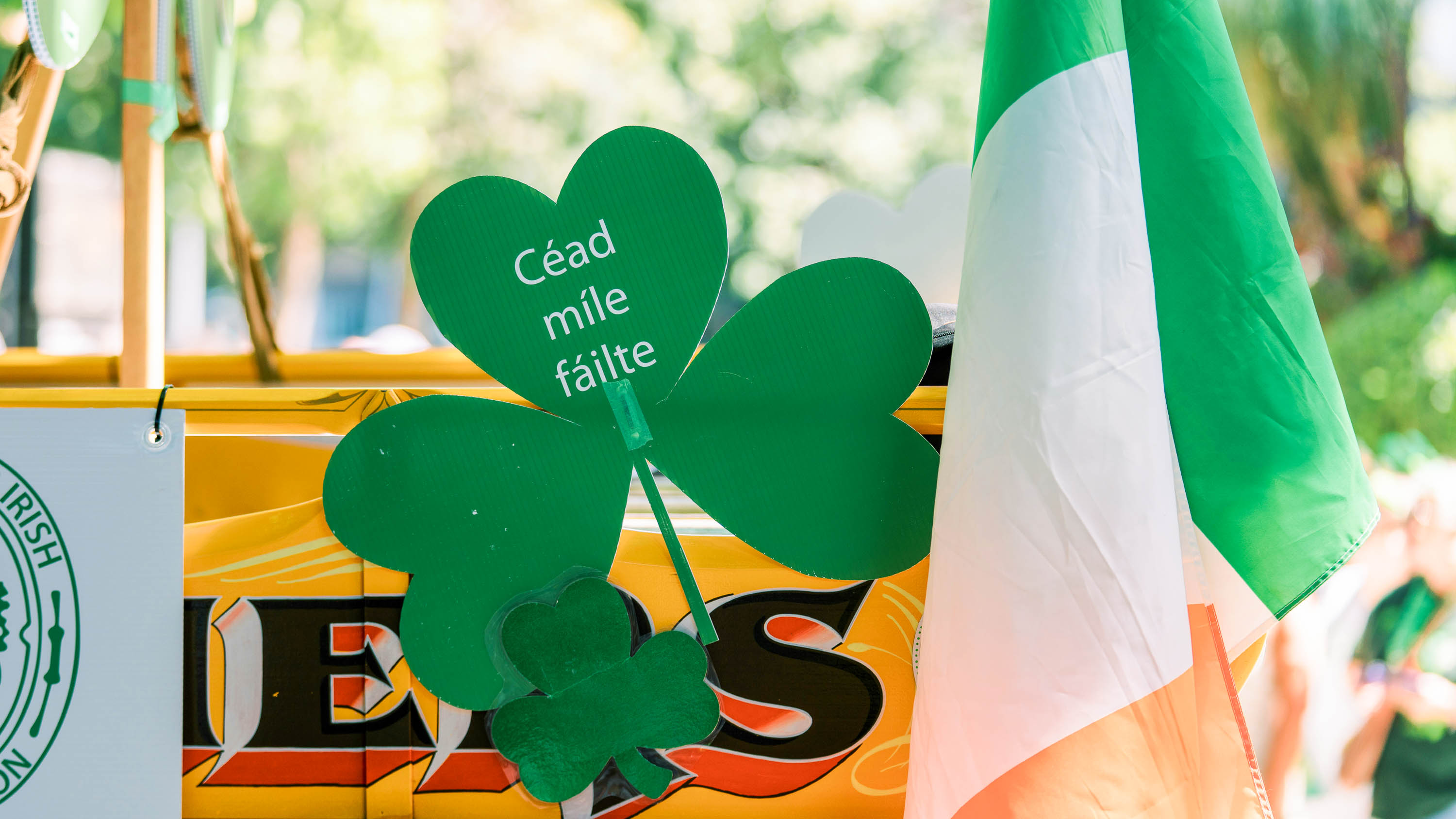
Éalú Aran retreats are open to Irish-language novices, as well as experienced speakers. Attendees have visited from wider Europe, North America and Australia. My British partner finds he can follow along without any basis in the language. Participants are “surprised at how much communication isn’t vocal,” says Seoighe.
During one of our hikes, Seoighe forages sea beet, an ancient plant often called ‘wild spinach’, for us to taste and points out currachs stacked on the sand, the traditional Irish boats that once were the only way to access the island. Alternating between Irish and English as we go, she translates Gaelic turns of phrase without interrupting the conversation’s flow.
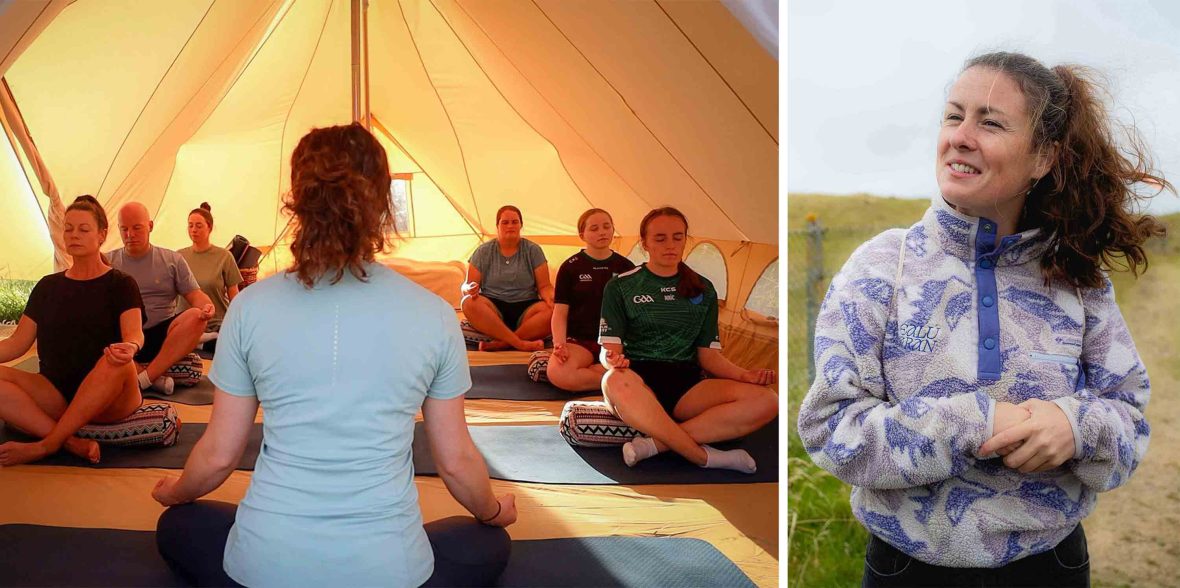
Eventually, we reach a ‘garraí’, a walled plot overlooking a freshwater lake, Loch Mór. Inside is a yurt, the setting for our yoga class. “I’ll go in and out of Gaeilge, but you’ll follow that, I’m sure,” Seoighe tells us, as we begin. The tent is open to the elements. Currachs move across the lake, while a sleepy calf is feeding in the adjoining garraí.
“Learning a language keeps the mind active, curious and engaged,” she says. “So for me, wellness and language-learning are a very natural combination: We are looking after the body, the mind and our connection to our culture and the world around us.”
For Seoighe, movement facilitates learning. “When we move, we are focused mainly on the movement, not the words. We hear the language repeatedly and naturally, and over time the sounds and words begin to become familiar.”
This is certainly my experience. On the yoga mat, the vocabulary I studied in classrooms of my childhood resurfaces. I’m surprised by how much I remember. “Dún na súile … weʻll close the eyes here,” Seoighe says, encouraging us to think of the “gaineamh agus an fheamainn, the sand and seaweed that made the land” as we stretch out on the “talamh” (ground).
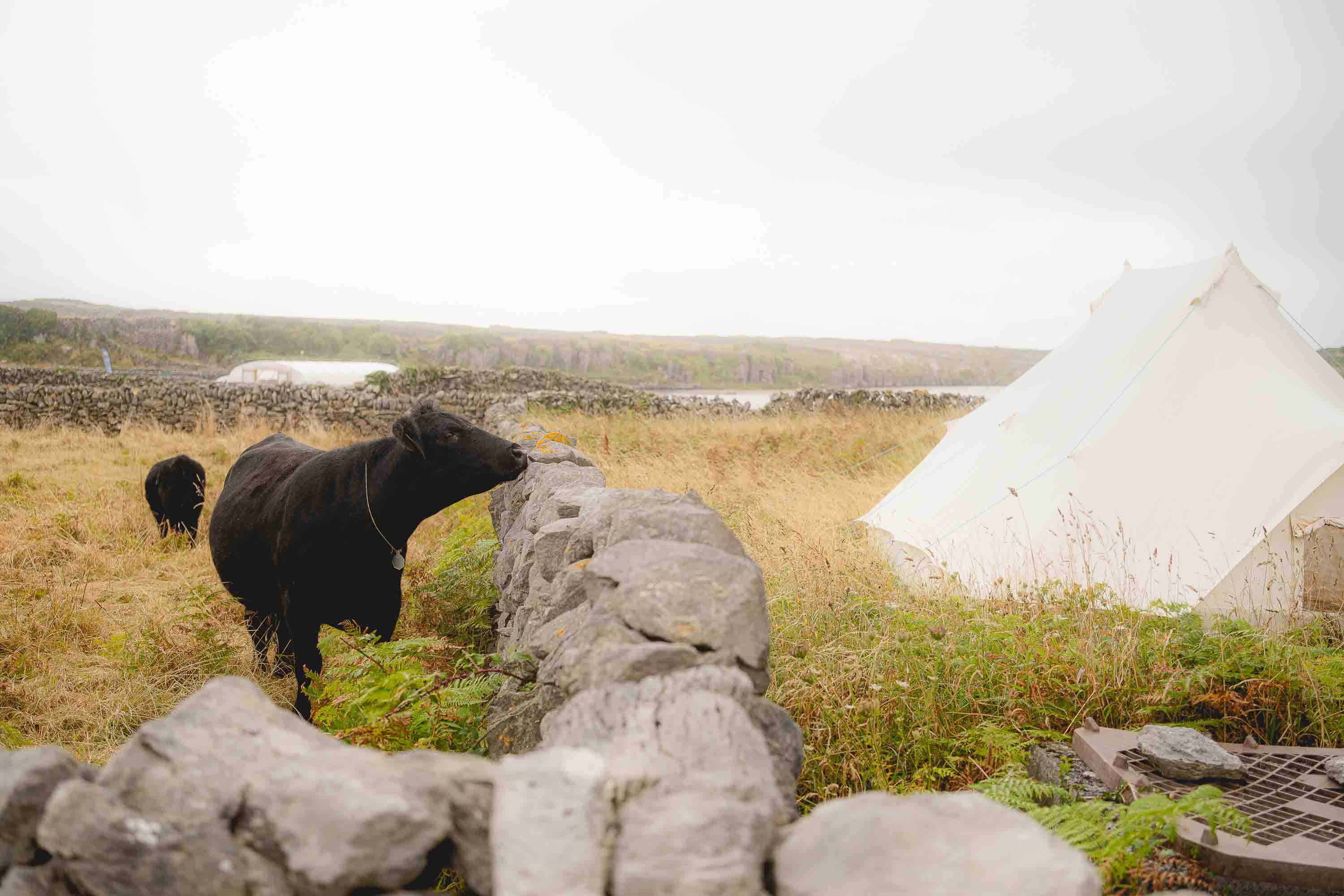
Lunchtime arrives. A picnic of cheddar cheese, homemade bread and potato salad has been prepared by the island’s Teach an Tae café. It’s been spitting rain all morning, but suddenly the sky brightens and the water glitters; we enjoy lunch on the rocks overlooking the lake.
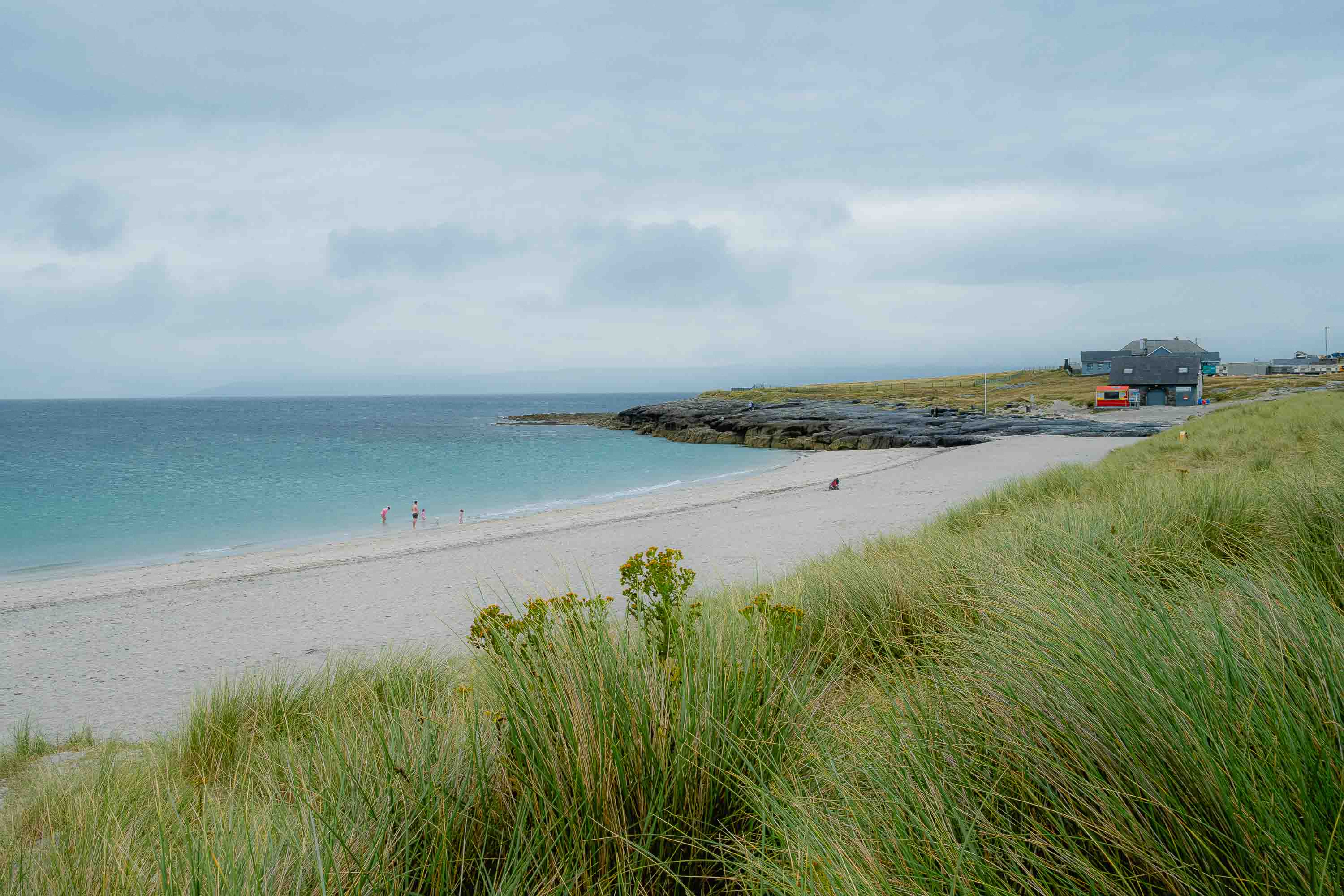
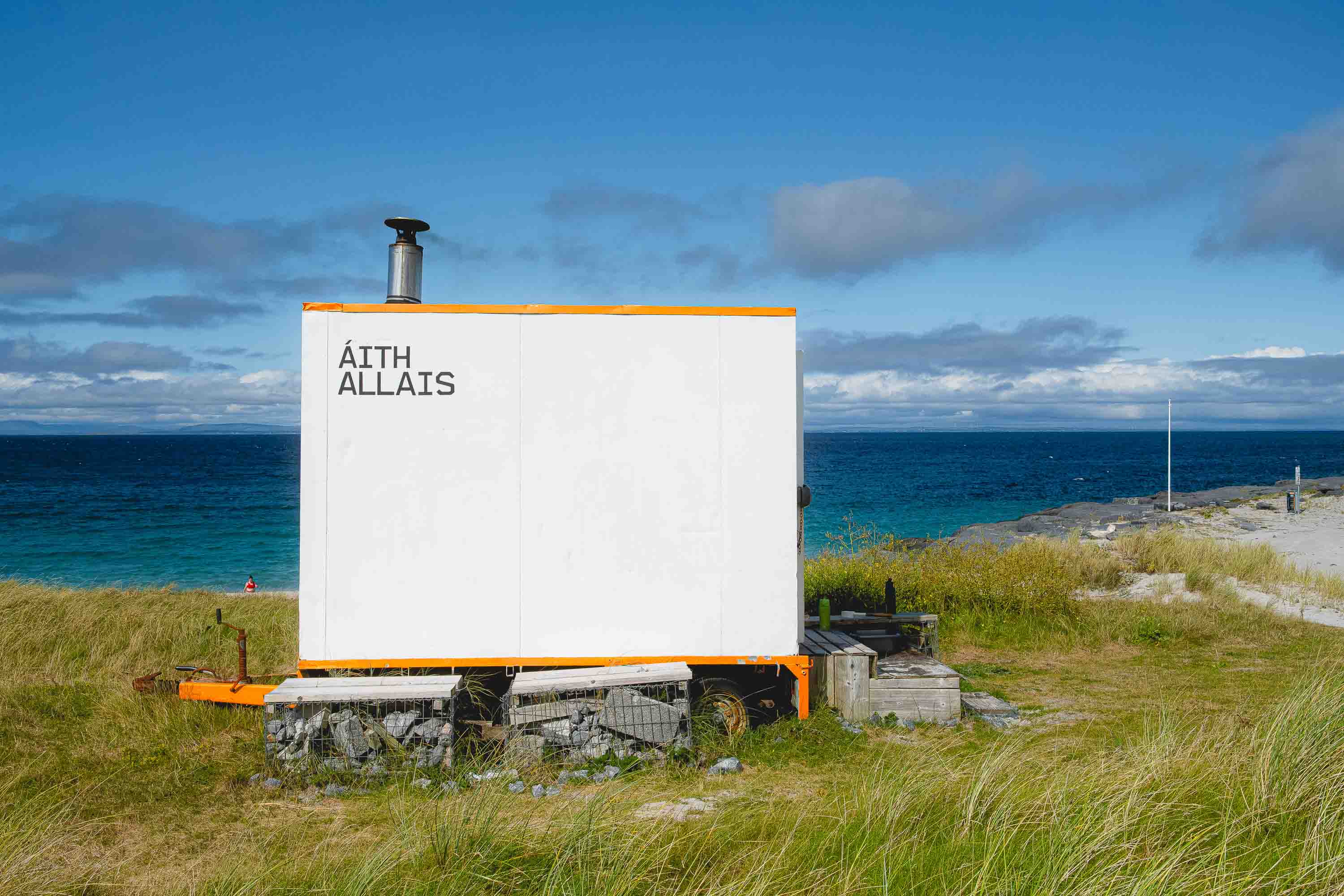
Later, on the island’s main beach, Seoighe fires up the sauna, and we join locals and holidaymakers in the icy water. By the shore, the words snámh (swim) and fuar (cold) come back to me. My time on Inis Oírr has proven I haven’t fully lost my Irish, but I’ll have to put in some work to find it again.
It’s a beautiful language to rediscover and we owe so much to its custodians, like Seoighe, who are safeguarding it for future generations. “Keeping the language living is about much more than preserving words,” she says. “It is about preserving a different way of seeing and understanding the world.”
**
The writer was a guest of Éalú Aran. Retreats are priced from EUR€95 ($110/AUD$155) per person. Transport and accommodation were arranged by the writer.
****
Adventure.com strives to be a low-emissions travel publication. We are powered by, but editorially independent of, Intrepid Travel, the world’s largest travel B Corp, who help ensure Adventure.com maintains high standards of sustainability in our work and activities. You can visit our sustainability page or read our Contributor Impact Guidelines for more information.

Ailbhe MacMahon is an Irish travel writer with bylines in publications that include BBC Travel, Atlas Obscura, Fodor's and The Irish Times. With a background in textile design, she loves delving into a place where travel, culture and craft interconnect.