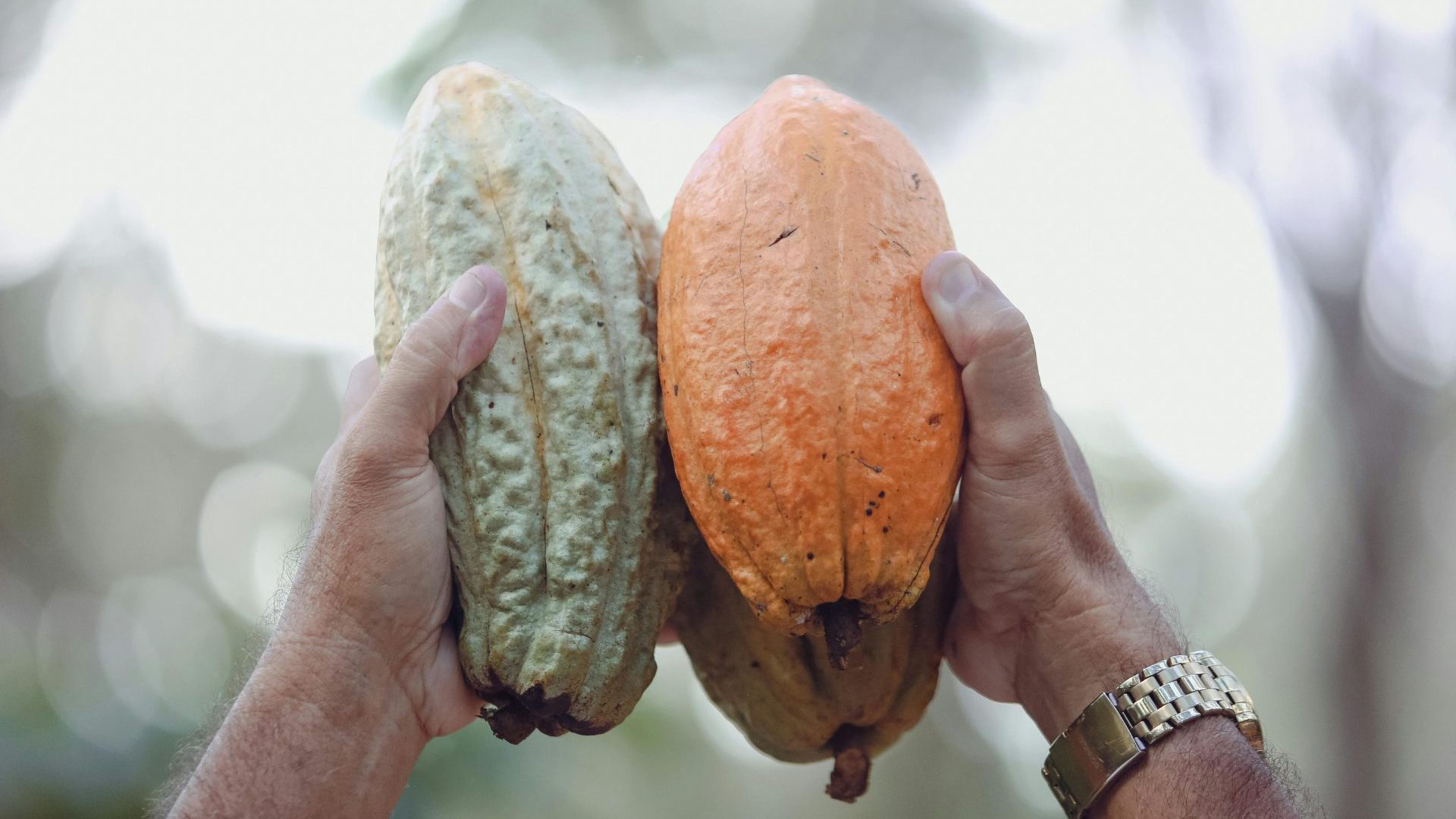
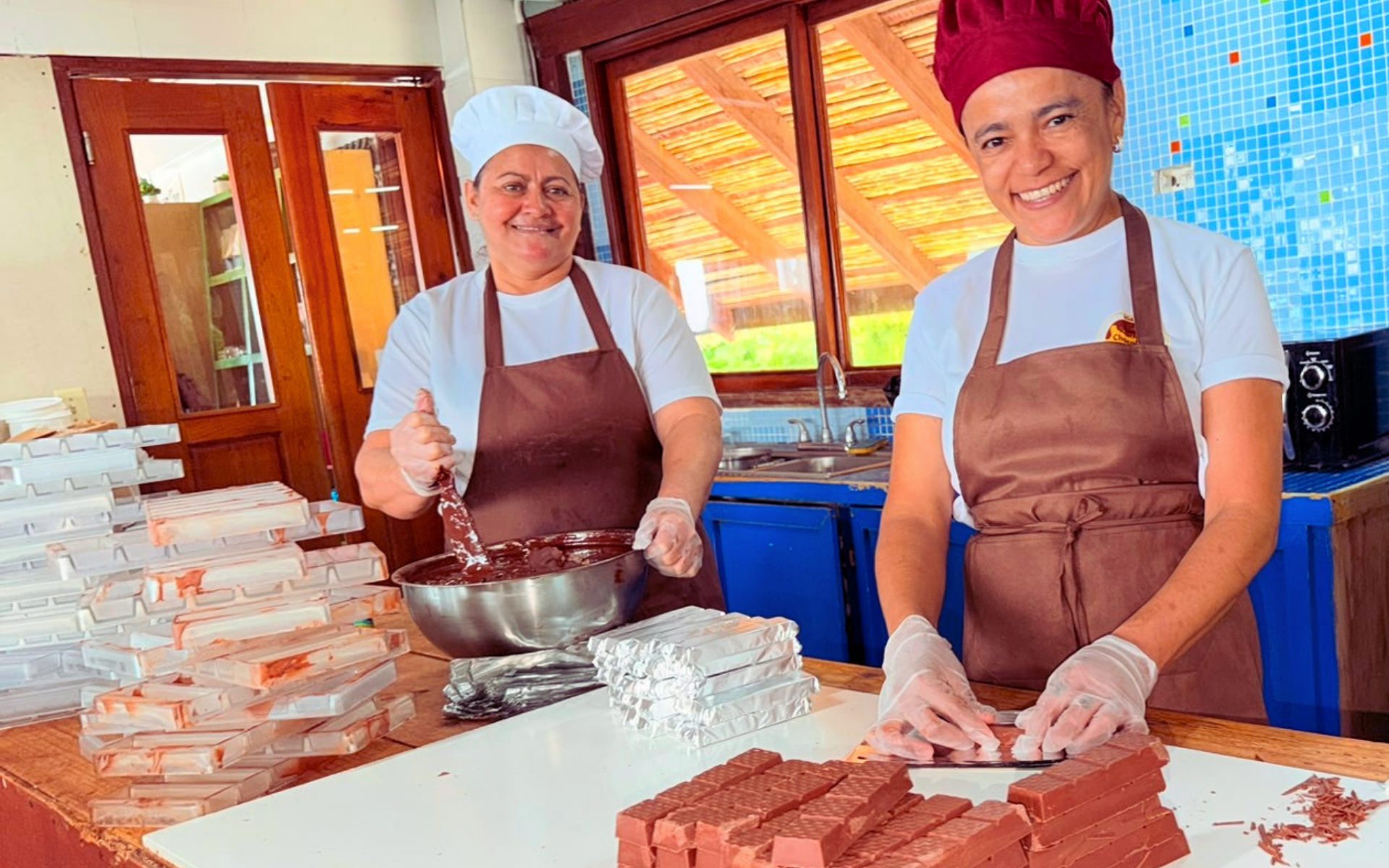
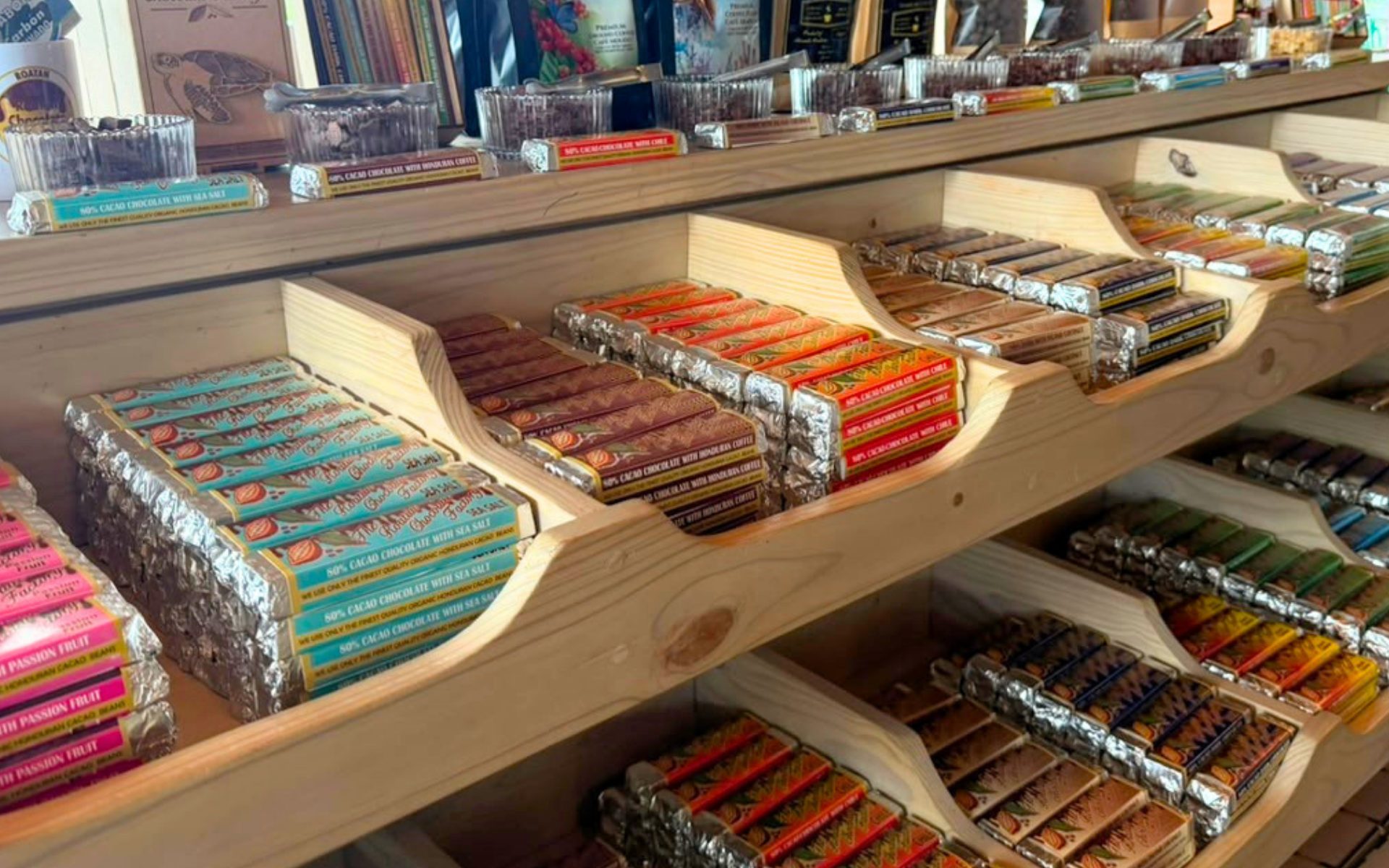
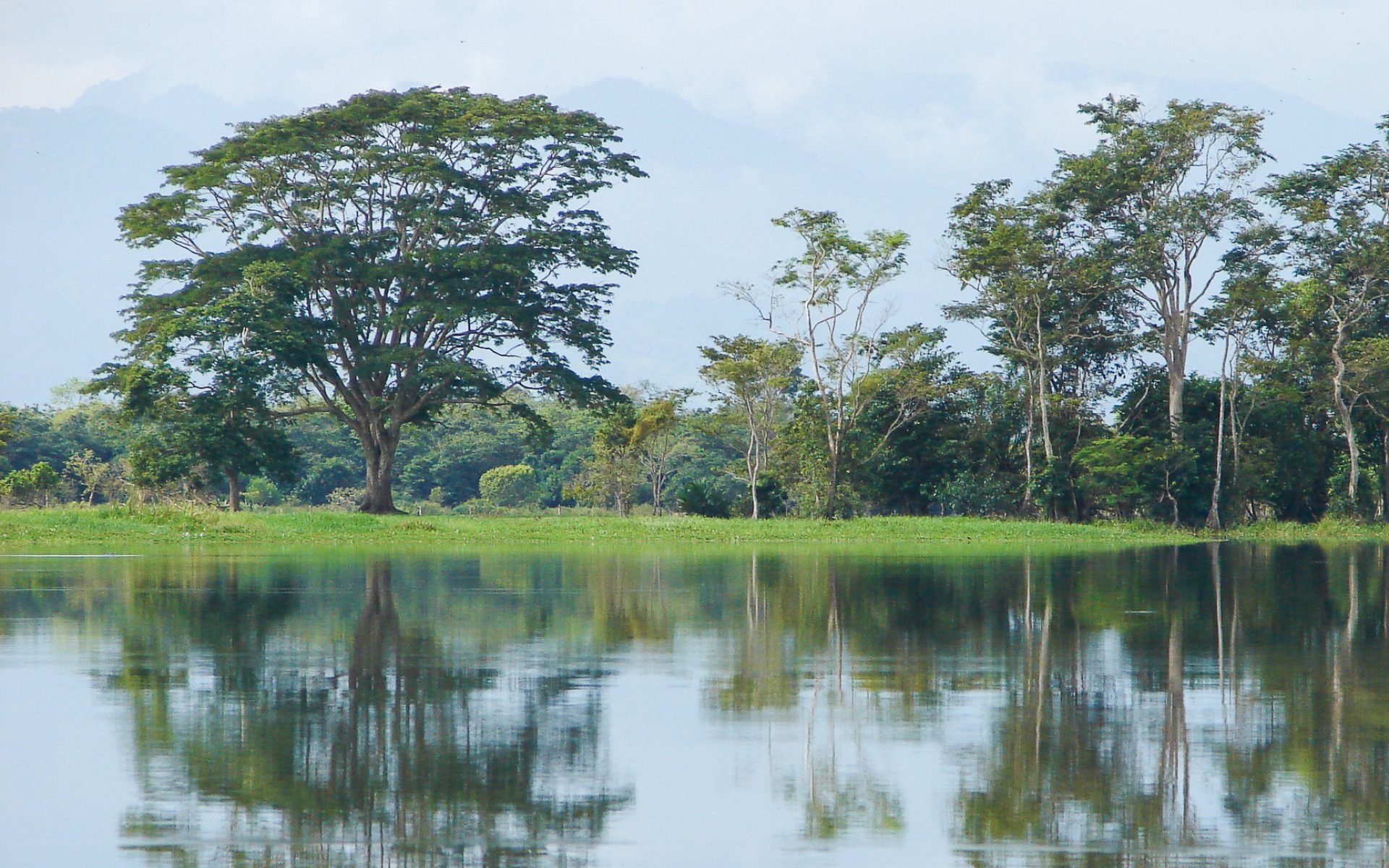
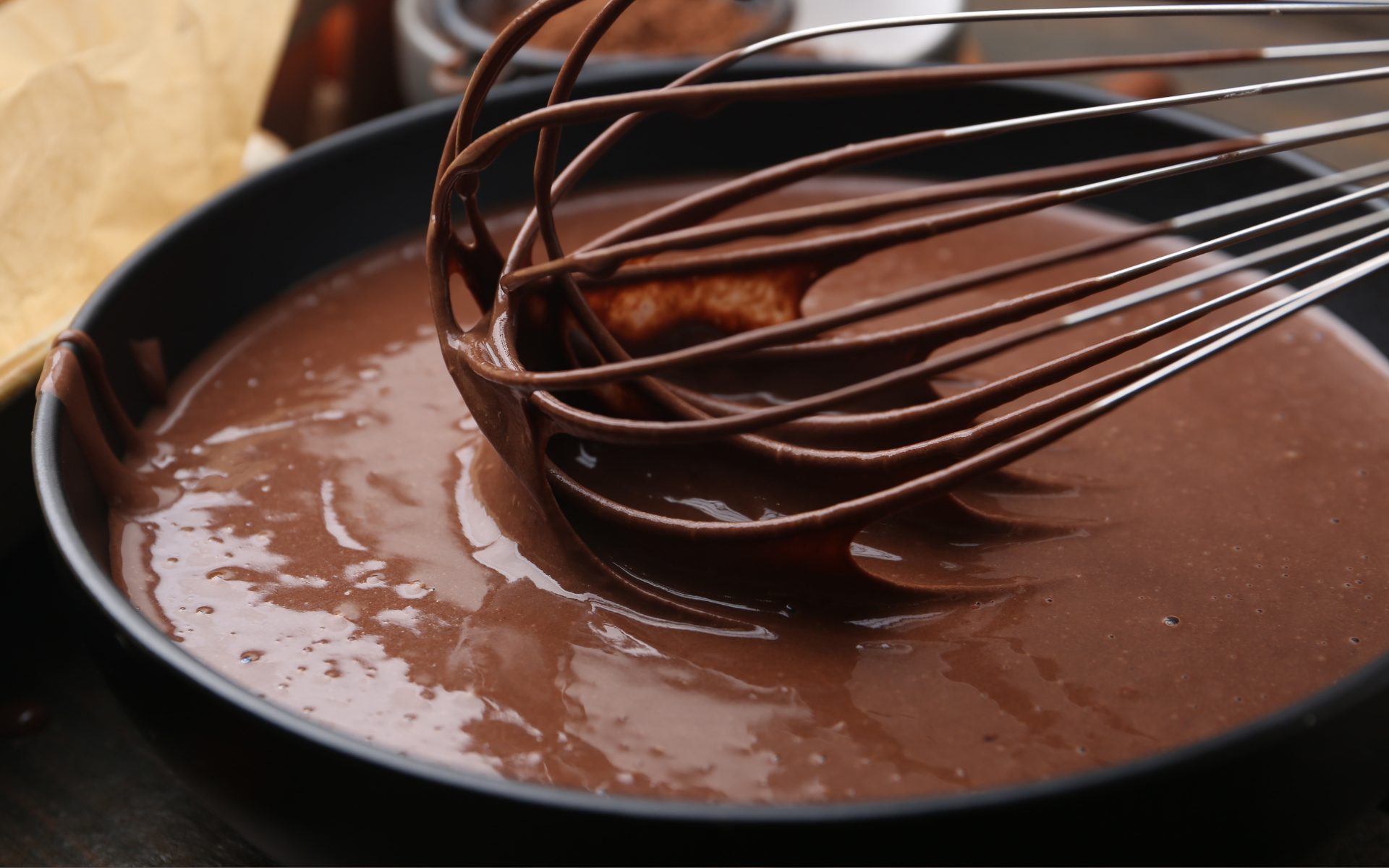
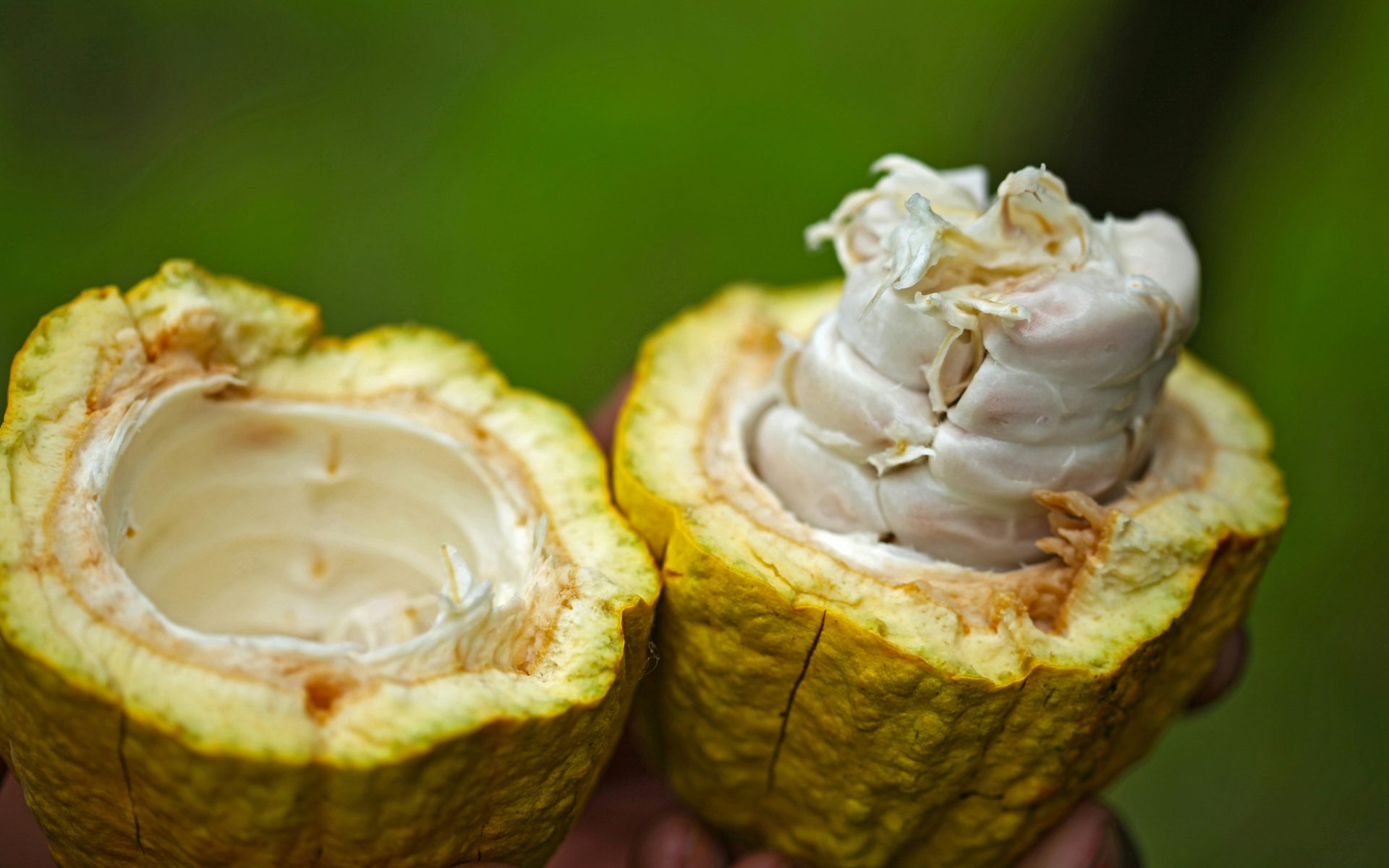
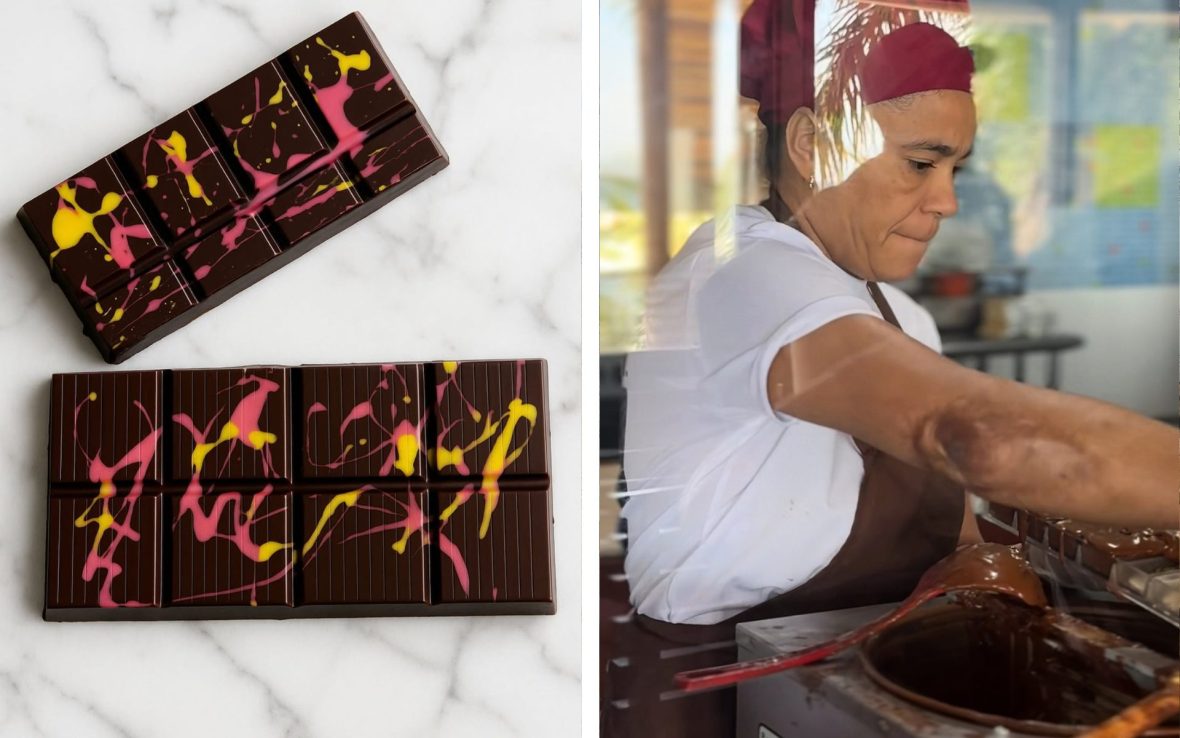
In a different corner of the chocolate factory, I meet Daniel, a self-taught chocolate maker who has dedicated years of trial and error on his quest to perfect the artisanal bar. He passes around roasted cacao beans from La Mosquitia, a vast roadless jungle in northeastern Honduras—18,000 square miles (47,000 square kilometers) of rainforest denser than the Amazon—and watches our faces as we bite into them.
The bean is gritty, airy, coffee-like. He then holds up two bags of cocoa powder (raw cacao beans after they have been roasted and processed). One is light brown, the other nearly black. “The dark one has been processed to hide what the bean has lost,” he says.
Up until now, I didn’t know chocolate could lose something.
When European traders moved cacao to West Africa in the 1700s to cultivate the cash crop somewhere cheaper and closer (West Africa now produces some 70 to 80 percent of the world’s cocoa production), they took the bean out of its jungle, far from the river water and fruit trees that had always grown beside it. “When sommeliers talk about wine, they say ‘a hint of cedar, a scent of lavender.’ It’s the same with cacao,” says Daniel. “Change the environment, and the flavor becomes flat.”
“In the jungle,” he continues, “the cacao trees are getting different nutrients and minerals from the soil, and from the river flowing down the mountain. The fruit and floral trees are what give the cacao its depth and flavor.”