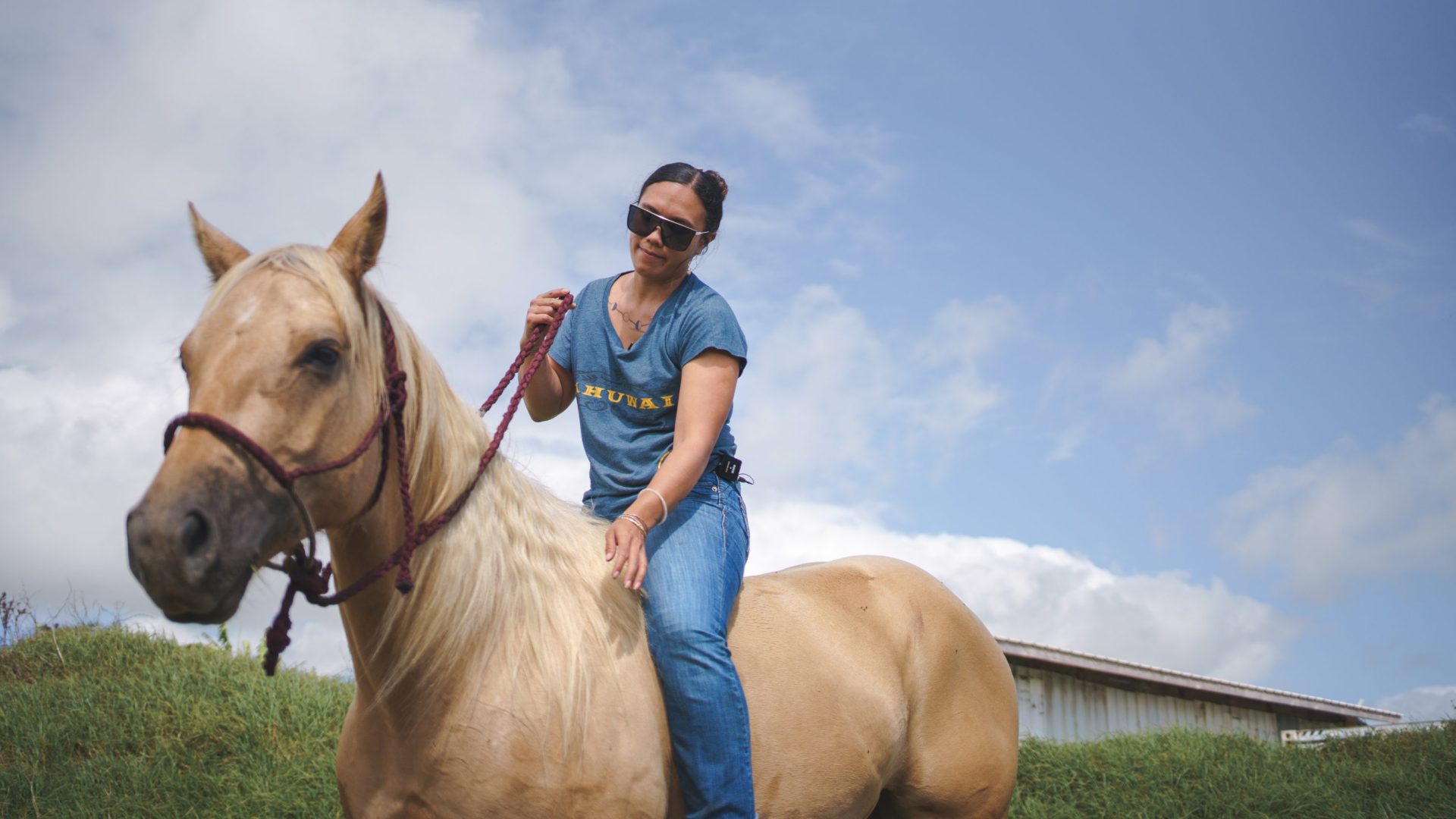
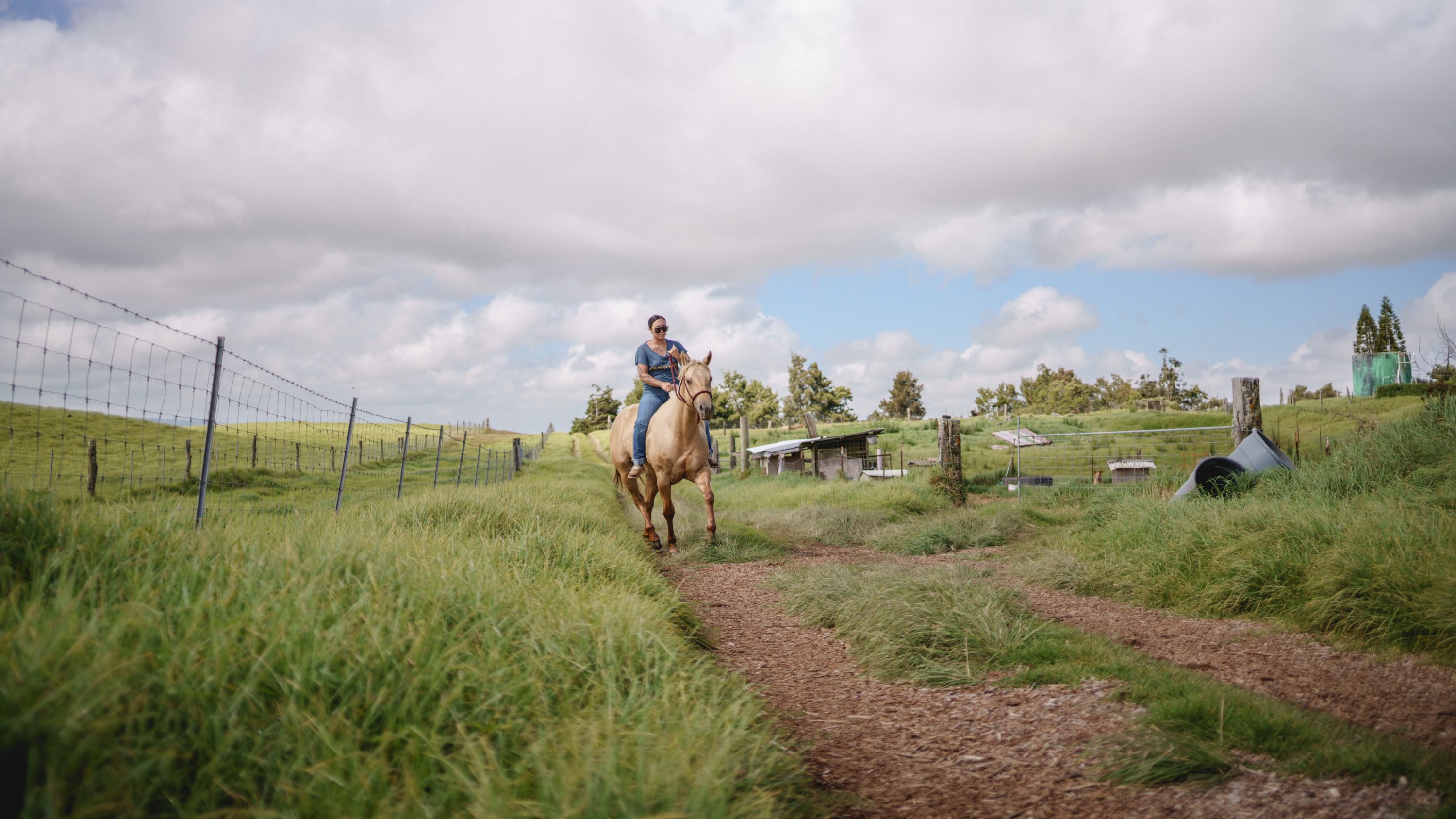
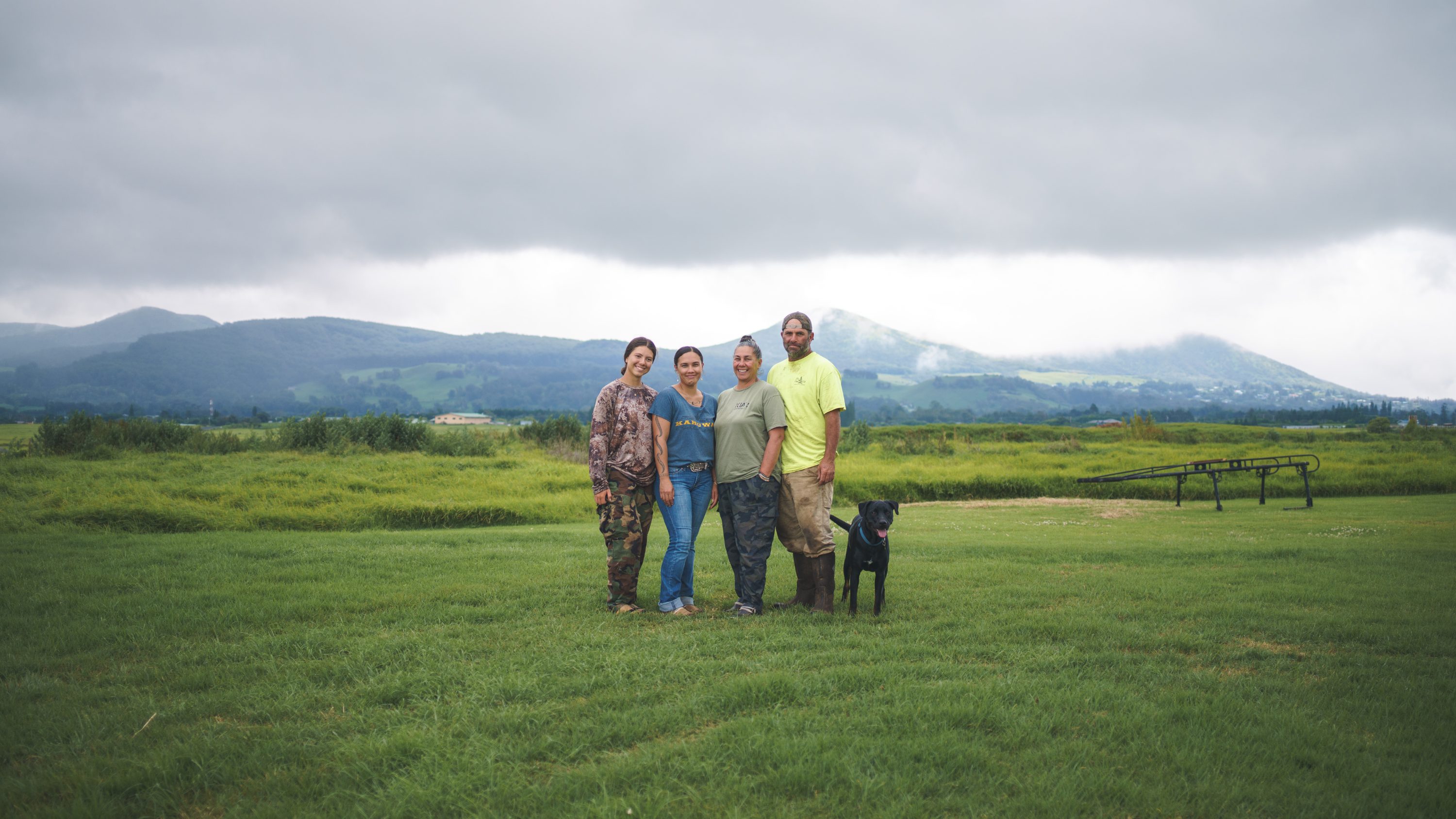
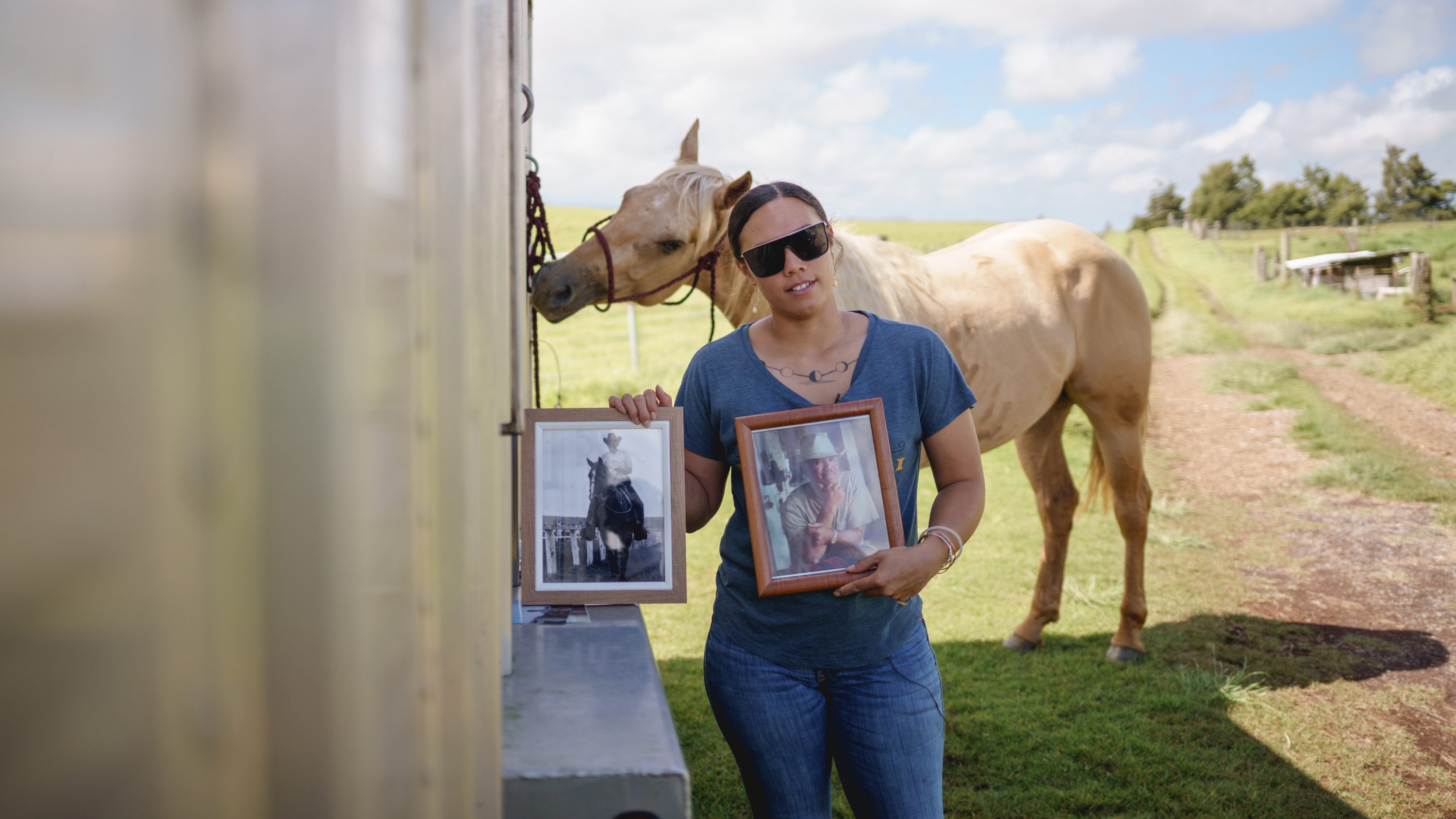
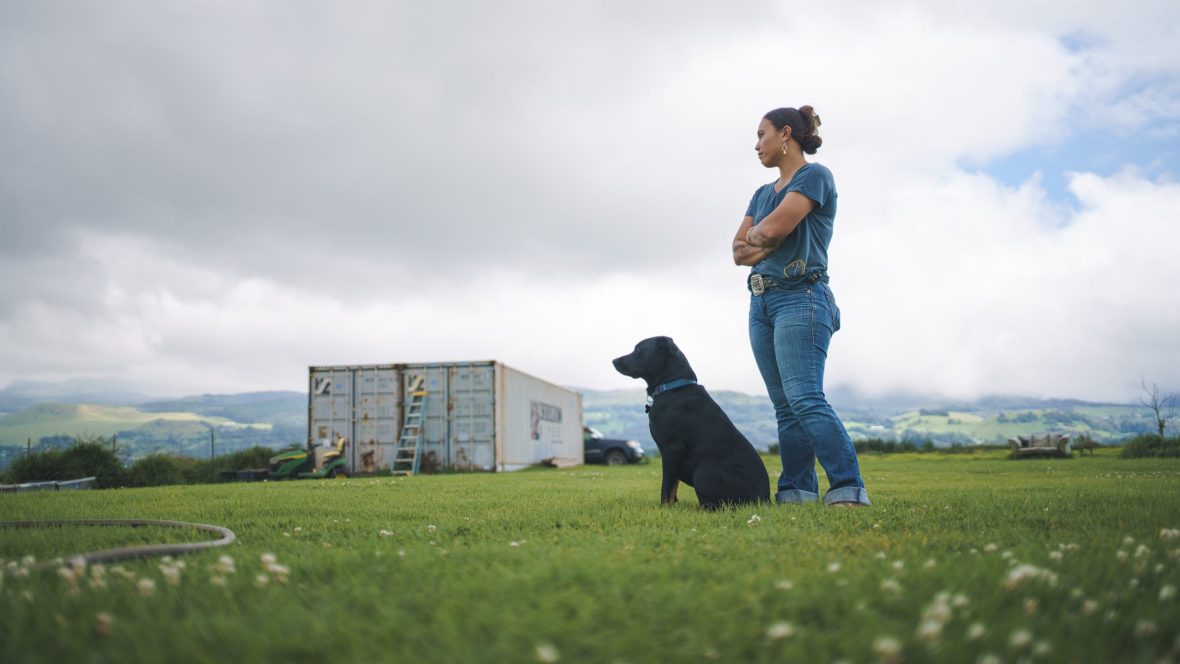
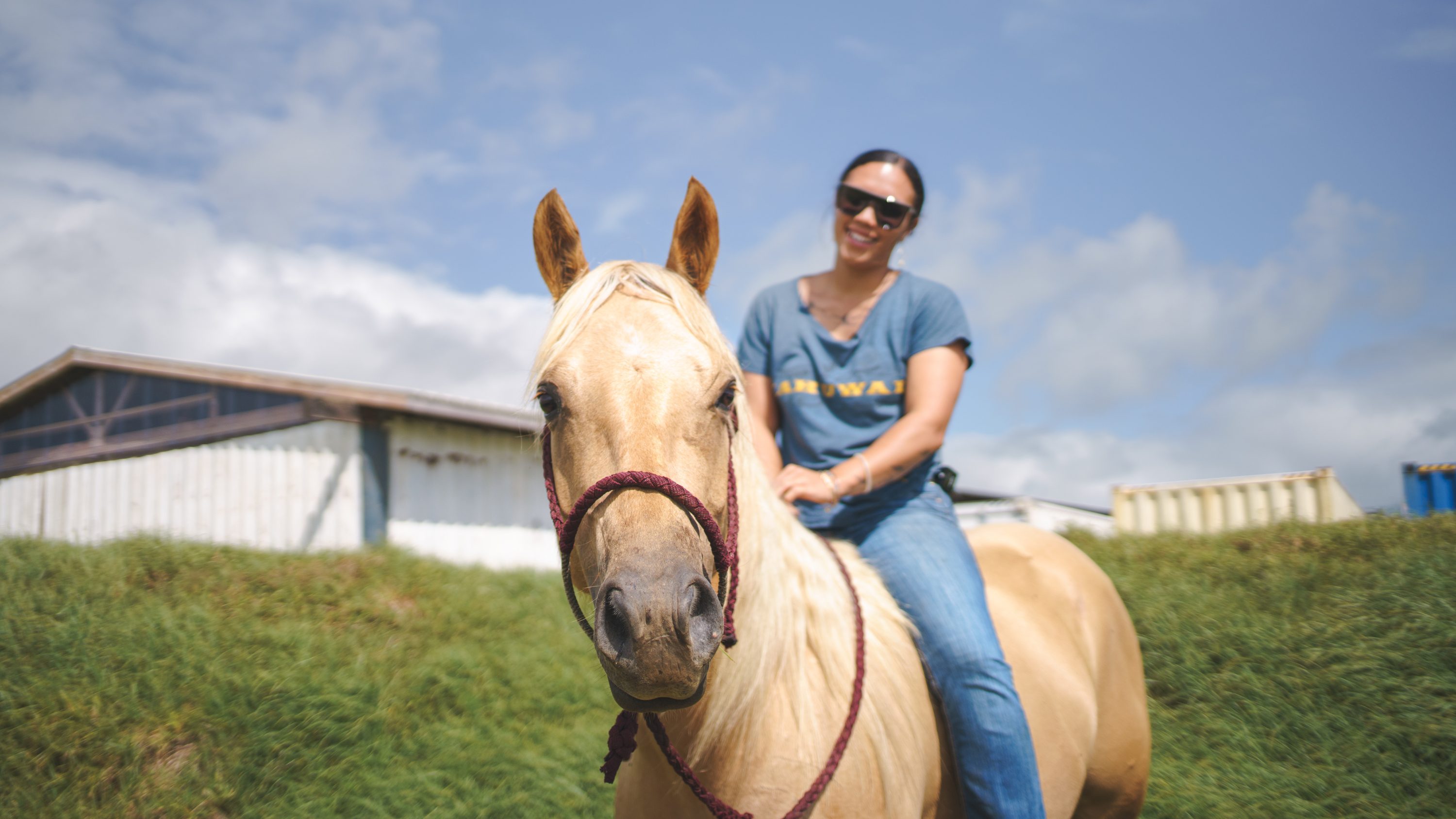
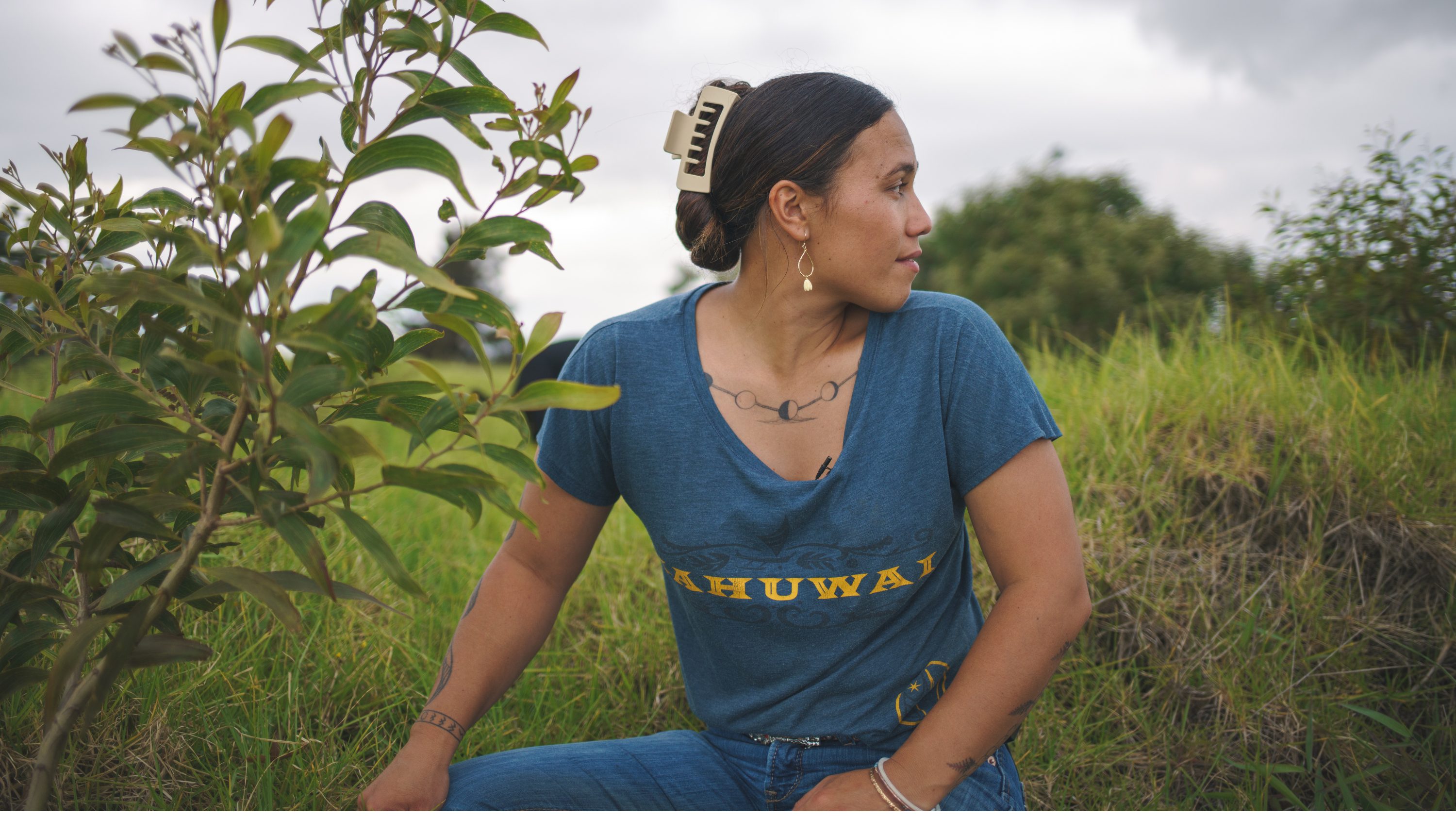
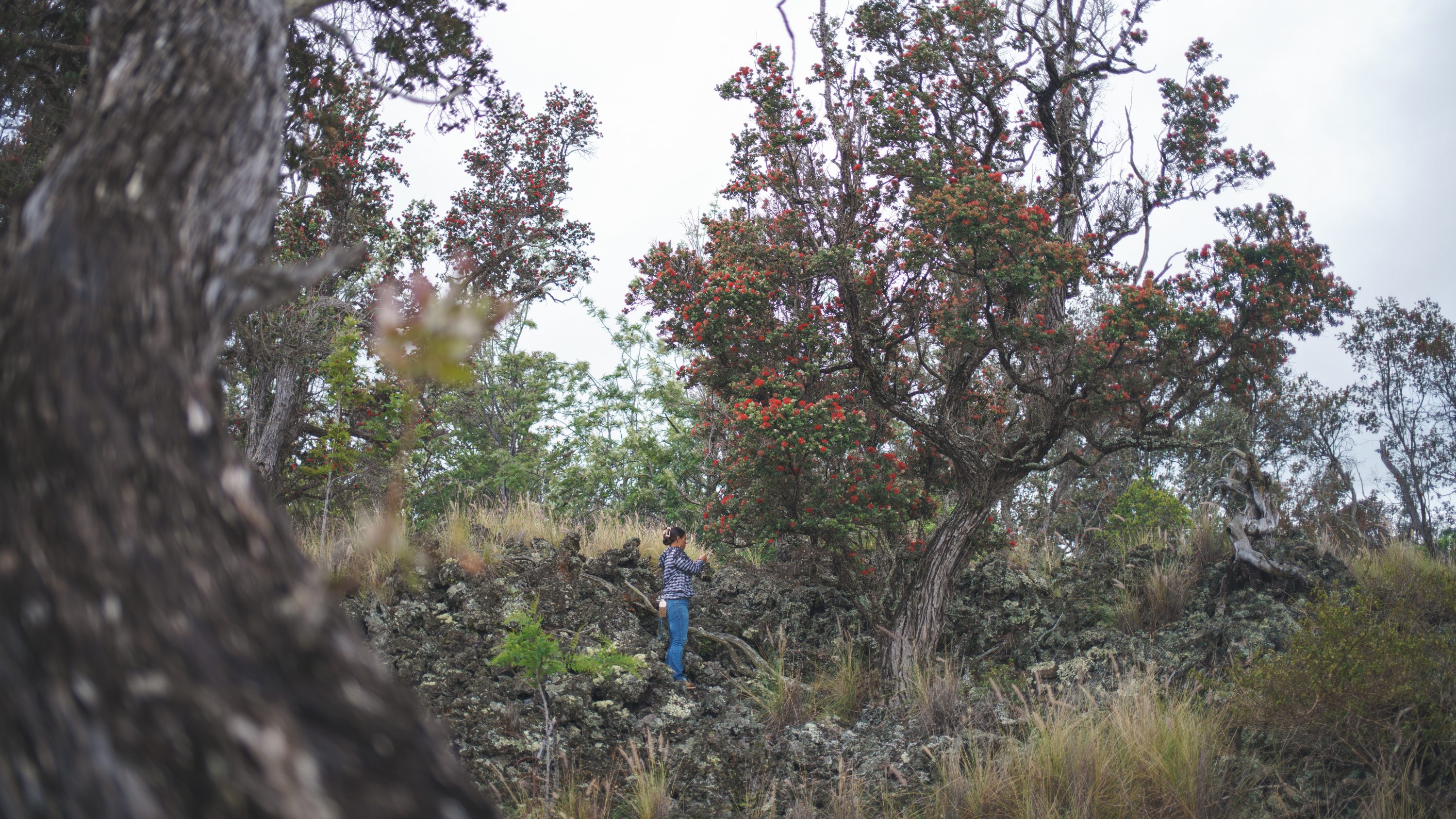
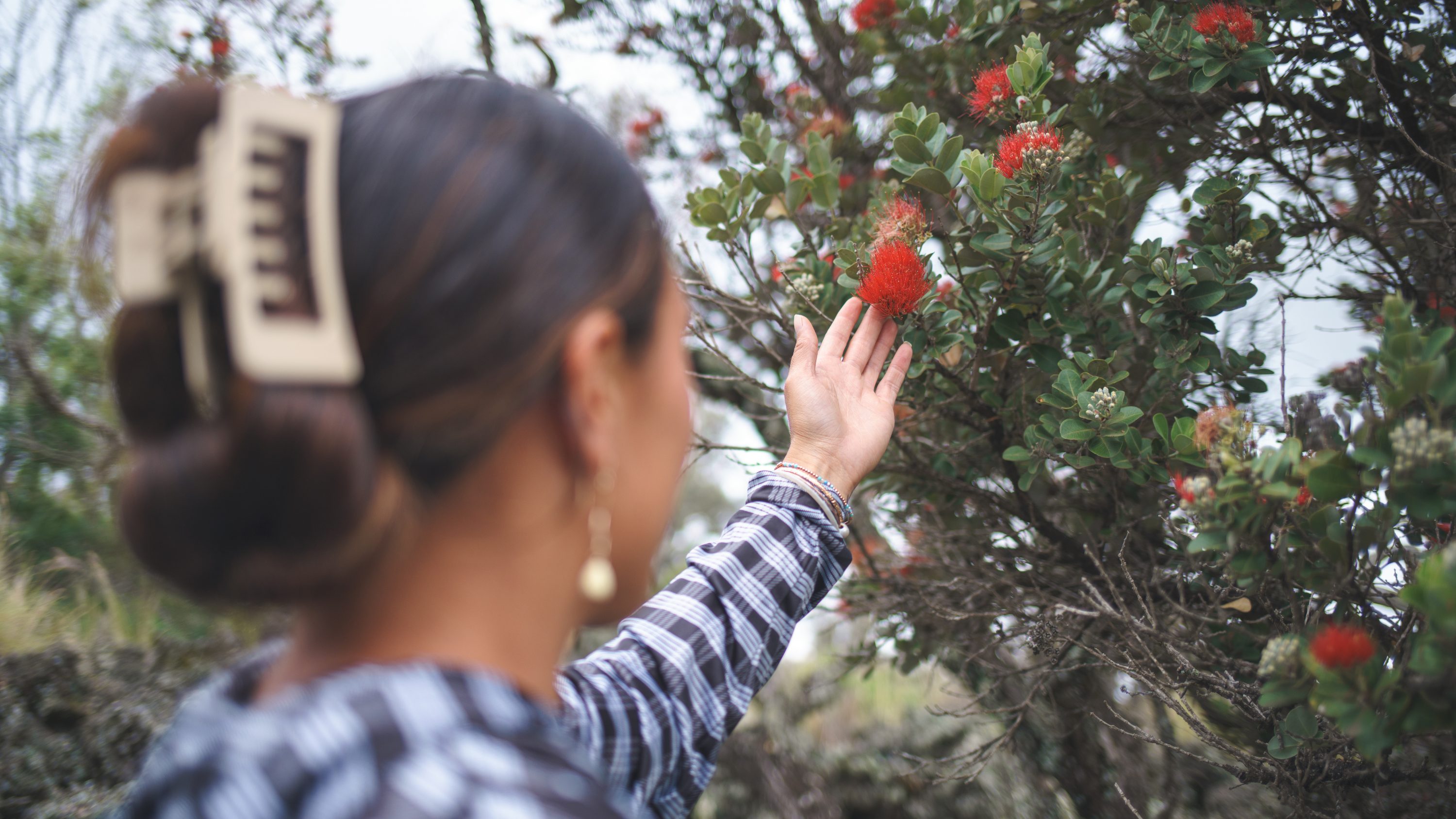
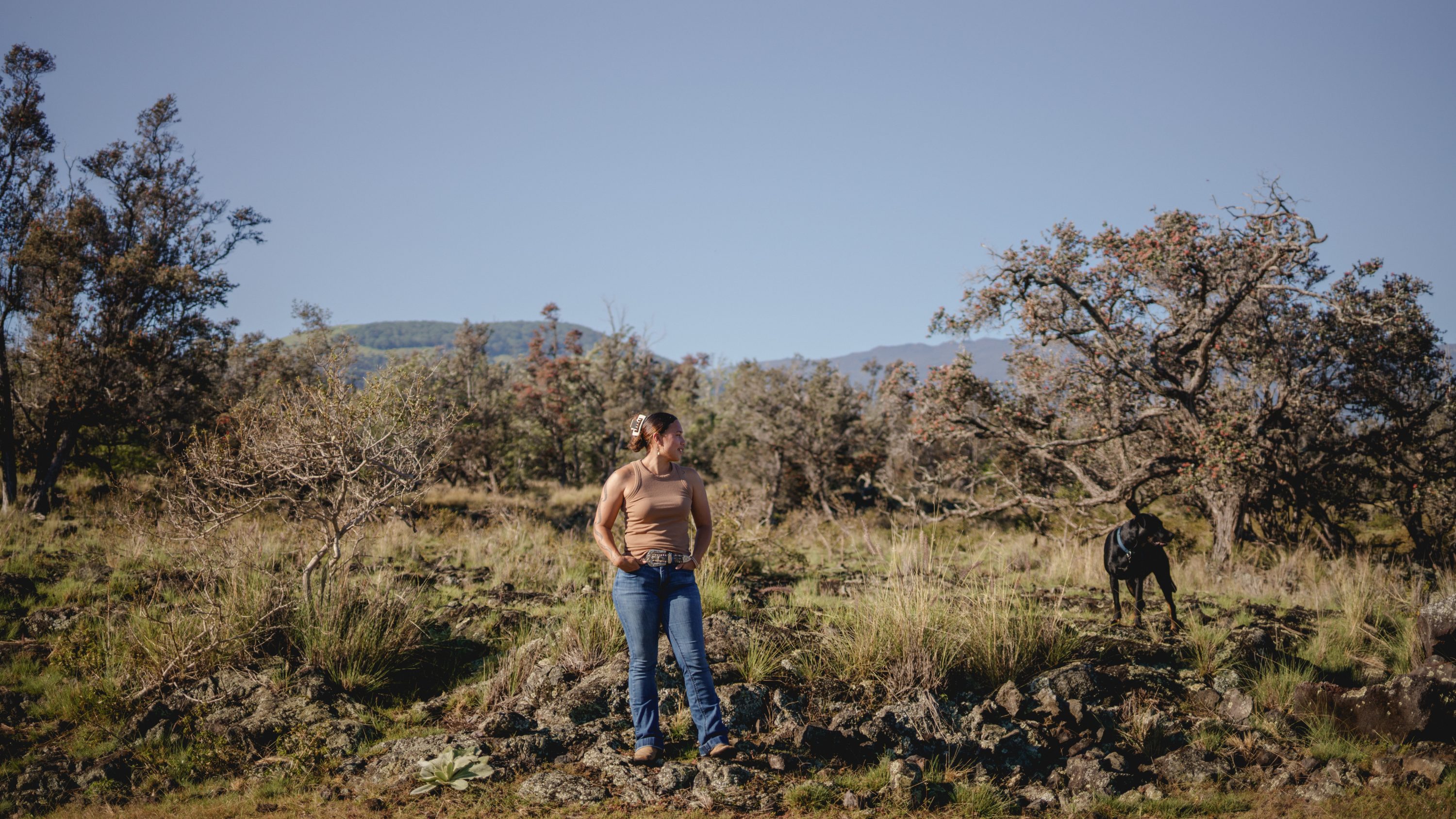
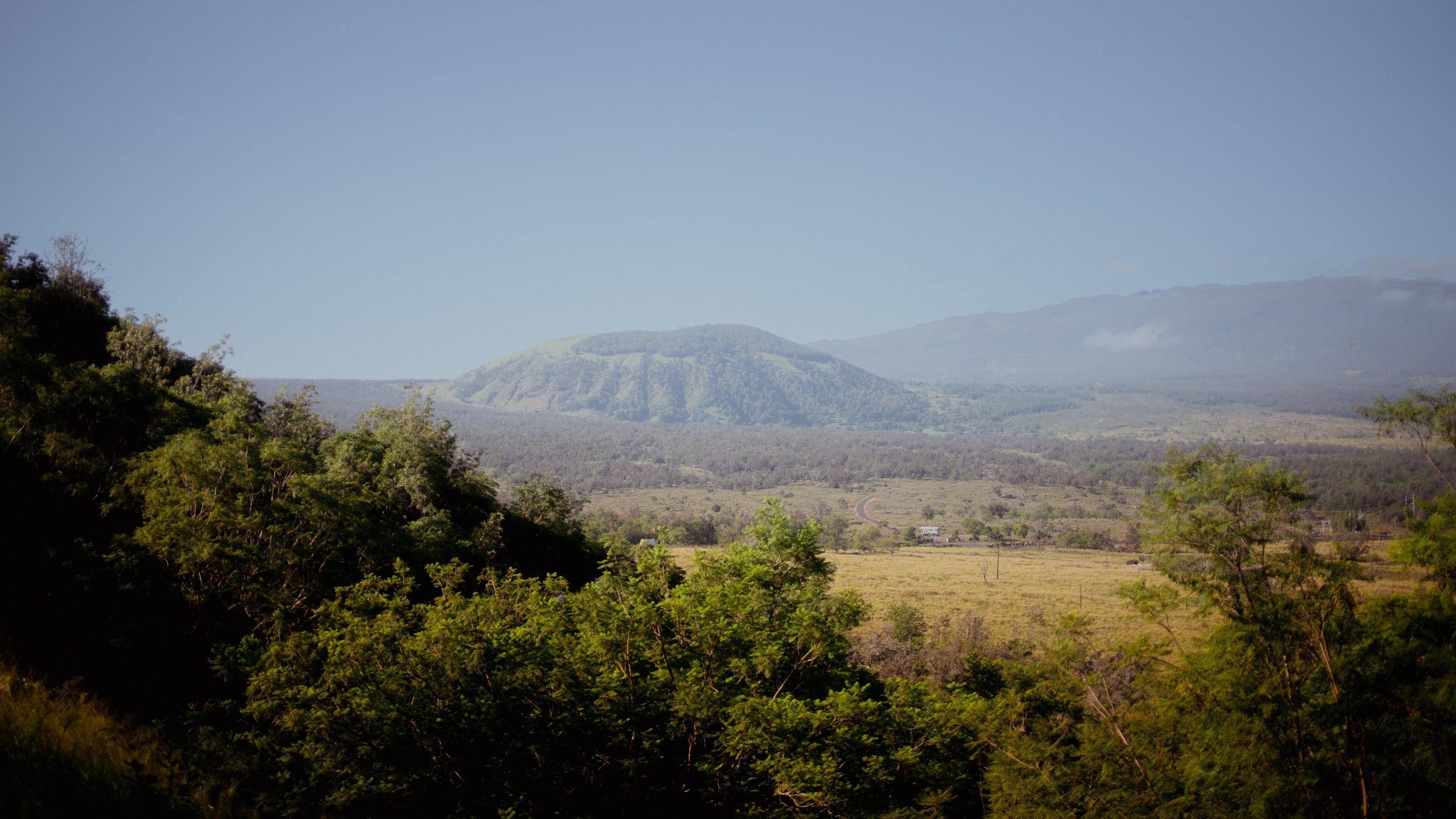
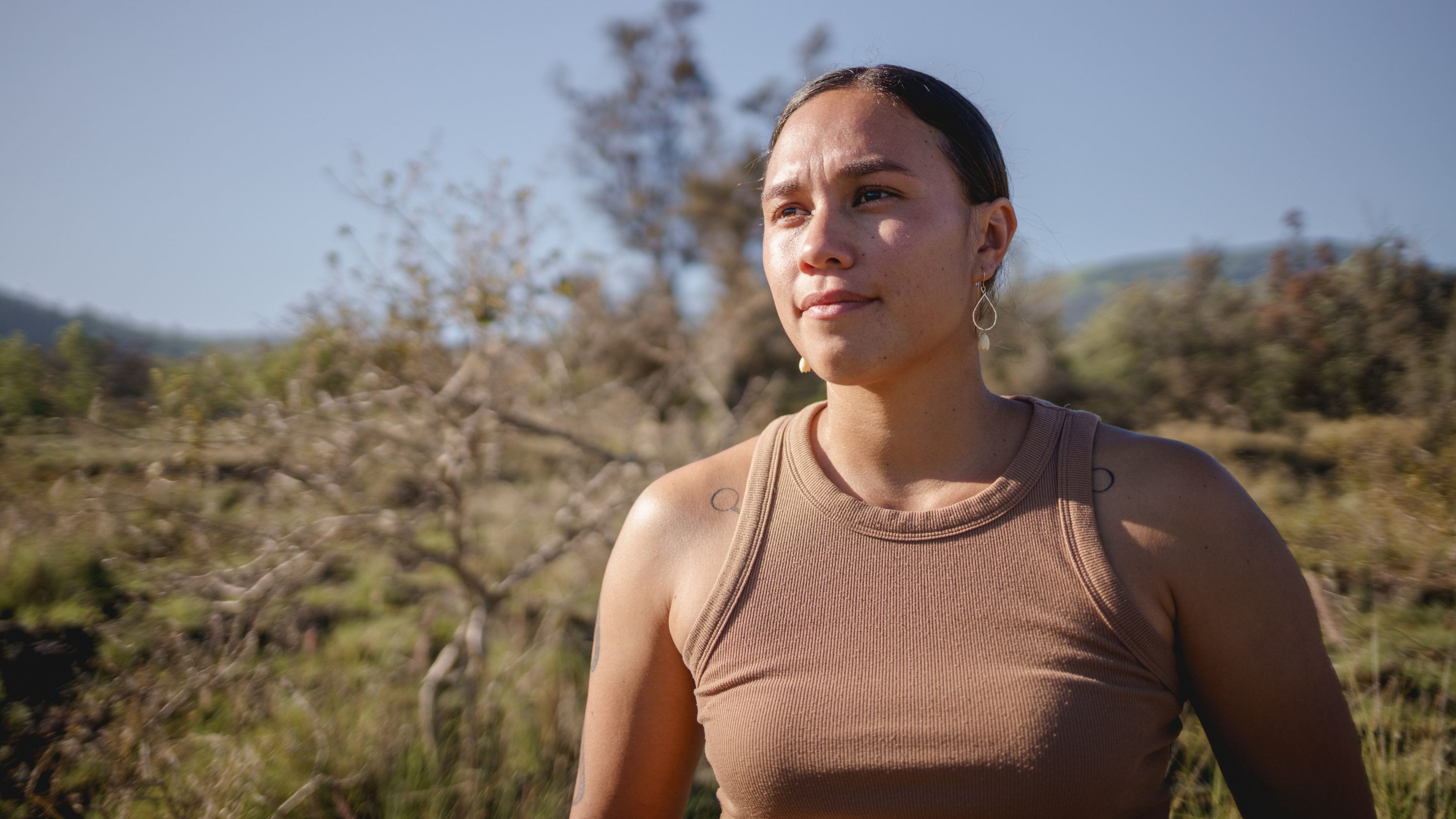
As we walk around the homestead, Nahe points out the gun couch (an old three-seater set in a field that’s used for shooting practice), a fledgling wiliwili (a deciduous native tree found only on Hawai‘i island) and a horse named Gypsy (a real “diva”). We’re trailed the entire way by a shadow—Nahe’s dog, Sister.
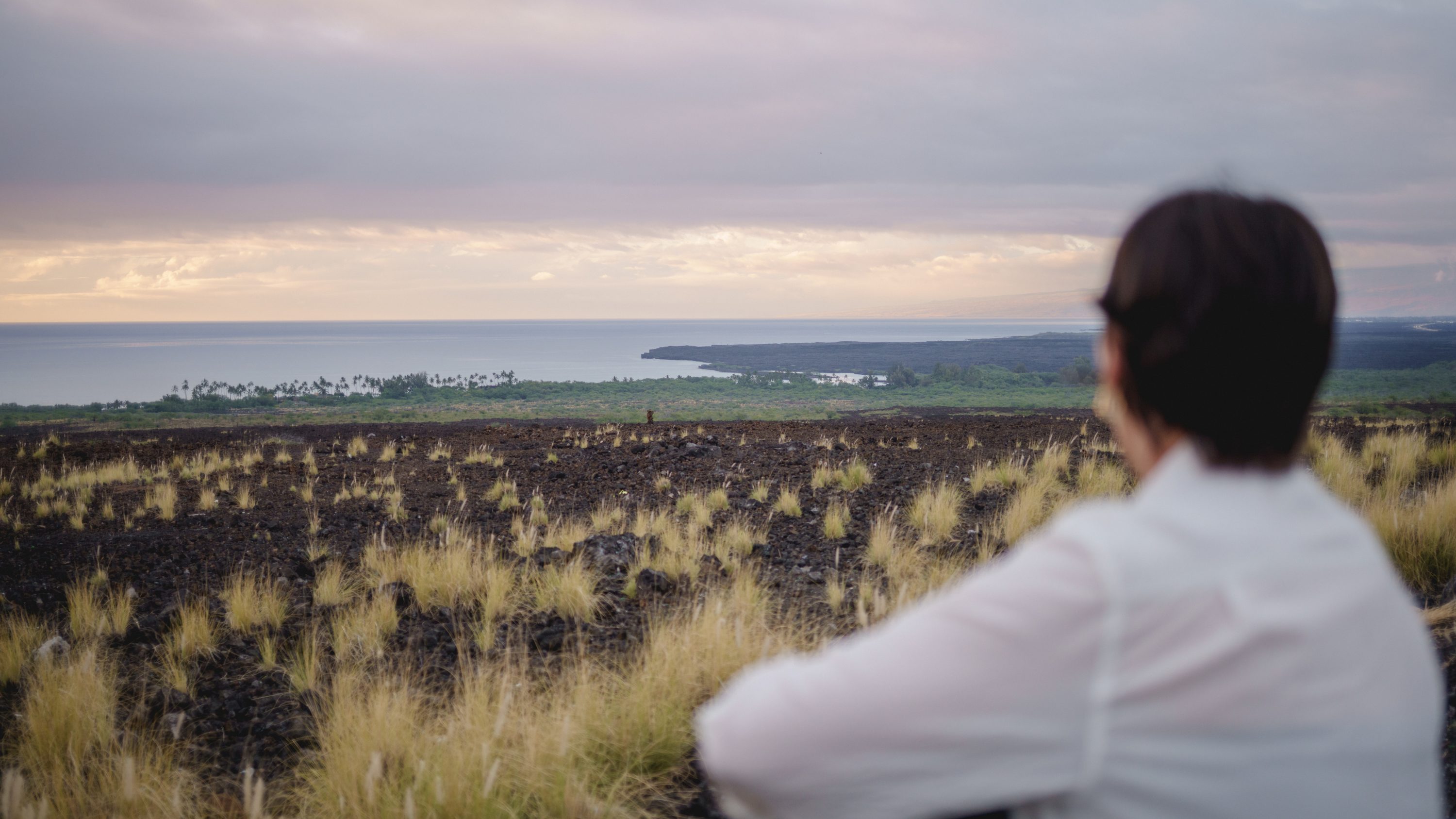
Whenever Nahe stops, Sister stops. Wherever Nahe looks, Sister looks. As the clouds swell, I watch Nahe and Sister observe the changing sky. Their faces are turned the same direction; their silhouettes aligned against Waimea’s lush backdrop. There’s a term in Hawaiian language, kilo, which refers to the quiet observation of nature. “We’re practicing kilo,” Nahe confirms with a laugh, sensing my gaze.
“When I wake up, the first thing I do is kilo. When I come to work, I kilo. It’s almost like my prayer time,” she says. “Kilo and aloha ʻāina (love of the land) go hand in glove. Because to aloha ʻāina you have to kilo, and to kilo, you have to understand how the ʻāina moves.”
Nahe predicts it’s going to rain in roughly two hours.