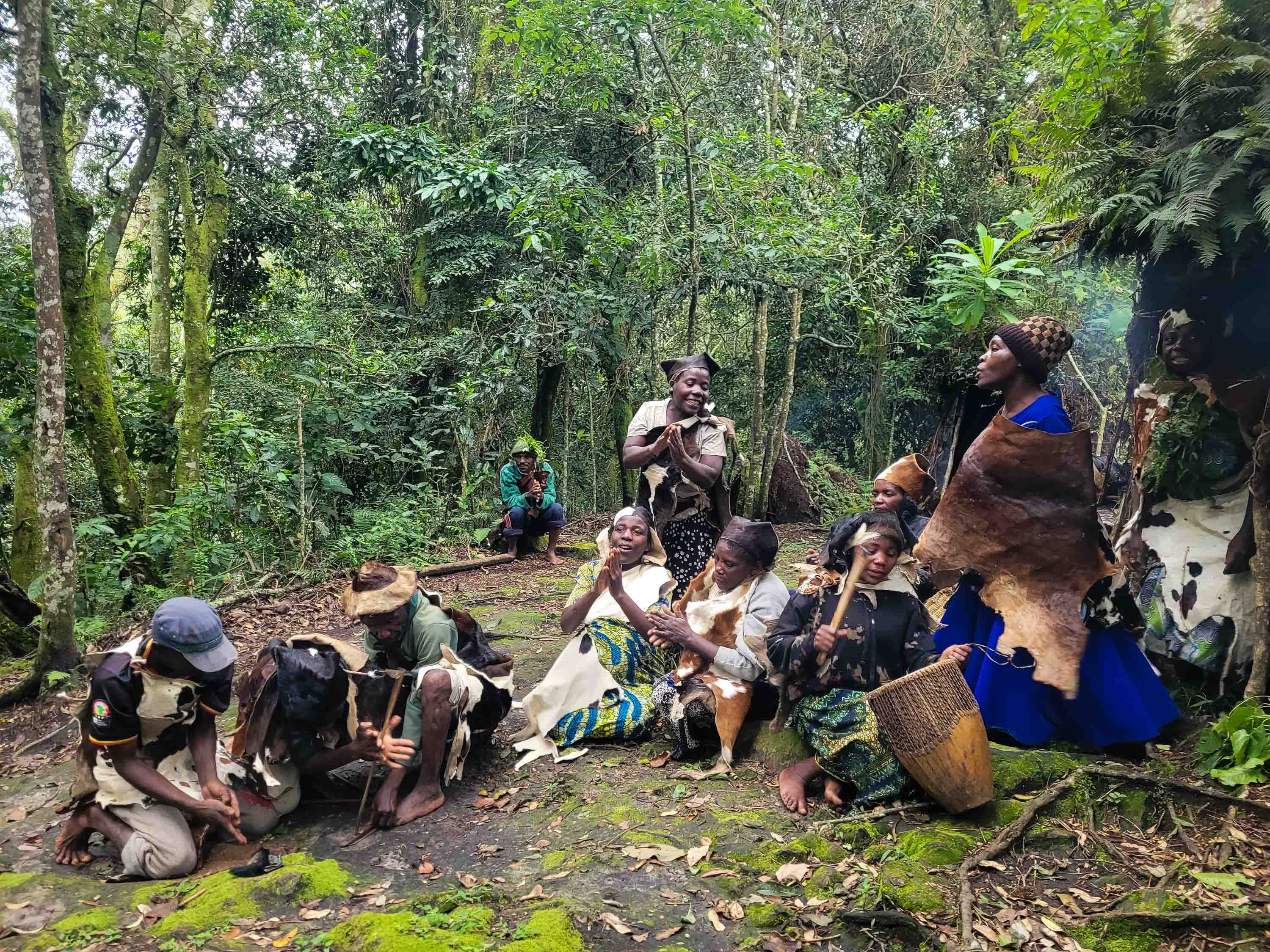
Bwindi isn’t only about gorilla tracking. When the national park was created in 1991, the Batwa, nomadic hunter-gatherers who lived inside the forest, were forcibly evicted. Frequently ostracized and marginalized from life outside, and with no formal program for education, housing or employment, the onus often fell on individual organizations and private lodges to create them.
Over time, the Batwa have integrated, and reports of discrimination reduced too. But more than that, their knowledge of the forest is celebrated and respected. A short walk from the lodge is a Batwa heritage experience, one of many around the national park, where the community both preserves and shares their skills in fire-making, setting up snares and hunting, and their deep knowledge of medicinal plants.
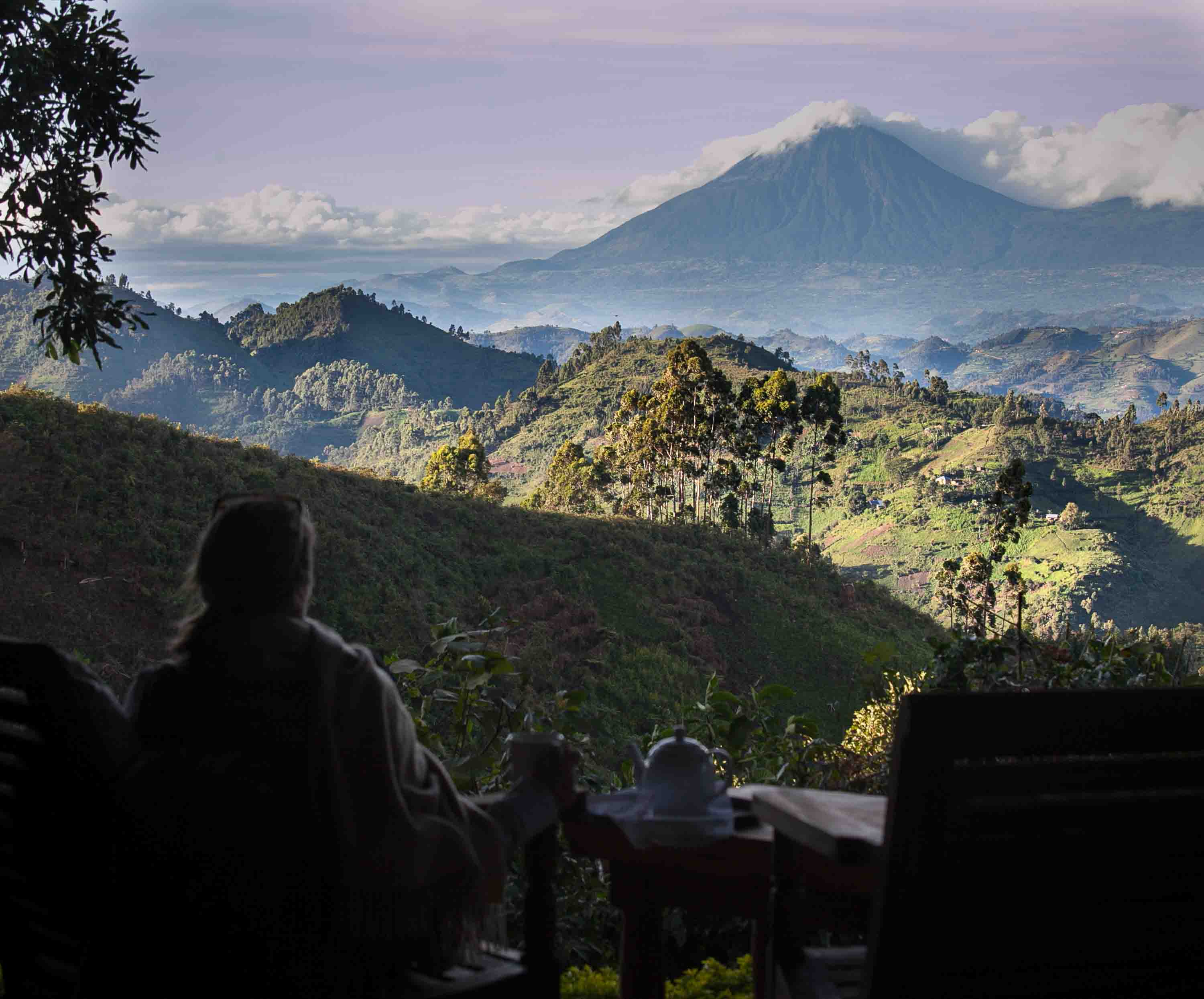
While managed by Wild Places, Clouds itself is owned by the local community via the Nkuringo Conservation Development Foundation which raises funds for community and conservation initiatives. There’s much to discuss as we enjoy drinks on the patio. This evening, the mist is so dense, it’s as if someone activated a fog machine, but in the distance, we see the active stratovolcano of Mount Nyiragongo, geographically in the Democratic Republic of the Congo (DRC) but inside Virunga National Park near the Rwandan border—a reminder we’re at the confluence of the three countries the mountain gorillas call home. I consider just how much is packed into this lesser-known landlocked nation, a land with both familial and travel memories for me. But perhaps that’s a good thing, and flying ever so slightly under the radar is also its ace card.
**
The writer’s trip was supported by World Odyssey and WildPlaces Africa who offer a fully inclusive experience including safari activities, domestic light aircraft flights and permits. For UK travelers, Uganda Airlines flies direct between London Gatwick and Entebbe, Uganda’s international airport. Travelers can also connect to Entebbe directly via several airlines through hubs in Africa, the Middle East and Europe.