An expedition trio, one dugout canoe and 320 miles of undocumented Amazon river. We chat to marine scientist and adventurer Charlie Young about her explorations in northern Brazil and the significance of spotting a rare river dolphin.


An expedition trio, one dugout canoe and 320 miles of undocumented Amazon river. We chat to marine scientist and adventurer Charlie Young about her explorations in northern Brazil and the significance of spotting a rare river dolphin.
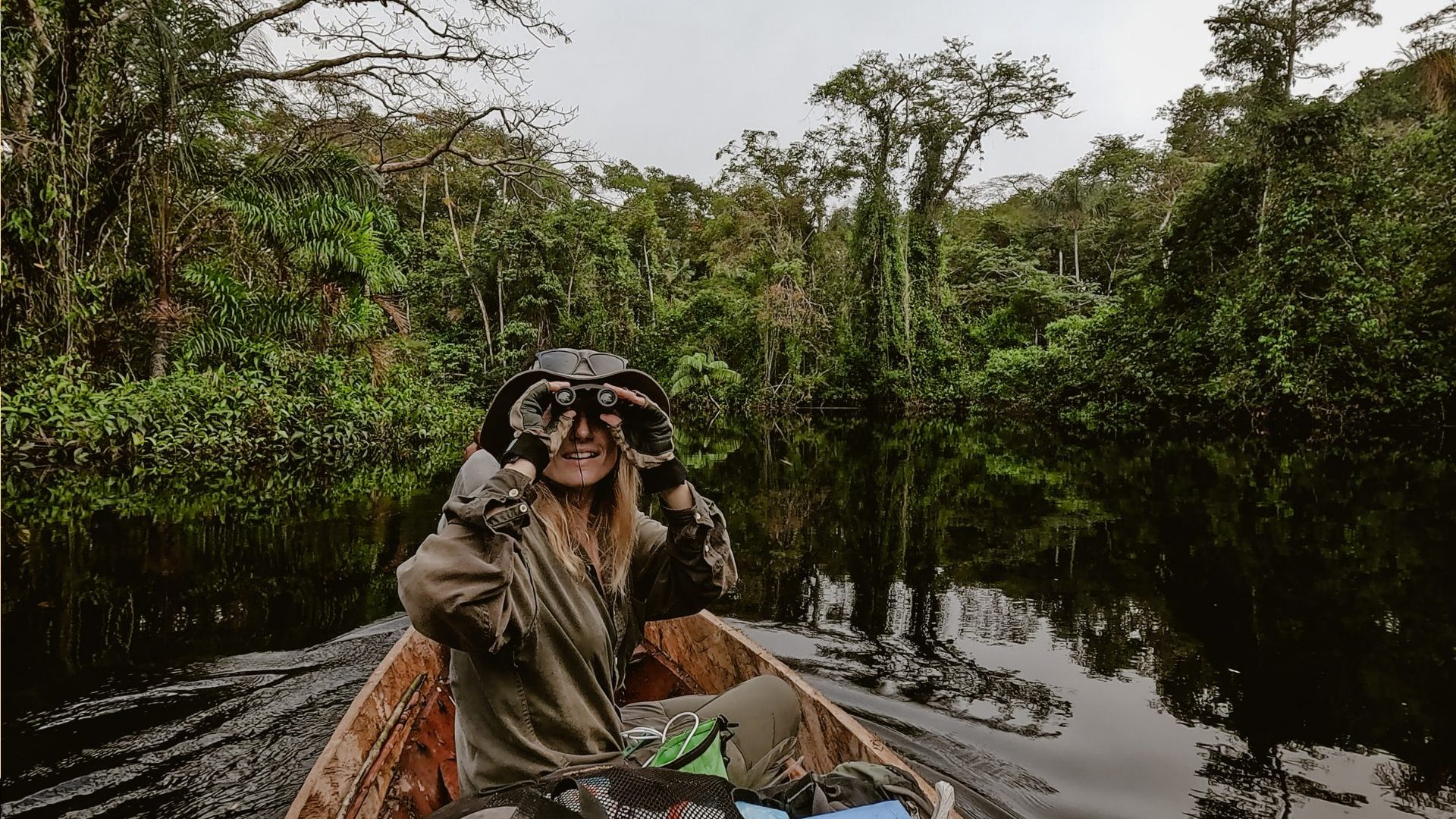
“It had been a week since I had seen the sky,” marine scientist Charlie Young reminisces over a call from Turks and Caicos, far from the sun-swallowing forests of northern Brazil. “That first moment when the canopy opened up and I was able to see the clouds moving overhead was a moment of immense relief and joy. It revealed this magical world that we had been dreaming about for years.”
Young is much more accustomed to wide-open skies, having dedicated her life to the ocean. She has lived aboard her 36-foot (11-meter) catamaran ‘Feral’ for four years, crisscrossing the Atlantic, conducting research in its most remote corners and reporting on underreported conservation stories. But it was not science that led her deep into the Amazon rainforest, however. It was pure adventure—and her French explorer husband, Alexis Girard D’Hennecourt.
Almost a decade ago, D’Hennecourt read the accounts of another French explorer—Jules Crevaux—who, in the mid-1800s, reported from the Amazon’s Rio Japura and Rio Negro. These two rivers spill into Brazil from Venezuela and Colombia and run parallel to each other, less than 100 miles (160 kilometers) apart at the narrowest point.
In his accounts, Crevaux off-handedly mentions a waterway connection between the two tributaries that can only be accessed at high-water. D’Hennecourt knew he had to find it. Fast forward to 2024 and the couple landed in Maraã, a community on the banks of the Rio Japura, prepared to make the world’s first full, documented descent of the Rio Cuiuni—the illusive connection between rivers.
“We came through the undergrowth and there’s just this beautiful, untouched world.”
- Charlie Young, marine scientist and adventurer
Young’s daily concerns normally include squalls and rough seas, but as she helped D’Hennecourt and their in-country team scour satellite maps and plot a route, thoughts of jaguars, caimans, and hordes of murderous insects filled her head.
Mikeas de Lima Almeida, the Maraã local and forest guide who would complete the expedition team, had other concerns which included navigating interactions with Indigenous peoples and illegal drug traffickers. “I didn’t know what we would encounter along the entire length of the route,” he said.
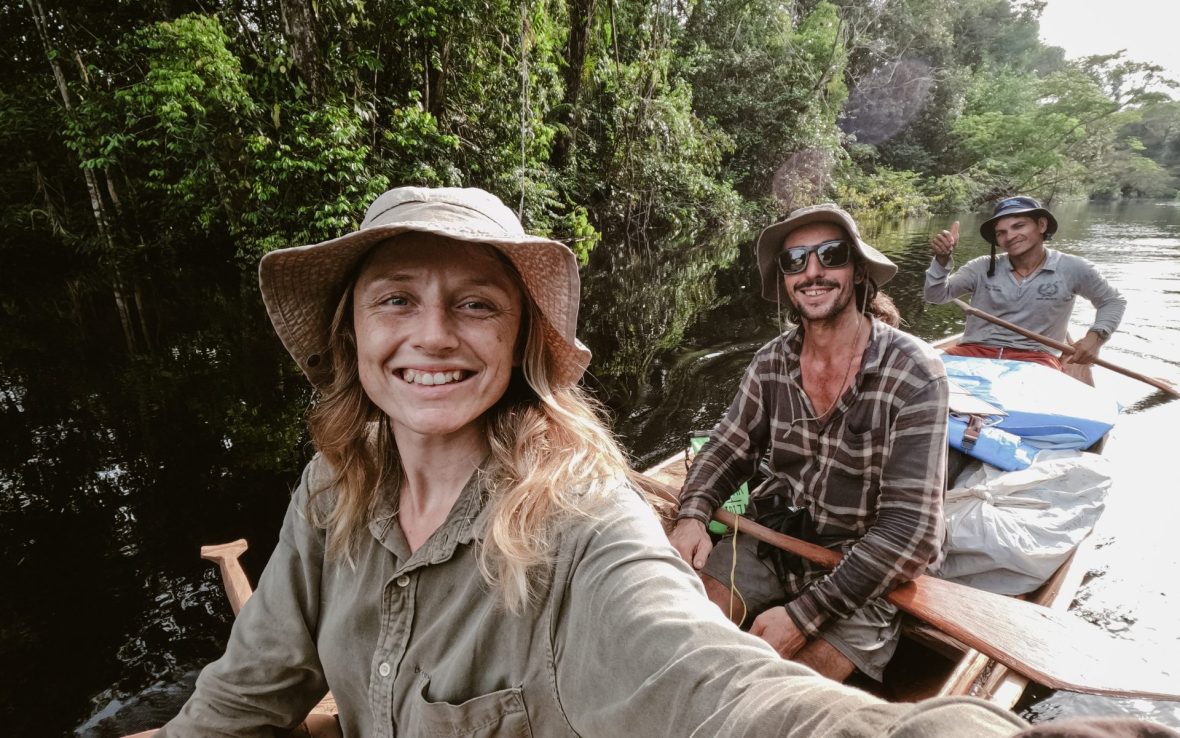
“We did everything that we could to listen to the stories, talk it through as a team, and rationalize,” says Young. “We always came to the same conclusion: That it was safe to do what we were planning.” That plan was to build a dugout canoe, something D’Hennecourt said would “add to the romanticism of the undertaking”, and chart 320 miles (514 kilometers) of undocumented river. But before they could even attempt to face their fears, Almeida had bad news—they could not reach the river by boat.
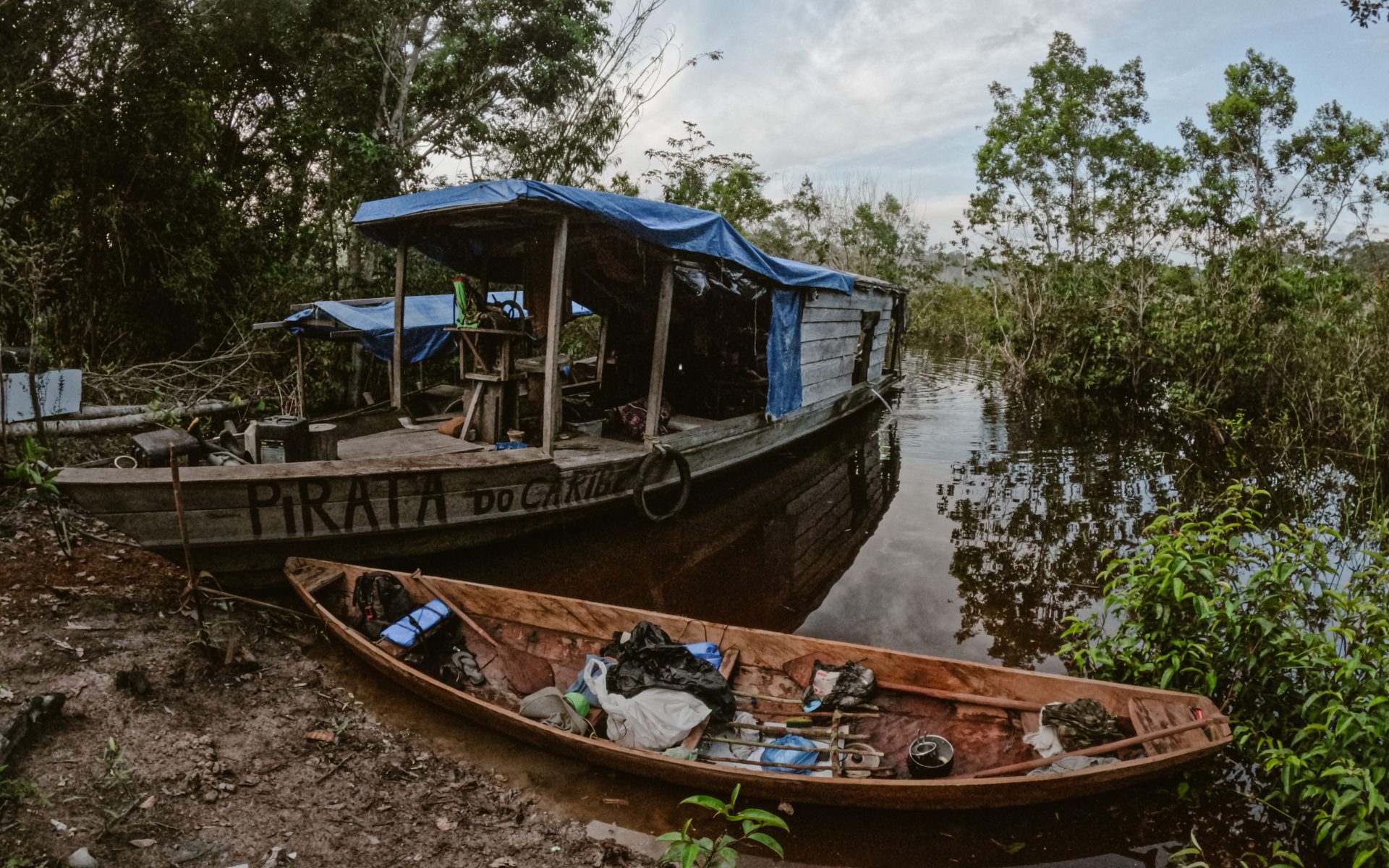
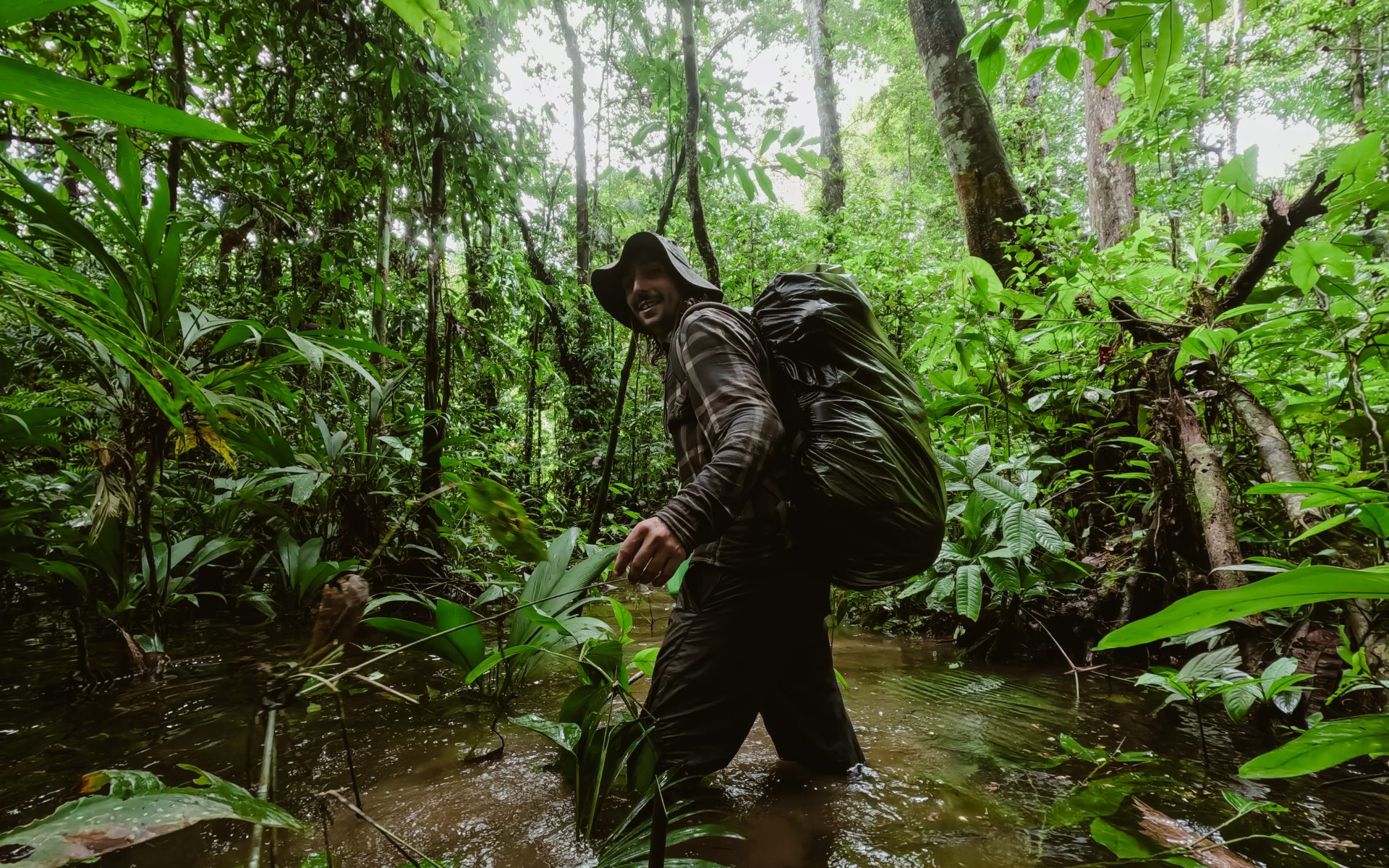
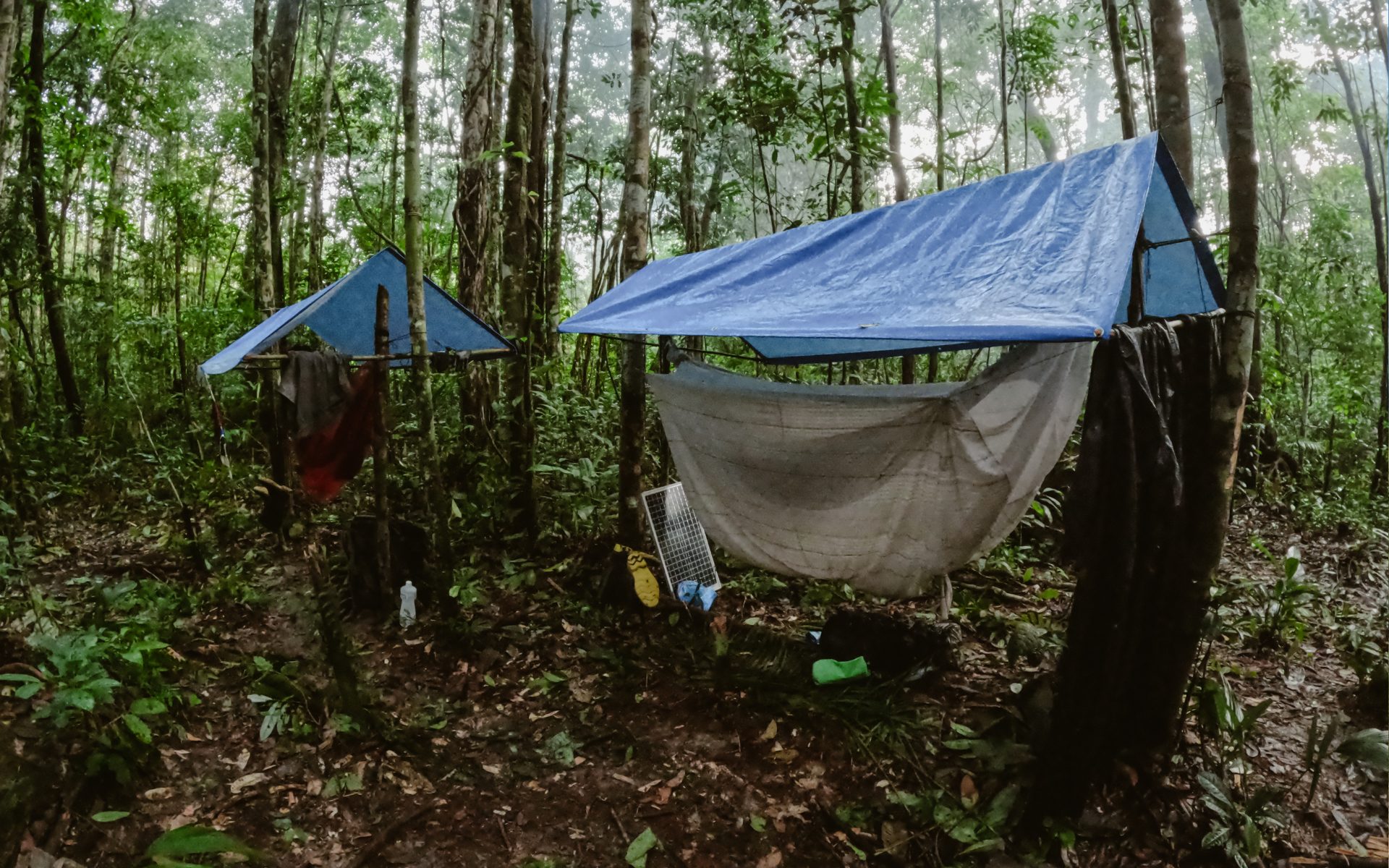
The Amazon Basin had experienced its worst ever drought in the two years preceding the expedition, according to Fernando Trujillo, an Amazon expert who worked with Young after the expedition to contextualise her findings. These droughts left the region’s igarapés (small streams) unseasonably low, which forced the team to pivot. They would instead venture forth in a motorized canoe as far as possible before continuing on foot to the river bank where they’d build their dugout. The expedition was estimated to take two weeks, but they set off with enough supplies to last a month and everything they’d need to build the boat.
An old hunting track became their trail through the dense jungle, and the team followed near-invisible markings on trees. Often, the trio had to take diversions, using a satellite tracker to keep the headwaters in front of them. The anticipated 10-mile trek turned into 15, then 20… by the time they had made it to the river, they had walked for 37 miles and two full days.
Although they had seen the formidable slashes of Jaguar claws on fallen trees, Young quickly learned that it’s the “small things that get you” in the forest. “It was grueling,” she says. “We were up to our waists in muddy water, getting stuck and going in circles. You don’t heal so well in the rainforest so I was starting to build up a lot of bites and little cuts everywhere. That was definitely weighing on me mentally.”
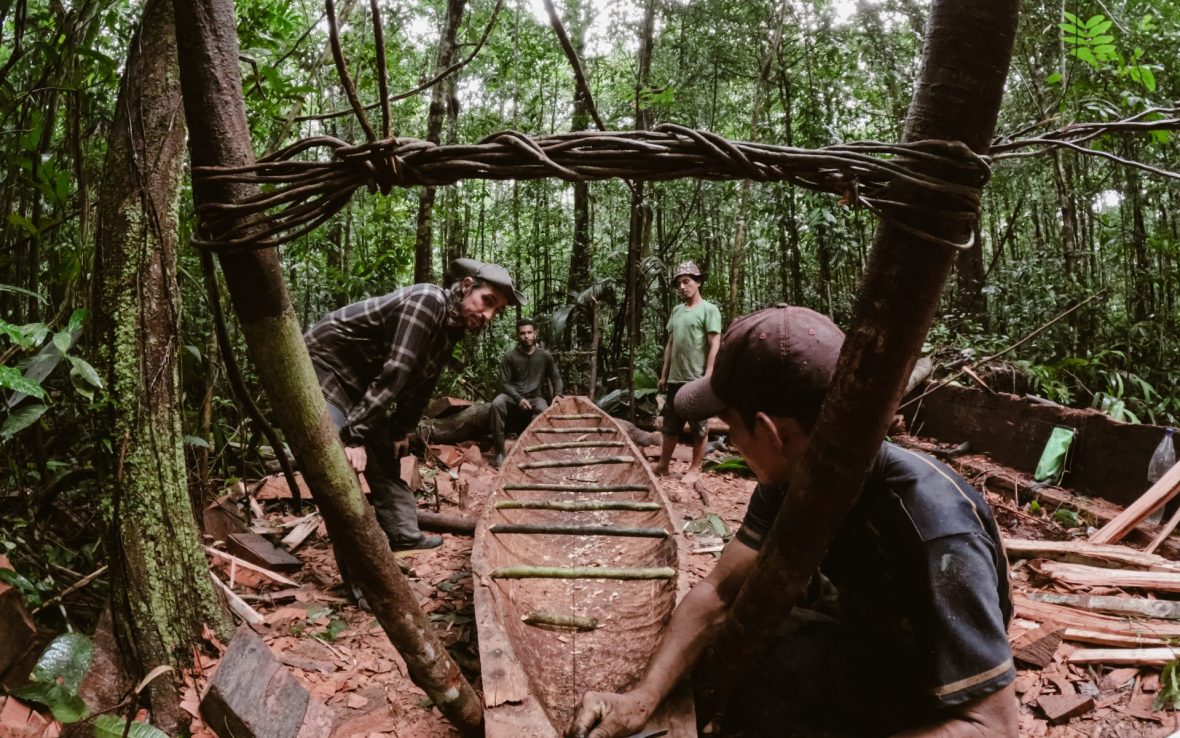
Luckily, the boat building was a little more familiar. Almeida’s father was a canoe builder, and Young and D’Hennecourt restored their first catamaran from an abandoned wreckage.
“It’s obviously a challenge to do it in the middle of the forest where you’ve only got a few tools, but it was quite remarkable to watch the transformation of a log into a boat,” says Young. When their canoe, which was christened Ainora, began taking on water, they managed to caulk it using a ripped-up pair of jeans soaked with tree resin and motor oil.
“We did an analysis over the last 30 years and we have lost 52 percent of the Amazon pink river dolphins. We lost 330 dolphins in just three weeks during the 2023 droughts.”
- Fernando Trujillo, ecologist
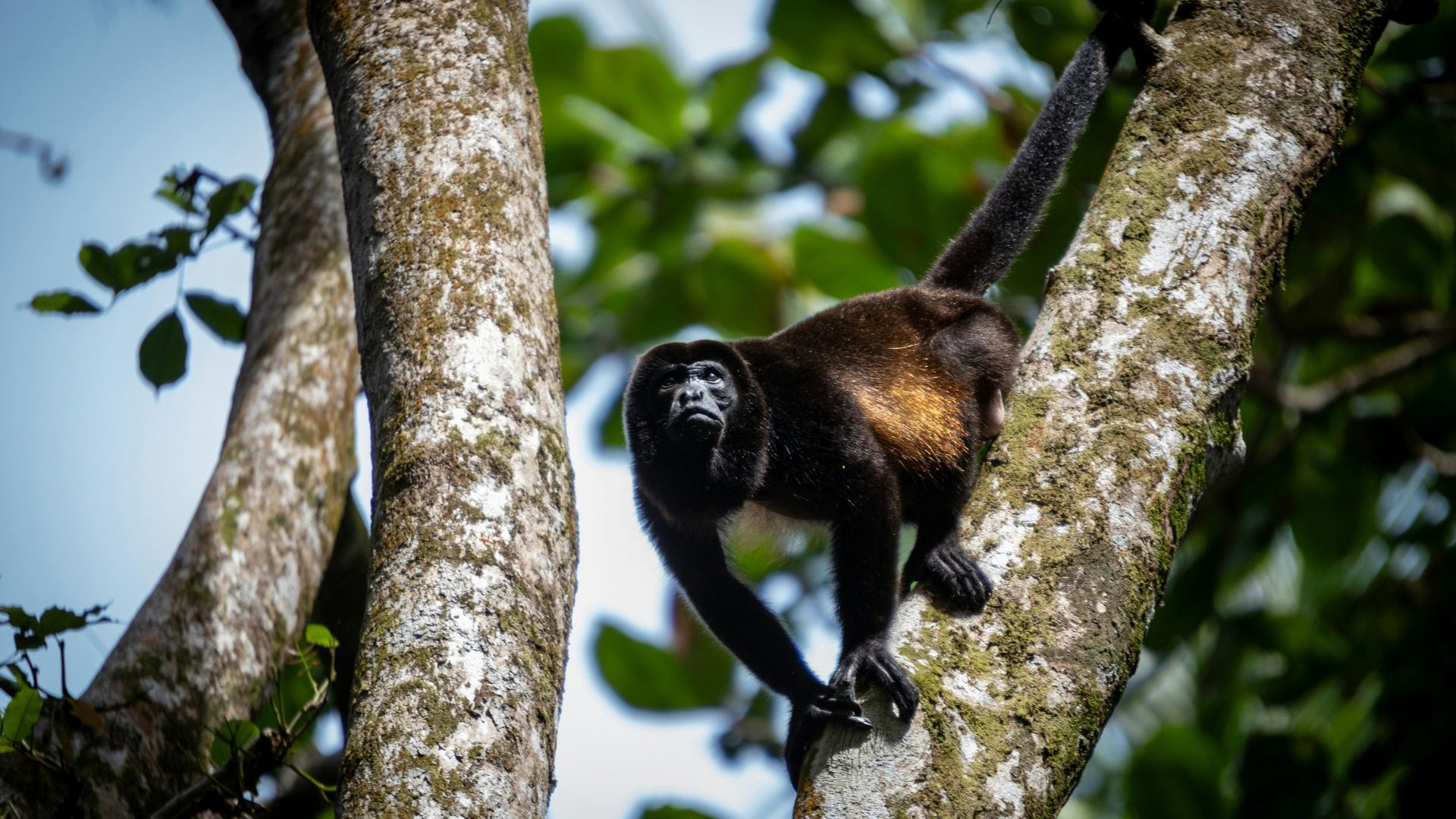
For the wild inhabitants of the remote river, the three strangers floating through were a curiosity. “We came through the undergrowth and there’s just this beautiful, untouched world,” explains Young. Bees and butterflies surrounded them, attracted by the minerals in their sweat, and howler monkeys stared back from the trees. Though they never saw them, the caimans lurking beneath the brown waters responded to Almeida’s mimicking calls.
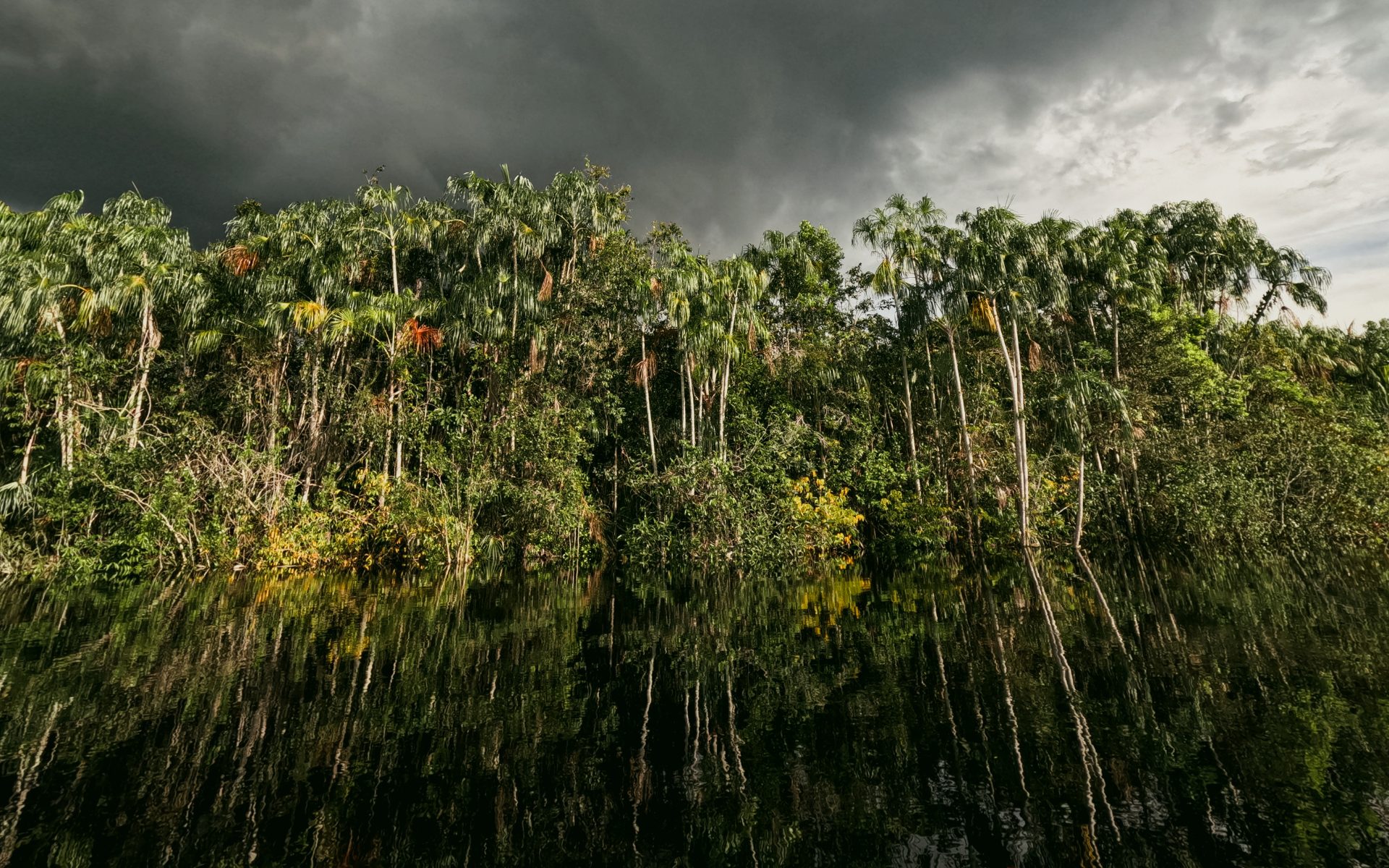
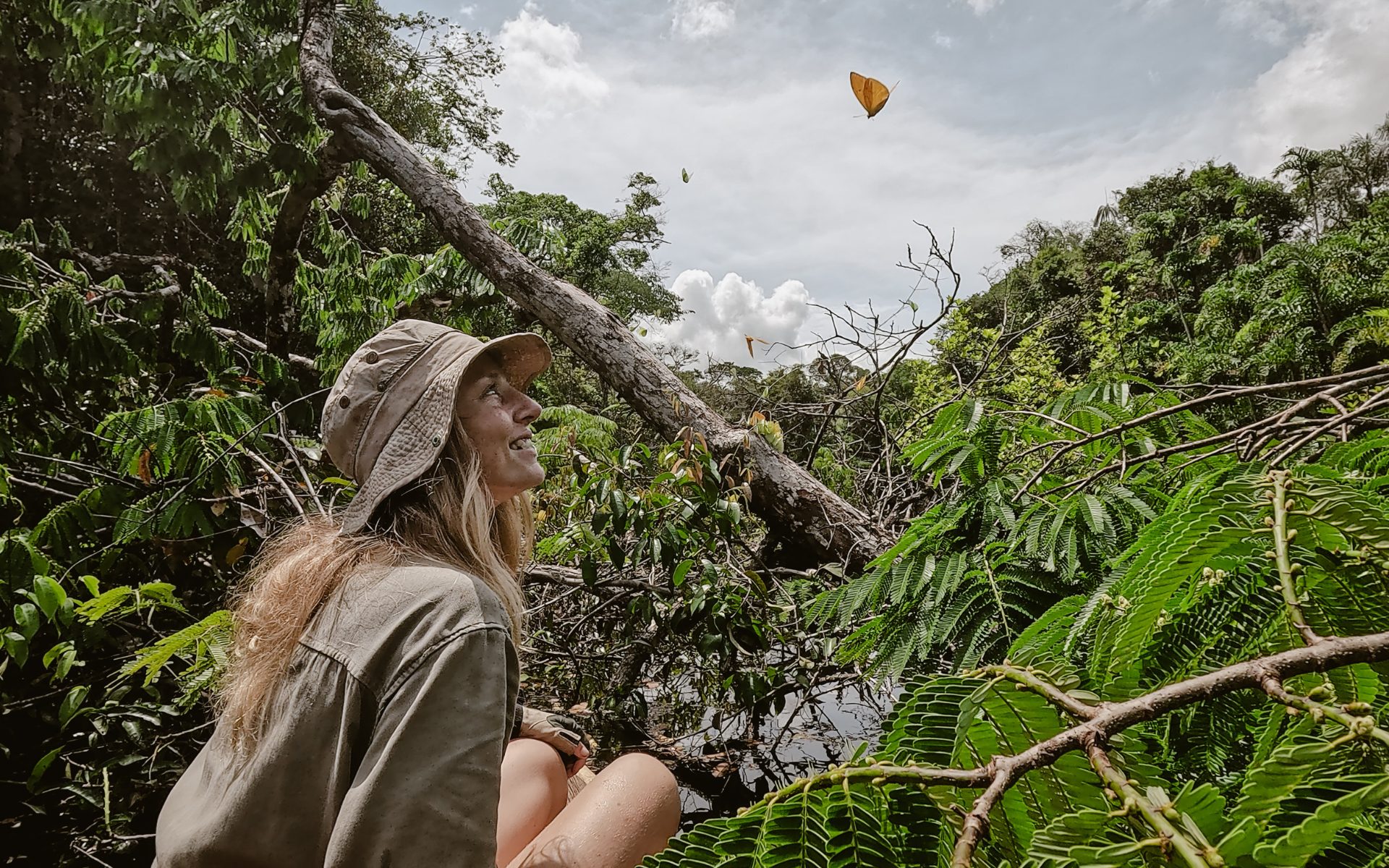
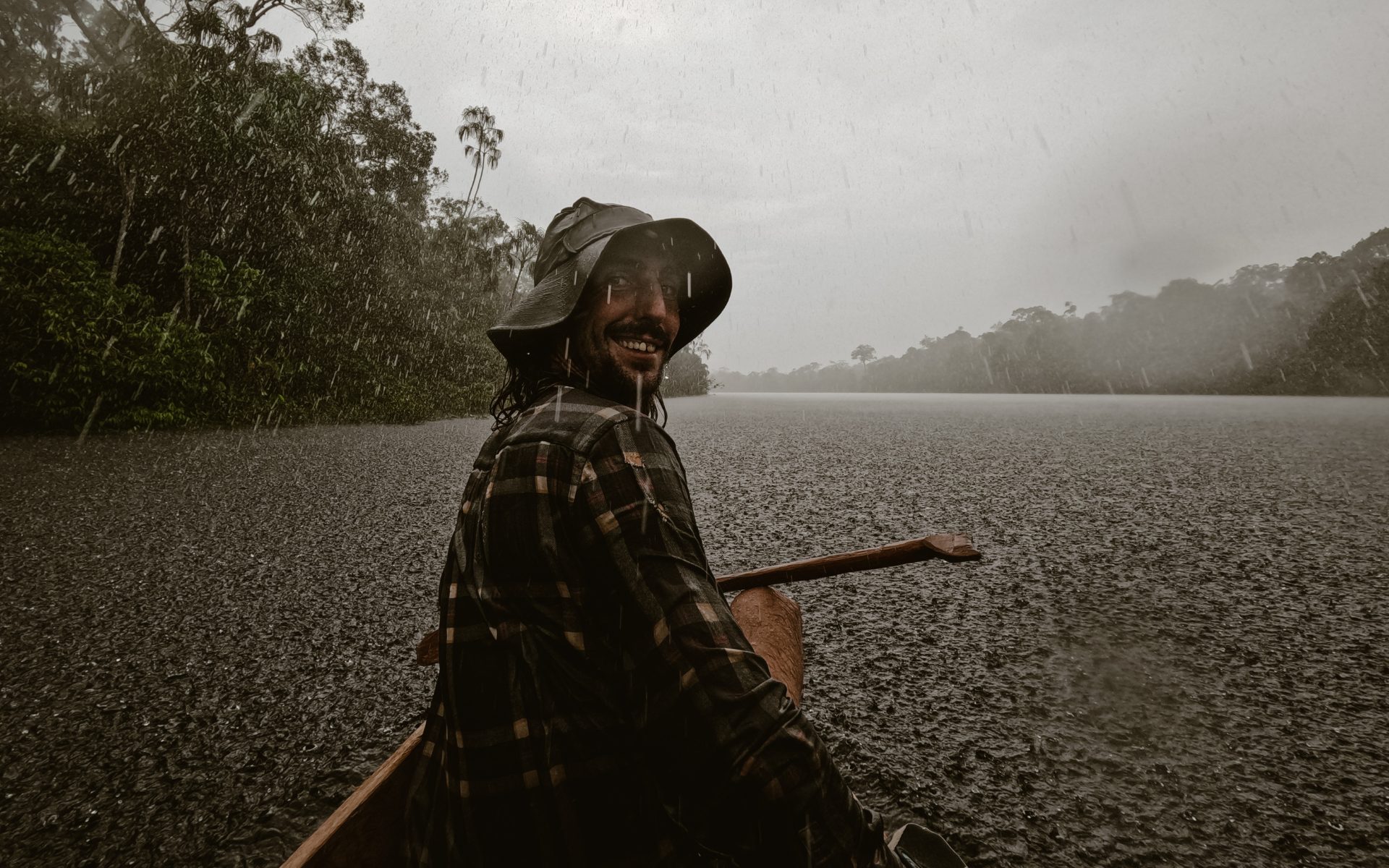
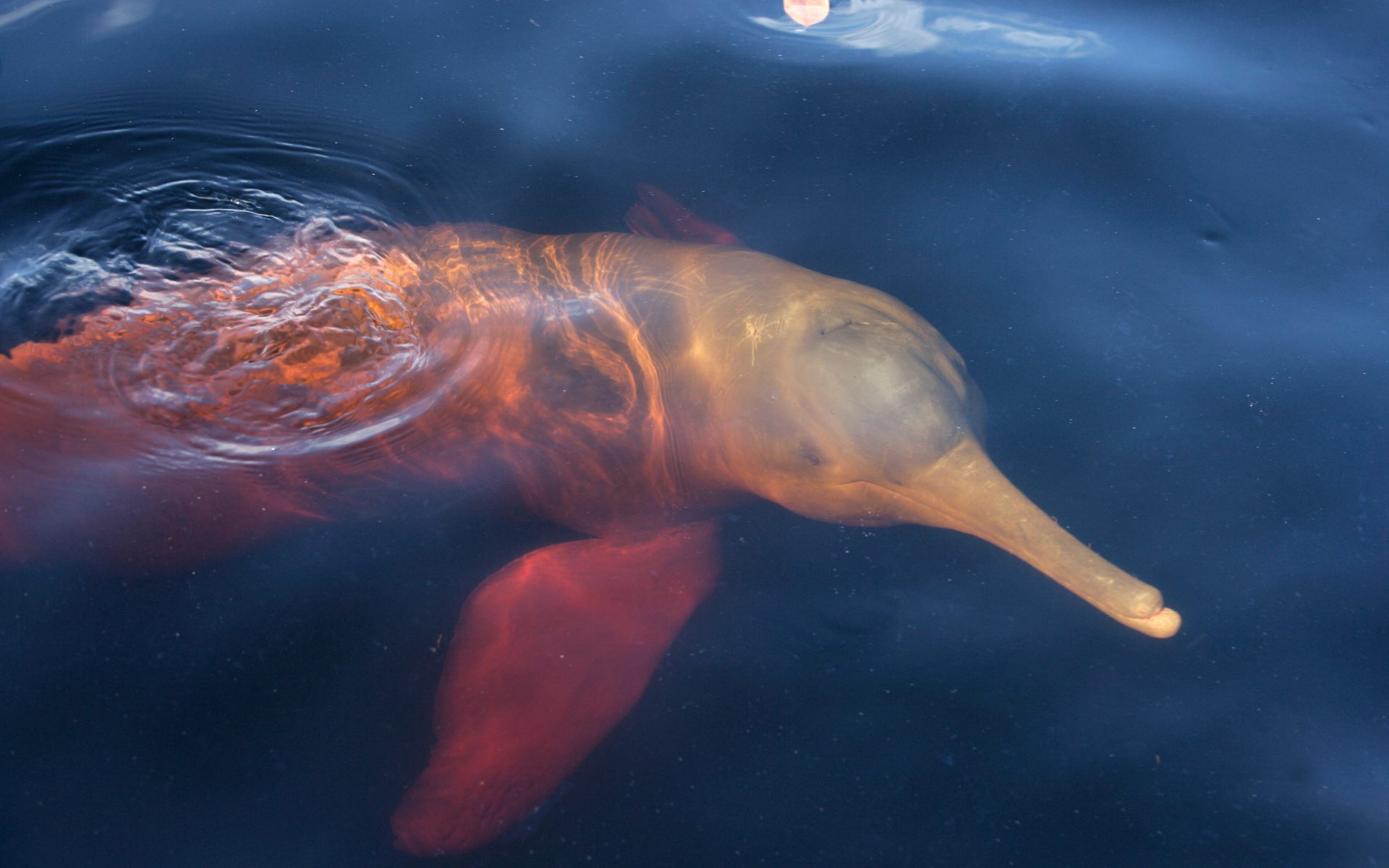
The strenuous nature of paddling 40 miles (64 kilometers) per day coupled with the constant damp and relentless jungle green took its toll, but the river had its own way of delighting. Almeida was the first to call “Boto!” after seeing a quick flash of pink.
Amazon river dolphins, known locally as Botos, are the largest species of river dolphin and have characterful long noses, chubby fins, and distinct pink skin. “You could tell that they were following us and were curious,” says Young. The remarkable, and rare, creatures rely on a high degree of mobility in the Amazon’s vast waterways but anthropogenic pressures are putting them at risk. According to Trujillo, these pressures include overfishing, deforestation, and climate change, and have led to the species being classified as Endangered.
“We did an analysis over the last 30 years and we have lost 52 percent of the Amazon pink river dolphins,” Trujillo says. “We lost 330 dolphins in just three weeks during the 2023 droughts.” The botos’ vast range (in rivers and flood forests across seven South American countries) and elusive behaviour have made them historically hard to monitor. Young’s complete descent of a previously undocumented habitat is an exciting glimpse into the prevalence of the species in remote and undisturbed waterways.
“Rivers like these are an oasis for these animals,” says Young. “They are their strongholds.” Although she didn’t set out with scientific intentions, she couldn’t help but log both locational and behavioral data which she shared with Trujillo. In 2020, Trujillo was part of a 590 mile (950 kilometer) expedition down the main stem of the Amazon River where he observed an “obvious reduction” in the number of dolphins in the Brazilian sector.
“He confirmed that the Rio Cuiuni is probably where a lot of these creatures are going,” Young says. She noted close to 100 sightings in just ten days on the river. There are 37,000 miles (59, 545 kilometers) of protected river in the Amazon region, and these unobstructed and remote waterways are vital hotspots for the social creatures. The team noticed that the closer they got to mankind, the more scarce the dolphin sightings became.
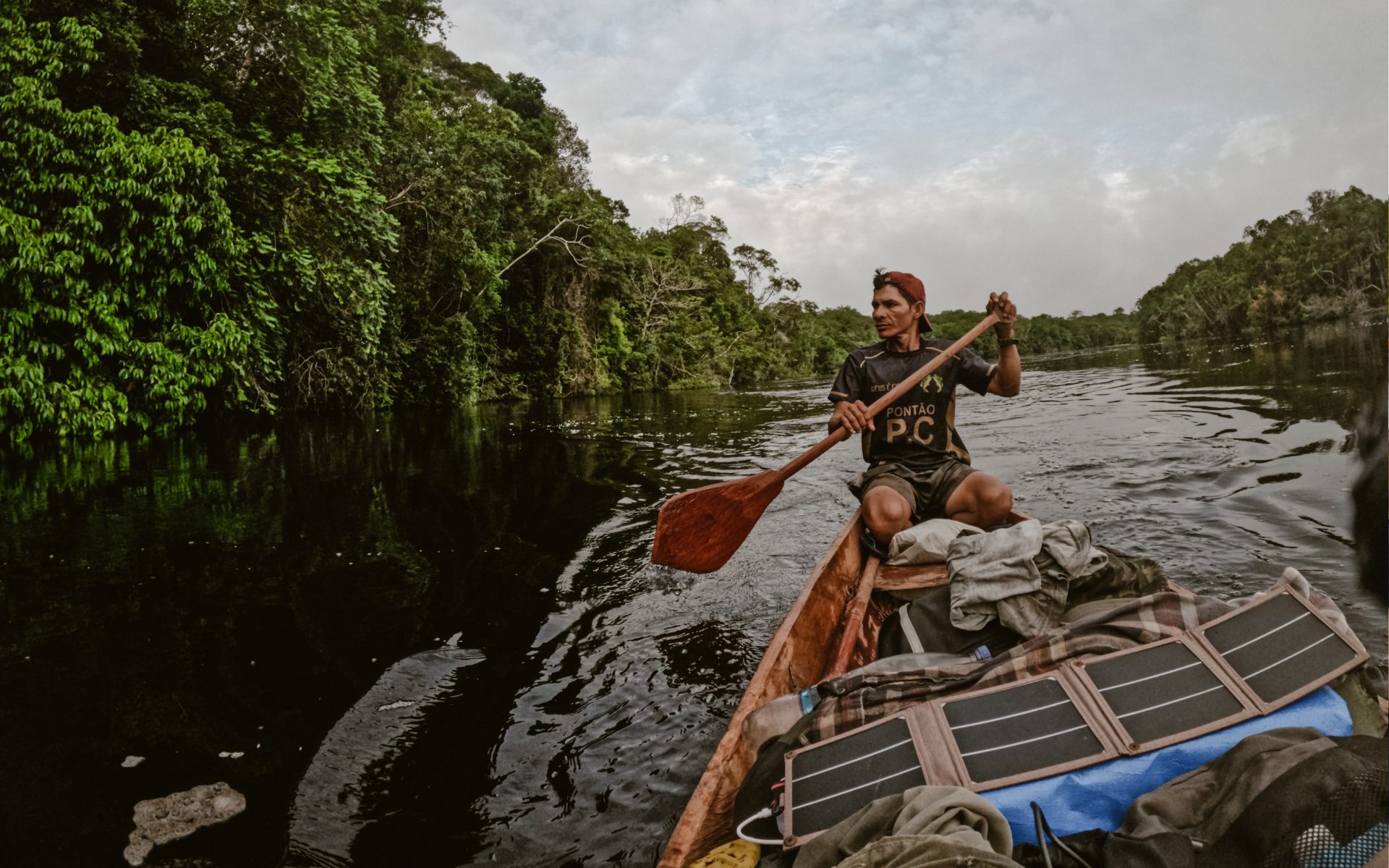
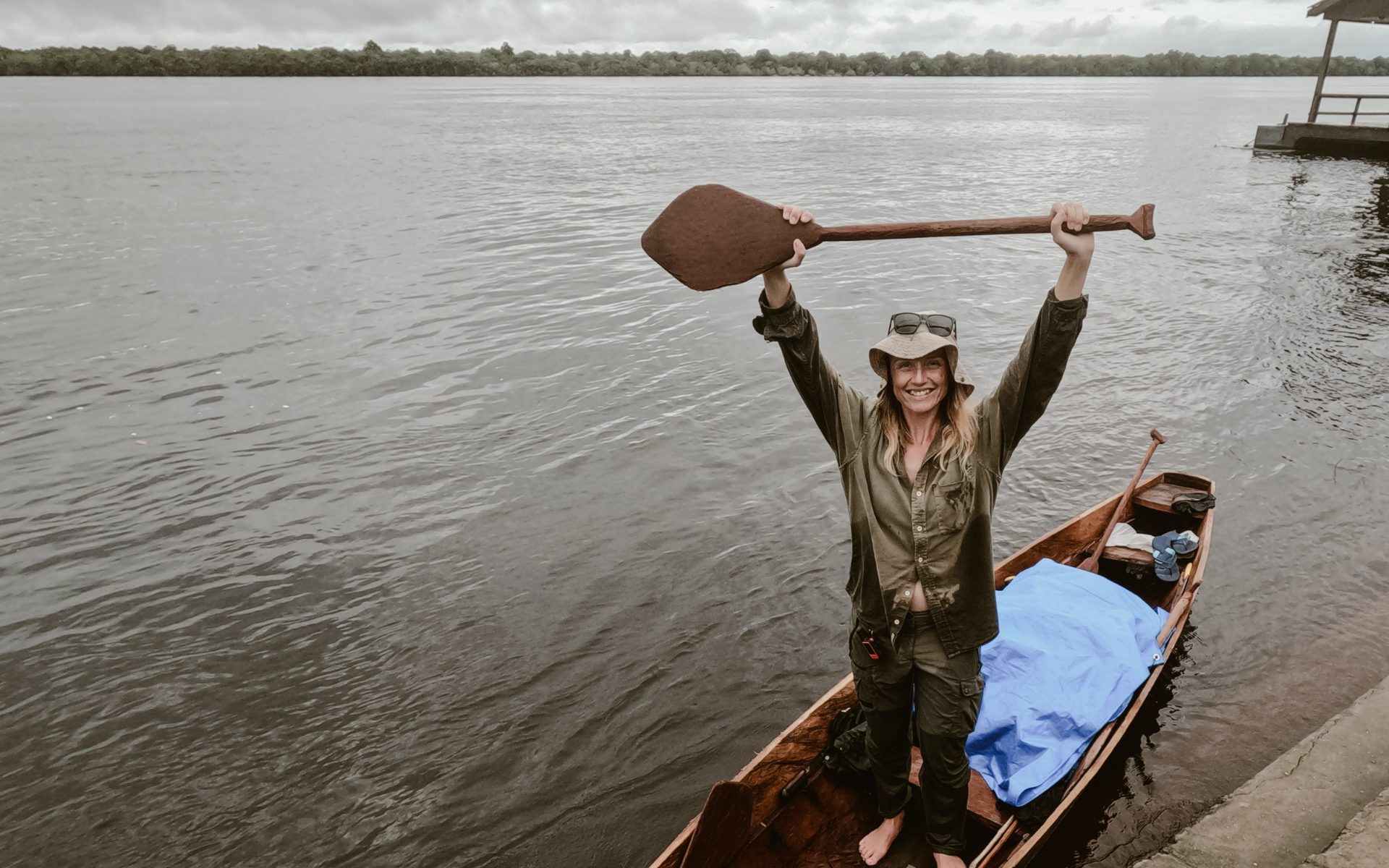
Their 16-day expedition wrapped in a wave of relief, joy, and achievement. They had successfully documented the length of the Rio Cuiuni. “You’ve come from where?” locals asked in surprise. “They couldn’t believe it,” Young laughs. “Mikeas was welcomed like this living legend.”
“I learned that I am capable of more than I imagined,” says Almeida. “The forest has everything we need.”
“I would definitely do it again,” Young says excitedly. “I go into any expedition with my science hat on, but there was a lot more to gain from this. Personal growth, pushing myself out of my comfort zone, and seeing what I was capable of.” She says that the expedition has changed her perspective on comfort, which is sure to serve her well in the frigid waters around Greenland, where ‘Feral’ will be set to work as a research vessel.
Back in Brazil, Ainora continues to float the enigmatic rivers of the Amazon, having been donated to a local family.
****
Adventure.com strives to be a low-emissions travel publication. We are powered by, but editorially independent of, Intrepid Travel, the world’s largest travel B Corp, who help ensure Adventure.com maintains high standards of sustainability in our work and activities. You can visit our sustainability page or read our Contributor Impact Guidelines for more information.
Annaliese is a freelance writer and editor primarily covering culture and wildlife. She is also the managing editor of Adventure Travel, a UK-based outdoor travel magazine. Her own favorite adventures include canyoning in Jordan’s Wadi Hasa (despite having to escape a flash flood) and kayaking with crocodiles through Mexico’s Lacandon Jungle.