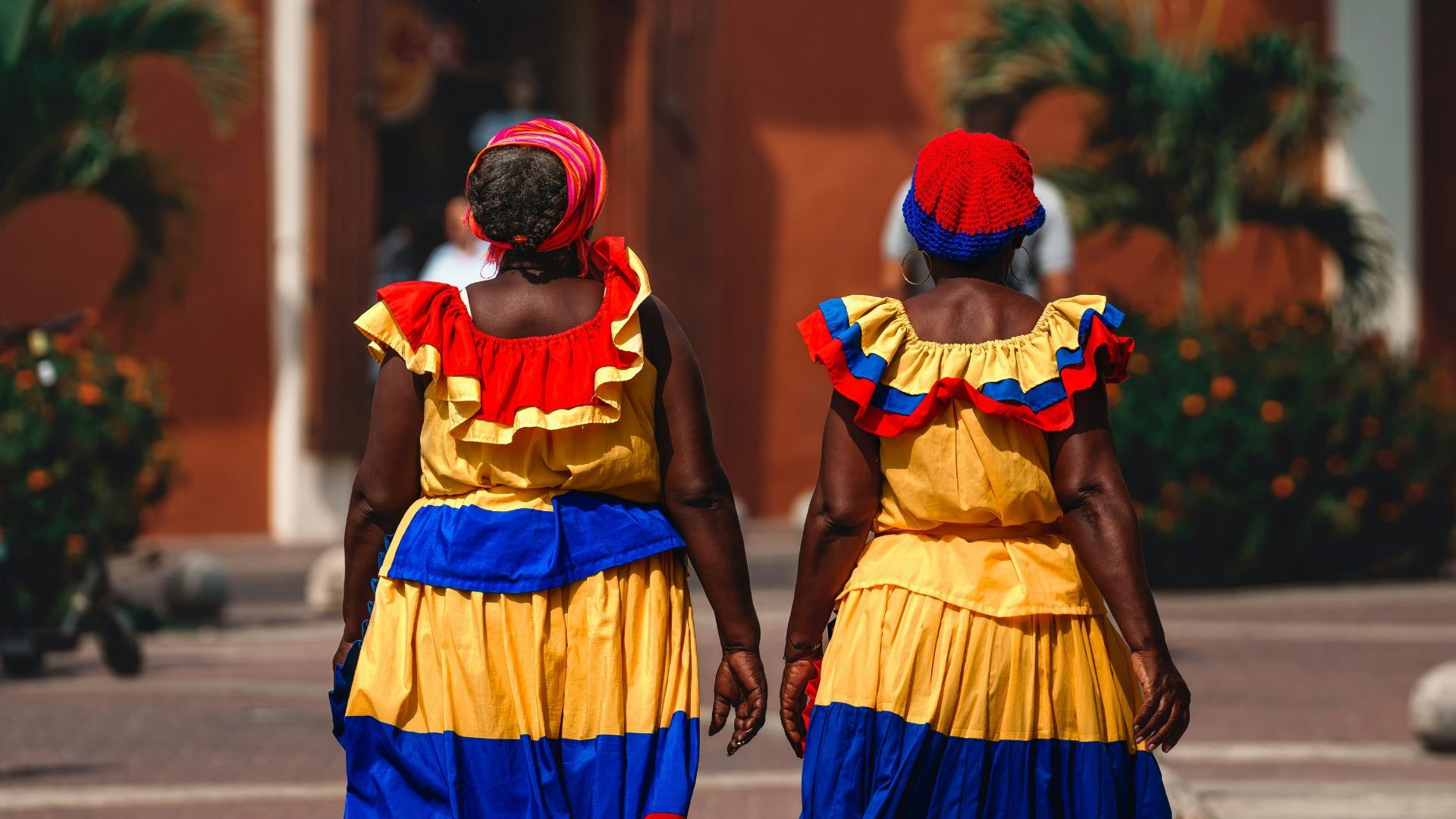
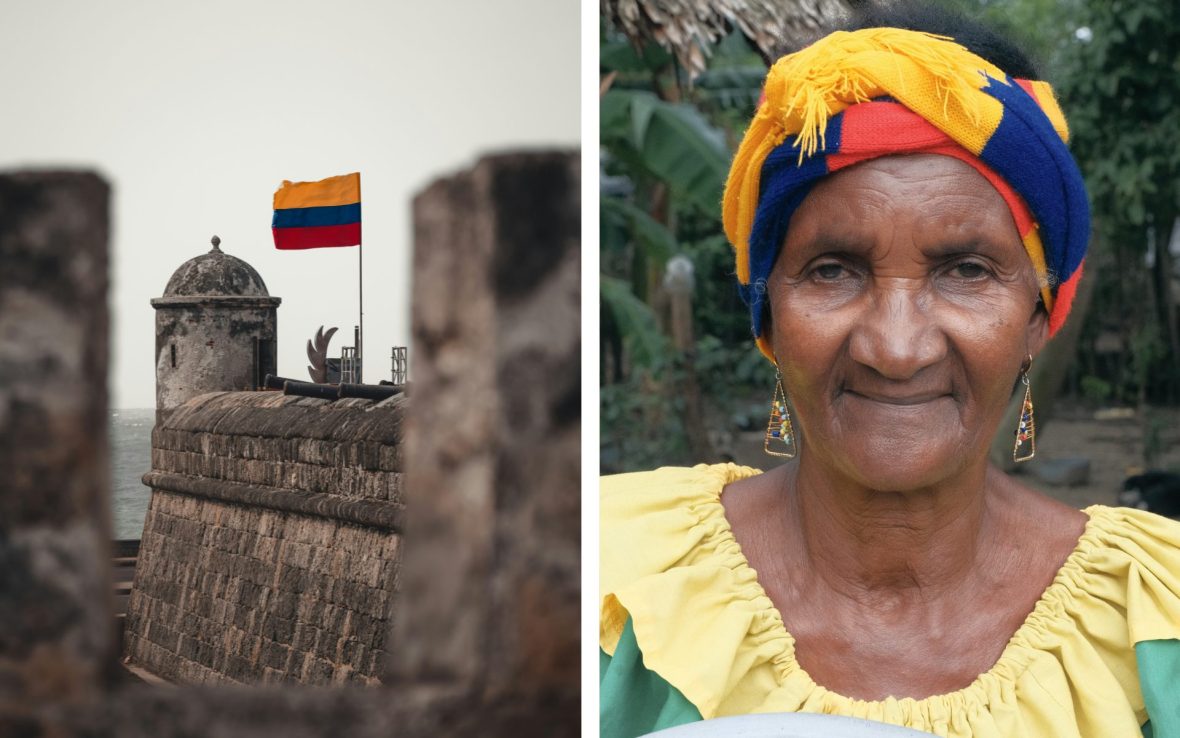
By the time I reach Ruperta Cañate Teherán’s open-air backyard kitchen, she’s deep into her first lesson of the day, guiding a small group of us in making traditional Palenque desserts. She works strips of coconut meat up and down a metal grater in quick, practiced strokes. Her head is wrapped in a vibrant turbante, a traditional Afro-Colombian headwrap, of yellow, blue, and red—the colors of the Colombian flag.
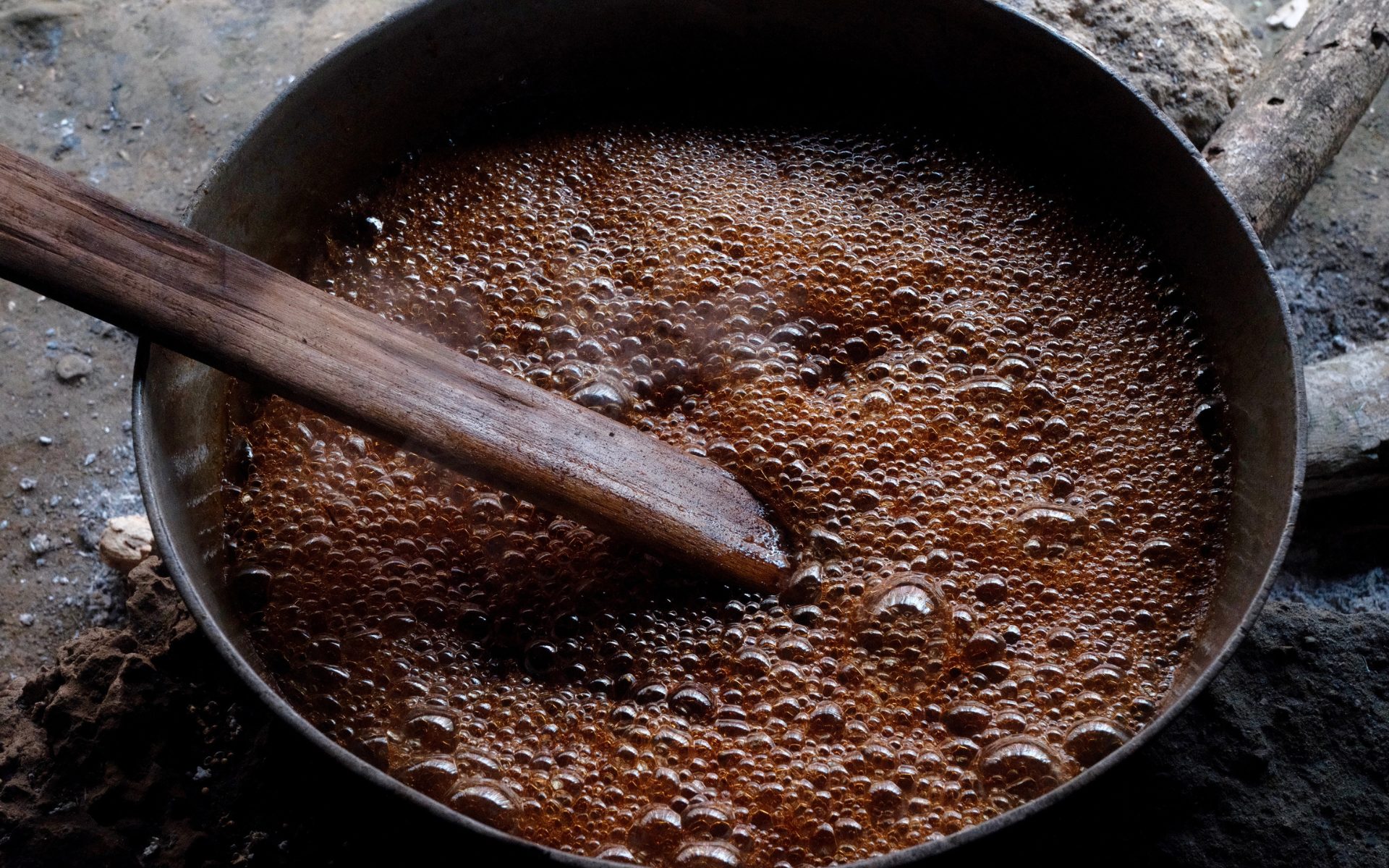
Nearby, a pot bubbles over an open fire and she directs her guests to stir the golden mixture with a long stick. The rising scent hits me immediately: Warm cinnamon, toasted coconut, and the sweetness of sugarcane reducing. It’s the kind of smell that reminds me of Christmas morning, comforting and familiar.
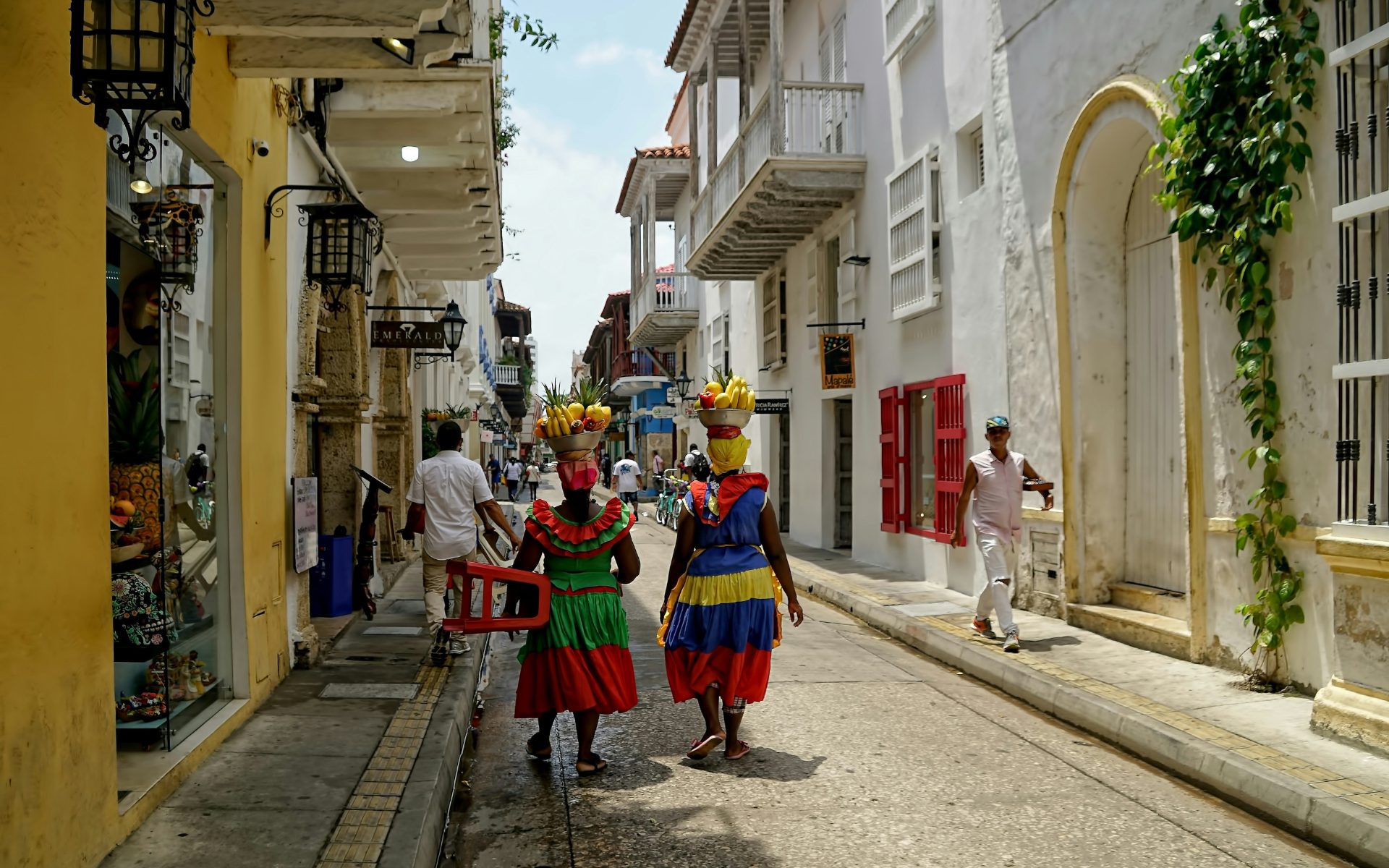
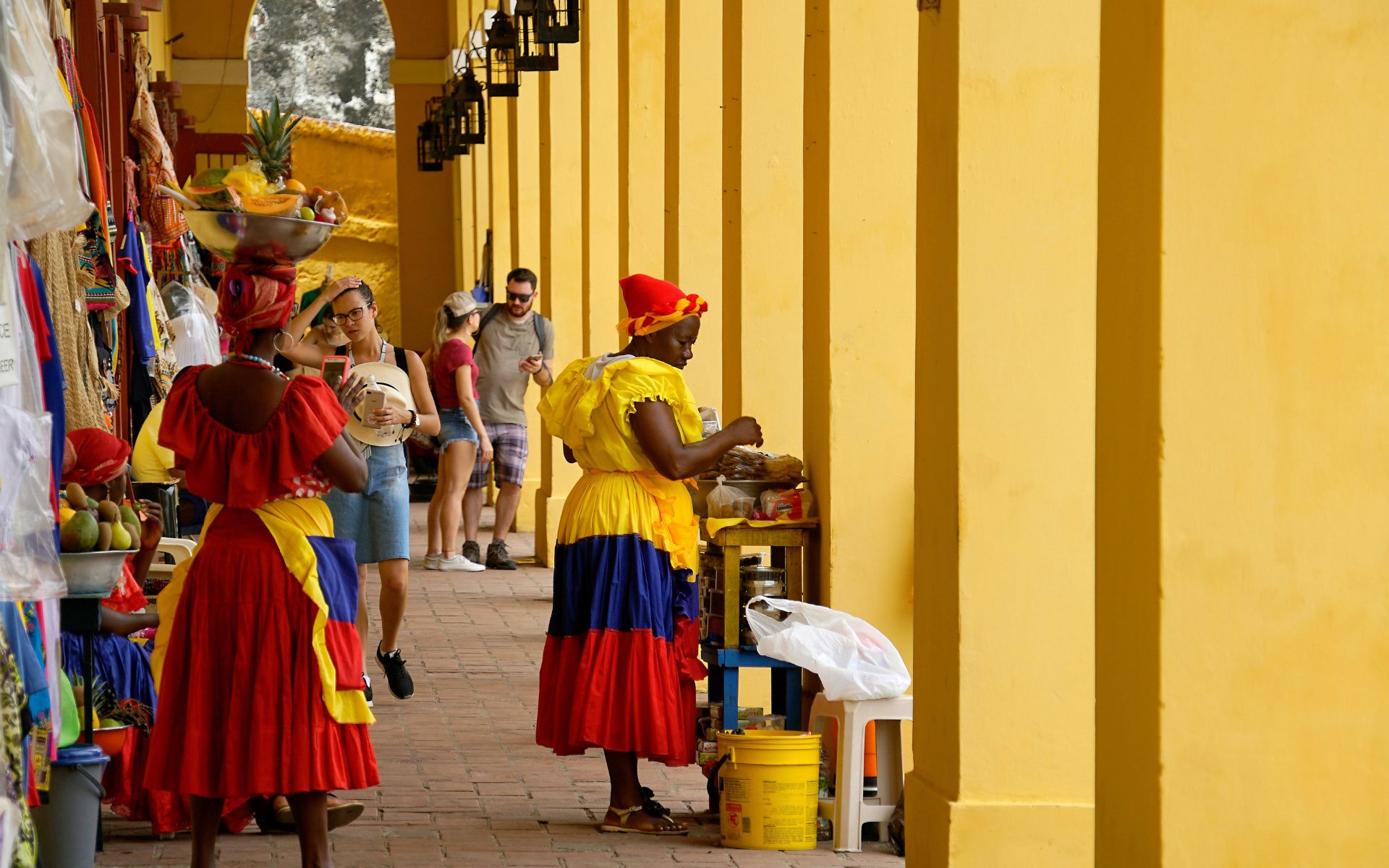
Seeing Ruperta in her traditional dress reminds me of the Palenquera women I noticed years ago on my first trip to Cartagena, Colombia’s port city on the Caribbean coast. Dressed colorfully, carrying fruit bowls atop their heads, theirs was a story I was eager to learn. And that’s what brought me here, to San Basilio de Palenque, two hours southeast of Cartagena’s ‘Walled City’.