Writer Tracey Cheung decides to face her fear of the wild unknown on an outdoor survival course in Australia. These are the lessons that stuck with her.


Writer Tracey Cheung decides to face her fear of the wild unknown on an outdoor survival course in Australia. These are the lessons that stuck with her.
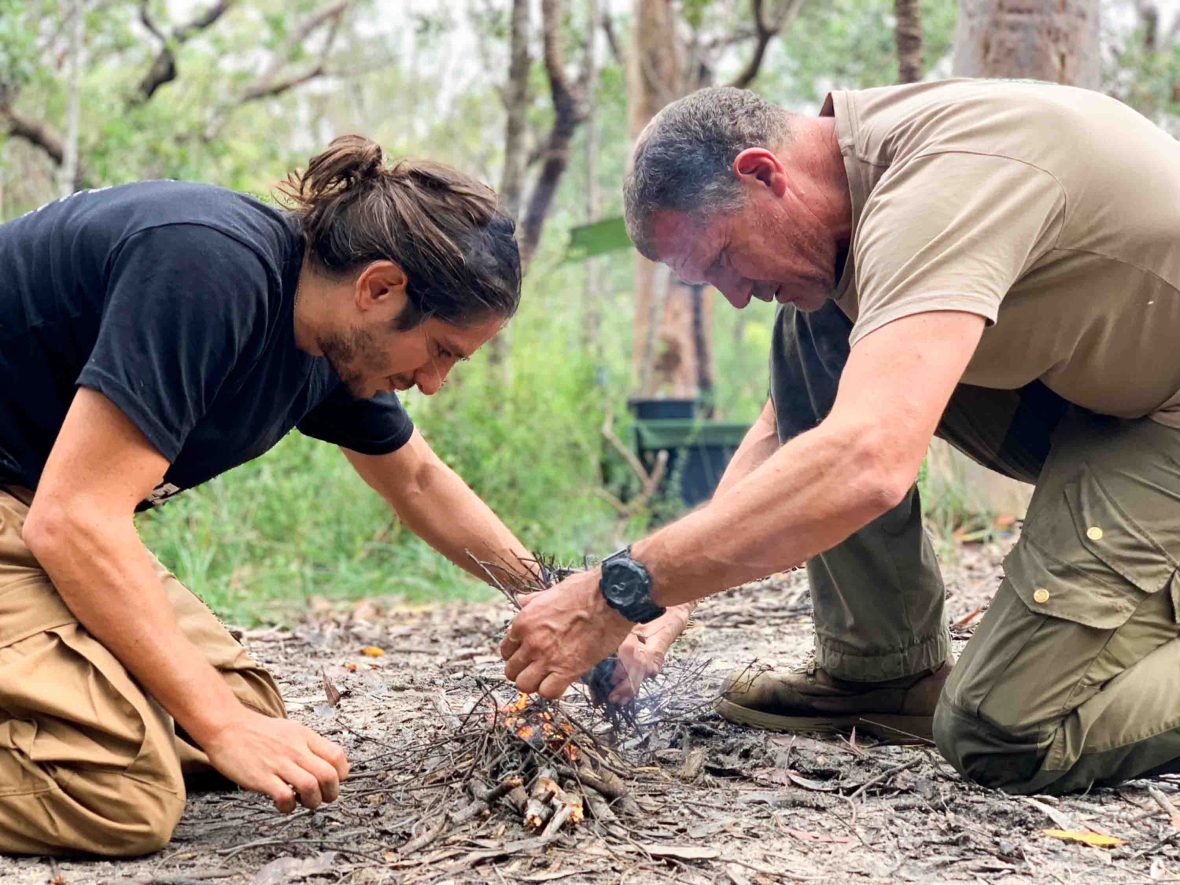
I keep striking, trying to remember the technique: Keep the hand holding the knife firm against the ground, use the Ferro rod to strike against the knife’s back. Do it with force. It’s like trying to get the right angle with a matchstick.
A few little sparks fly, but no fire yet. The instructor reminds me to tip the knife at 45 degrees, and that does it. The tinder below sizzles; it’s quite the thrill to see the spark.
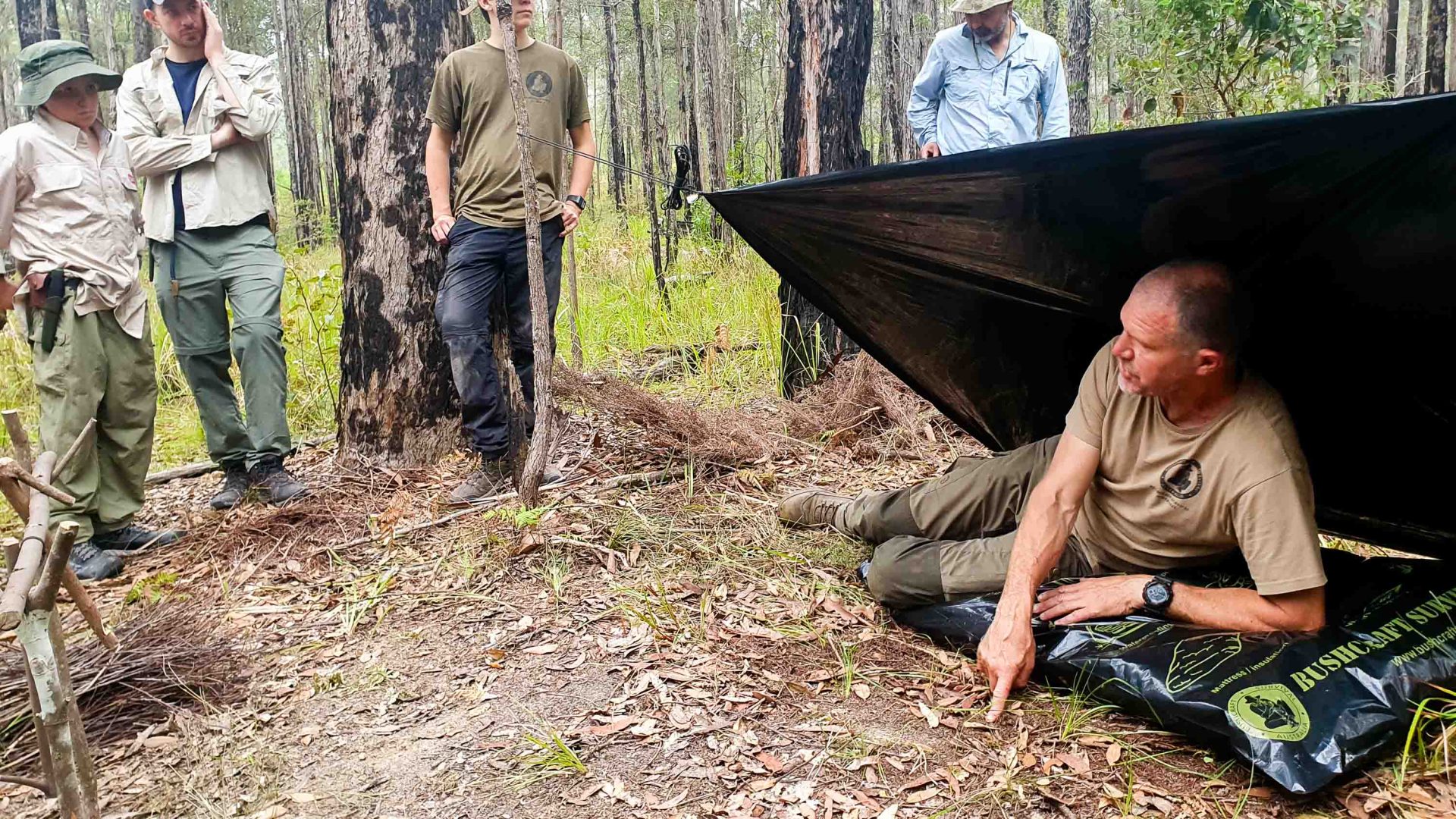
It seems that angles make all the difference in the wilderness. Take a tarp, for example. The strength and sturdiness of a tarp shelter depends entirely on the angle it’s set up—45 degrees is good in most conditions.
I’ve always loved being in nature, but the power and unpredictability of the wild—and our lack of control over it—scares me. That’s why I’m here, on an outdoor survival course in rural Victoria, learning how to survive, in case of an emergency.
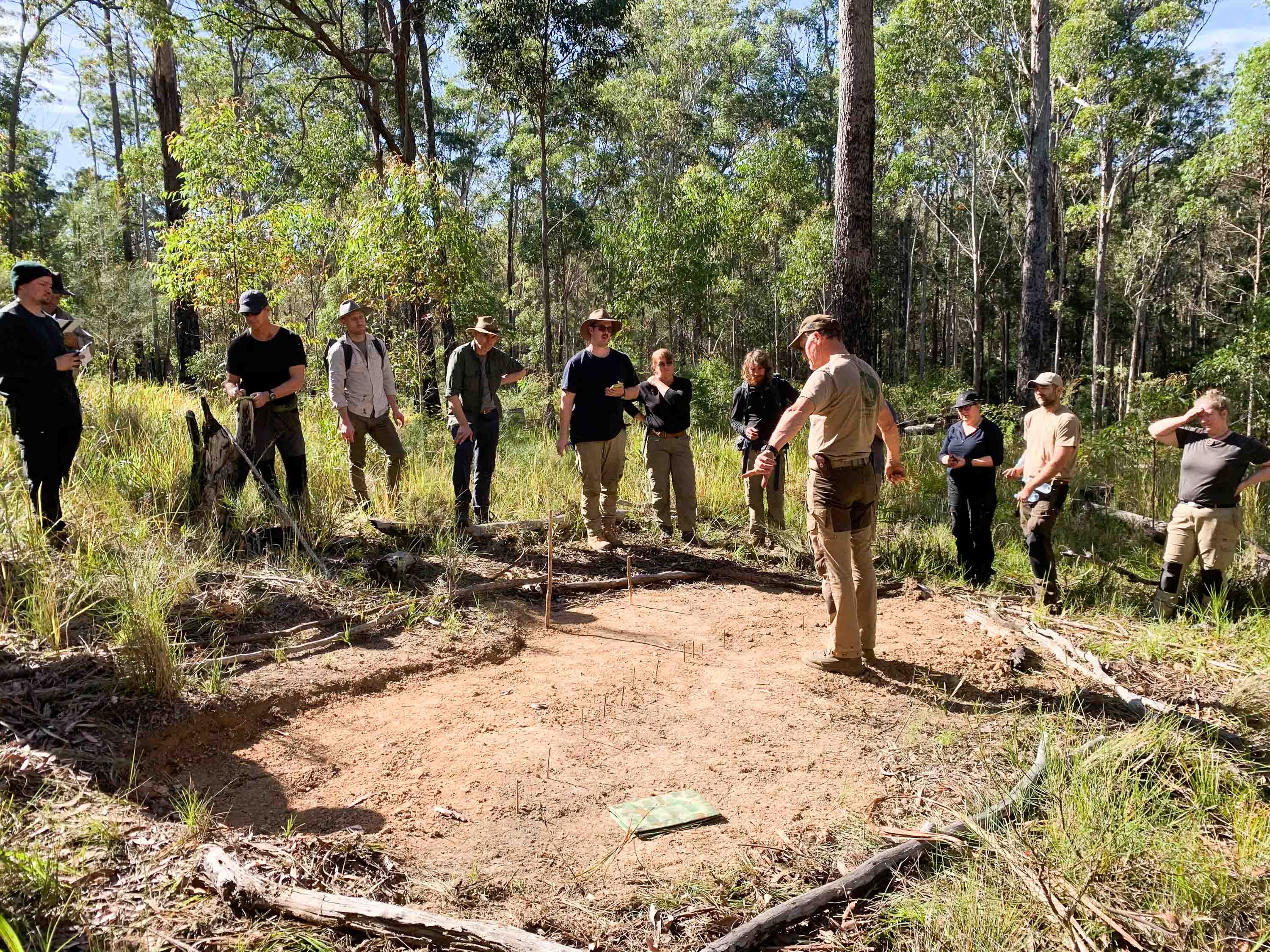
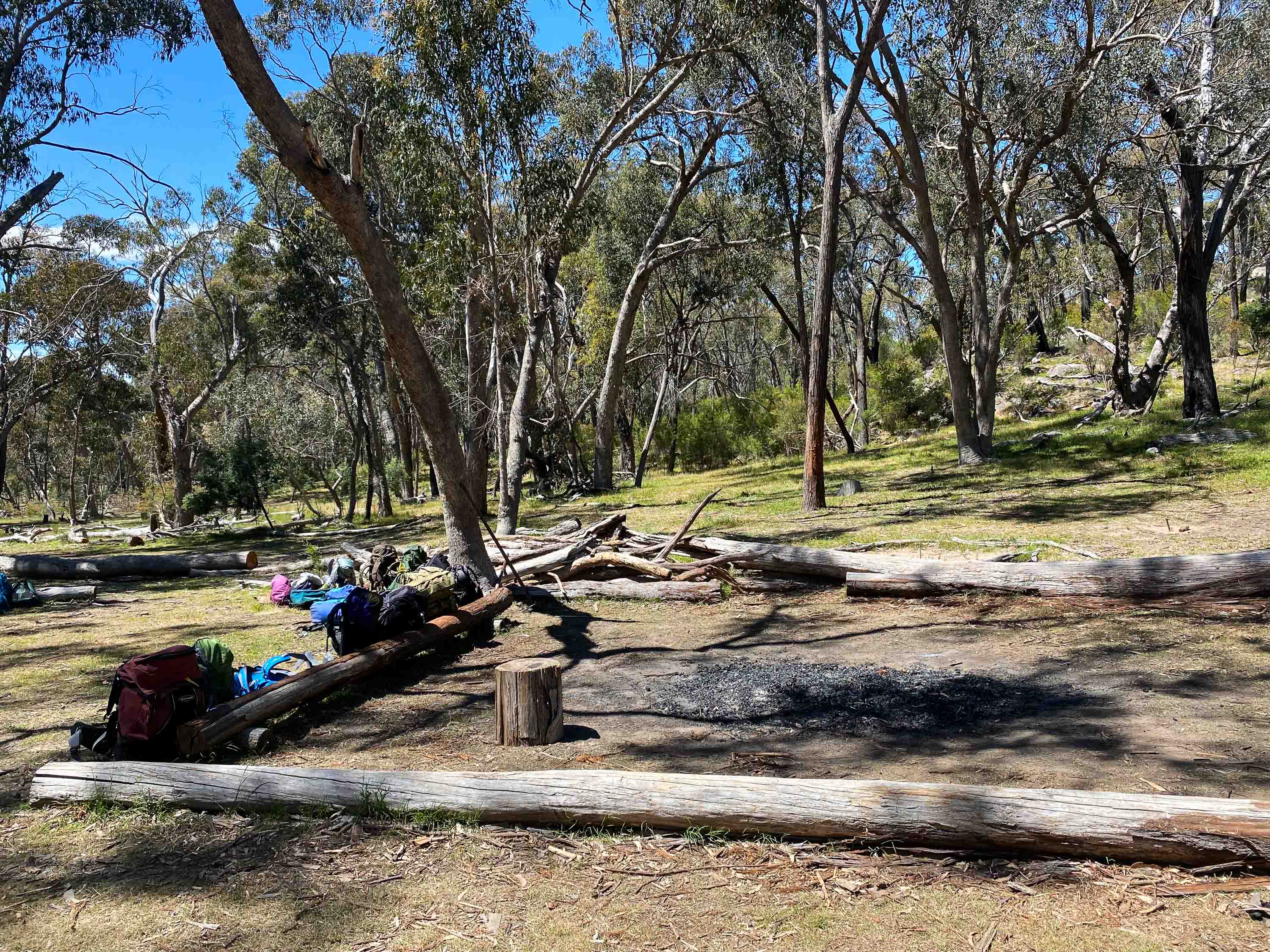
This Bushcraft Survival Australia (BSA) two-day course is held on private woodland neighboring the Warby-Ovens National Park on traditional Bangerang country. We’re in open bushland, among a range of native Australian trees including silver wattle, fringe myrtle and red stringy bark. The remoteness makes me feel like we’re truly in the middle of nowhere. In actuality, the nearest town is roughly 10 minutes by car, and Melbourne city is three hours away.
It’s a perfect warm Spring day, with sharp blue skies, decorated with wispy clouds, and this weather brings so many flies that it calls for a mosquito head net to stay comfortable.
This fire-making process has helped me see fire and knives in a new light. As Dedman notes, it’s unfortunate how both are often associated with fear and negativity.
Our ‘classroom’, shaded by an old army parachute, is under the tutelage of BSA founder Gordon Dedman. We’re a group of 20 initiates and we gather around a fire, over which sits a boiling kettle, our source of hot water. This is not a powered site. We’re minimally resourced on purpose.
“When it rains, it can reveal your weaknesses,” Dedman tells us. But he’s not just referring to physical strength. According to Dedman, many people find themselves in dire trouble because they panic instead of plan. That’s my first lesson…
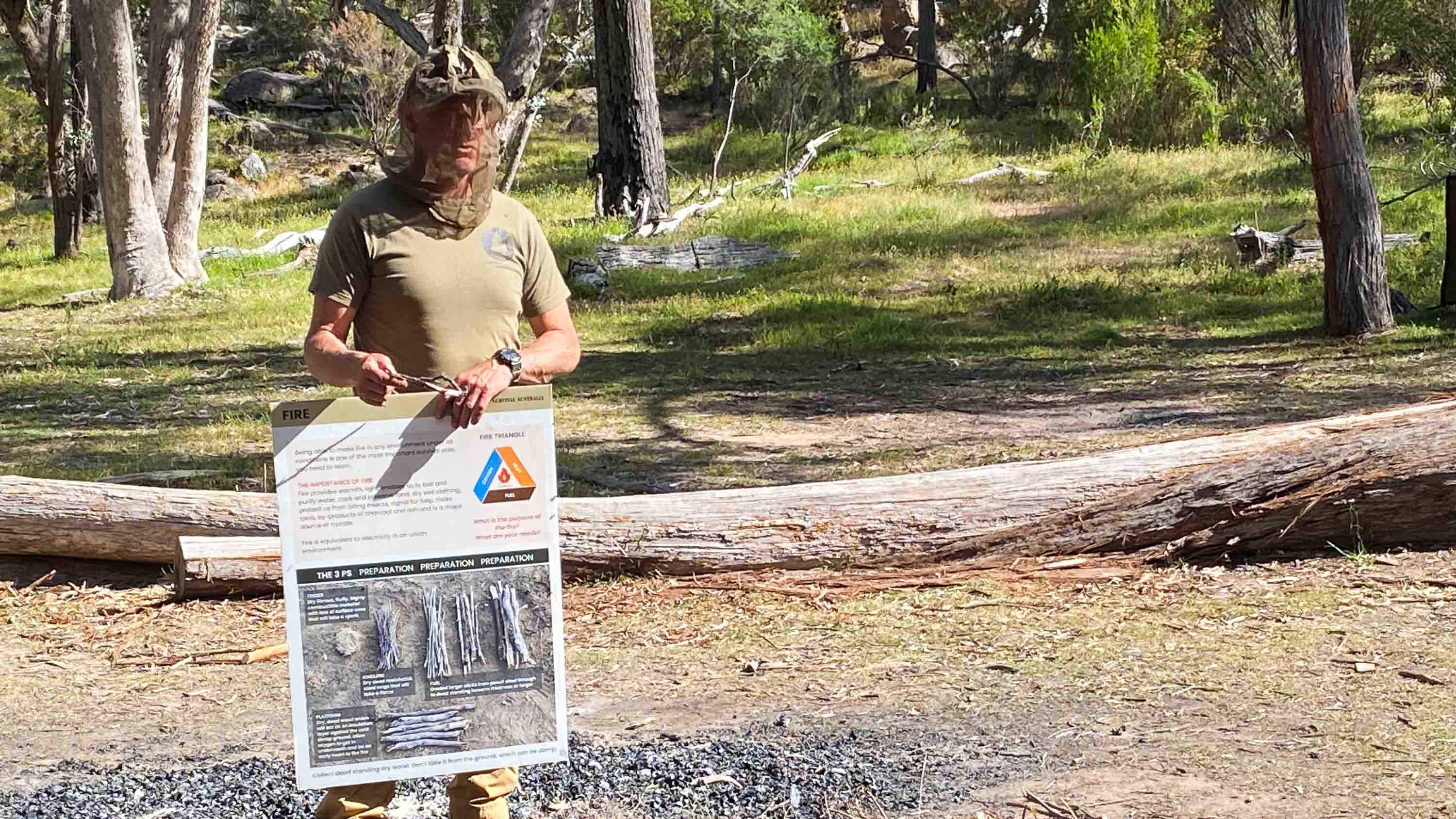
Dedman is a bushcraft and survival consultant for Alone Australia, a popular TV series which drops survivalists in remote parts of the country. He’s also a former member of the Australian Army 1st Commando Regiment, and a survival instructor in NORFORCE—an Australian Army Reserve Regional Force Surveillance Unit (RFSU).
For Dedman, PLAN is a survival-based acronym standing for Protection, Location, Acquisition, Navigation. He tells us a true story about two hikers in New Zealand who found themselves in trouble when the weather turned freezing. Wearing only cotton, they eventually froze to death.
Clothing, along with first aid, falls under Protection, the ‘P’ and first priority in PLAN. When we get wet, cotton makes you colder, while wool helps you stay warm. You should always “be bothered” to stop and put on extra clothes, he says.
Beyond style, clothes play an important role and it makes me question what I’m wearing on an average day. I live in Australia and the sun is infamously unrelenting. Can I protect myself more strategically from the elements? Something to consider when I get home to my wardrobe.
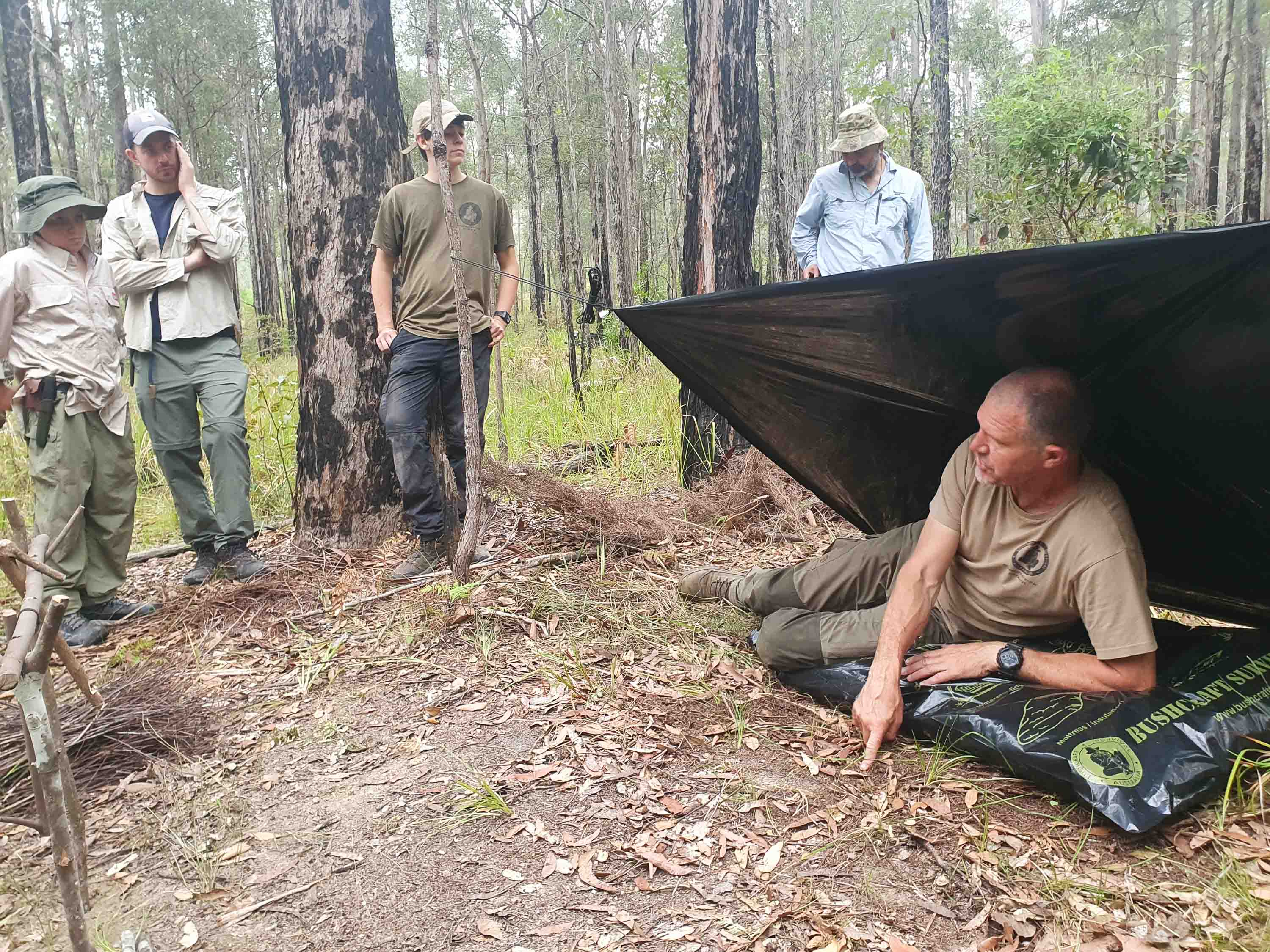
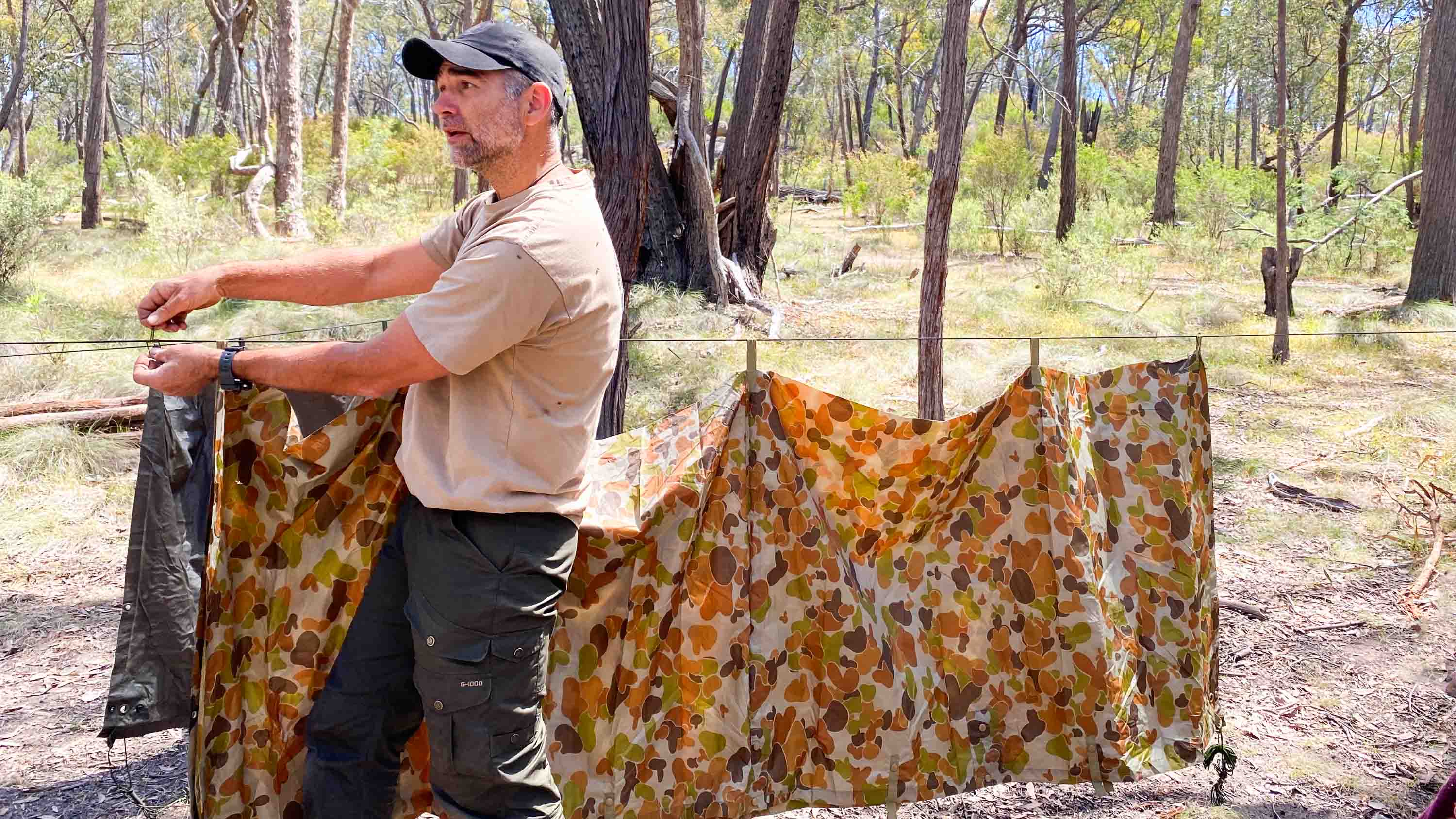
Co-instructor Warrick Angus teaches us how to string a shelter tarp between two trees using cordage and a piece of material. Having a go at this teaches me to appreciate the skill of knot-tying. I’m also reminded of how uncoordinated I am; extra homework will be required after this course is done.
This exercise underscores how useful cordage is to pack, as are other tools, like the bandana, which I’ve become somewhat of an expert on. We brainstorm creative uses for a simple bandana, coming up with: Underwear; flag; net to catch fish; and water filtration device.
“My fear led to a fascination, the more I learned the more I realised how amazing these creatures are, and the special roles they play in our ecosystem.”
- Warrick Angus, survival instructor
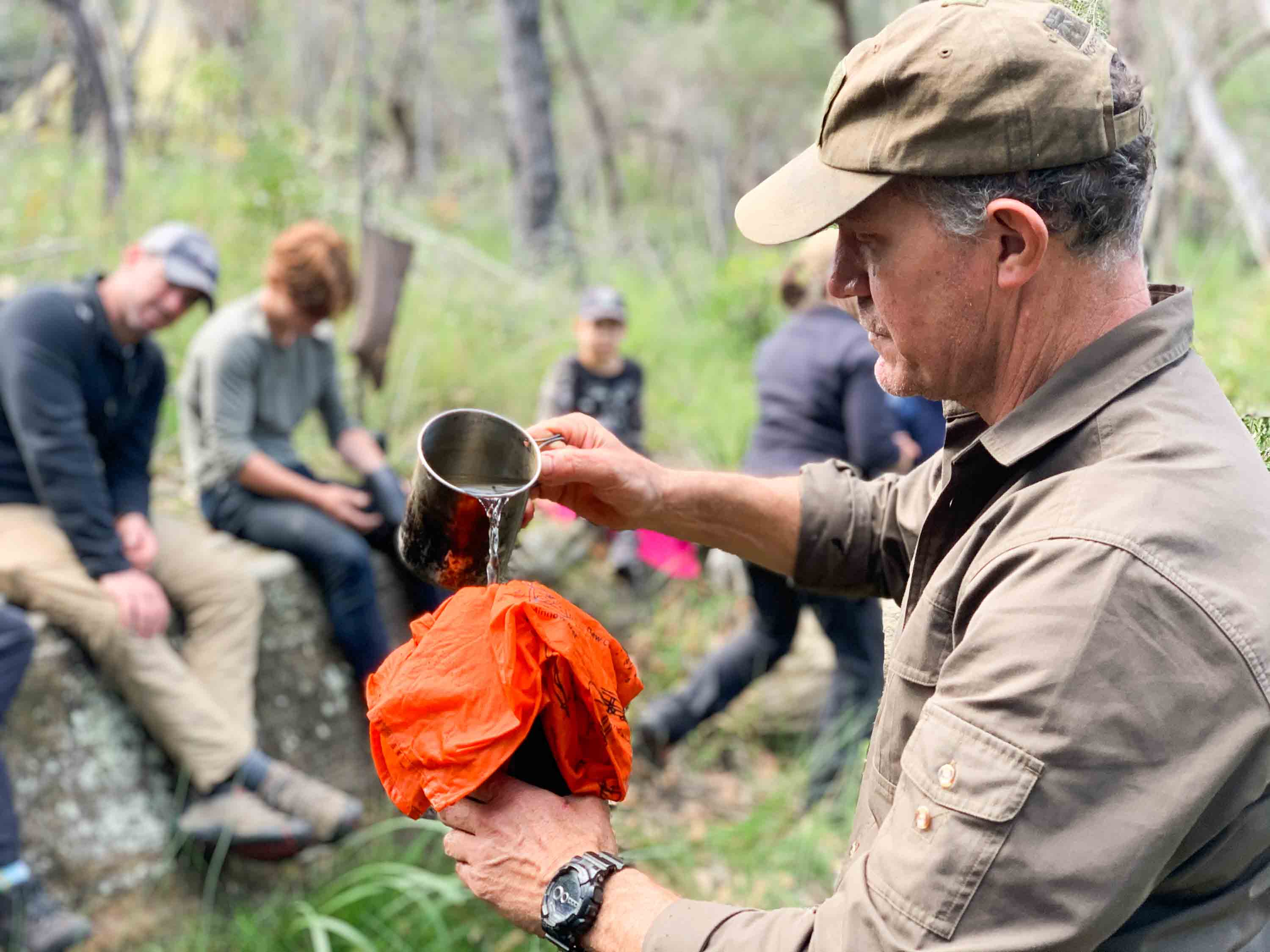
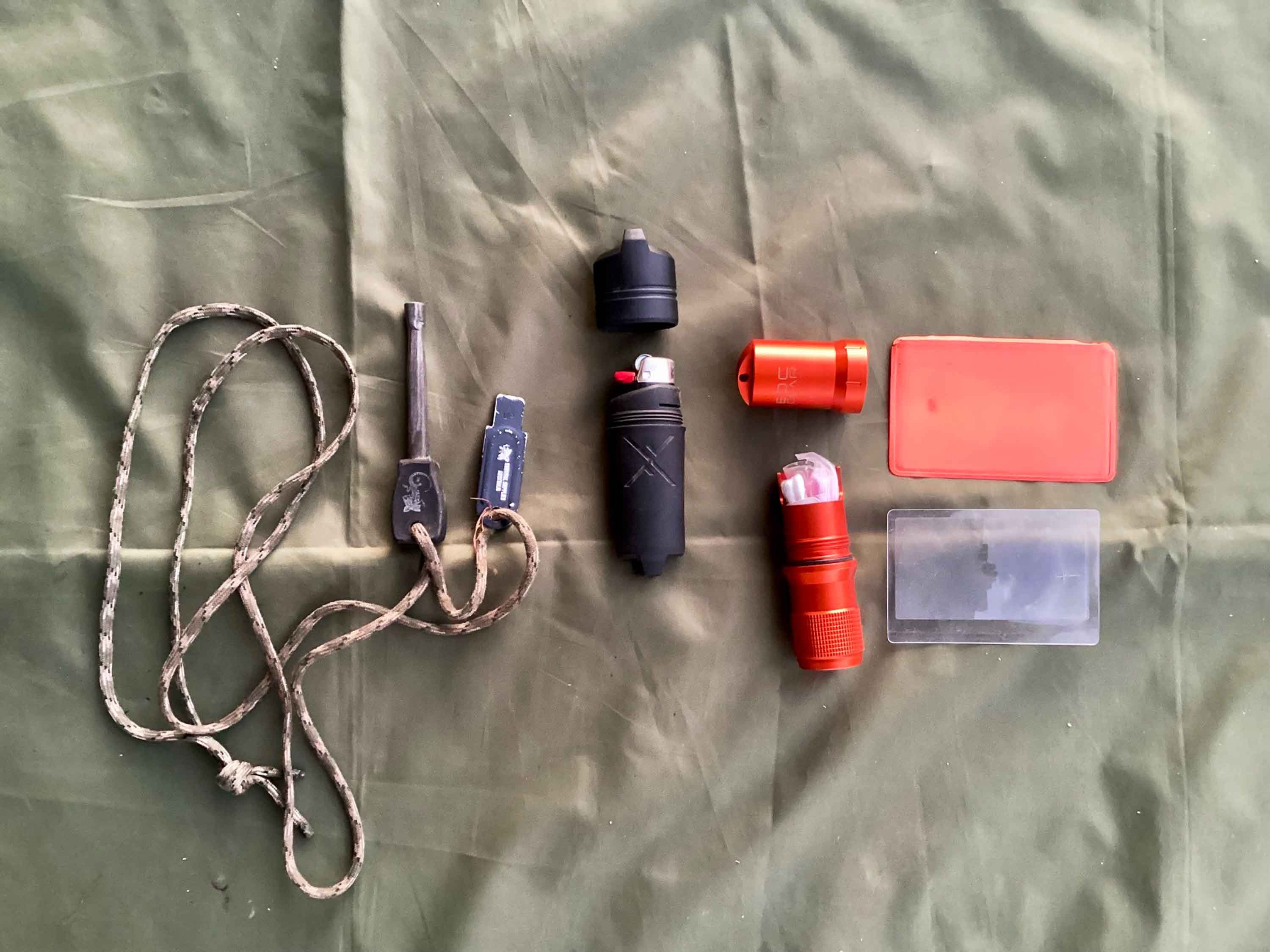
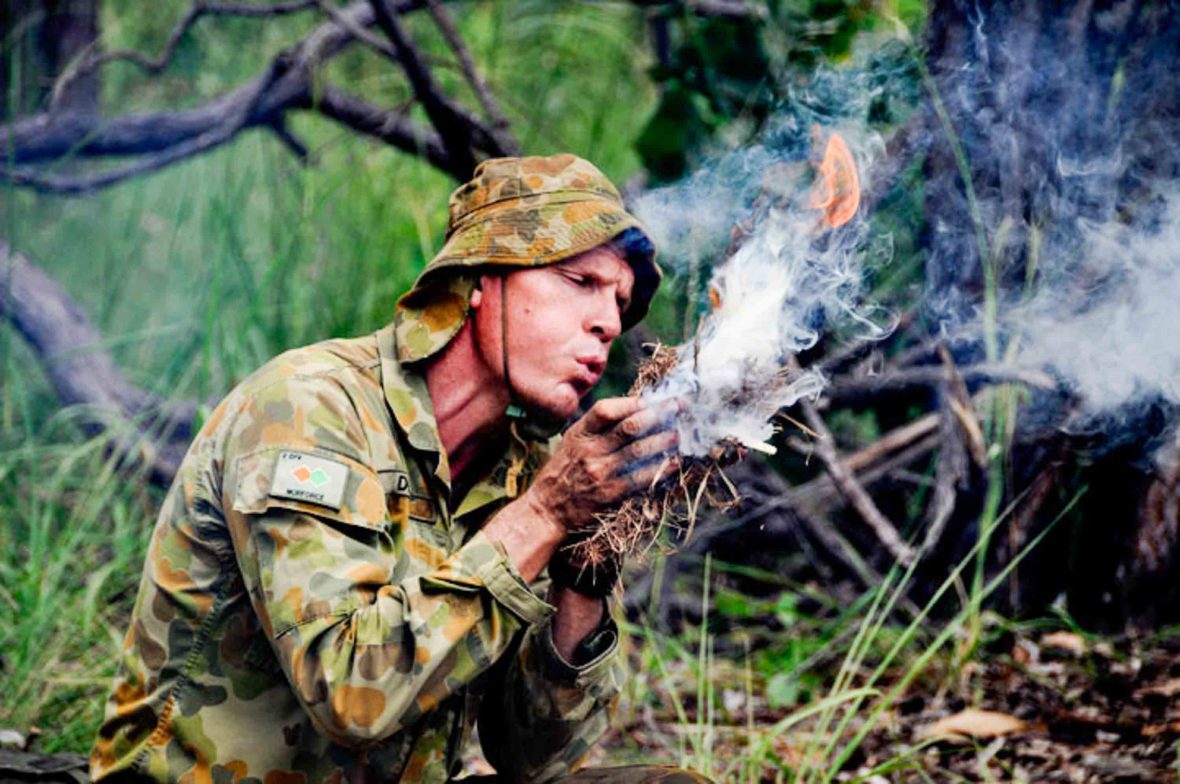
Speaking of water filters, down by the river we learn how to build a fire, using a Ferro rod, knife, and wood, to boil water of its impurities. We learn the types of tree materials best gathered to make fire—dry bark, dead twiggy branches, pencil-thin sticks, and thicker rods for the base. Finding dry bark to make the nest-like tinder bundle was the hardest to source. My hands are getting cuts, and the knife is handy for scraping the bark clean.
This fire-making process has helped me see fire and knives in a new light. As Dedman notes, it’s unfortunate how both are often associated with fear and negativity. But now, I see them as helpful, useful tools now that I’ve learned how to use them. I’m not too uncoordinated, if anything I’ve learned that with a little perseverance I can thrive. So long as I don’t let fear hold me back.
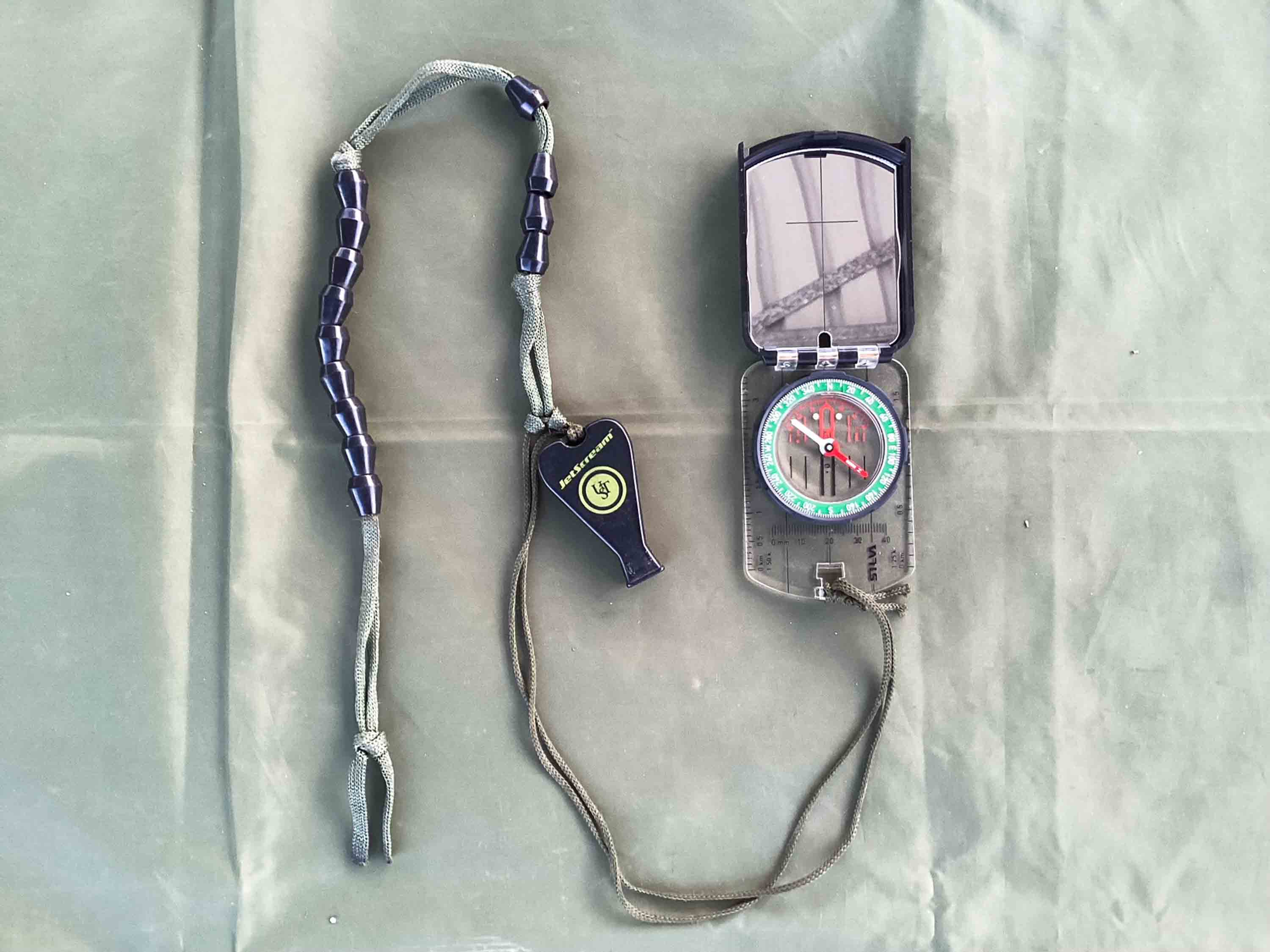
At around 8pm, when it’s dark enough for the stars to be out, we take a night walk up a rocky slope. Even with our headtorches, each step is nerve-racking. I make it to the top unscathed, where Dedman is using a laser pen to show us the Southern Cross constellation and how its pointer stars can direct us south.
While a compass and personal locator beacon should always be on the outdoor survival packing list, this celestial navigation walk makes me realize that most of us would be lost, literally, without modern technology. But nature, when you know how to read her, always has the answer.
But this means being comfortable without technology, which we have grown used to relying on to guide, entertain, and even save us. It was only in stepping out of my comfort zone, imagining myself being lost out here in the bush, did I realize the depth of my own dependency. I’m now resolved to be a little less reliant on tech in the future.
As we watch Angus hold a huntsman spider in his hand, he tells us that he overcame his arachnophobia by studying the eight-legged creatures. “My fear led to a fascination, the more I learned the more I realised how amazing these creatures are, and the special roles they play in our ecosystem,” he says.
Similarly, I have feared certain aspects of nature, but this bushcraft survival course has equipped me with a better understanding of how nature can help, rather than hinder us. I’ve learned to never underestimate the elements (and to always pack a wool layer), I’ve become resolved to not let fear hold me back from growing, and discovered that technology is not always the answer. Sometimes we just have to look at the stars.
****
Adventure.com strives to be a low-emissions travel publication. We are powered by, but editorially independent of, Intrepid Travel, the world’s largest travel B Corp, who help ensure Adventure.com maintains high standards of sustainability in our work and activities. You can visit our sustainability page or read our Contributor Impact Guidelines for more information.

Tracey is a freelance lifestyle and travel writer from Australia, with a focus on wellness and environmental conservation. Recent topics include swimming with dugongs in the Philippines, a solo stay on an uninhabited Fijian island, and cannabis wellness treatments in Thailand. She has previously worked as a food tour developer and guide.