Sick of waiting in line for the lifts at Whistler? Priced out of St. Moritz? There’s a burgeoning ski scene happening in North Africa’s Atlas Mountains, and we sent Morocco-based writer Sally Kirby to find out more.

Sick of waiting in line for the lifts at Whistler? Priced out of St. Moritz? There’s a burgeoning ski scene happening in North Africa’s Atlas Mountains, and we sent Morocco-based writer Sally Kirby to find out more.
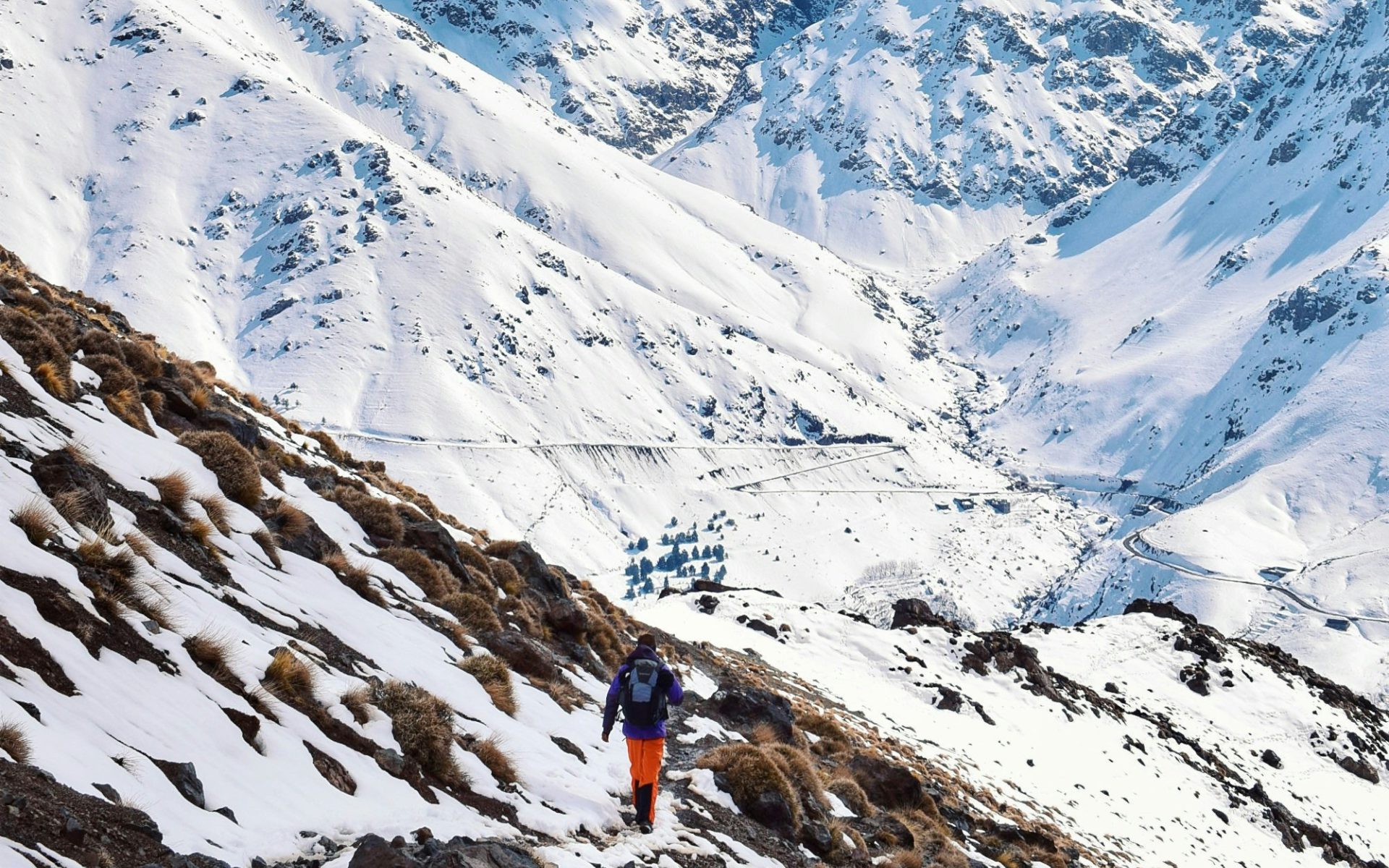
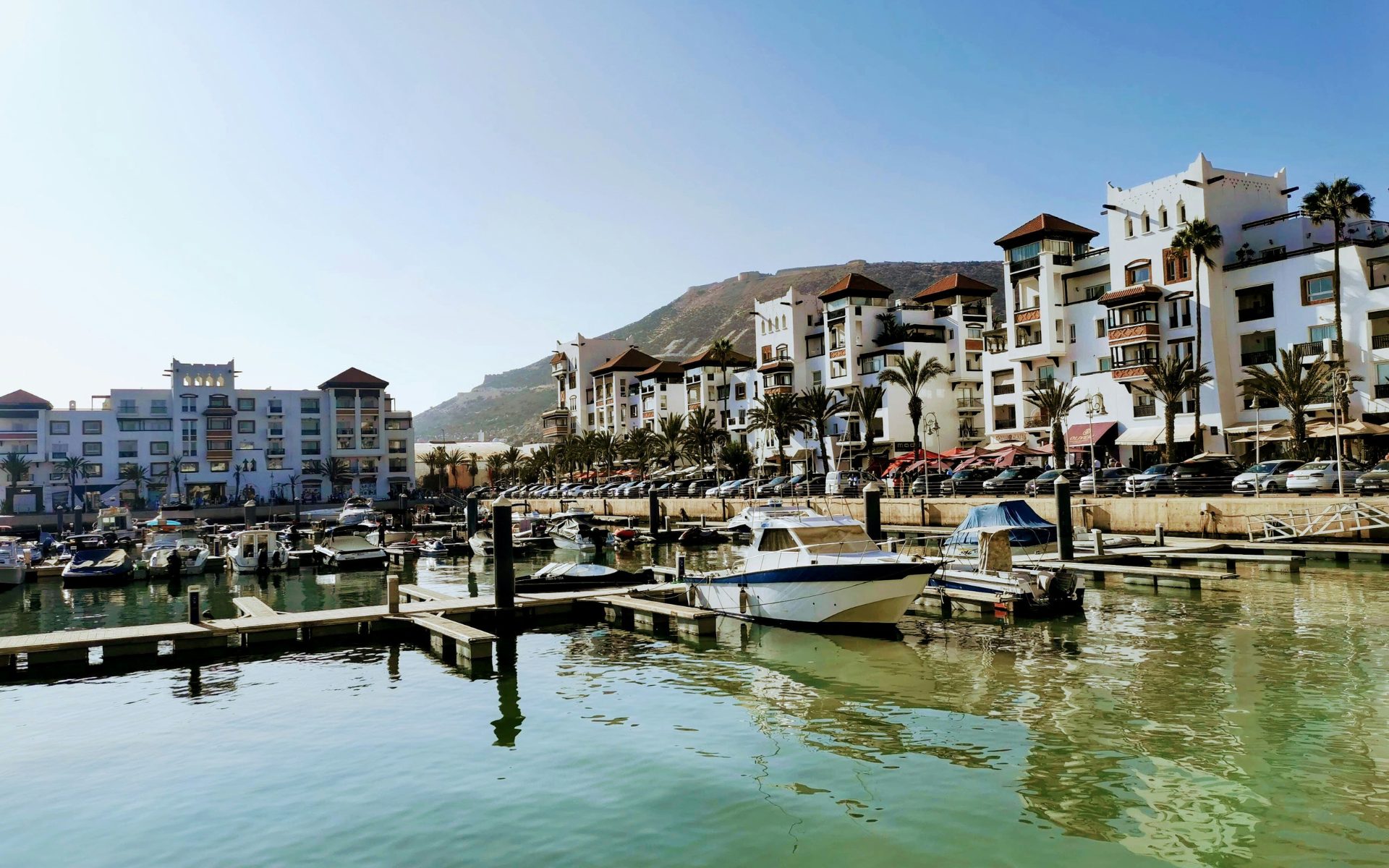
I’ve lived in Morocco for eight years and have yet to experience the snow that blankets the Atlas Mountains, North Africa’s highest peaks. I’ve been analyzing videos on social media for signs of AI, watching as professional skiers plough through powder on Moroccan slopes. It often seems incomprehensible that Agadir, where I live, can be bathed in winter sunshine while just 186 miles (300 kilometers) away, snow is many feet deep. Altitude is an amazing thing.
So, on a balmy beach day, along with my generous-spirited, ski-mad friend, Charlotte Mabbett, we load the car with camping chairs, a picnic, and many bags of warm layers. We’re on a mission to see the snow for ourselves.
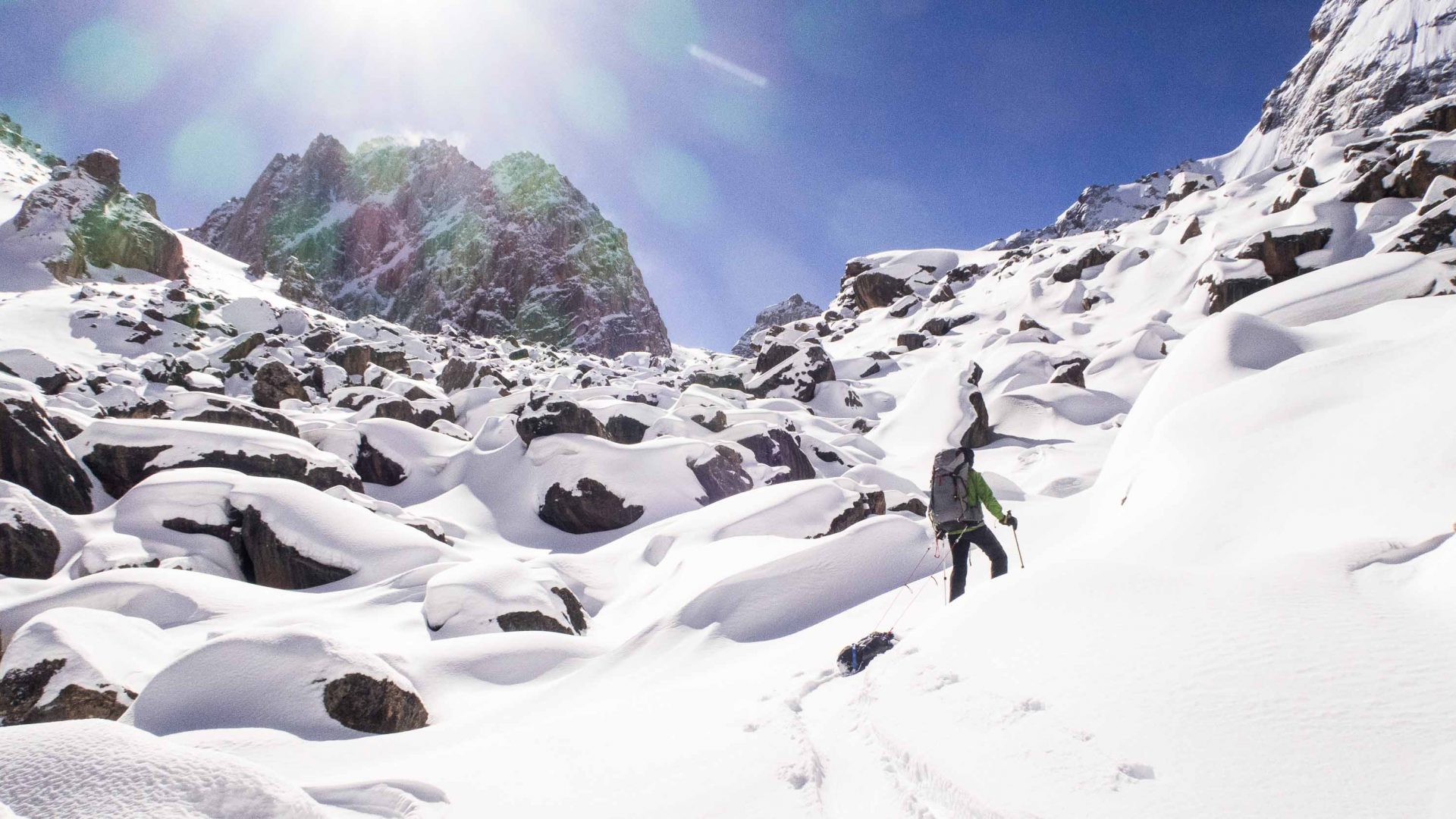
This year, record snowfall has been attracting skiers from all over the world who are drawn to the uncharted peaks near Imlil and the beginner-friendly slopes of Oukaimeden, both within a 90-minute drive of Marrakech. There are other African ski resorts, like Chrea in Algeria, but Oukaimeden is North Africa’s highest—standing at 10, 738 feet (3,273 meters)—and largest ski area. And so, Oukaimeden is our destination.
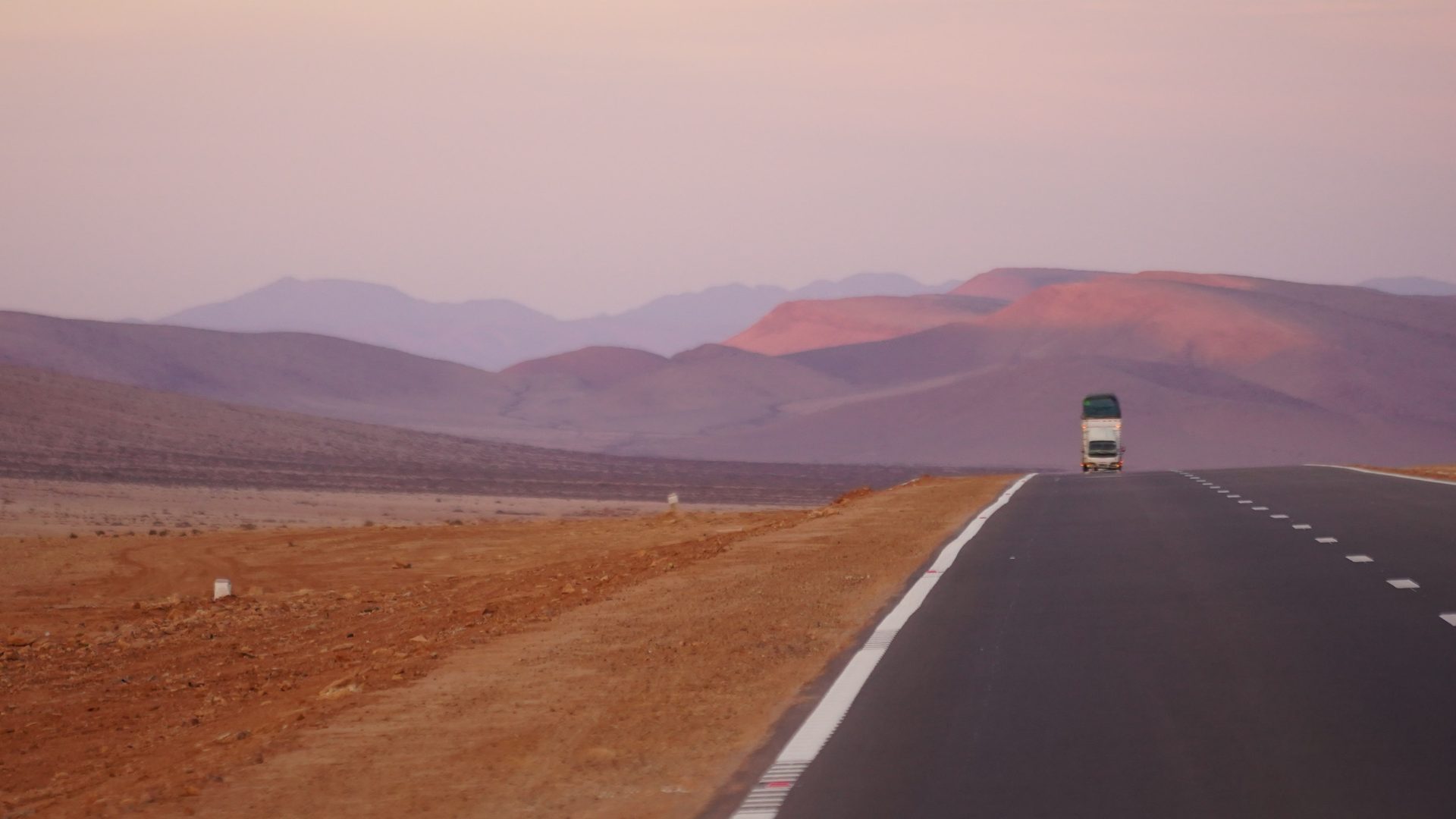
Driving from Agadir, the scenery is green and washed clean by recent heavy rains. Coming off the autoroute, the road becomes a single-carriageway. Windows down, Robbie Williams blaring, we sing along to the open road. Soon, I see snow on the distant peaks. What would usually be an arid landscape has been transformed by fields of yellow and white wildflowers. We eat our sandwiches with a view to the mountains beyond.
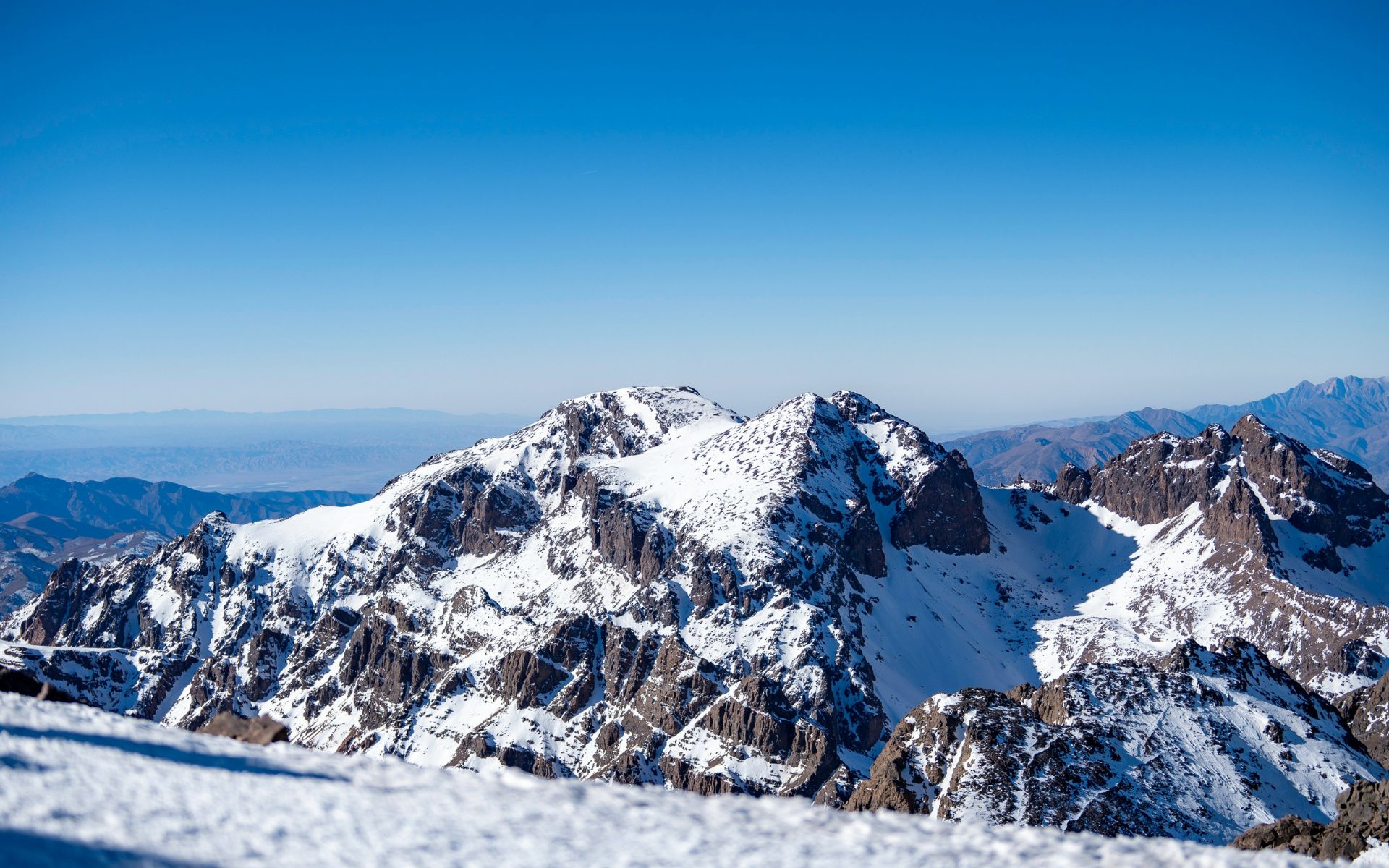
At almost 6,000 feet (1,800 meters), we stop in Imlil for the night. Arriving at our hotel, Kasbah du Toubkal, in time for sunset, we sip sugary mint tea by their new infinity pool, taking in the village below and the snowy summit of Mount Toubkal, North Africa’s highest peak (13,671 feet / 4,167 meters) above.
Climbing higher, we wind through alpine forest, a steep drop to one side and rocks the size of houses on the other. In a thick, snow-laden cloud, visibility drops to several feet, so we crawl along, hazards blinking.
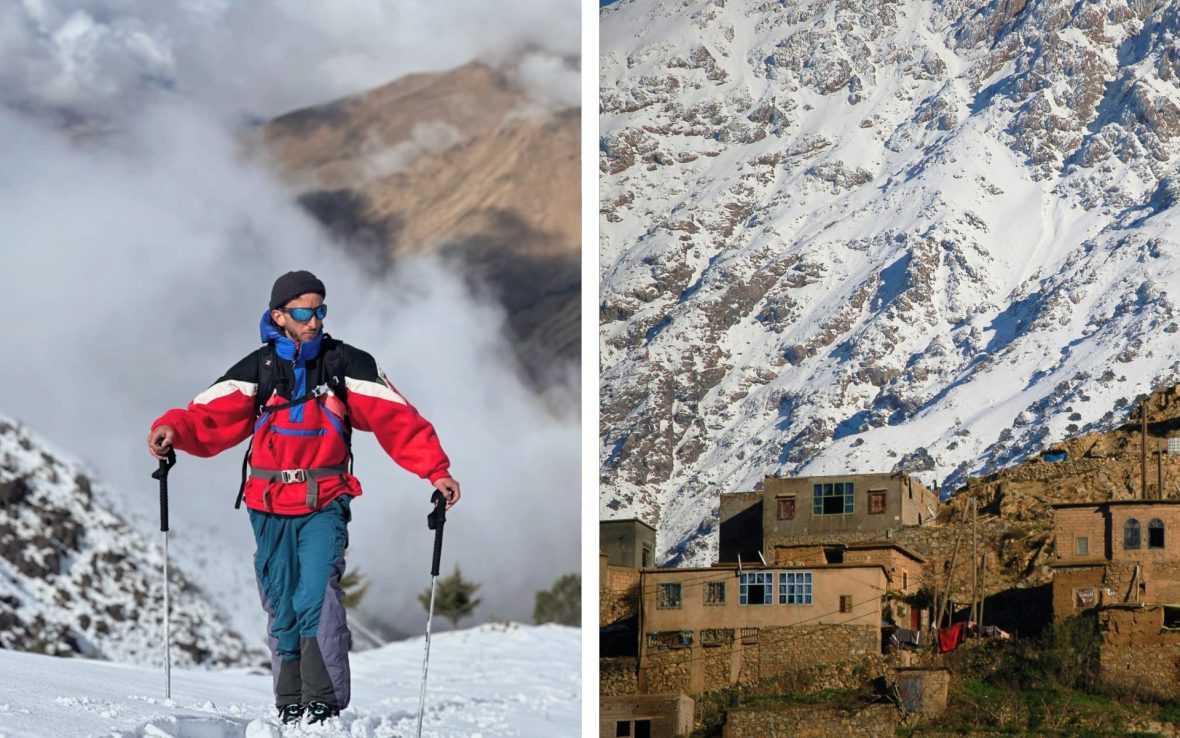
Over a slow-cooked turmeric chicken and caramelised onion tagine with Radouane Isouktan, a local 24-year-old self-taught skier and mountain guide, we hear about his day backcountry skiing in nearby Tacheddirt. His footage of advanced skiers jumping off snow-covered rocks and doing sharp turns down narrow couloirs (mountain fissures) makes my stomach flip.
“It’s a challenge getting quality ski equipment to Morocco,” says Isouktan. He’s Amazigh (Berber), a group Indigenous to Morocco who live predominantly in mountain villages where they maintain a strong connection to their land. As we eat, he tells us about his dream of becoming a certified mountain guide in Chamonix, France—often considered the pinnacle of guiding. Isouktan wants to learn from experts under optimal conditions, and bring that experience back to Morocco, where professional tuition is limited.
Having heard about the weekend embouteillage (traffic), we’ve chosen to drive our next leg on a Friday. Isouktan warns us that heavy rains have dislodged rocks, telling us “shwiya, shwiya, slowly, slowly.” Climbing higher, we wind through alpine forest, a steep drop to one side and rocks the size of houses on the other. In a thick, snow-laden cloud, visibility drops to several feet, so we crawl along, hazards blinking.
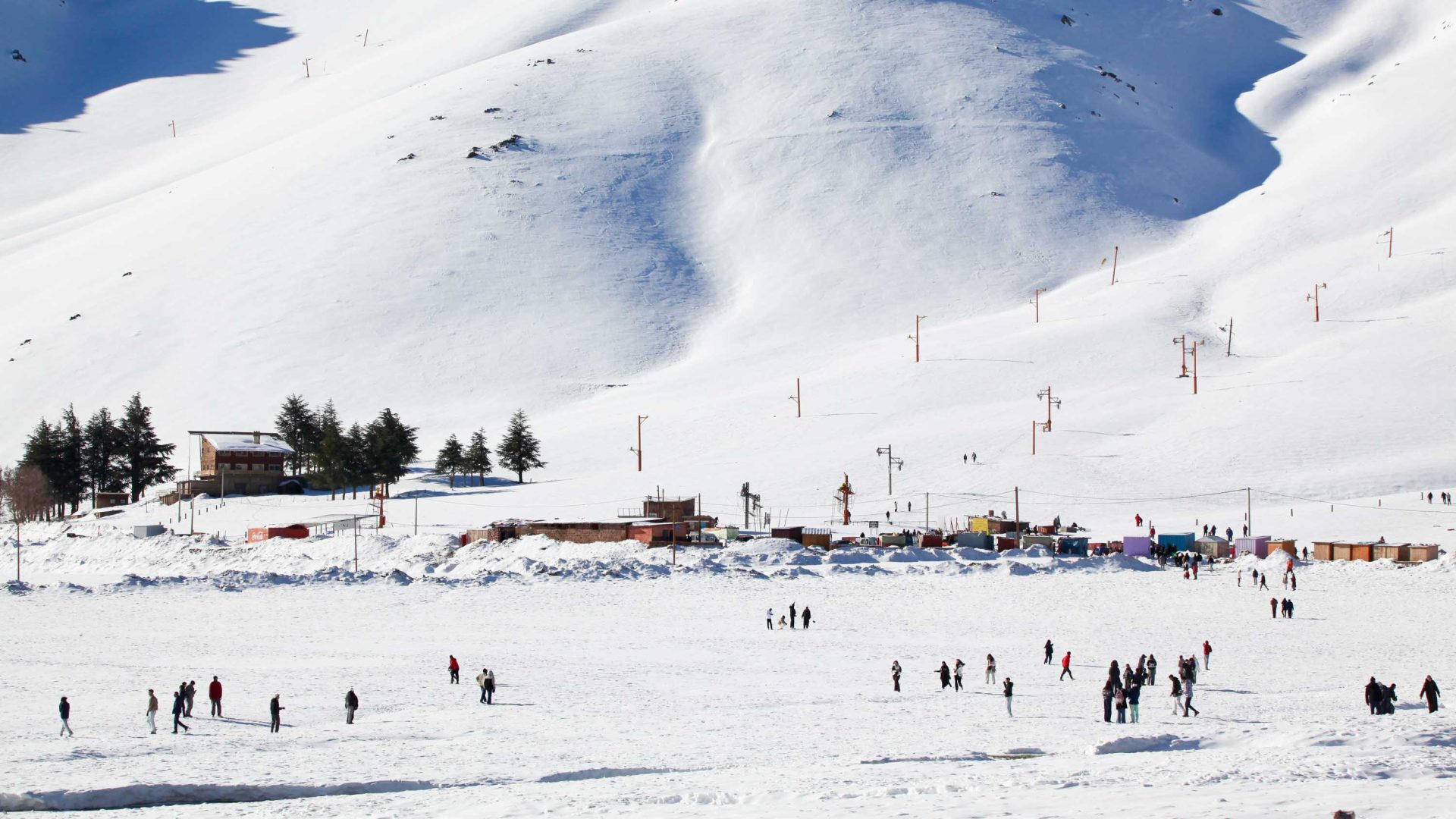
Then, just like that, the cloud clears and out pops a cobalt blue sky—we’re in Oukaimeden. We, the guarias (foreign girls) are spotted arriving in town and soon the car is surrounded by men dressed in full-length woolly djellabas (traditional, loose-fitting hooded robes), with chapped lips, weathered skin, and wraparound sunglasses. I spot red Ecole du Ski Francais (ESF) outfits and an alpine-esque ski village, completely under snow. Many of Oukaimeden’s low-rise apartment buildings and unpolished mountain refuges date back to the 1940s. The stone buildings huddled on an east-facing slope are charming in their simplicity.
“Ski?” the men shout. “Mn b3d,” I reply, with the Moroccan Darija word for ‘later’. Unshelled walnuts and jars of honey are shoved towards the car. We decline, marching towards the snow, howling with laughter as we disappear knee-deep into powder.
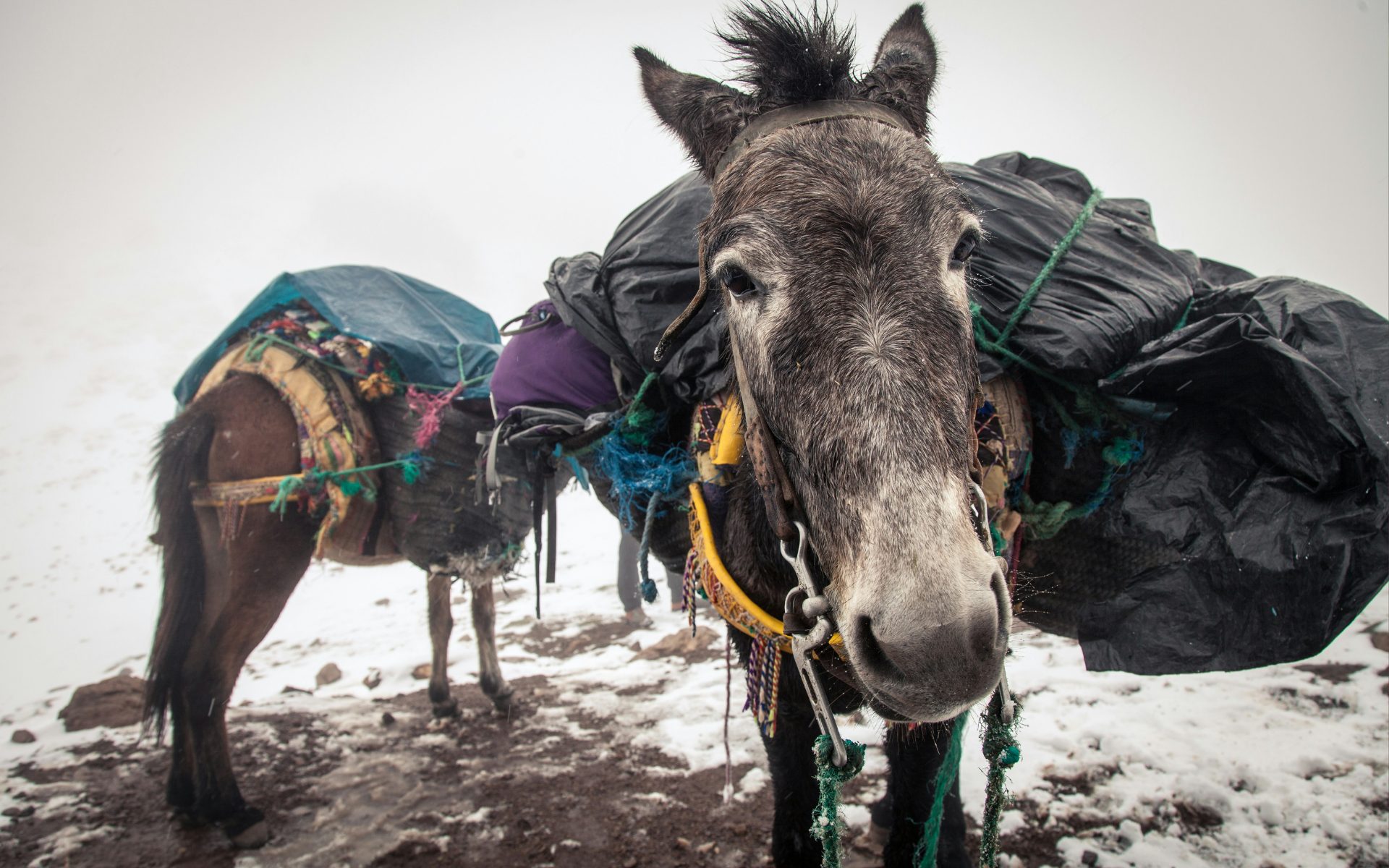
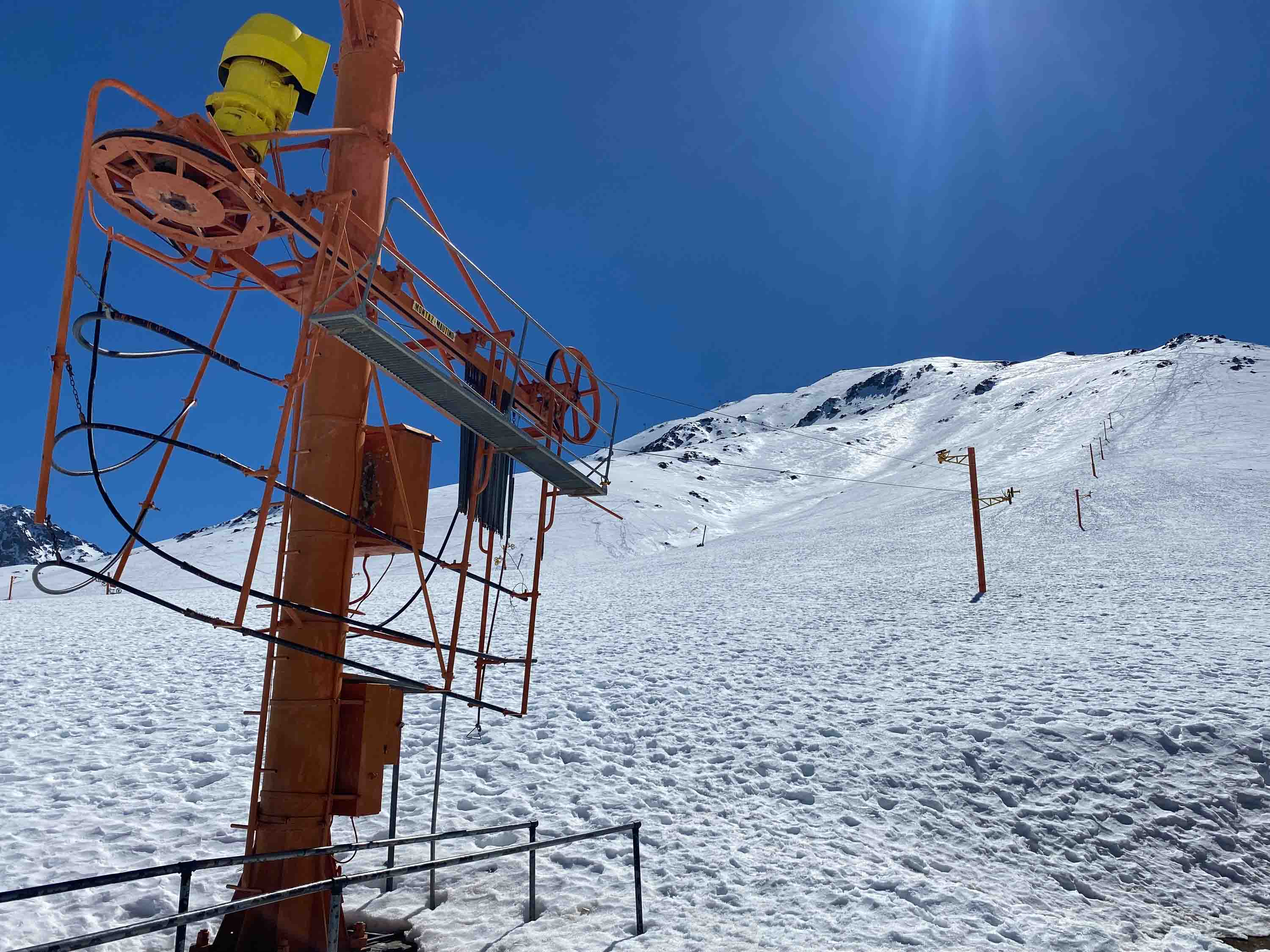
The hamlet itself is so tiny it’s hard to imagine anyone living here. On one side of the road, we note several apartment blocks with closed shutters, a handful of simple plastic table and grill restaurants and a police station. On the other side, next to the nursery slopes, there are dozens of wooden huts selling rental skis and local produce, including honey. I count four stationary ski lifts. I see a mule carrying someone’s skis up the slopes.
“There has been a remarkable surge in visitors to Oukaimeden this year”, says Samir Azzimani, a Moroccan double-Olympian ski racer and instructor. Azzimani and I connected over Instagram, where I watched him bring curious French skiers from the French Alps to Oukaimeden. Proactive and generous with his tips, he’s since become a vital source of information for Charlotte and I.
And yet despite the influx of visitors, the lifts remain unmoving. “The issue is not simply a lack of investors,” says Azzimani. “The real challenge lies in the disconnect between administration and on-the-ground realities. There is currently a lack of clear vision and strong project leadership.”
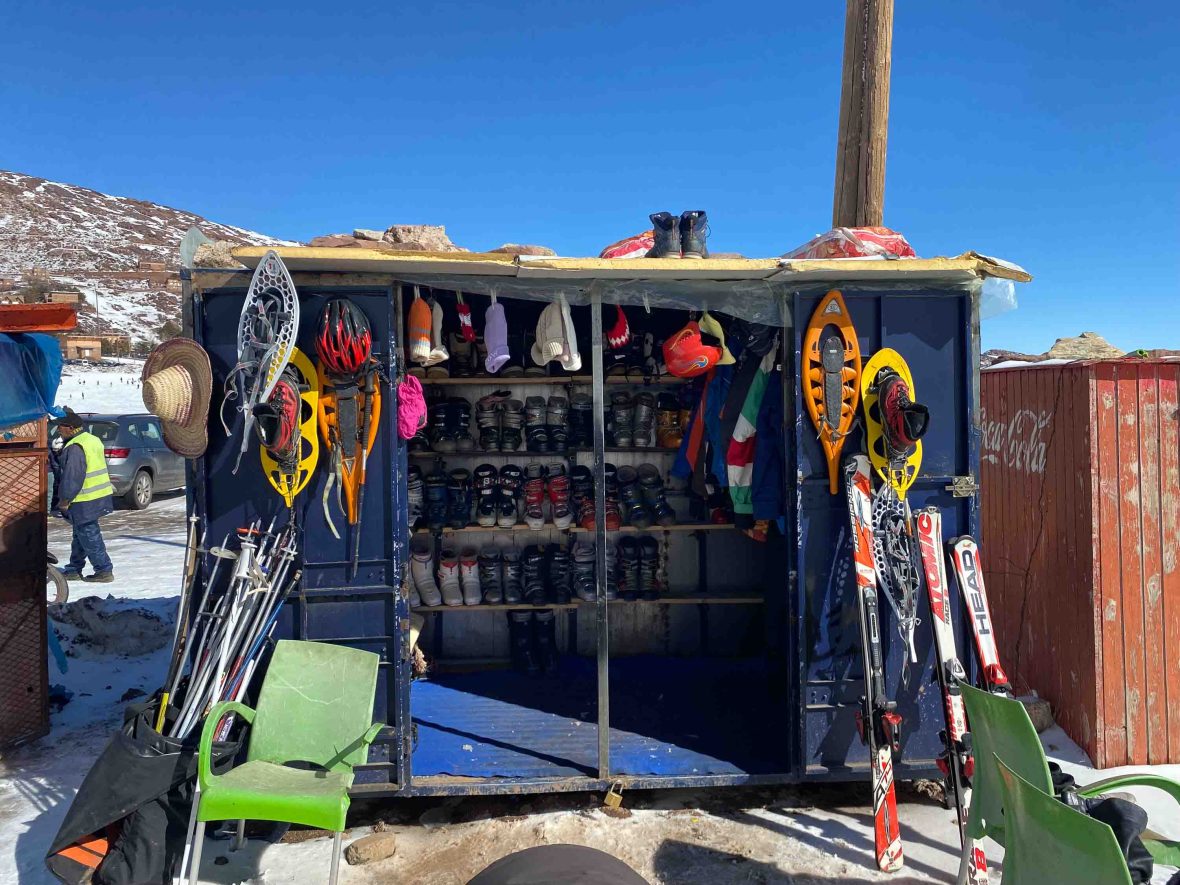
For unfussy skiers and snowboarders looking to have a go on the lower slopes, all the equipment you’ll need is available—albeit dated.
“Decision-makers, often based in Rabat,” he continues, “tend to focus primarily on financial aspects, which is understandable, but they have limited expertise in winter sports and mountain development.”
Charlotte’s face lights up and our minds sync: “We have to find someone to open the chairlifts!”
According to Azzimani, the area surrounding Oukaimeden is part of Toukbal National Park, while the resort itself falls under royal jurisdiction. “No development can take place without approval from the Royal Palace,” he says. “However, His Majesty appears to be moving in a direction that could eventually allow the creation of a true ski resort in Africa.” Inchallah, god willing.
At Chez Juju, a stone restaurant with a sunny terrace, we find Isouktan’s uncle Omar Amjif. He invites us in for lunch. We opt for tartiflette, a classic Alpine cheese-and-potato dish. Next to us, a couple from Casablanca tells us they’ve been coming here to ski since the ‘90s. Omar scoops ice from the snow heaped on the stone walls and stuffs it into the ice bucket with their wine.
By afternoon, the clouds have rolled in, snow is falling, and we’re wearing all our warm layers. Everything is closed except a handful of hanouts (shops) selling drinks, snacks, and kitchen cupboard basics. Snow gathers on a row of tagines. Sensing there’s not much to do in Oukaimeden once the sun sets, we pick up a deck of playing cards and head to Club Alpin Francais (CAF), our chalet for the evening.
We awake to a world of white. Yallah (let’s go), we beeline it for a rental hut decorated with retro skis and bobble hats. For unfussy skiers and snowboarders looking to have a go on the lower slopes, all the equipment you’ll need is available—albeit dated. We brought our base layers, and that was a good idea. If you’re tackling the summit or venturing further off-piste, I’d recommend bringing your own kit.
We agree on a price of USD$10 (MAD100) each for a two-hour boot and ski rental, and another 10 bucks for Mohammed, a calm and smiling mountain man, to be our guide. Taking no measurements, he helps me into the ski boots with a tug and a jump. Efolki, perfect.
Last night’s snowfall adds to the pristine white of the bumpy and icy-in-patches nursery slopes. We dodge kids on toy cars fixed to skis and daring adults trying their hand at skiing. Most visitors are day trippers, largely locals and a handful of tourists looking to experience snow in Africa. While Oukaimeden has been a ski destination since 1936, when Morocco was under the French Protectorate, the COVID-19 pandemic and a subsequent earthquake in 2023 both rocked the local tourism industry.
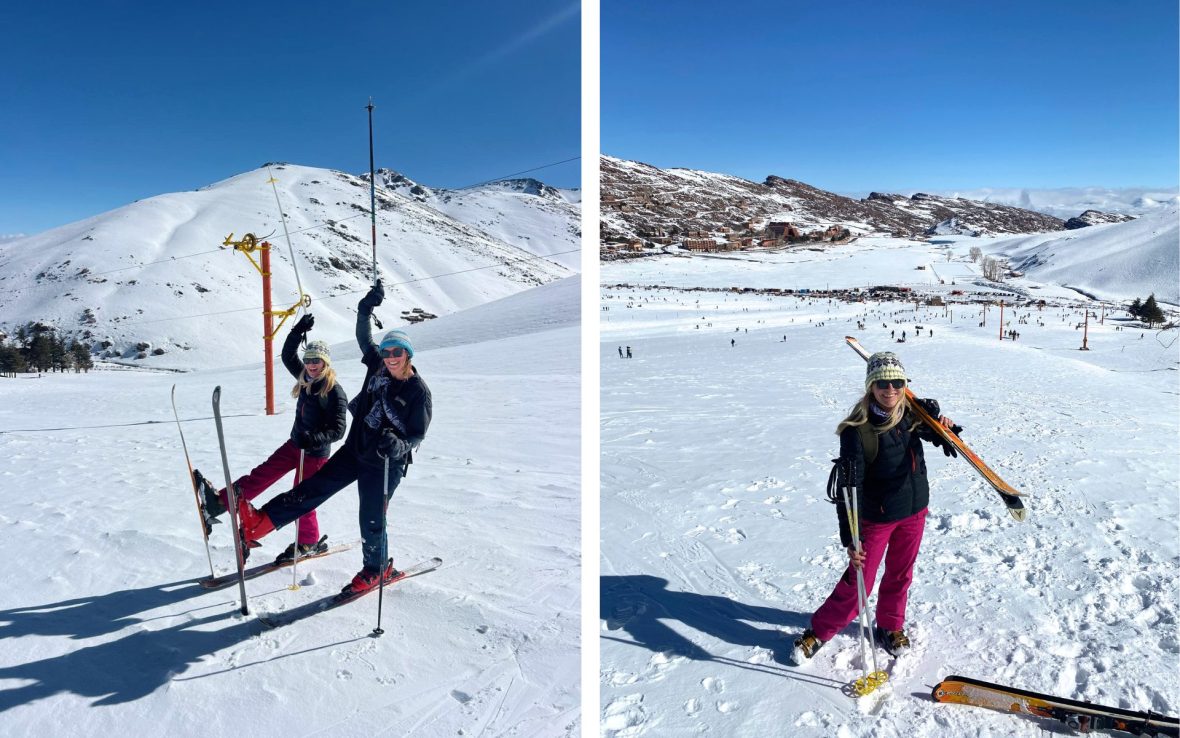
Once we’re warmed up, it’s a steep hike. Advanced skiers with climbing skins will aim for the summit. Me? I’m heading up 1,000 feet (300 meters). Maximum. Before moving to Morocco, I skied regularly. But a 10-year break is a long time, and I feel the difference in my ability—or lack thereof.
Clicking into the stiff bindings, I’m off at a snail’s pace. Picking up speed, the skis want to cross, and I’m completely out of control. After a few turns, and a reminder from Charlotte to give myself a break, I remember the sensation of transferring the weight from one ski to another. I tell myself, “Just commit”. Something shifts. I’m skiing. In Morocco. And, what an incredible experience it is.
The vastness of the mountain scenery, the sheer amount of snow, and the local passion for snow sports have all exceeded our expectations. And while Oukaimeden’s infrastructure is basic, it was enough for two beginner-to-intermediate skiers on our first Morocco ski trip. I’ll leave advanced skiers to tackle the off-piste areas with our new friends Azzimani and Isouktan.
Oukaimeden is the antithesis of a glitzy, state-of-the-art ski resort, but if you travel with an open mind then you’re guaranteed to find more than a little charm in Morocco’s ski scene. Charlotte and I are already talking about a visit in the summer, when there’s hiking and mountain biking to be found. And what about our plans to fix the defunct ski lifts? It turns out the Moroccan Agency for Tourism Engineering also believes in Oukaimeden’s potential, and a USD$10 million resort transformation is on the cards. First investment—a brand new lift.
****
Adventure.com strives to be a low-emissions travel publication. We are powered by, but editorially independent of, Intrepid Travel, the world’s largest travel B Corp, who help ensure Adventure.com maintains high standards of sustainability in our work and activities. You can visit our sustainability page or read our Contributor Impact Guidelines for more information.
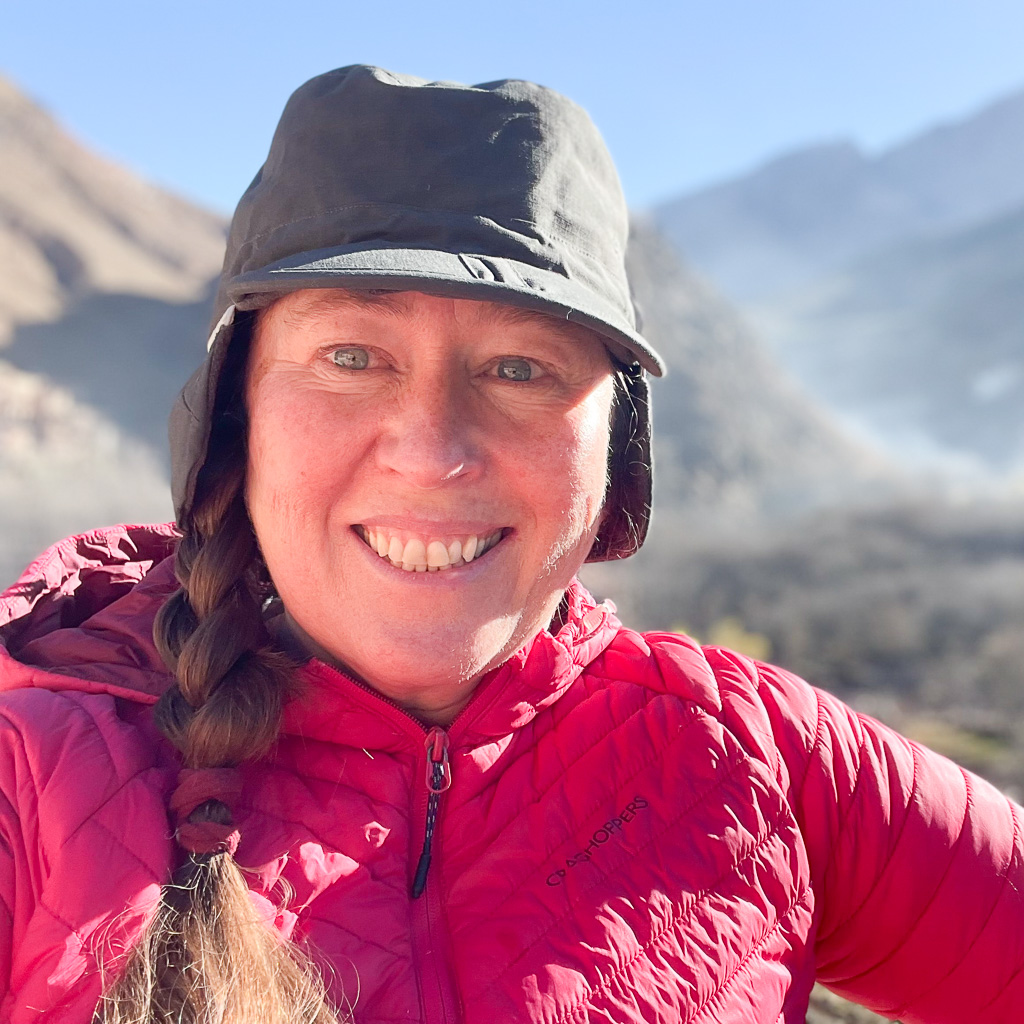
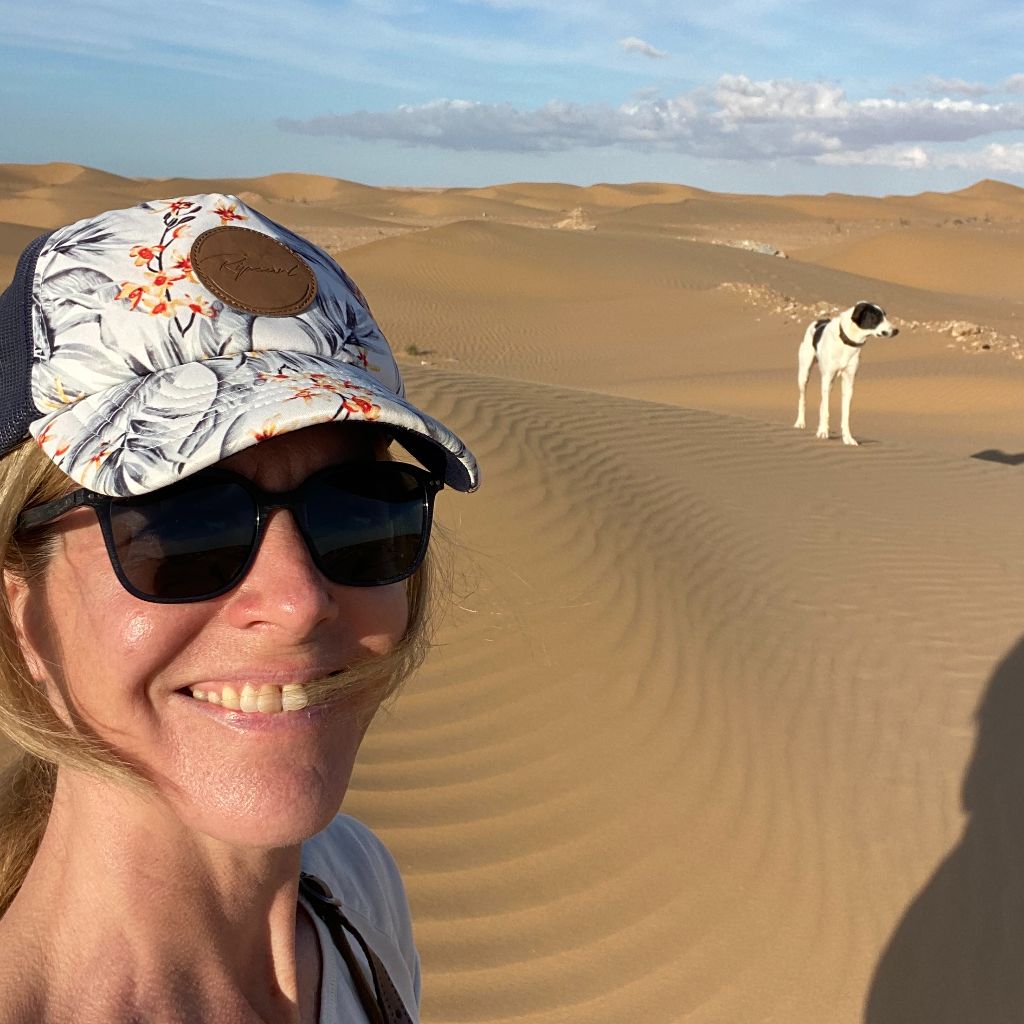
Sally Kirby is a travel journalist from the UK living in Morocco. Her work focuses on sharing her passions: Surfing, connection, and Africa. She has written about surfing the length of Morocco’s coastline, her first time fasting for Ramadan, and discovering Morocco’s cities as a solo traveler. Her latest work appears in the Lonely Planet, DK Eyewitness, Time Out, and on a personal blog.