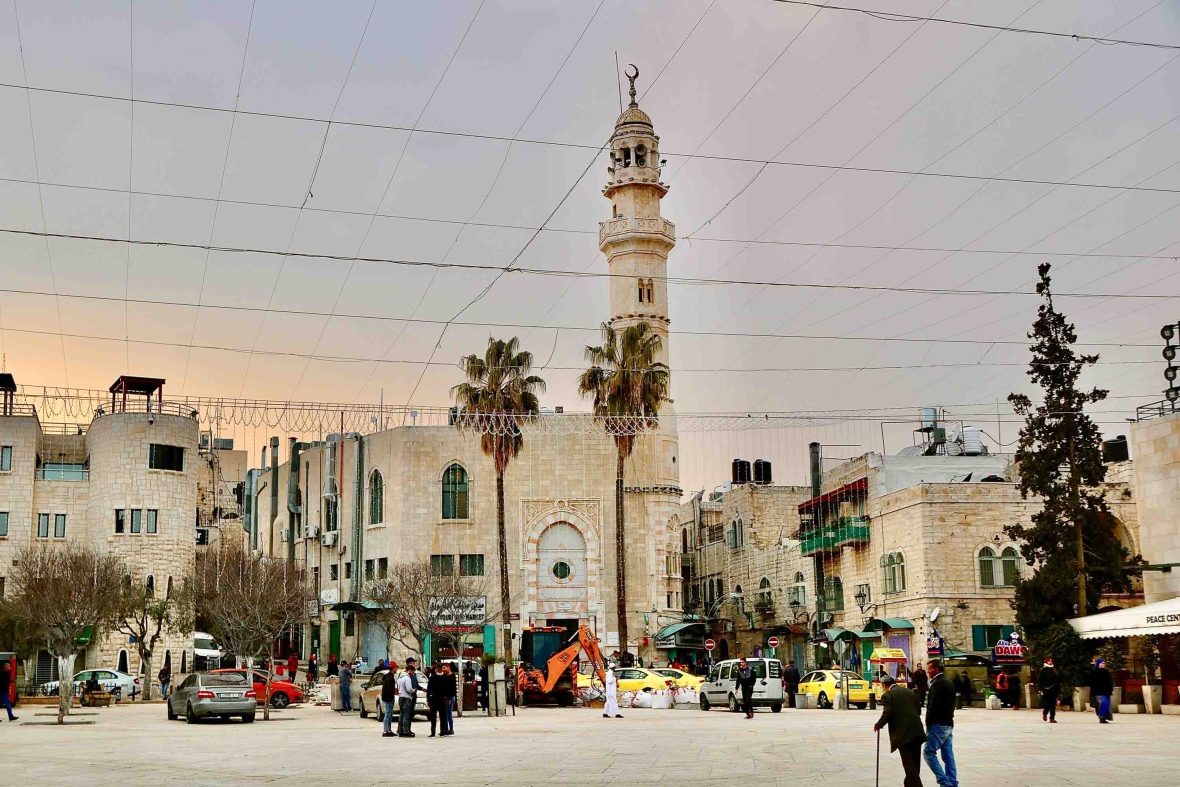
“In the last year, we’ve had four bookings,” says Fadi Kattan, a chef and business owner who opened Bethlehem’s first luxury boutique hotel, Kassa, with Palestinian-Chilean entrepreneur, Elizabeth Kassis, in 2023.
Before opening Kassa, Kattan, who splits his time between Bethlehem and London, ran a successful restaurant and a guesthouse in the occupied West Bank, both of which closed during the pandemic. While Kattan was set to reopen both venues in late 2023, the Israeli assault on Gaza meant the reopening never happened. The reality, says Kattan, is the same for most hotels in the region. And following the US and Israel’s strikes on Iran at the end of February, and Iran’s retaliatory strikes against US targets throughout the region—from Dubai to Qatar, Bahrain to Oman, the return to pre-2023 tourism figures seems further away than ever.
Over the past two years, I, like many others, have watched with a growing sense of rage, heartache and disbelief as thousands of Palestinian families have been murdered in what has been termed a genocide by major international human rights organizations (including the United Nations, Amnesty International, Human Rights Watch, Doctors without Borders as well as a UN Commission of Inquiry and Israeli NGO B’Tselem).
In that time, most of the Gaza strip’s population of 2.1 million has been displaced, several times, and entire neighborhoods in Gaza have been leveled—in August 2025, , the UN estimated 78 percent of all structures had been destroyed or damaged. Beyond the humanitarian and environmental catastrophe, there is another, quieter catastrophe unfolding across the region—and that’s the near-total collapse of tourism. Though it may seem trivial to consider when human lives are on the line, tourism is not only a major sometimes existential source of income for many of these economies, but a sorely needed source of hope and cultural exchange.