When preparing for her latest visit to Kenya and Tanzania, travel writer and Afrophile Emma Gregg took a crash course in Swahili. What difference does learning a language—or a few words of it—make to a trip?


When preparing for her latest visit to Kenya and Tanzania, travel writer and Afrophile Emma Gregg took a crash course in Swahili. What difference does learning a language—or a few words of it—make to a trip?
I have a glowing memory of a family holiday in France when I learned my first few words of French. It was just enough to say hello and buy a newspaper, baguettes and ice cream—but I was tiny, and felt triumphant. I’m a native English speaker with little formal language training, but on my subsequent European travels, I always aimed to set out with a smattering of conversational skills. Out of respect, and for the fun of it.
Later, Africa found its way into my life. The continent has a multitude of languages—estimates vary between 1,000 and 2,000—but I was undeterred. I speak enough French to get by in West Africa, I have an ear for local greetings, and in East or southern Africa, the lingua franca tends to be English.
More recently, when planning a safari in Kenya and Tanzania, I found myself wondering whether it was reasonable to take all this for granted. What if I had a stab at learning Swahili ( (called Kiswahili when you’re speaking the language), the most widely spoken language of almost all Kenyans and Tanzanians?
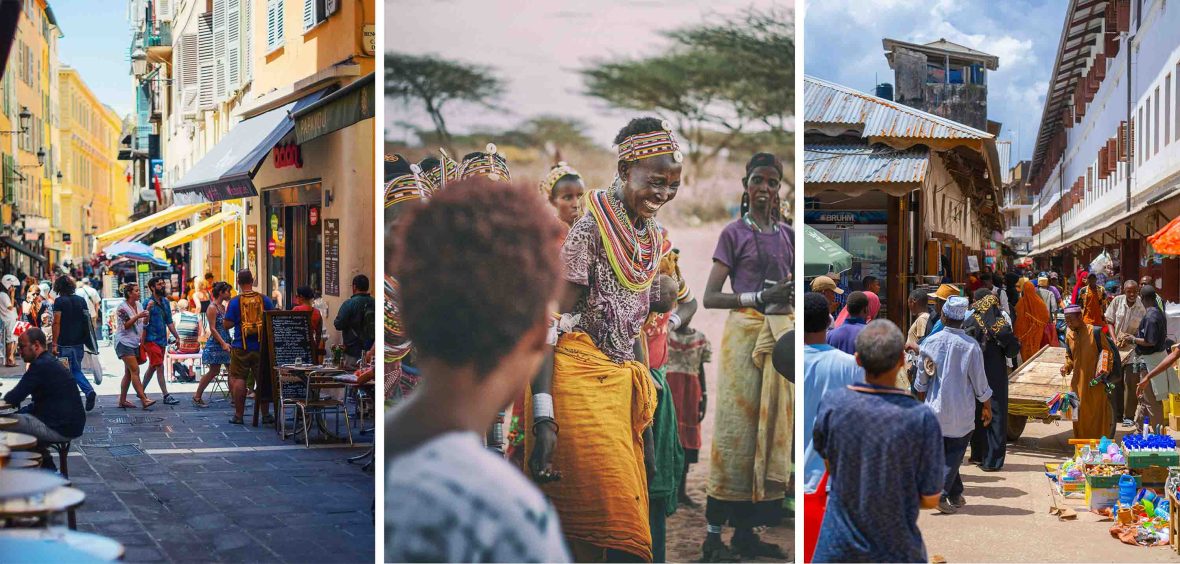
With the safari industry struggling to shake off its colonial trappings, I’d long wondered if switching to Swahili could add some authenticity to the experience, and help me bond more closely with local people. Swahili, which arose out of interactions between Bantu-speaking Africans and the Arabic-speaking traders who landed on the shores of Kenya, Tanzania and Mozambique between the first and 10th centuries, is one of the East African Community’s official languages, alongside English and French.
In many ways, it’s never been easier to learn. More of us are catching the language-learning bug now that smartphone apps and podcasts are helping simplify and gamify the process. In late 2025, the creators of Duolingo, the world’s most popular language-learning app, reported that more than 135 million people access its courses at least once a month, an increase of almost 20 percent compared to 2024.
A staggering near-1.5 billion people count English as either their first or second language—that beats Mandarin Chinese, Hindi, Spanish and Arabic by a substantial margin.
After English, the most-studied languages on Duolingo are Spanish, French and Japanese, with Chinese, Korean and Brazilian Portuguese growing rapidly. Google Translate, meanwhile, has more than 500 million daily users. For language-learners on a mission, apps offer a flexible, fast-track route that conventional methods such as once-a-week group classes can’t match.
But Duolingo’s course contents vary wildly, and many learners find they can’t rely on the app alone. “I’ve used Duolingo, in-person lessons and Italian TV,” says Italian-learner Lee Etherington. “Duolingo is good, but it doesn’t always explain the why, and TV with subtitles is great, but they speak so fast! In-person lessons have been the best for me, speaking with a native who can tell you how the language is used in real life. The buzz I got on holiday when I spoke to a waiter in Italian and they responded in Italian was wonderful!”
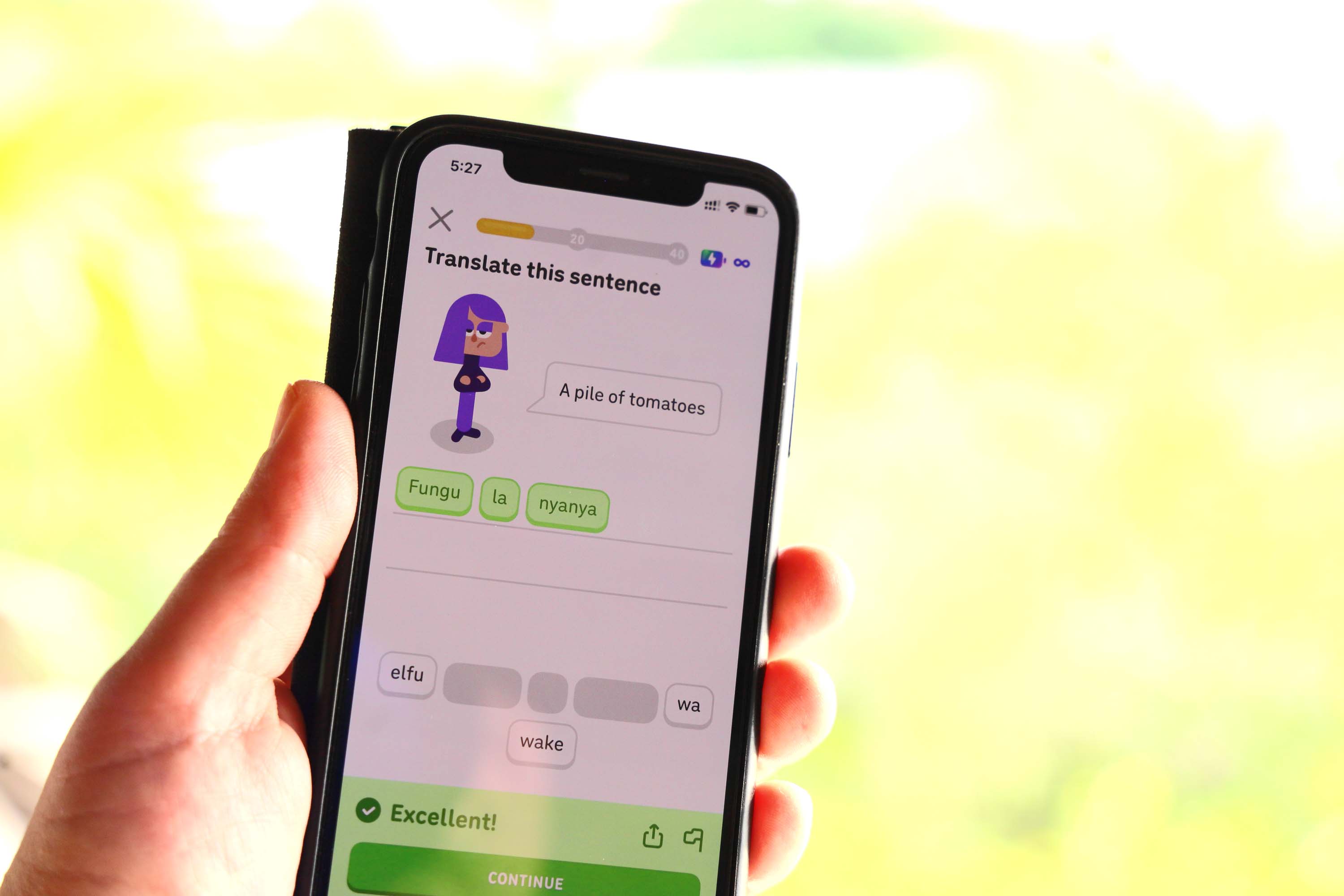

Diving into Duolingo’s Swahili course, I discovered it doesn’t include voice recognition, radio clips or games, and its approach seems aimed more at development, education and healthcare workers than regular tourists. Phrases such as Watawesesha wakulima (“They will empower the farmers”) and Usipige kelele darasani (“Don’t shout in class”) left me convinced the course wasn’t created with learners like me in mind. Everyday expressions such as “Two more beers and the bill please”? Sadly lacking.
The shortage of what I would deem useful phrases was a setback, but this is where other tools came into their own. I spent hours tapping away at other apps such as Memrise, Elon.io and Swahilipod101, listening to podcasts and poring over a dog-eared dictionary.
On arrival in Tanzania’s Serengeti National Park, I play it safe at first, sticking to the easy-to-remember Swahili niceties that Kenyans and Tanzanians love to share with everyone: The cheery Jambo! (How are things?), the gracious Asante sana (Thanks very much), the endearing Pole pole (Slowly slowly) and the homely Karibu (You’re welcome). Not forgetting the Lion King catchphrase Hakuna matata (No problems) and the charming Lala salama (Sleep peacefully).
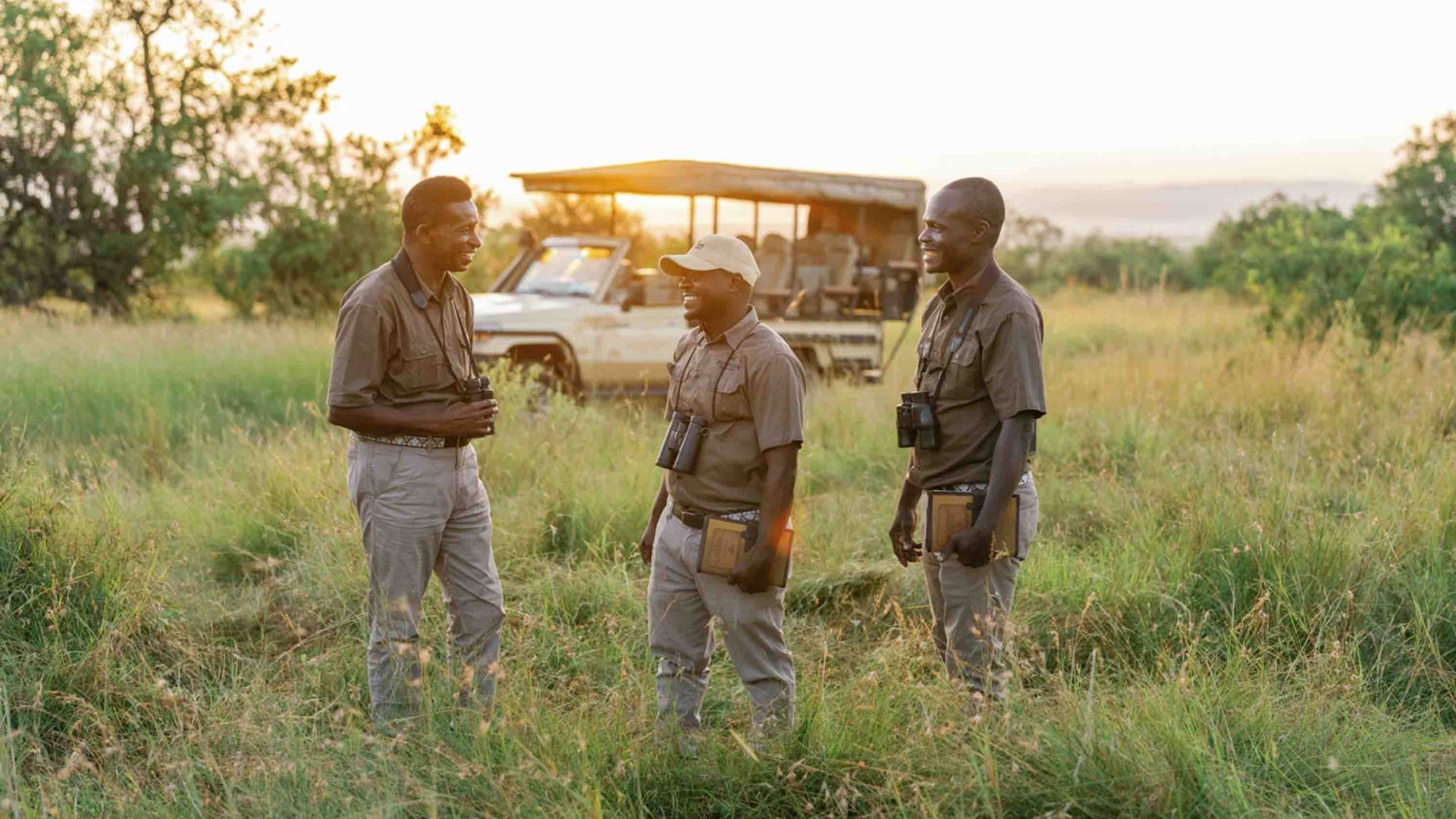
So far so good. But having studied hard, I of course wanted to take things further. “Nimefurahi kukutana nawe,” I say to my safari guide, Alfred Muzigula from Bushtops Safari Camps, based in the national park. Pleased to meet you. A basic phrase, but one that had taken time to sink in.
“You speak Swahili?” asks Alfred, eyes wide, smiling broadly. “Wow!”
“Kidogo tu, lakini ninajifunza. Ninajaribu!” [Only a little, but I am learning. I am trying!]
“Poa! Kwa nini?” [Cool! But why?]
It’s a question I’d been grappling with to be honest.
“Kwa sababu Kiswahili ni lugha nzuri.” [Because Swahili is a beautiful language.]
And I mean it.
The benefits of multilingualism to our brain health are well-known; a recent study by a team from the University of Patras discovered that learning a second language led to significant improvements in working memory, attention and flexibility of thought.
Nonetheless, native English speakers find it all too easy to get by without speaking other tongues. The truth is, we’ve been immersed since birth in the world’s most widely understood language.
Did I become fluent enough to have a proper conversation? Nowhere near. But with each word shared, I feel a greater affinity with these gifted, warm-hearted women.
And while there are almost three times as many first-language Mandarin Chinese speakers as English, the reality is a staggering near-1.5 billion people count English as either their first or second language. That beats Mandarin Chinese, Hindi, Spanish and Arabic by a substantial margin.
Whenever I’m in Africa, I meet people who are delighted to chat in English with a UK-born speaker—both to be friendly and to improve their skills. Young kids, in particular, often love to chant the phrases their teachers have drilled into them in school.
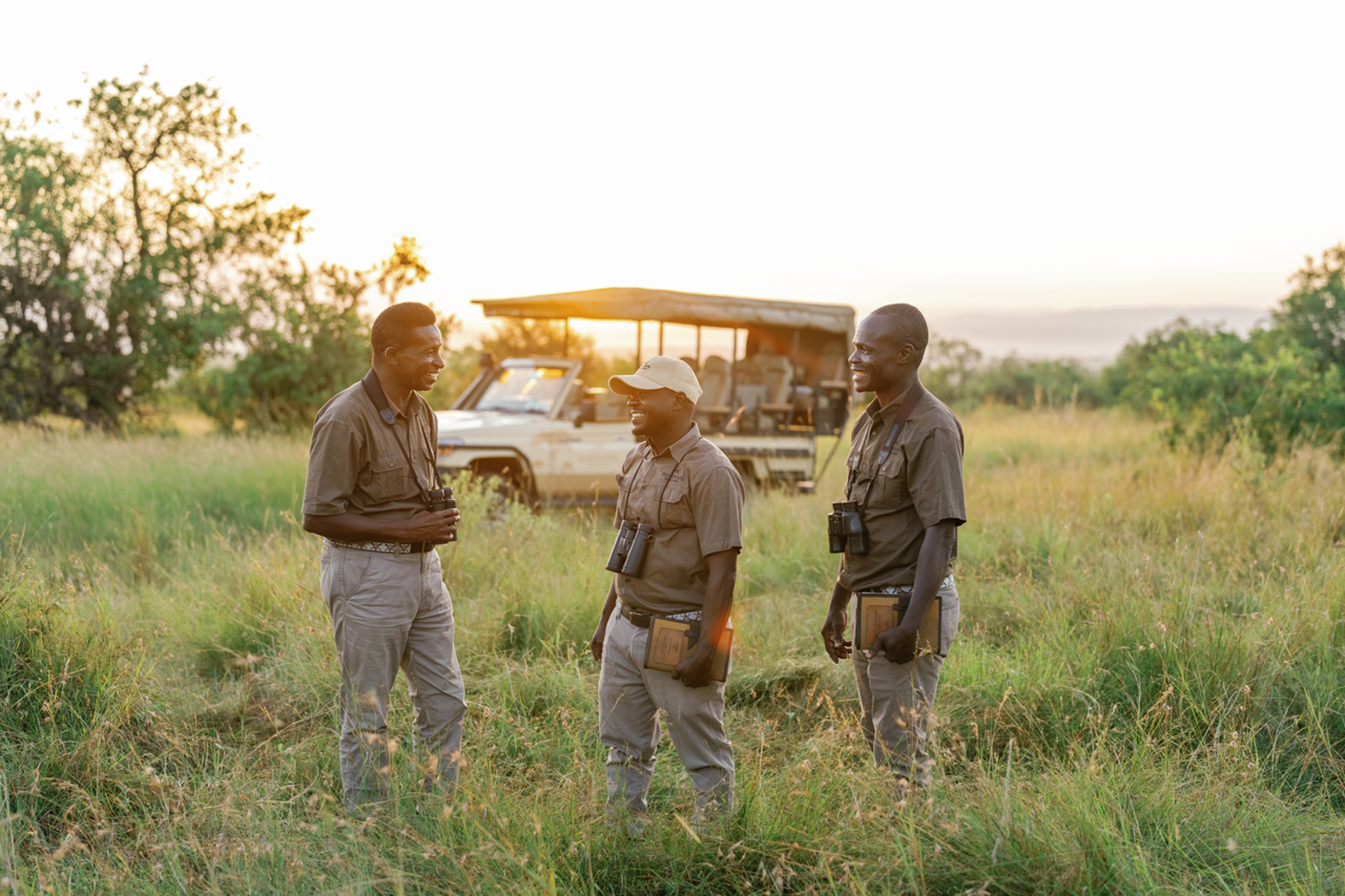
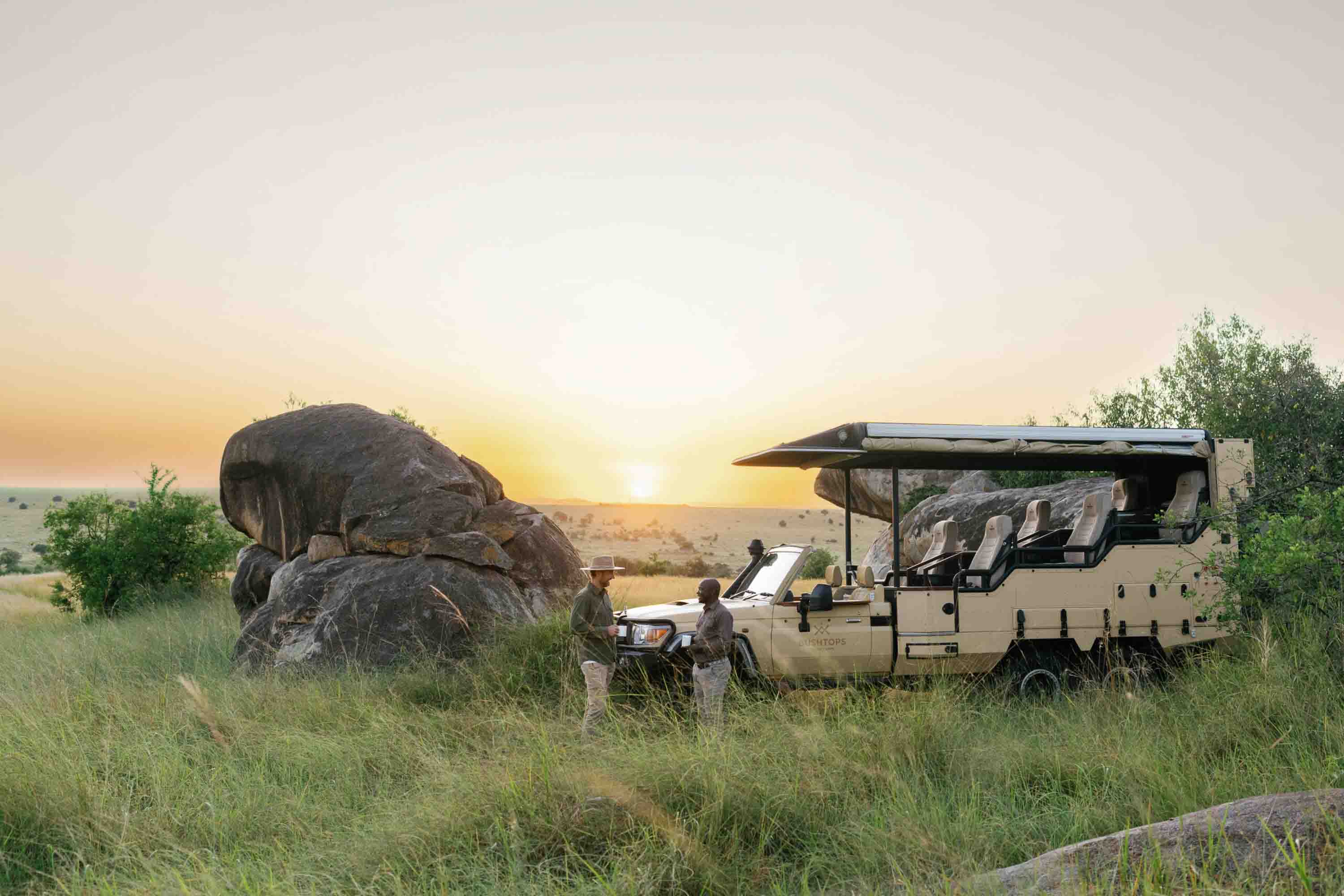
According to Alfred, practically none of the non-resident Brits, Americans and Europeans he hosts speak Swahili beyond the basics. “But it’s great that you’re giving it a go”, he tells me, bursting into astonished laughter each time I try out a new phrase or successfully name an animal.
It’s not hard to break the ice with a guide when you’re on safari—and like most guides, Alfred is a people person—but I can’t help feeling that he and I hit it off faster than most.
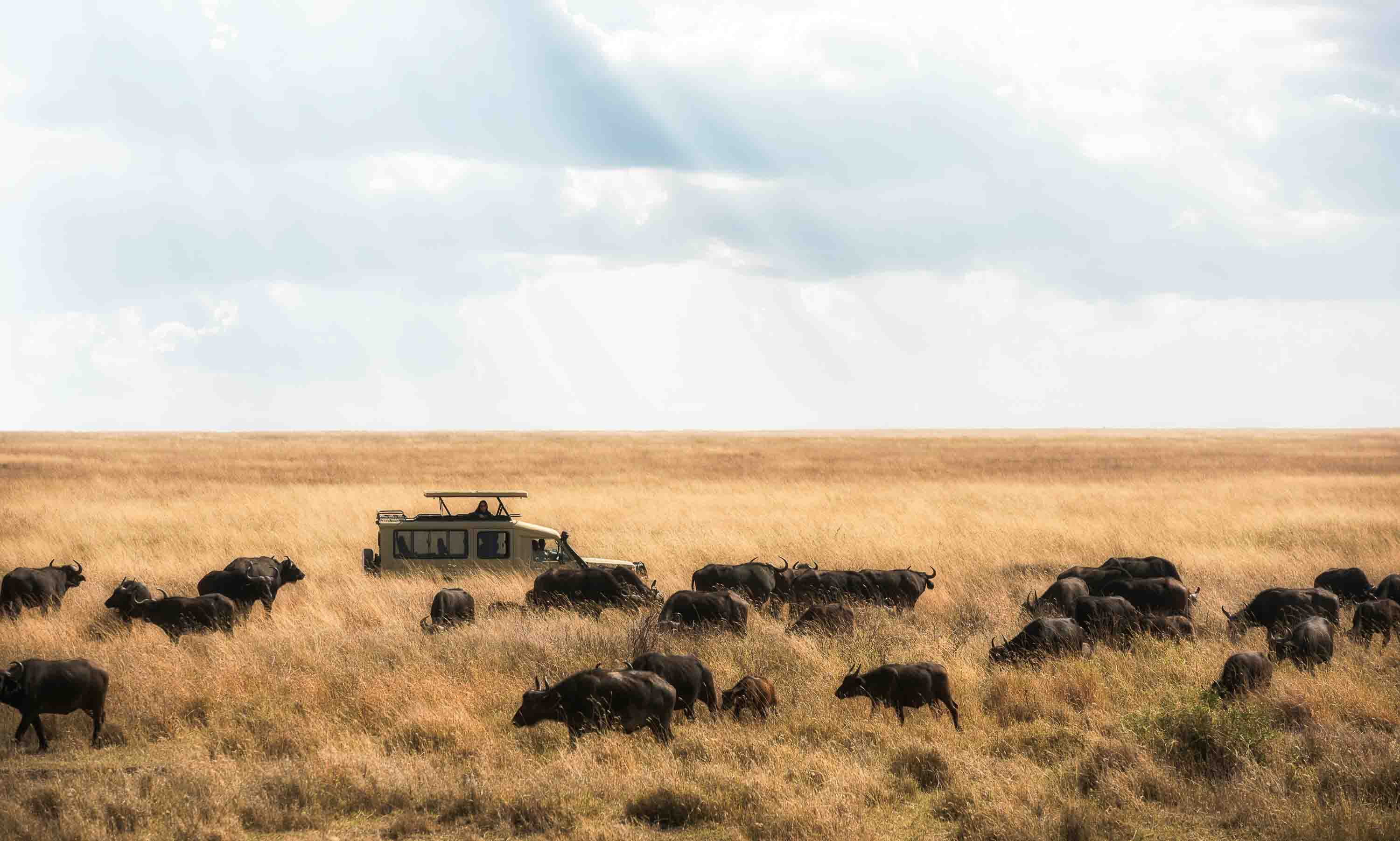
I find simba for lion and tembo for elephant easy to remember; nyati for buffalo and nyani for baboon less so. I also discover that Swahili-speaking safari guides use slang names for animals, such as pembe (horn) for rhino, mikasi (scissors) for crocodile and shingo (neck) for giraffe when they come across other guides in their vehicles, to establish sightings.
Assiduously, I eavesdrop whenever Alfred stops our vehicle to chat with another guide, a standard bush practice that can leave safari-goers feeling a little excluded. But by concentrating hard, I make out the bare bones of their exchanges—which animals they’re seeking out, for example, and where they were last seen—helping me feel more tuned-in.
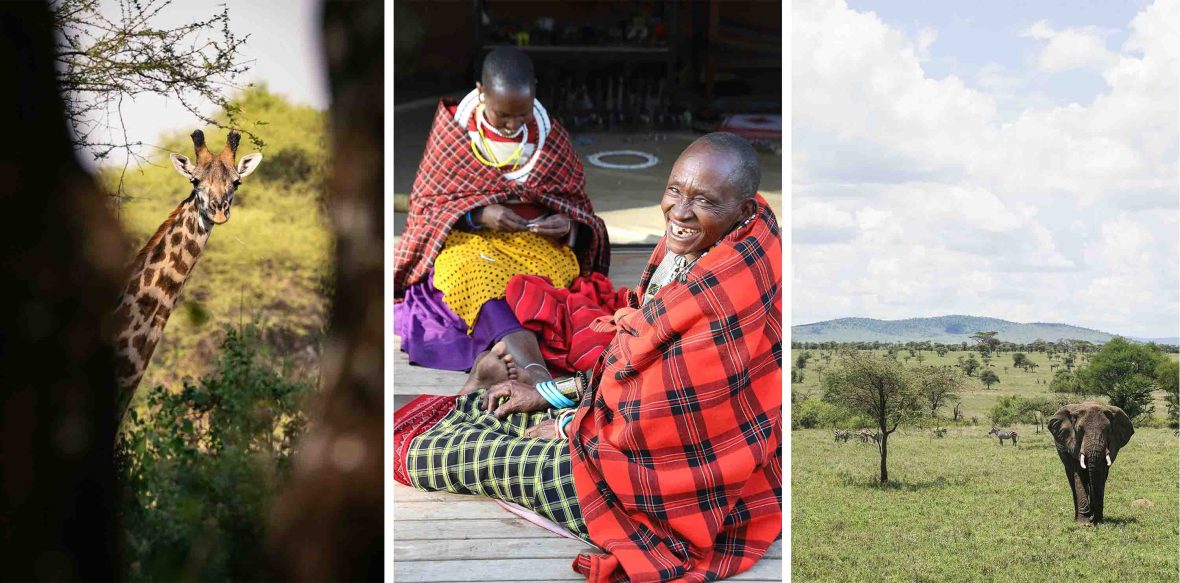
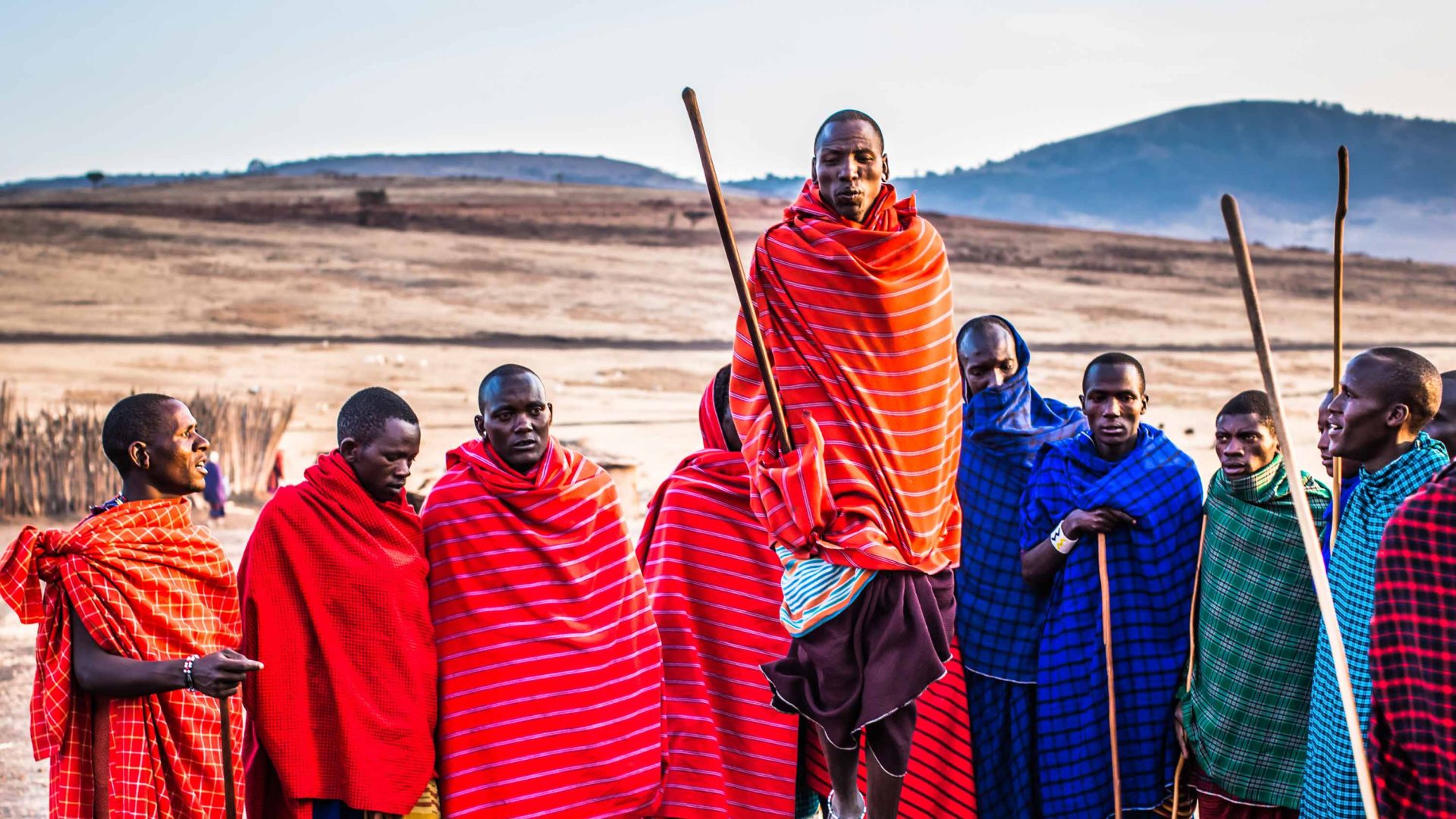
Later, on a break from wildlife-watching, I spend a happy couple of hours with a collective of Maasai craftworkers who’ve invited me into their workspace to learn the art and significance of beading.
Their English is limited but my halting Swahili, bolstered with sign language, gives me the confidence to get to work. Nyeupe moja, nyekundu mbili, bluu tatu (one white, two red, three blue) we repeated, stringing tiny glass shanga (beads) onto nylon thread. Cow’s-milk white symbolizes peace, I find out, while blood-red represents strength, and blue (like water) means life.
Did I become fluent enough to have a proper conversation? Nowhere near. But with each word shared, I feel a greater affinity with these gifted, warm-hearted women. They’ve grown up more than 6,000 miles from me, but like me, they love colors, patterns and making things. And that’s a language as powerful and universal as any.
**
The writer stayed at Serengeti Bushtops and Roving Bushtops (bushtopscamps.com) in Serengeti National Park and at Crater’s Edge (thewildernesscollection.com) in Ngorongoro as part of a nine-night Serengeti itinerary organized by Timbuktu Travel.
****
Adventure.com strives to be a low-emissions travel publication. We are powered by, but editorially independent of, Intrepid Travel, the world’s largest travel B Corp, who help ensure Adventure.com maintains high standards of sustainability in our work and activities. You can visit our sustainability page or read our Contributor Impact Guidelines for more information.

Based in Brighton, UK, Emma Gregg is an award-winning travel journalist who has visited all seven continents. Of the seven, it’s Africa that keeps calling her back. She specializes in responsible tourism, writing extensively about sustainable travel including eco-friendly adventures and low-carbon, flight-free trips. She has also interviewed some of the leading conservationists of our age.