As the remote, rugged archipelago of Haida Gwaii enters a new era of First Nations sovereignty, writer Emily Barlow explores the role tourism is playing and chats with some of the Haida locals leading the way.

As the remote, rugged archipelago of Haida Gwaii enters a new era of First Nations sovereignty, writer Emily Barlow explores the role tourism is playing and chats with some of the Haida locals leading the way.
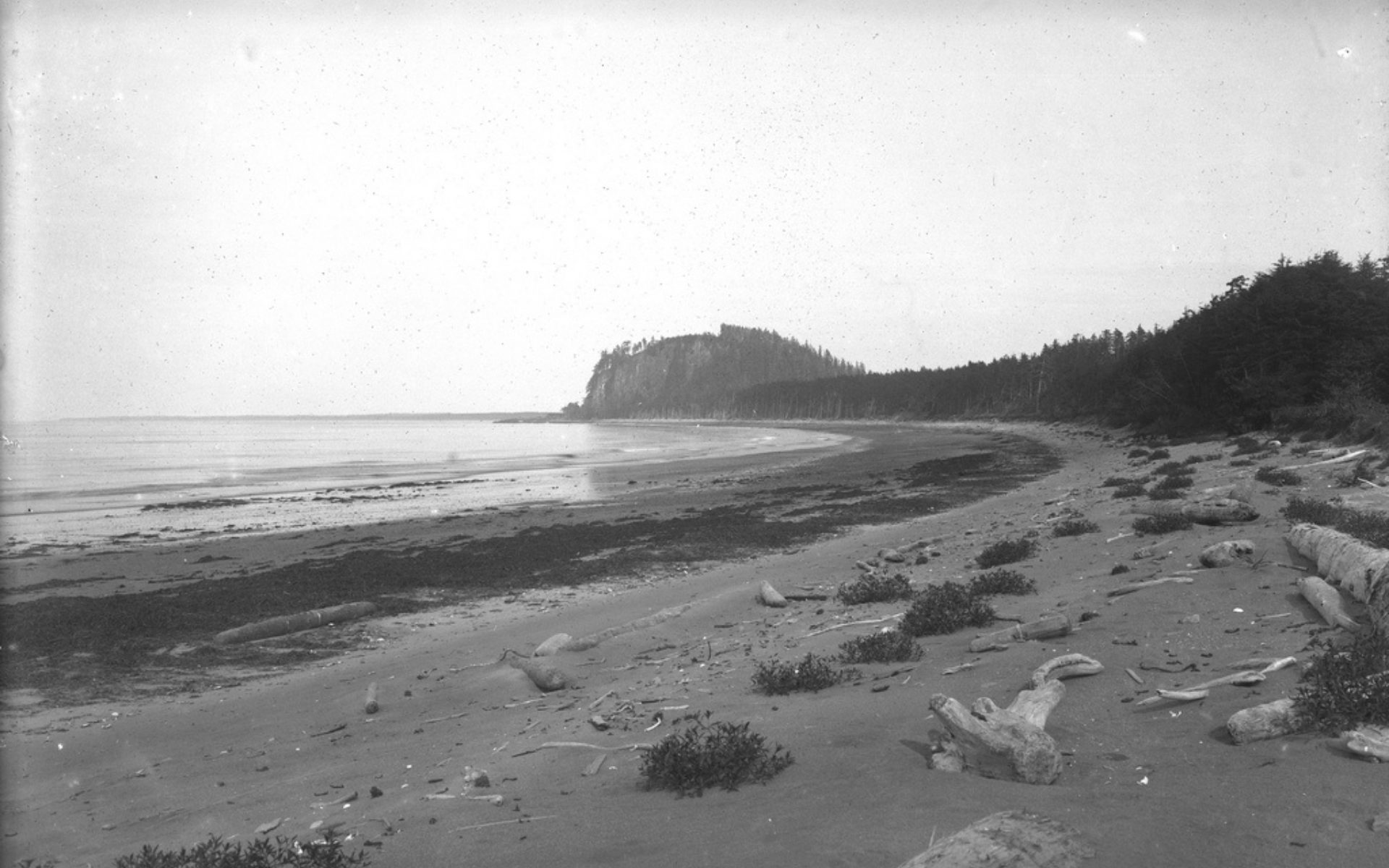
It’s low tide and I’m standing among golden kelp and jagged rock pools looking up at Taaw Tldáaw. The massive slab of basalt erupts from the middle of the seemingly infinite beach, its sheer facade draped with moss and its clifftop laden with old-growth spruce and western red cedars. Later, the ocean’s monstrous tides will flood the rocks I’m standing on to form a huge blowhole. Some 47 miles (76 kilometers) north is Alaska, but there’s no knowing that from here.
I’m on the northern shores of Xaayda Gwaay.yaay Haida Gwaii, an archipelago of around 150 islands off the Pacific north coast of British Columbia. Haida Gwaii—which means “islands of the people”—is the ancestral homeland of the Haida Nation who have been stewarding these islands and ocean for over 13,000 years.
In geological terms, Taaw Tldáaw is a two-million-year-old volcanic plug. In Haida terms, it’s a Supernatural Being, a place of many legends and, also, food. Before British colonization in 1853, followed by the commercialization of fishing from the early 1920s, this area was a seasonal harvesting ground for everything from razor clams and geoduck (burrowing clam) to cockles, scallops and abalone.
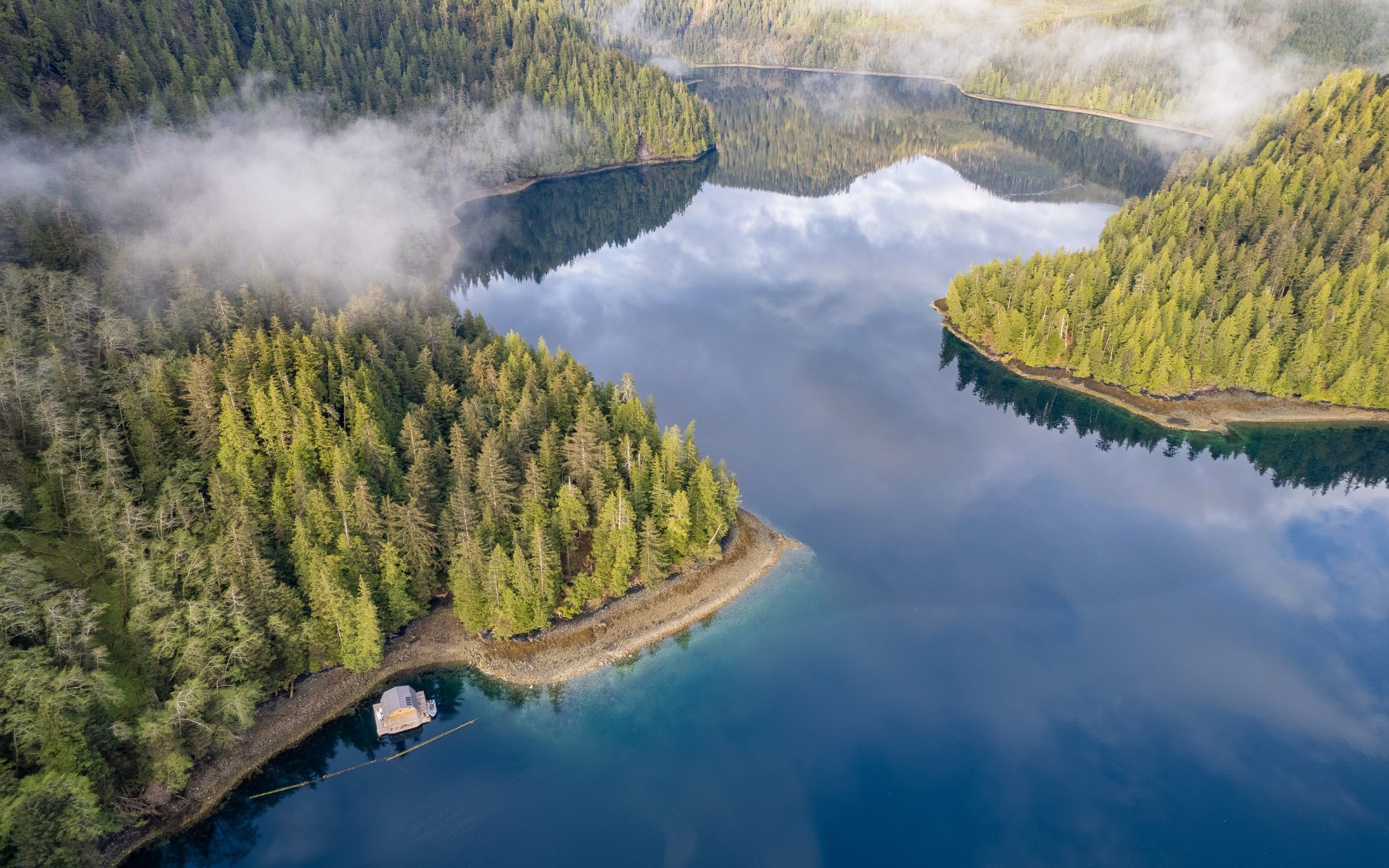
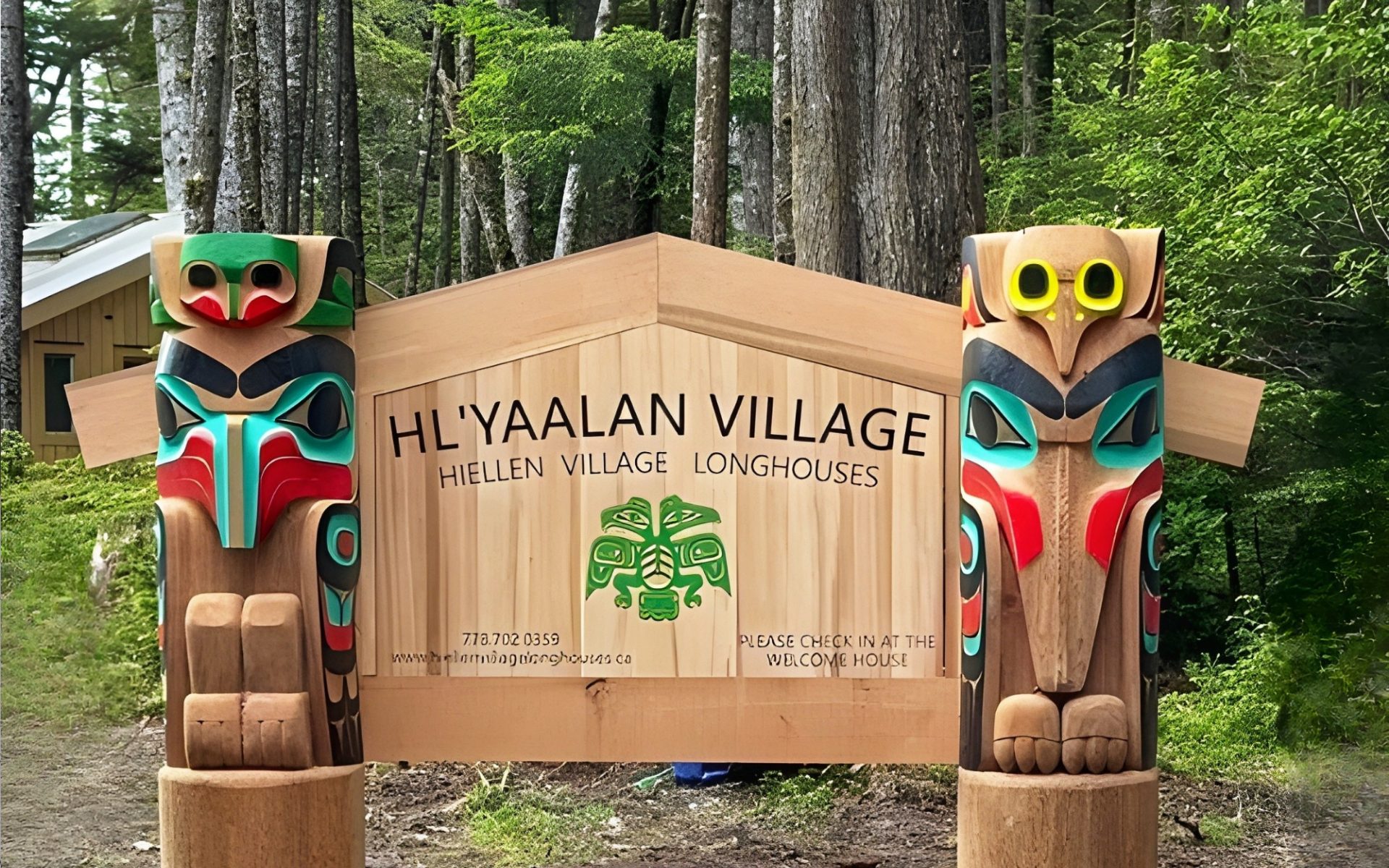
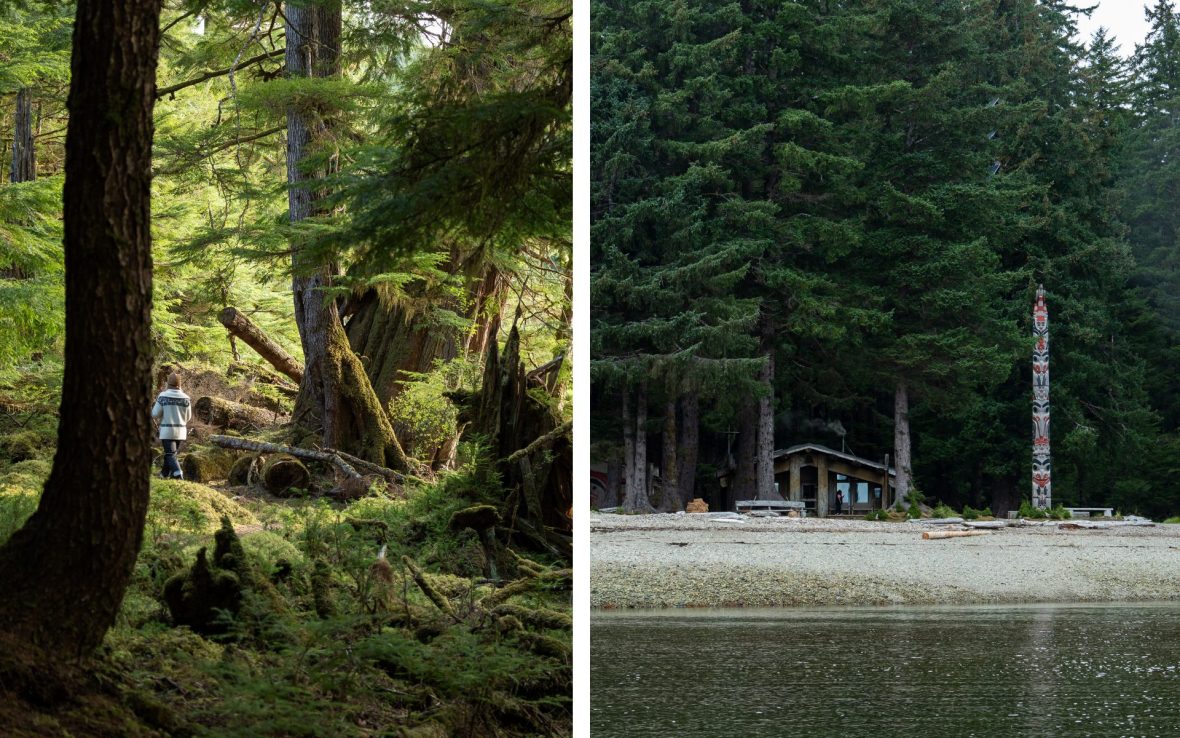
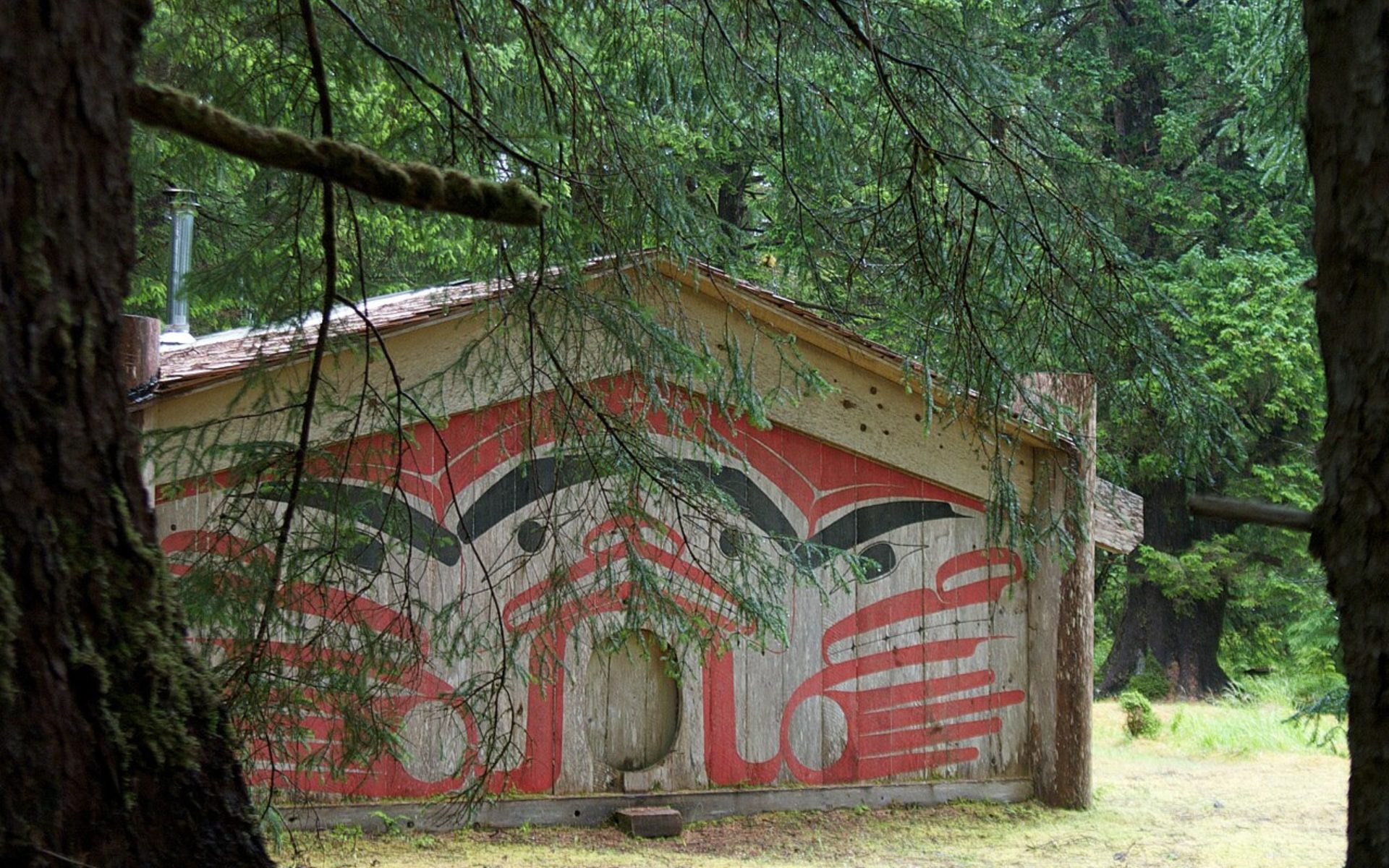
I walked here from my campsite at Hiellen Village Longhouses, a remote accommodation set between the tidal Hiellen River and North Beach on Graham Island. “We, Haida people, used to move across the land and waters throughout the year, following the food sources and seasonal cycles”, says Ivy Bell, Hiellen’s Economic Development Manager. Bell describes Hiellen as a cultural landscape: A place which holds embedded knowledge and stories, generational memory and ongoing cultural responsibility.
Hiellen is owned and operated by the Old Massett Village Council, a Canadian First Nations government, and is one of several Haida-owned tourism businesses working to reclaim culture, economic sovereignty and education across the islands.
“We’ve mentored from high school age to young adults, and have a fine-tuned squad of knowledge-keepers and guides, but it’s taken a lot of effort investing our own time and energy.”
- James Cowpar, co-owner, Haida Style Expeditions
The timing is pertinent. After 170 years of colonial governance, which saw logging and fishing industries take precedence over conservation, traditional practices outlawed, loss of language and severe population decline, the tides are turning back to Haida values. In 2024, the Trudeau Government instated full Haida Nation sovereignty over their ancestral territory through the Haida Nation Recognition Act—the first of its kind in Canada.
But with no current designated tourism board, many operators are wondering how best to balance visitor demand with the preservation of local customs and the environment. I’m here to learn more from some of the leaders shaping tourism across the archipelago.
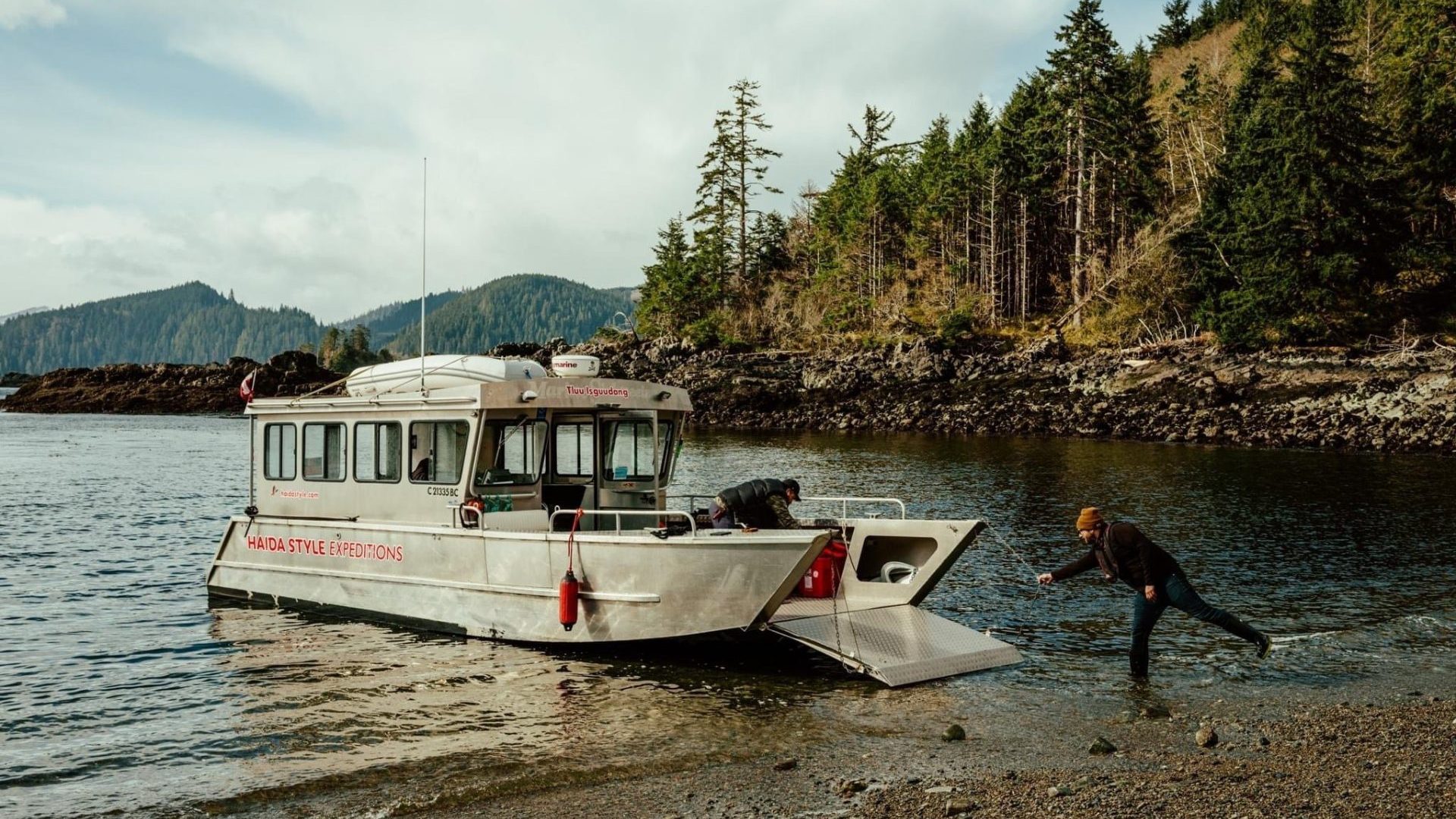
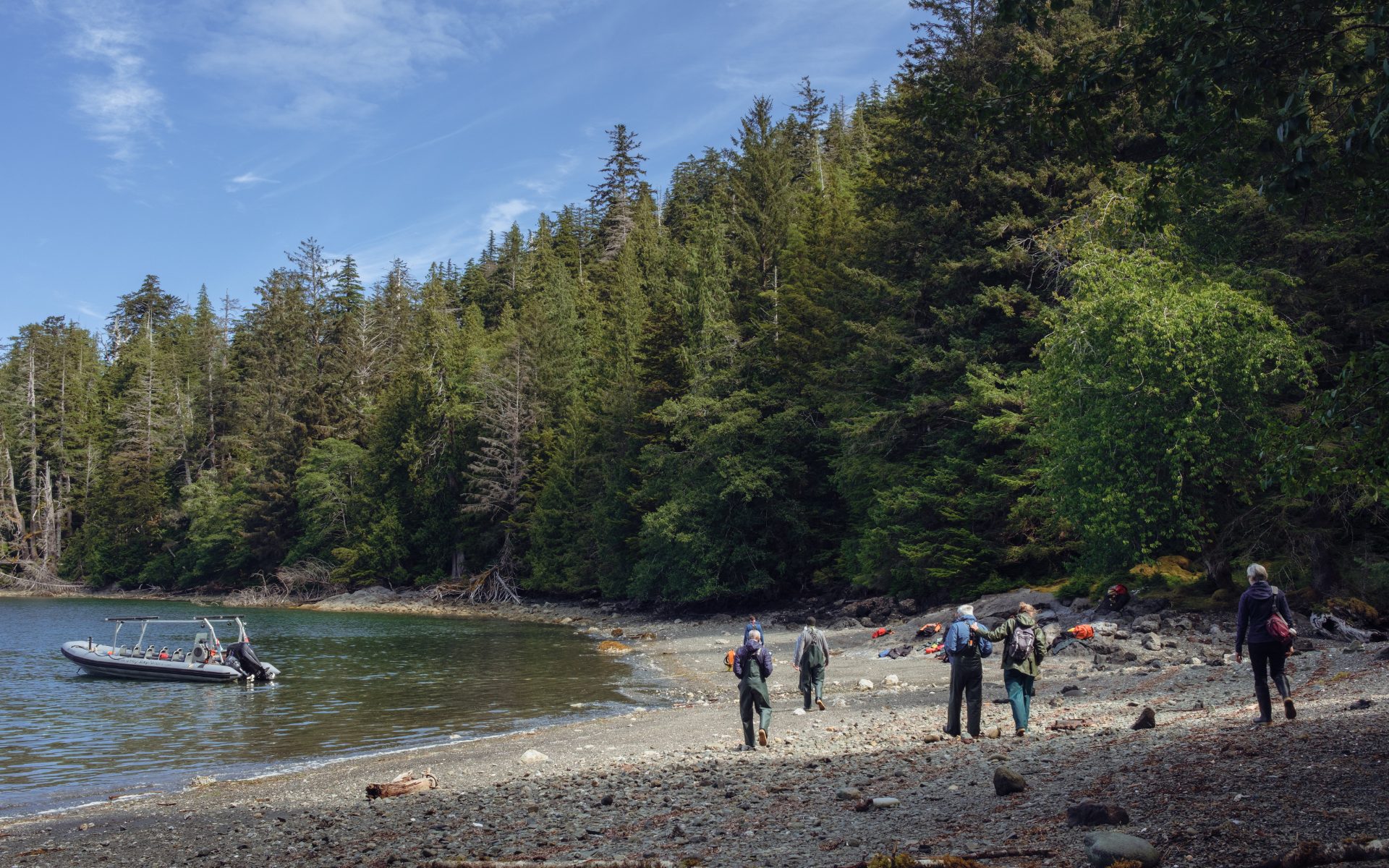
When we board a zodiac boat from the remote Moresby Camp, the last road-accessible campsite on the lower Moresby Island, we’re caked in fog. It’s late summer, but I’m dressed in thermal underwear, thick waterproof dungarees, gumboots and multiple jackets. The wind whips at my face so I pull up the hood, while our guide deftly navigates the thick wall of mist. Once we break through into a bay, something large and dark is plodding along the water’s edge: A Ta’an, the black bear subspecies native only to Haida Gwaii. It’s foraging for shellfish under the rocks.
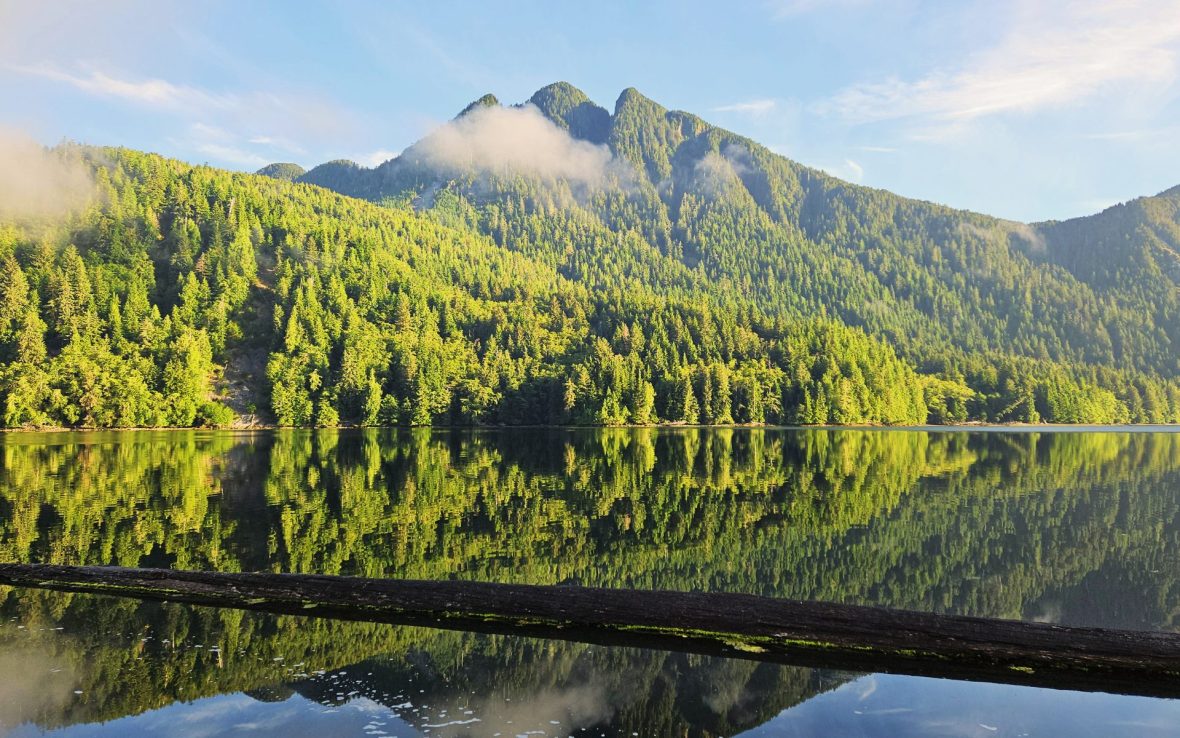
We’re entering the Gwaii Haanas National Park Reserve and Haida Heritage Site, a daunting stretch of coastal wilderness home to pristine waters, strong tidal currents, and ancient Haida village sites. The zone is co-governed and managed by the Government of Canada and the Council of the Haida Nation via the Archipelago Management Board.
As is customary, we await permission via radio before entering the Hlk’yah G̱awG̱a Windy Bay Watchman site, a former Haida village named Hlk’yah Llnagaay ‘Peregrine Falcon Town’. It’s one of five former villages within Gwaii Hanaas that can be visited thanks to the Haida Watchman program, where selected Haida men and women are posted as caretakers from spring to fall each year. 85-year-old Haida Watchman Gordie Russ comes out of his cabin, wearing thick yellow sunglasses and a purple t-shirt, to greets us.
Gordie invites us to sit in front of a magnificent 42-foot (12-meter) red cedar Legacy pole carved with red and black-painted moieties (often to denote lineages). This pole was carved and raised to commemorate and honor the 1985 Lyell Blockade, a landmark protest led by Haida elders to prevent ancient old-growth cedar and sitka spruce trees from being logged and which led to the creation of Gwaii Hanaas. Behind it, a longhouse named Looking Around and Blinking House, which housed protestors, still stands.
Gordie is a man with many stories, and today, he tells us of his own experiences working as a commercial fisherman and logger for decades before becoming a Watchman. He is one example of a long history of Haida being removed as decision makers and instead,reduced to work as laborers in the very industries depleting their land. In spite of the Haida belief in taking only what is needed, Gordie resigns, “I guess you could call me a killer.”
I start to realize how intertwined Haida Gwaii’s history as a resource-based economy and its call for conservation is. We walk through the forest and arrive at a gigantic sitka spruce that’s over a thousand years old. At its gnarled base, I gently wrap my arms around as far as I can reach. If it wasn’t for the elders of the Lyell Blockade, this ancient ancestor wouldn’t be here today.
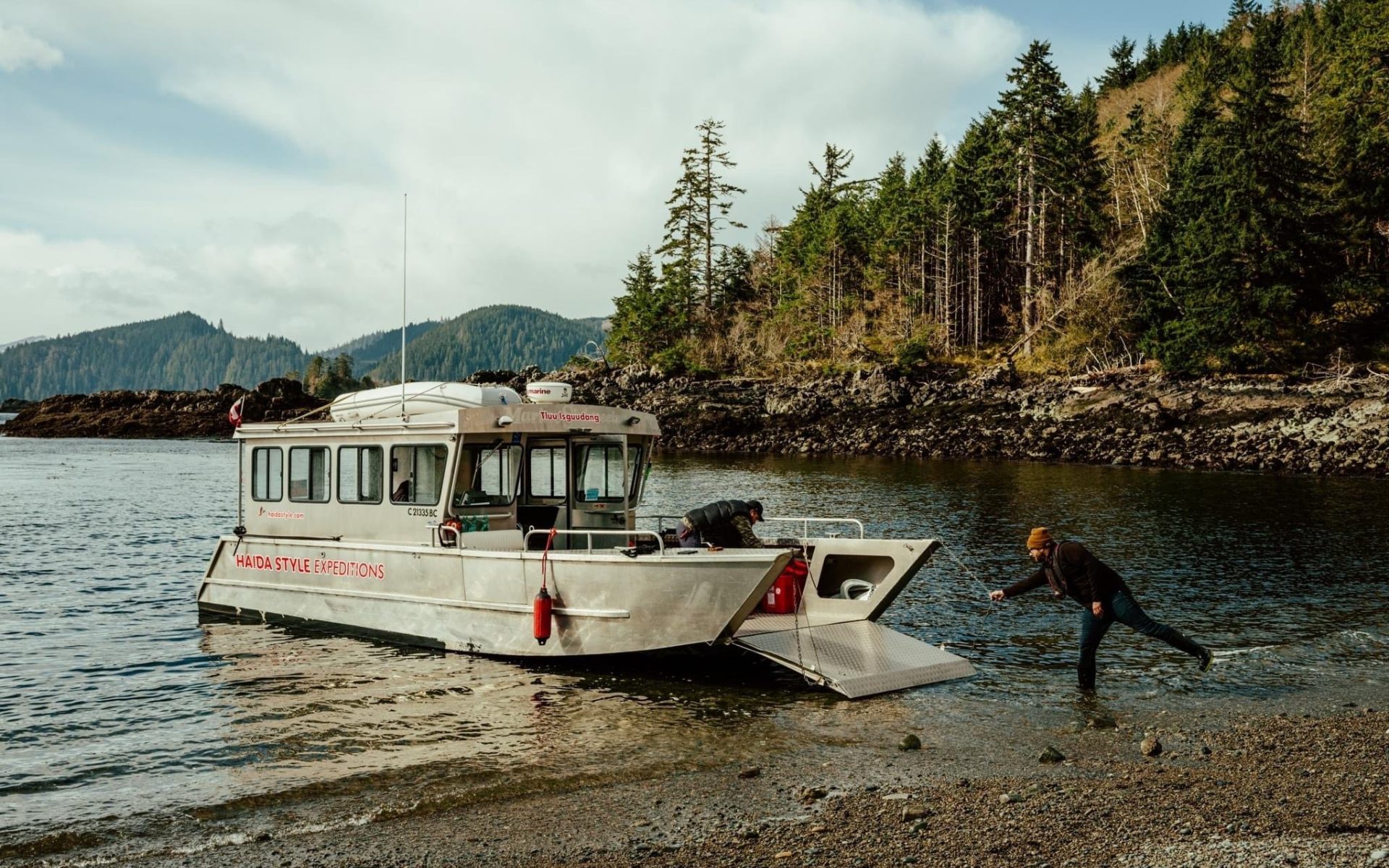
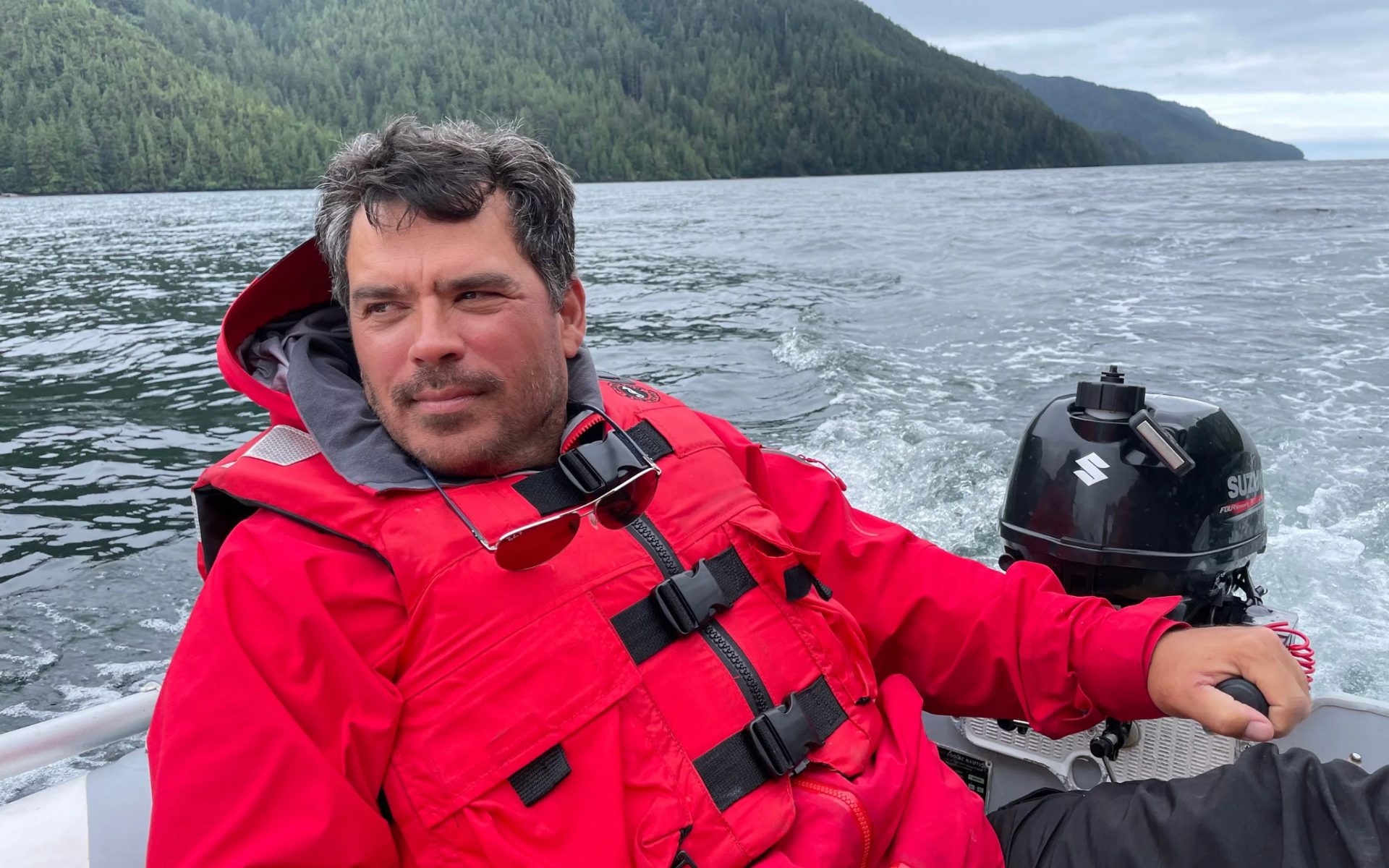
James Cowpar is the co-owner of Haida-owned and operated Haida Style Expeditions. What started as a kayaking and fishing hobby between twin brothers has become a successful business, but not without difficulty. “
We stick to our word and hire locally,” Cowpar says. “Although from a growth perspective, you face challenges, because not everyone wants to jump into the industry. So we’ve mentored from high school age to young adults, and have a fine-tuned squad of knowledge-keepers and guides, but it’s taken a lot of effort investing our own time and energy.”
“A lot of the tourists who come here don’t come for the culture or anything—they come for the fishing and the hunting.”
- Aay Aay Gidins, knowledge-keeper and multi-disciplinary artist
Visitation to Gwaii Hanaas operates under a strict quota system. They allow for 33,000 day visits (although you can overnight, this would just equal to two day visits) per year, these visits are typically split evenly between self-guided visitors, commercial Haida operators and other commercial operators (the majority of which are owned off-island). Cowpar says only two companies right now are tapping into the Haida allocation of 11,000 visits.
“We’ve done well over-regulating Gwaii Haanas,” he says. Visitors can wild-camp in allowed areas with a permit, otherwise there’s no accommodation or facilities for overnight trips. “Now it’s time to actively open it up so there’s more use and you lessen the impact on the current sites.” Cowpar wants to see better access for locals, to invite elders and storytellers into the area to connect to their land, as well as put infrastructure, such as longhouses, in place to offer overnight excursions. He says that with a local destination management board, they could be better placed to negotiate more affordable transportation onto the islands.
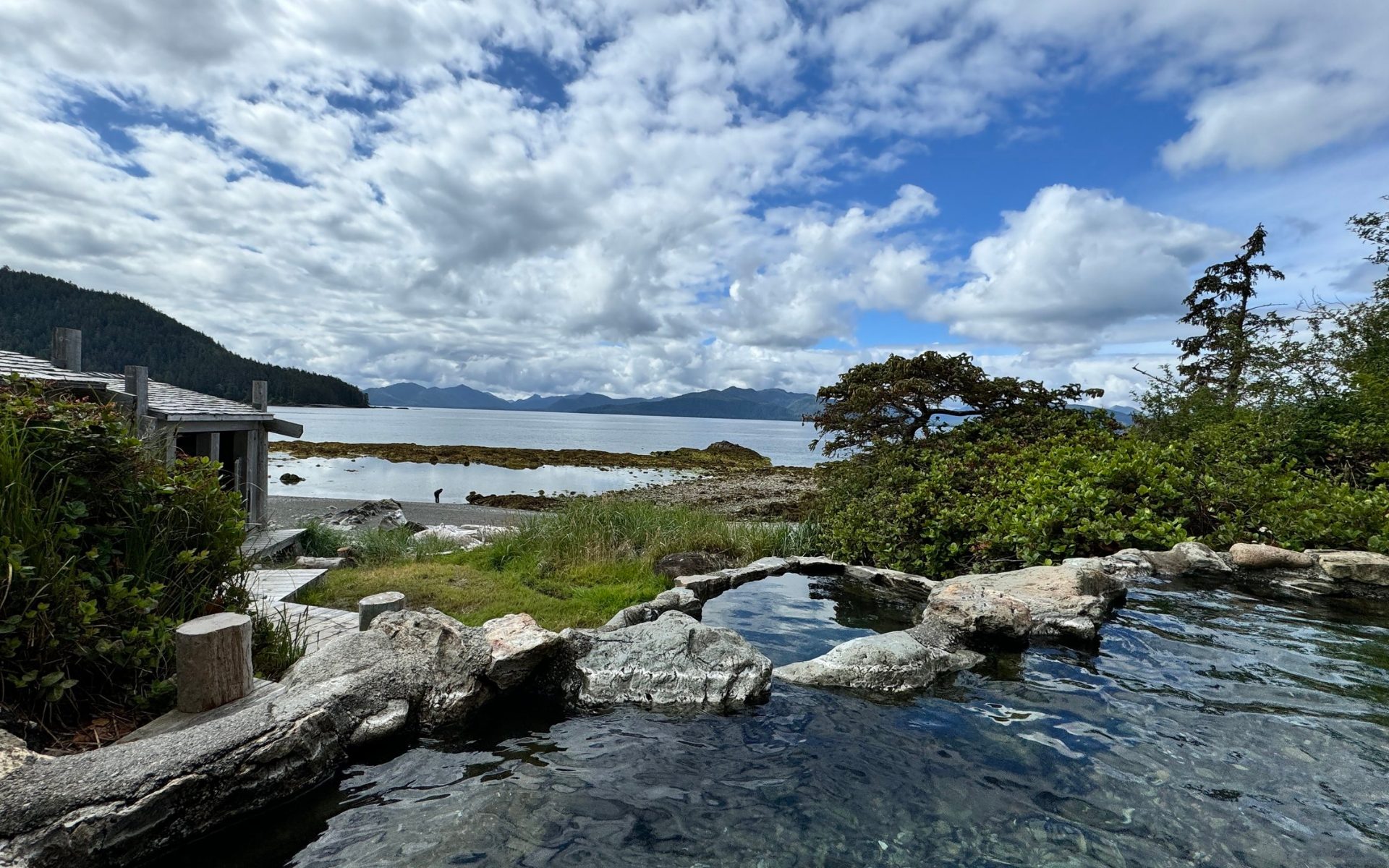
One of Haida Style’s day trips include a trip out to Windy Bay and Hotspring Island, but Cowpar says the value of the Haida experience goes well beyond a boat trip. “Does it mean soaking in a hot tub overlooking Juan Perez and catching the odd whale, and possibly a pod of transient killer whales swimming by? Absolutely. But it also tells the story of the work that’s gone into play to help make what Gwaii Haanas is today, and, more importantly, what Haida Gwaii is today.”
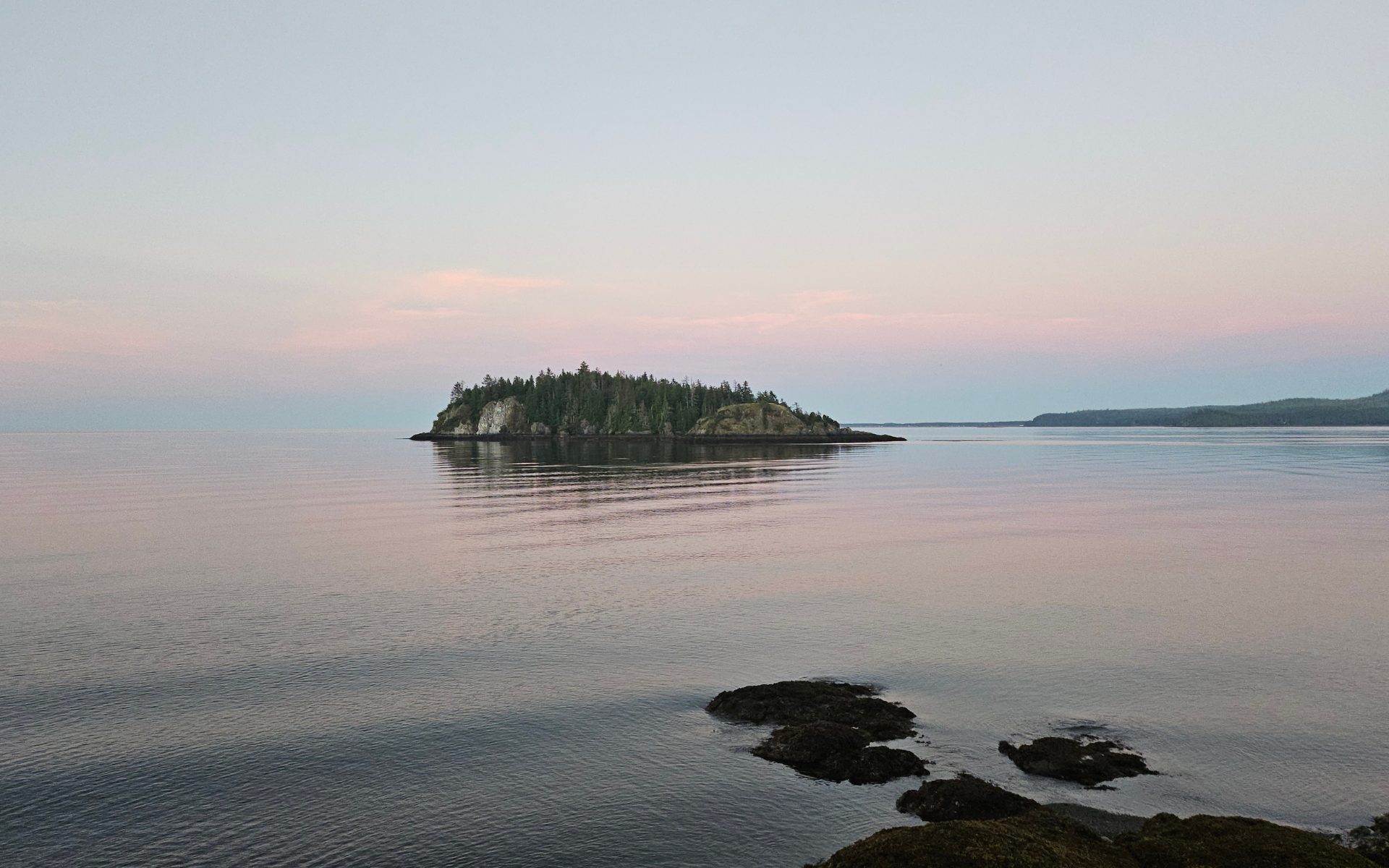
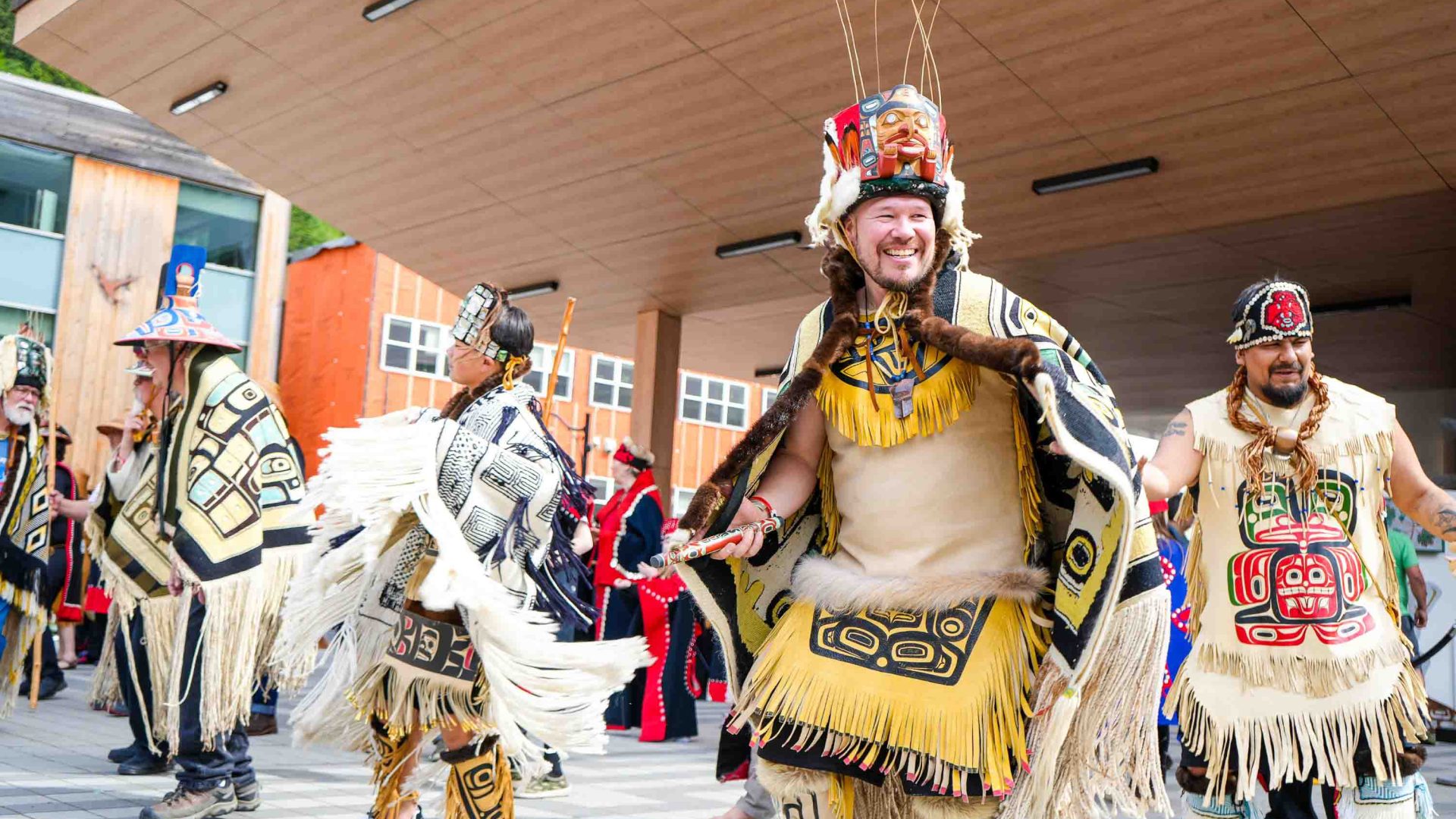
Aay Aay Gidins is a knowledge-keeper and multi-disciplinary artist who learned how to weave cedar bark from his grandmother, before expanding to weave traditional wool garments and bags on the loom. Gidins also works as Research and Repatriation Manager at the oceanfront Haida Gwaii Museum and Heritage Center at Kaay Ilnygaay Skidegate, an ancient village site on the southeast of Graham Island.
Here, he works to bring ancestral remains and cultural treasures from museums worldwide back to Haida Gwaii. He also runs weekly weaving classes for locals at the museum, and when I visit, I see his first ever exhibition—a display of over 120 woven cedar bark and wool pieces.
Gidins believes deeply in sharing Haida culture and art, coming from a long matrilineage of artists. “My late mother—her art was culinary,” he tells me. “My grandmother—she taught me how to weave. My sister—she made button blankets. Both my great aunties were weavers. We’re all artists in our own ways.”
“But a lot of the tourists who come here don’t come for the culture—they come for the fishing and the hunting,” he says. He’s referencing the swathe of luxury, all-inclusive recreational fishing lodges that line the islands. None of them are Haida-owned.
Seeing Gidins’ intricate basket, bag and regalia weavings within the halls of the Haida Heritage Centre—a must-visit place to learn about Haida traditions, art, land and history—is a window into the resilience and joy of Haida culture.
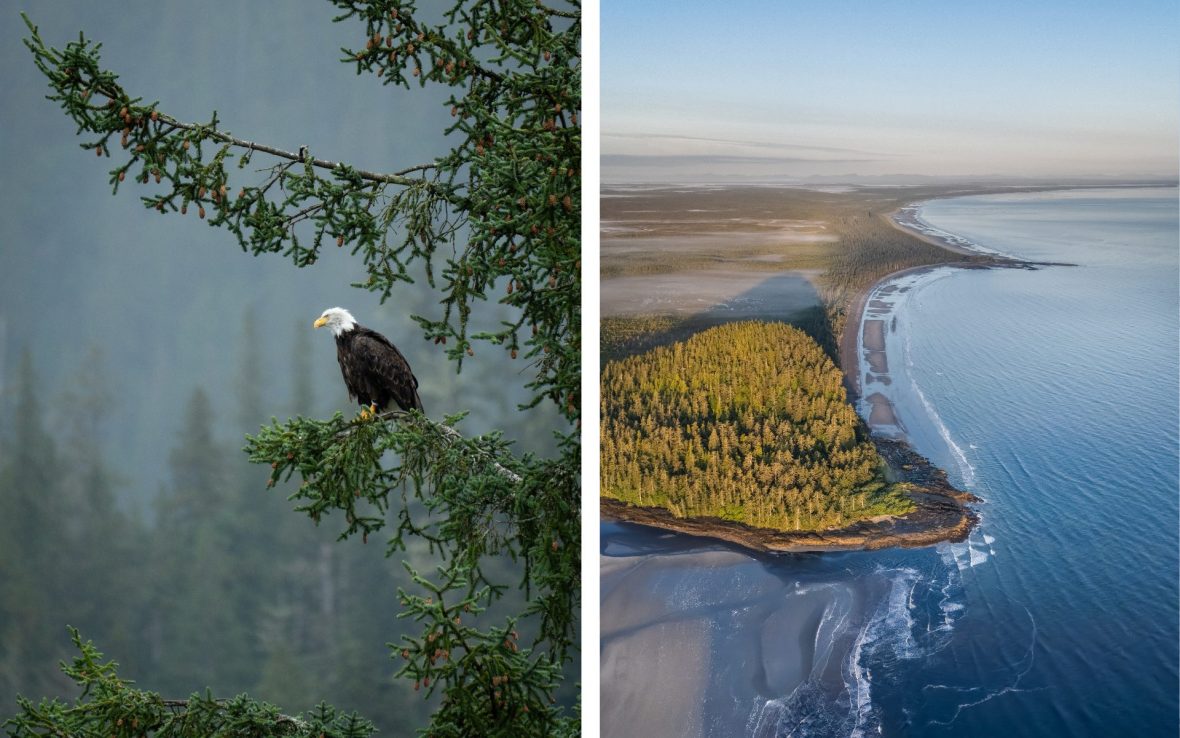
Beyond Gwaii Hanaas, tourism is far less regulated. Between the sporadic residential communities, the landscape is rugged, accessible only via single paved or long logging roads. Public campsites are on a first-come, first-served basis, and often full of RVs.
Back at Hiellen Village Longhouses, it’s mid-September, late in the tourist season, and as we set up our tent, the wind howls at our backs and carpenters are at work. Seven modern adaptations of traditional Haida cedar longhouses and one group longhouse are already available to rent, but they’re building seven more.
“The experience here invites people to slow down, to listen and to understand that they’re in a living cultural landscape, not just a destination. There is no separation between the visitor and the environment.”
- Ivy Bell, Economic Development Manager, Hiellen VillageLonghouse
The revenue from Hiellen goes straight back into the Old Massett community, providing jobs, infrastructure and community resources. But Bell says that the single biggest challenge is finding a way to lead tourism on their own terms. The Council’s internal systems, infrastructure and workforce are struggling to keep up with increasing demands. She wants to see small-scale, locally owned accommodations and cultural land-based experiences, like guided food and art activities. Bell is working to broaden youth involvement and mentorship opportunities, but admits that training takes time and retention can be difficult due to the seasonal nature of the work and Hiellen’s off-grid location.
“I want the youth to get dirt under their nails and really intertwine with our culture out there,” she tells me. “And also get them to understand how great it is to be disconnected from their cell phones and to actually connect with Mother Earth.”
“This isn’t just tourism for us. It’s about reconnecting to our land and creating something that supports our people long-term. If we can do that in a way that’s respectful, sustainable and grounded in who we are, then we’re on a great path.”
At the beginning of my travels, I signed the Haida Gwaii Pledge, an online orientation and commitment that asks visitors to respect Haida Gwaii and Haida Ways of Being throughout their visit. It was my first introduction to the Haida concept of ‘Yahguudang’, respect for all living things. It came to color every experience I had across the archipelago, and I saw Yahguudang in every Haida person I met.
“The experience here invites people to slow down, to listen and to understand that they’re in a living cultural landscape, not just a destination,” says Bell. “There is no separation between the visitor and the environment.”
Later, as I walk out past the cedar forest to the long sandy shore of North Beach, I listen to the waves and think about Haida notions of respect and interconnectedness, that everything depends on everything else. Where and how I choose to walk, spend time and money directly impacts the community, the land and ocean, all that is alive here.. In the evening, the wind continues to rage and the rain sets steadily in. I now know what Bell means when she describes this place as both quiet and loud at the same time. Like a living culture, like a heartbeat.
****
Adventure.com strives to be a low-emissions travel publication. We are powered by, but editorially independent of, Intrepid Travel, the world’s largest travel B Corp, who help ensure Adventure.com maintains high standards of sustainability in our work and activities. You can visit our sustainability page or read our Contributor Impact Guidelines for more information.
Emily Barlow is a travel and lifestyle journalist from Sydney, Australia and Adventure.com's Head of Partnerships. She's big on backpacking remote mountains and slow expedition-style travel, skiing, lake-hopping, and trying all the local food.