Fatima Haidari fled Taliban-controlled Afghanistan in 2021. Now, the tour guide has found an innovative way to share the beauty of her homeland with travelers. Belinda Jackons joins her on a virtual tour of Herat, Afghanistan’s city of poetry.
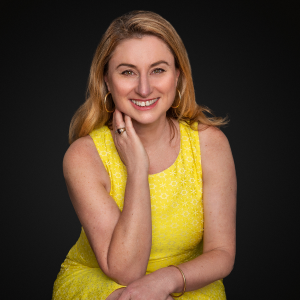

Fatima Haidari fled Taliban-controlled Afghanistan in 2021. Now, the tour guide has found an innovative way to share the beauty of her homeland with travelers. Belinda Jackons joins her on a virtual tour of Herat, Afghanistan’s city of poetry.
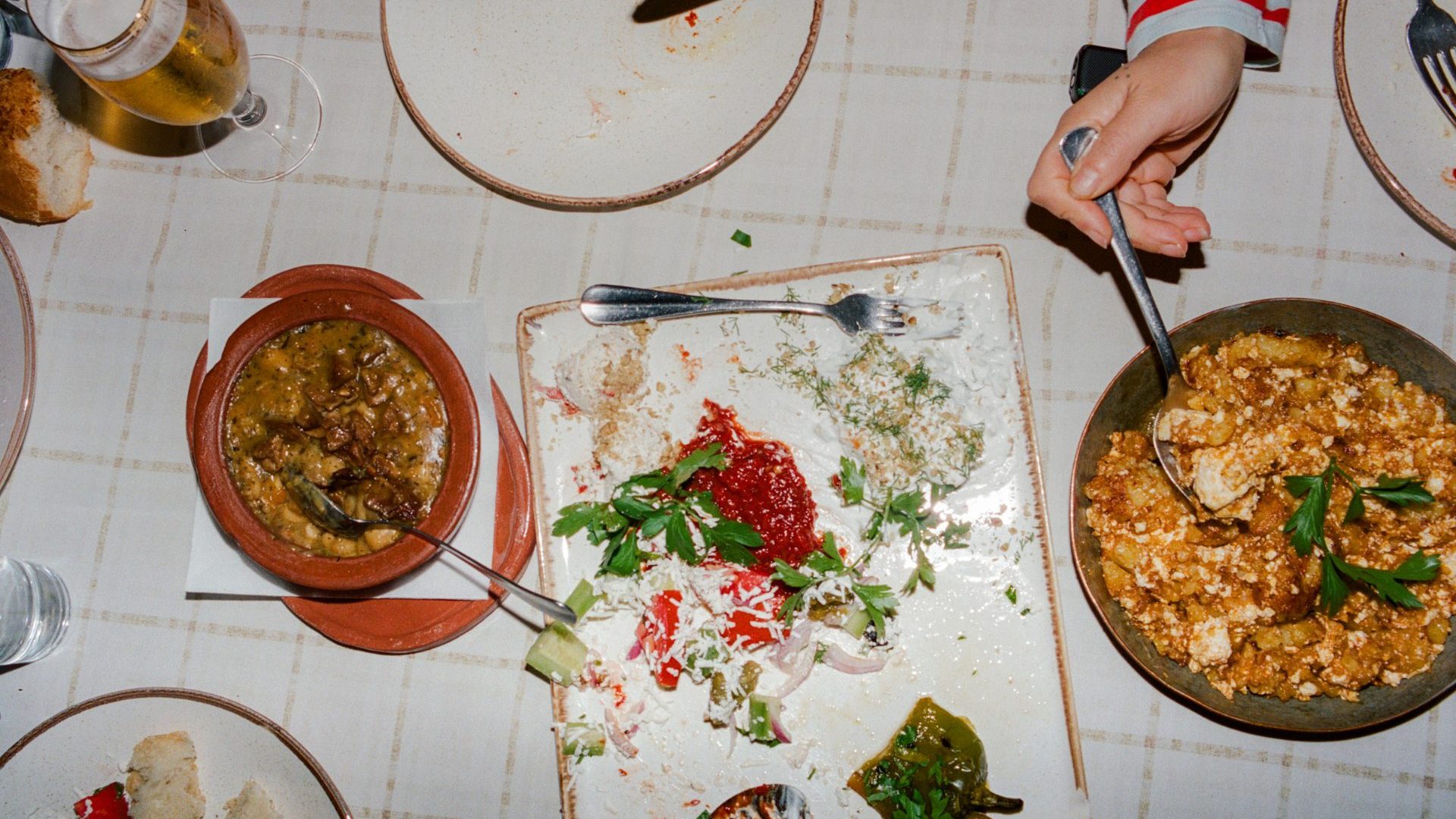
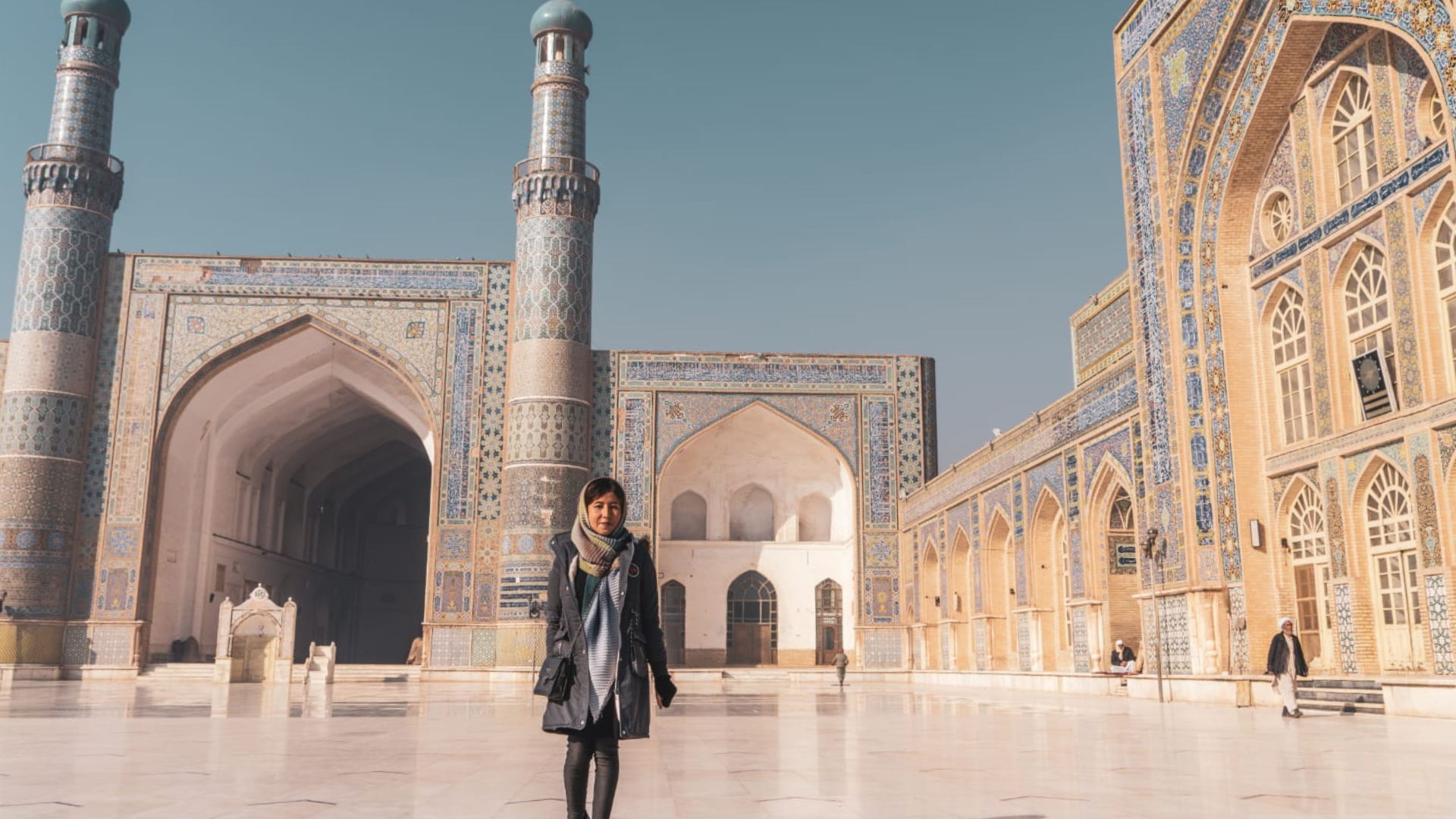
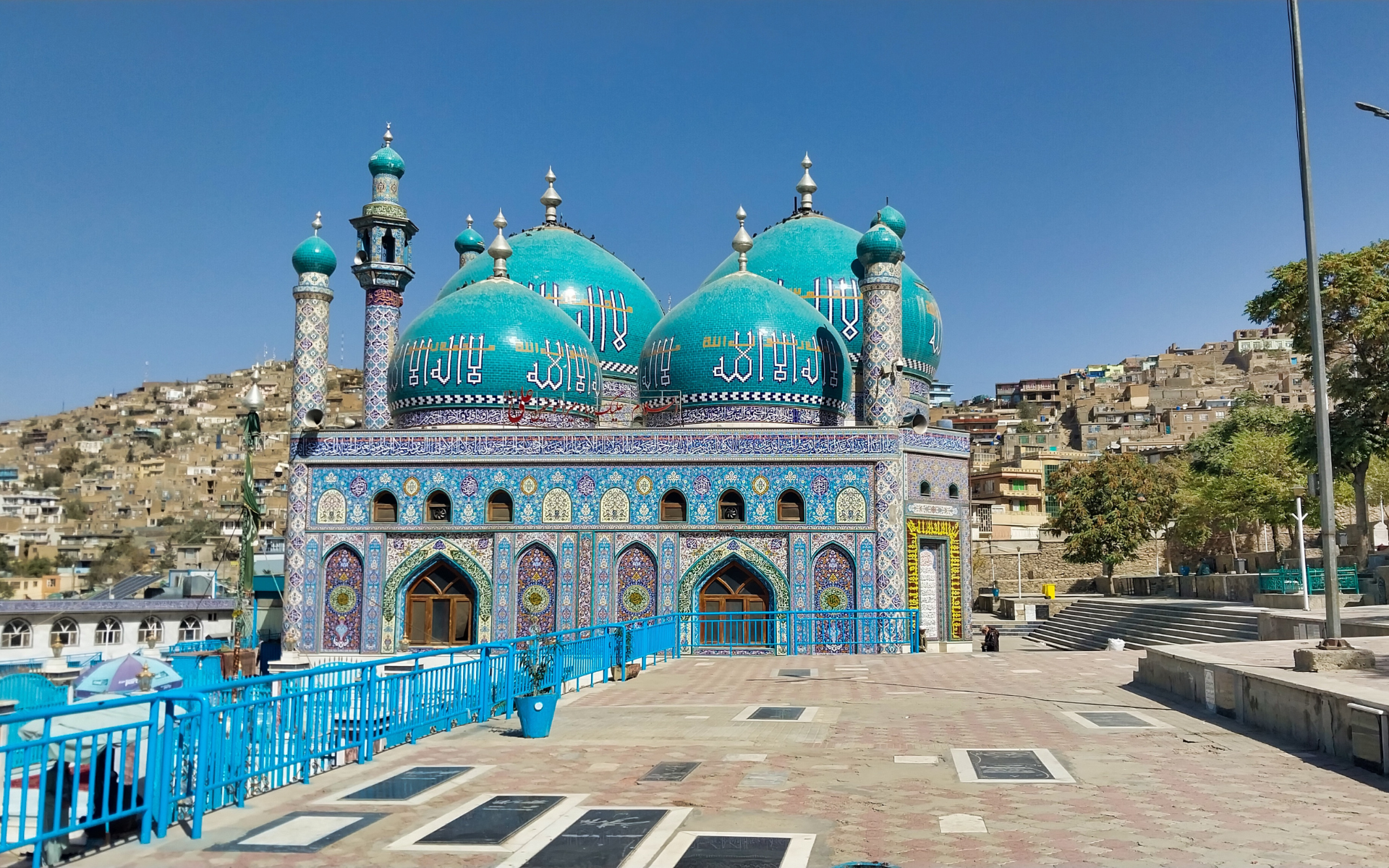
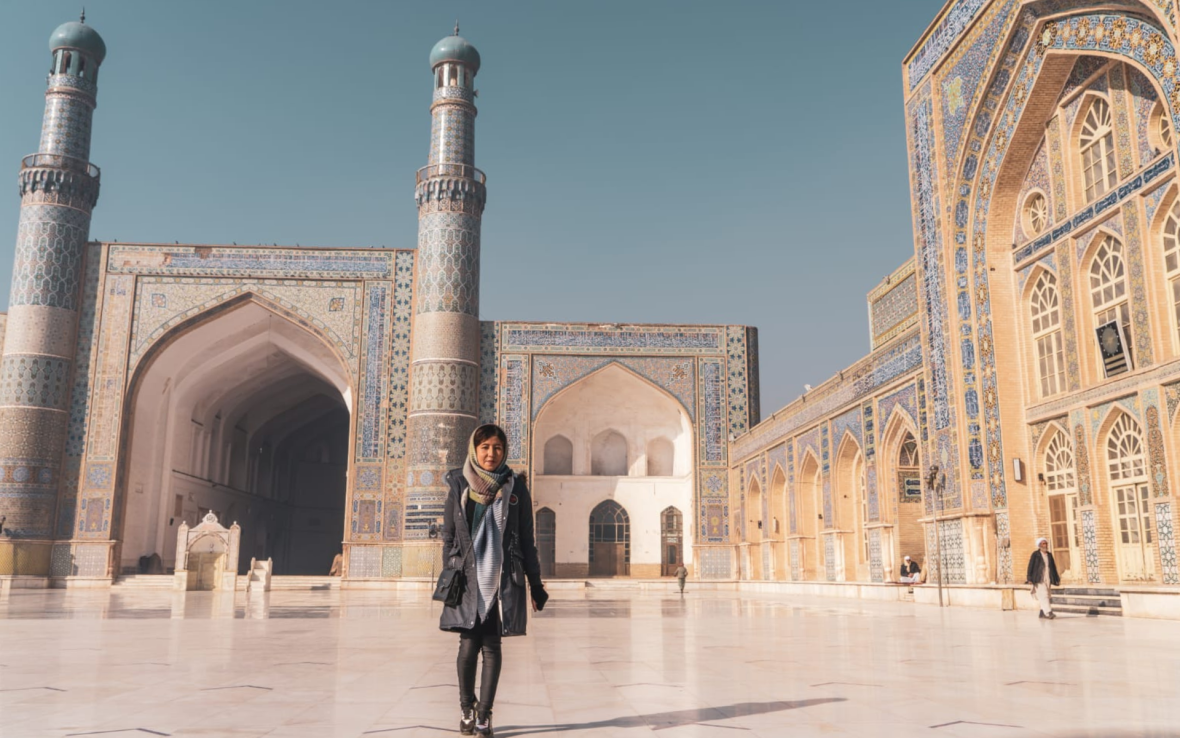
“In Afghanistan, we don’t ask if you’d like tea, we just ask if you’d prefer black or green, with cardamom or saffron,” Fatima Haidari tells me as we walk through the glorious bones of the Musalla of Gawhar Shah, a 15th-century Islamic religious complex.
“Our passport is so weak, we rarely get to see the world outside,” she says. “So when foreigners come, it’s extraordinary, and you’ll be treated like you’re famous.”
As we chat, Haidari points out the domes and turquoise walls of the mosque and its five remaining minarets. A survivor of two earthquakes and decades of war, the complex is the legacy of its founder, Queen Gawhar Shad, who moved the Timurid empire’s capital from Samarkand in modern Uzbekistan here to Herat in 1405.
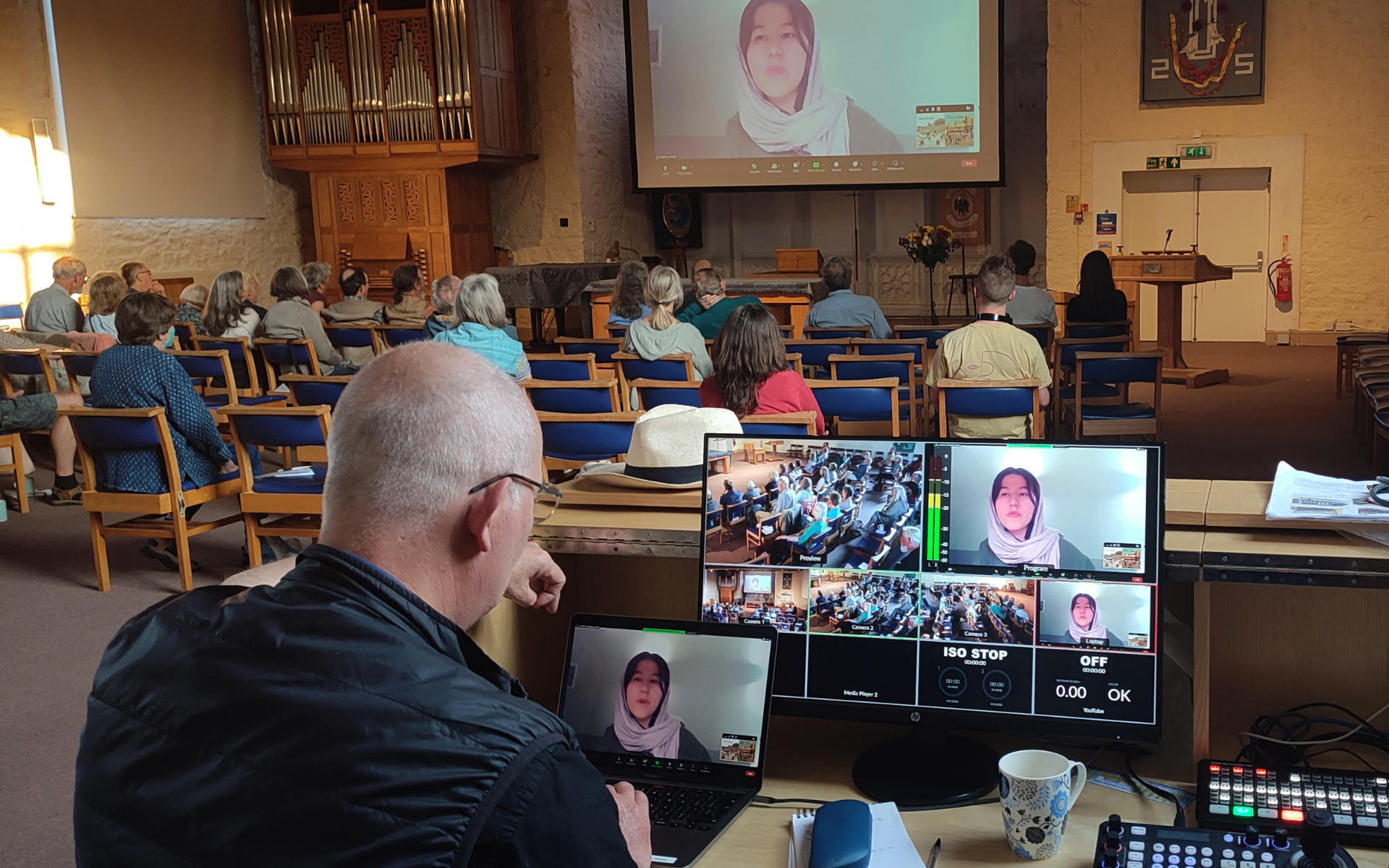
Our tour is an unconventional one: I’m at my desk in Melbourne, Fatima is in exile in Milan, and—via our screens—she’s guiding me through Herat, a city of poetry in western Afghanistan.
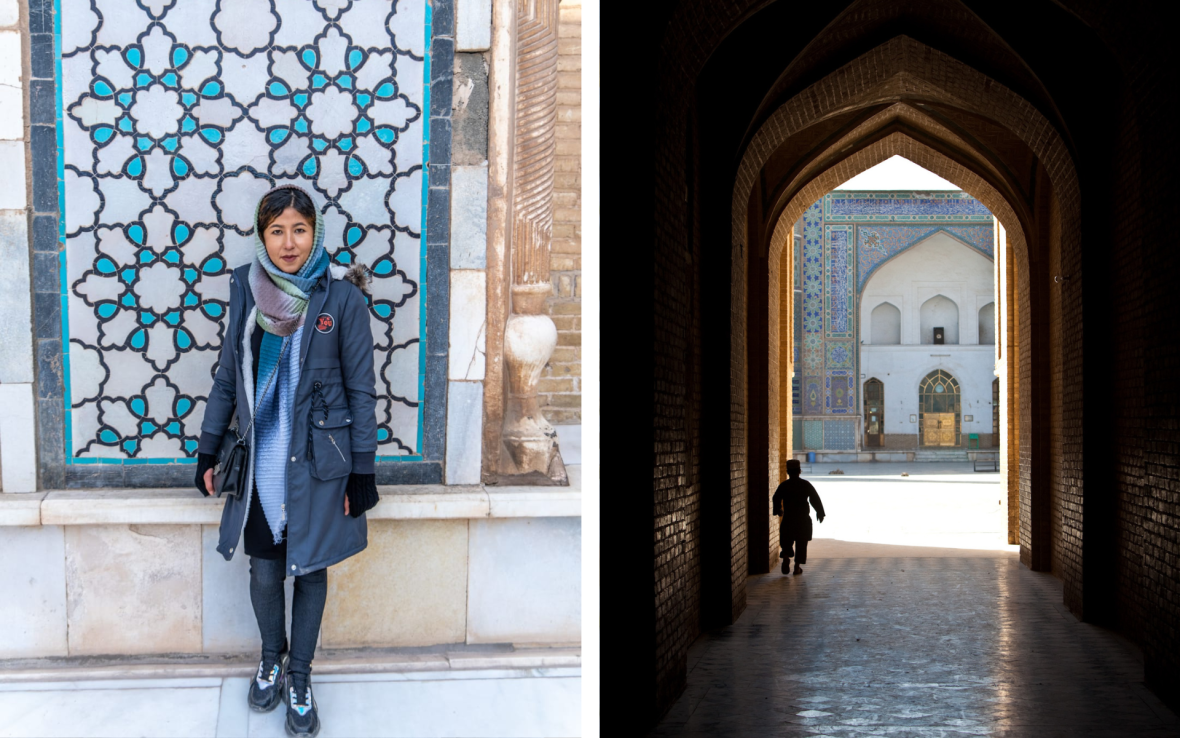
For 27-year-old Haidari, it’s a poignant reminder of what she’s lost and left behind. Until 2021, much of her life was spent among these minarets, and it was here that, by accident, she became a tour guide.
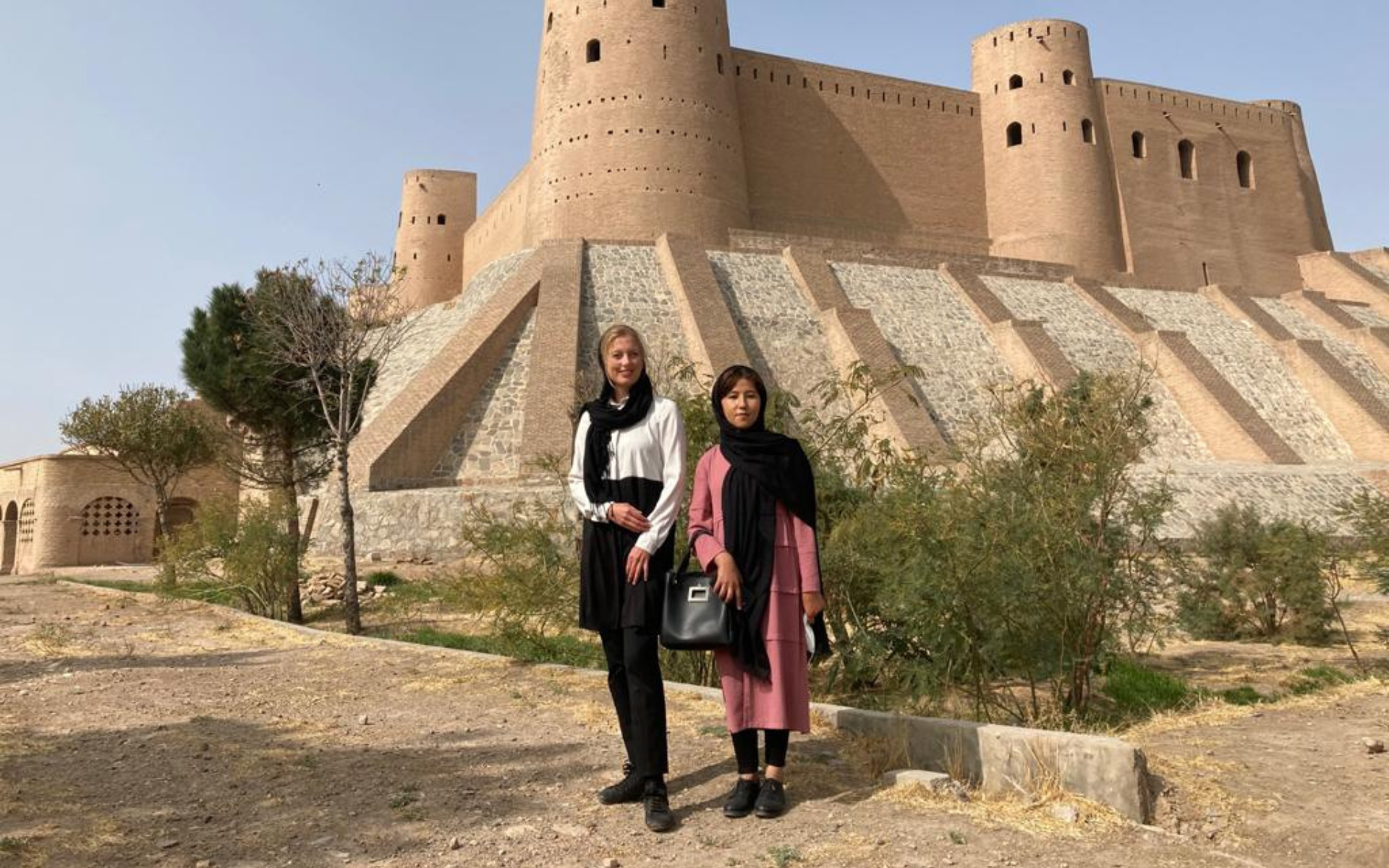
Working on a university project on Afghan history, Fatima started a Facebook page to share the beauty and 6,000-year history of her wartorn country. A Ukrainian traveler found the page and asked her to guide them on their visit to Herat. Impressed, the traveler gave Fatima’s name to British adventure travel company Untamed Borders, who had been guiding in Afghanistan for two decades, and so Fatima became Afghanistan’s first female tour guide.
“Many Afghans regard Rumi as part of our literary and spiritual heritage. His poetry is a source of wisdom about love, faith, separation, tolerance and the search for God. And poetry for us is a way of life.”
- Fatima Haidari
“On top of my guiding work, I was a university student, studying journalism and running a weekly radio program called ‘Winner Women’, which amplified the voices of women,” says Haidari. “A group of us also ran a small organization teaching women English, mathematics and preparation for university entrance exams.
However, within a month of taking back Afghanistan in August 2021, the Taliban had banned girls from secondary school. “I lost everything,” says Haidari. In the five years since, more than 100 decrees have eroded women and girls’ rights and safety, with child marriage permitted, a steep rise in early childbearing, bans on women’s access to employment and money, and the total exclusion of women from public life.
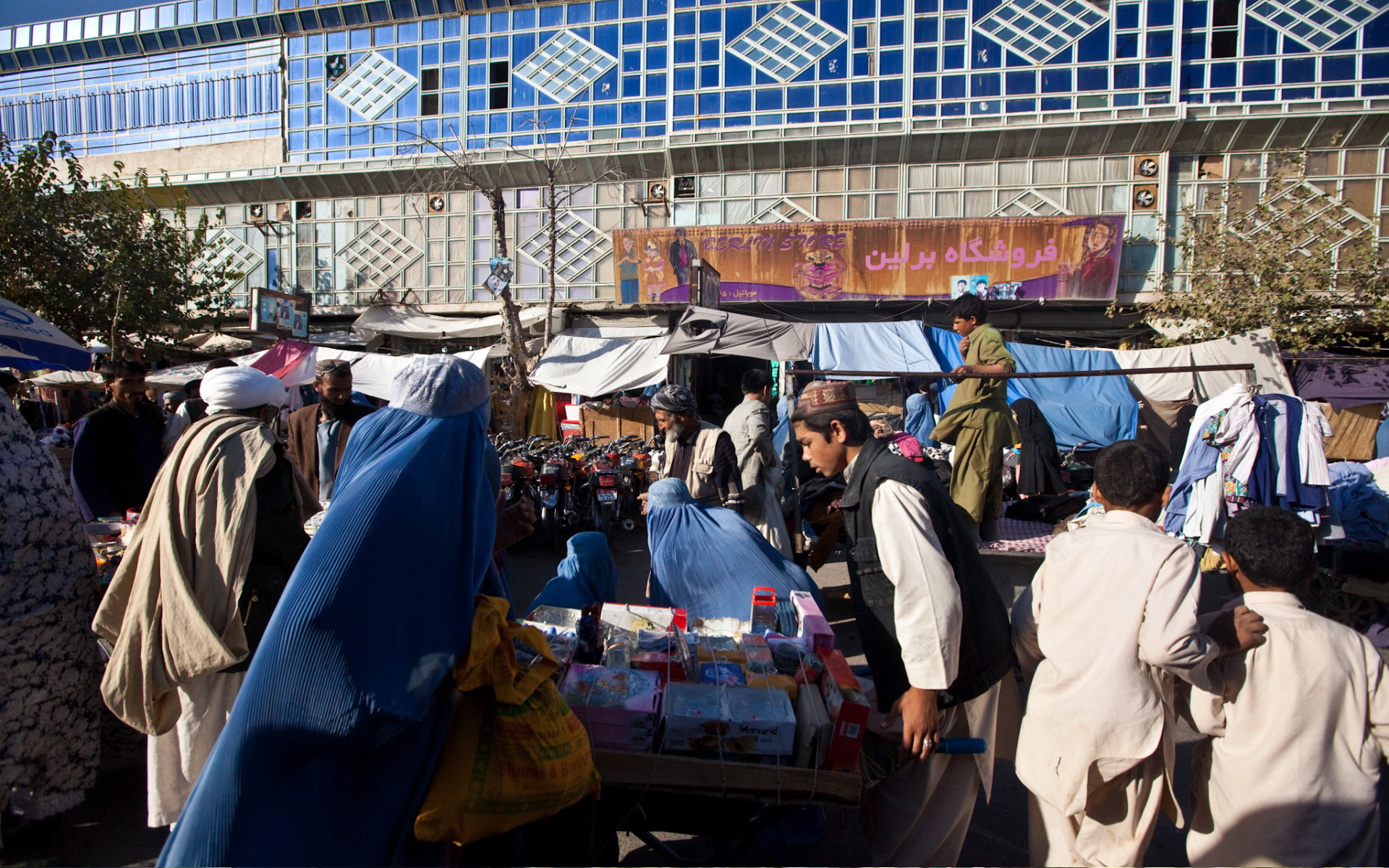
Next on our tour, we visit the old bazaar of Herat, a 13th-century trading post and key stop on the Silk Road. “The bazaar is so crowded, you can see women in blue burqas (full body cloaks), a girl wearing just a shawl, and others in the black chador (full body cloak with an open face) common Iran,” says Haidair.
She’s describing the photo we’re now looking at. Taken in the 2010s, in the 20-year hiatus between Taliban regimes, it’s also a geography lesson; Herat is just 77 miles (125 kilometers) from the Iranian border.
Carts are loaded with roasted peanuts and fresh cauliflowers. Low doors lead into busy tea shops. A seller displays Herat’s famed silk carpets, which can take whole families two years to weave. Musicians pick the dutar, a long-necked lute, the rhythm set by the zerbaghali, a handheld drum; there’s storytelling and there’s tea. Always tea.
Afghanistan’s color comes from its make-up, a mix of Sunni and Shia Muslims, of nomadic tribes and settled clans. There are overlaps on language, on geography, and even in its religion, with the mystic tradition of sufism found in both branches of Islam.
“Aghanistan is a very tribal country,” explains Haidari, with Pashtuns the largest ethnic group, followed by a rich mosaic of clans that include Tajiks, Uzbeks and her own—the Hazaras.
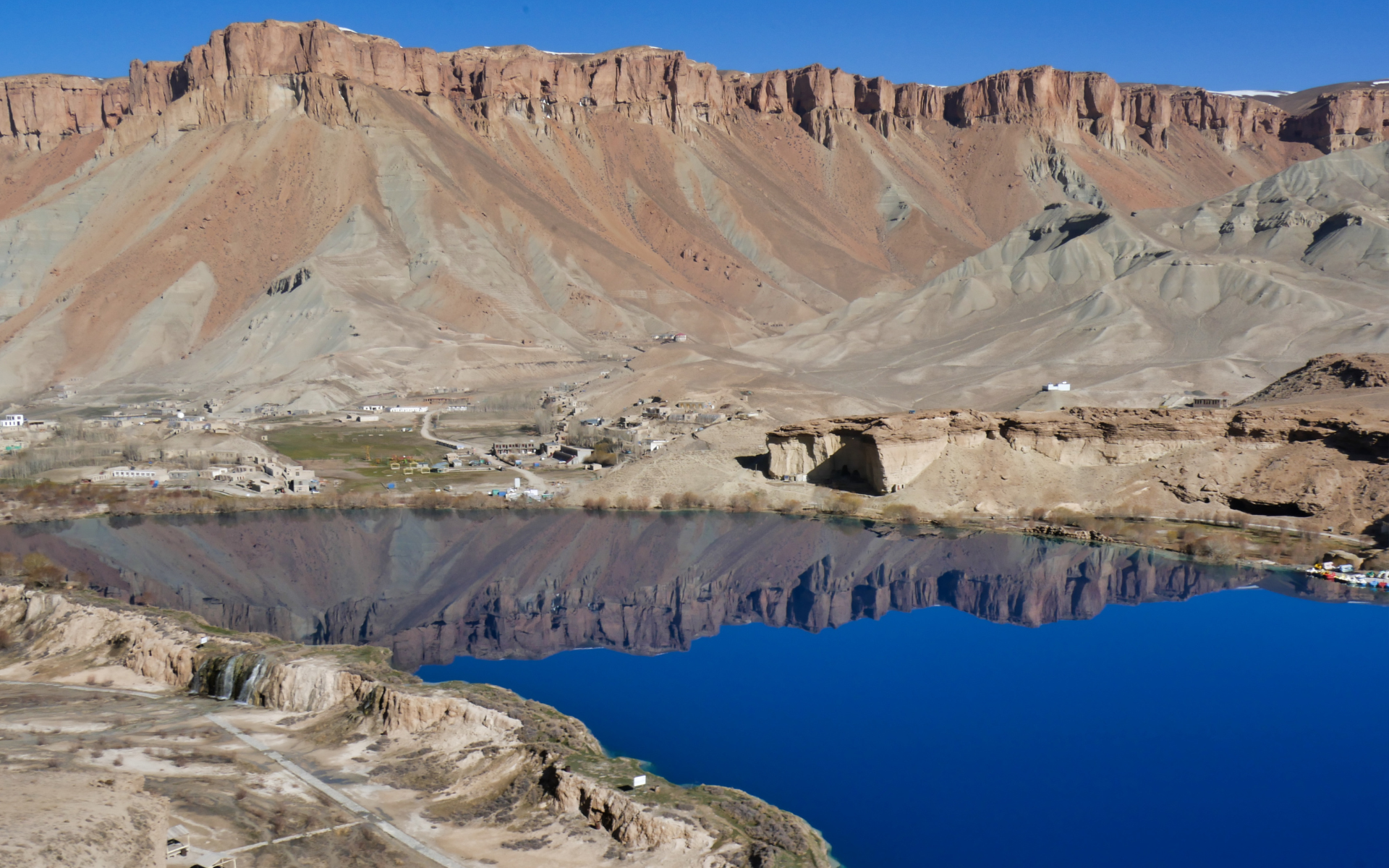
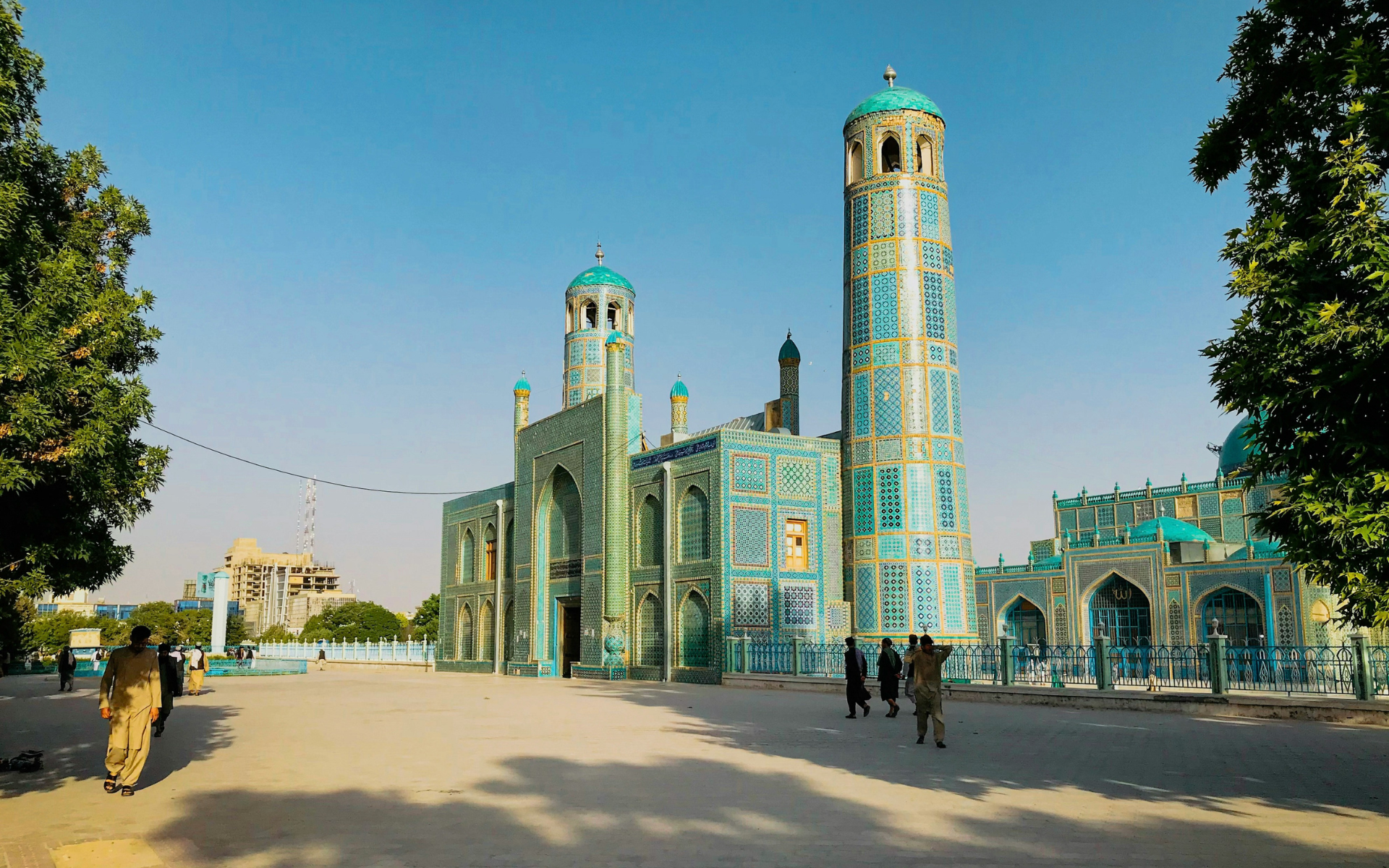
The country is awash with all shades of blue, from the turquoise tiles of a saint’s shrine to sapphire lakes, cobalt-tipped minarets, cornflower-blue skies and the rich lapis lazuli of antique jewellery. “We identify ourselves with blue,” says Haidari.
Blue is also a common color of the burqa, which covers the wearer from the top of her head to her toes, a mesh strip across her eyes. “It’s a piece of women’s clothing, but it’s also a form of oppression,” says Haidari, who wore a headscarf and modest clothing in public in Afghanistan but, before the Taliban returned, never covered her face. Under the current regime, Afghan law now requires all women to cover their faces in public. “Your face is your identity, so with the burqa, you don’t have an identity,” she says. “And as a law, it’s not your choice.”
As we tour Herat, our conversation swings between the erosion of women’s rights to the old city’s medieval footprint and onto the celebration of the 13th-century Sufi mystic and poet, Rumi, born in Balkh, in what’s now northern Afghanistan.
“Many Afghans regard him as part of our literary and spiritual heritage,” says Haidari. “His poetry is a source of wisdom about love, faith, separation, tolerance and the search for God. And poetry for us is a way of life.”
Haidari tells me that before the Taliban returned it was common for people to gather at each other’s homes to drink tea and recite poetry. This changed when the Taliban returned.
“We also organize workshops to create awareness among women of their rights—about forced marriages and mental health—and we hope to add a computer class. For our students, it’s not just a classroom, but a way of resistance.”
- Fatima Haidari
“We were so scared, we burned all our documents and everybody was telling me to leave,” she says. As a tour guide for Untamed Borders, Haidari had been interviewed by CNN, attracting international attention for leading tours and sharing her story—a shepherd girl from impoverished Ghowr province now a university student.
Haidari was now a target.
“If the Taliban had captured me, they would have not only harmed me, but also my family,” she says. “I had grown up with my mum’s stories about the Taliban [during the First Regime, from 1996-2001] bombing schools and universities, which I was now also seeing. So I had to leave.”
Getting out of Afghanistan meant raising funds, lobbying embassies, and getting her name on evacuee lists. In August 2021, as the US withdrew and the Taliban retook Kabul, violence and chaos saw Fatima’s final destination change daily, from Pakistan to the US to Poland. After days of dangerous dashes to the airport, being held at gunpoint and seeing people dying in the crush around her, she found a seat on a flight to Italy, and fled Afghanistan.
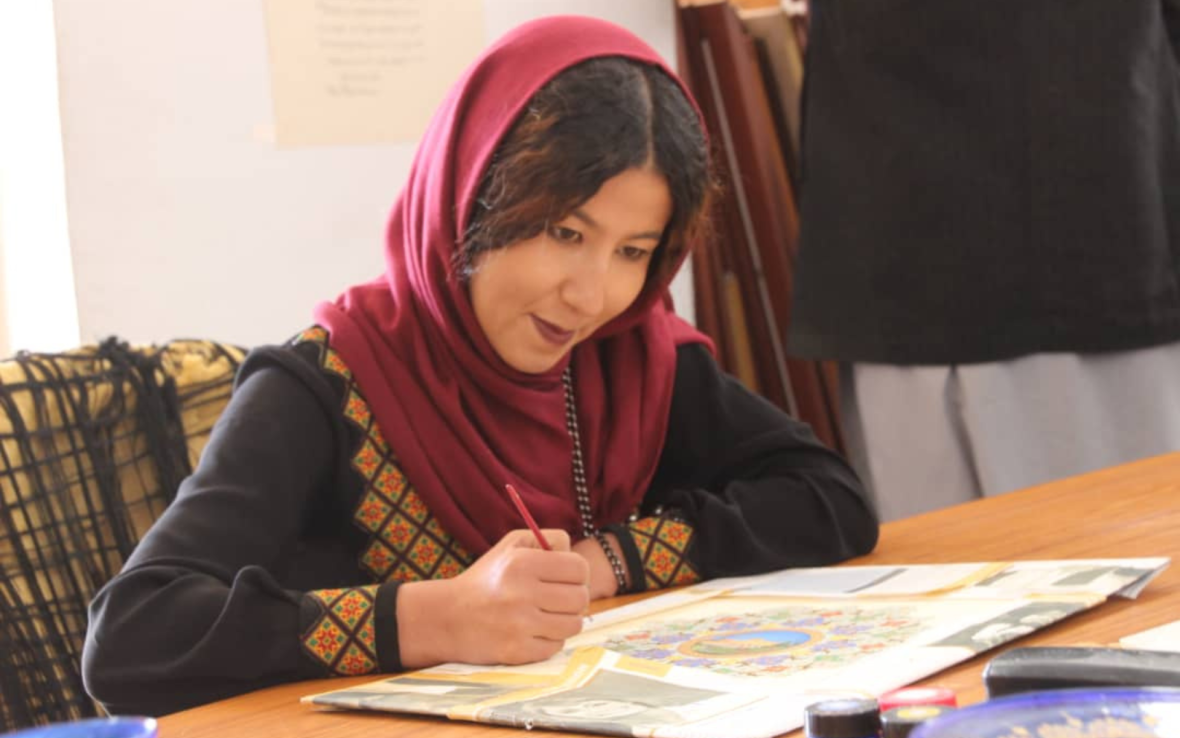
“The only Italian word I knew was ‘pizza’ and even then, I didn’t know it was Italian,” she says. “I thought pizza was Afghan food!”
Now fluent in Italian as well as English and her native Dari, Fatima has completed a degree in international politics and government at Milan’s Bocconi University, and this year will begin her Master’s in International Law.
Our virtual tour is a mix of photos and drone footage, which Haidari talks me through over a zoom call. A portion of Haidari’s earnings from these online tours also help fund a secret school for girls and women in Afghanistan, who are now banned from receiving any education after 12 years of age.
Having started with a single teacher, the school has now grown to consist of four English-language teachers, a tailor who teaches women to sew dresses, shirts, suits and tablecloths to earn an income, and literacy classes for older women who had been denied the chance to learn.
“We also organize workshops to create awareness among women of their rights—about forced marriages and mental health—and we hope to add a computer class,” she says. “For our students, it’s not just a classroom, but a way of resistance.”
“While all the teachers are female, we have a man who buys our books, goes to the bank,” says Haidari, “the things that would be very difficult for a woman to do.”
Ironically, as the country grows ever more conservative, it has become easier—bureaucratically—to visit Afghanistan. In March 2026, the government launched 30-day e-visas, which cost USD$128 and are available to most UN member countries, including the USA and UK.
However, the UK’s Foreign Office states: ‘You should not travel to Afghanistan’, in line with the US State Department Travel Advisory to avoid travel to Afghanistan “due to civil unrest, crime, terrorism… and kidnapping”.
Both countries closed their embassies in August 2021 after the fall of Kabul, and the UN-aligned Institute for Economics & Peace ranks Afghanistan as one of the world’s least peaceful countries. In its Global Peace Index 2026, the country is ranked 157th in its assessment of 163 states and territories.
“Taliban is not a government, it’s a terrorist group, and it’s systematically eliminating women from society.”
- Fatima Haidari
“I don’t know if I can ever go back to Afghanistan,” Haidari tells me. “But I wish I could be the Minister of Education, to open schools, change the education system and include more women.”
When I’d first spoken with Haidari, I’d naively asked her the question on every female traveler’s lips: Is it safe for women travelers in Afghanistan? When the question really should have been: Are Afghan women safe in Afghanistan?
The answer is, of course, an emphatic no. The United Nations organization UN Women, which aims to uphold women’s human rights, calls the situation “the most severe women’s rights crisis in the world”.
“Taliban is not a government, it’s a terrorist group, and it’s systematically eliminating women from society,” says Haidari.
For now, Afghanistan remains out of reach. I won’t join the ‘Talibros’—those foreign travel influencers cheerfully promoting the country, and the Taliban, while turning a blind eye to its brutality of women and girls.
I will wait, and in the meantime, place my faith in Haidari’s virtual tours, in the secret schools, and in the network that exists between Afghan women and their male supporters.
More importantly, my confidence in the country’s restoration is shared by Haidari herself. “When I see how motivated the girls are [in our secret schools], it gives me hope for the future of Afghanistan.”
Fatima Haidari and Untamed Borders run online tours of Herat and central Afghanistan. More info here.
****
Adventure.com strives to be a low-emissions travel publication. We are powered by, but editorially independent of, Intrepid Travel, the world’s largest travel B Corp, who help ensure Adventure.com maintains high standards of sustainability in our work and activities. You can visit our sustainability page or read our Contributor Impact Guidelines for more information.

Melbourne-based journalist and explorer, Belinda Jackson, is a regular writer for Australia's national magazines and newspapers. She's visited every continent and has spent more than a decade exploring the Middle East. She'll travel by any means necessary to reach a destination, including the time she took a dingy to find indigenous rock art.