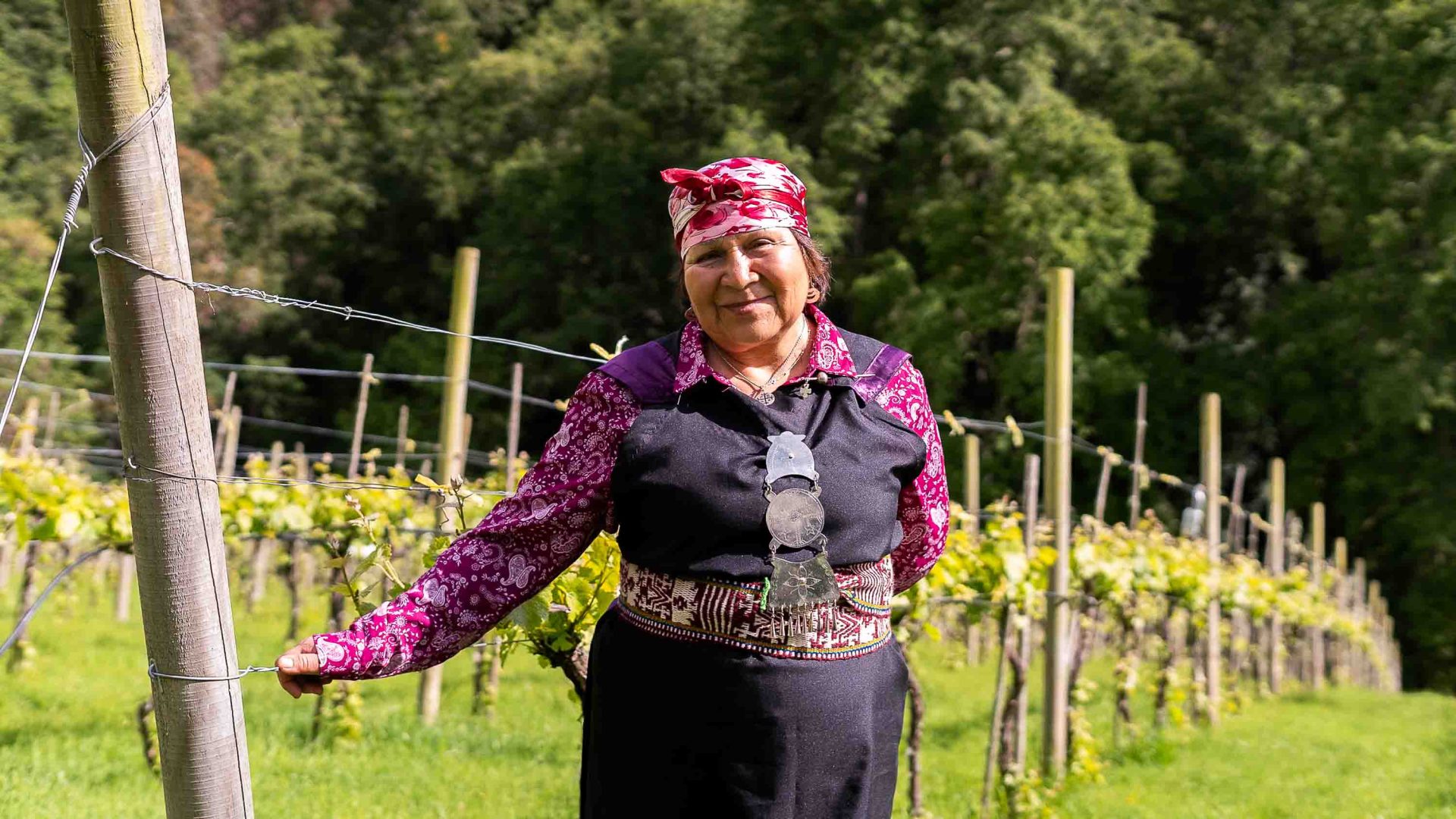
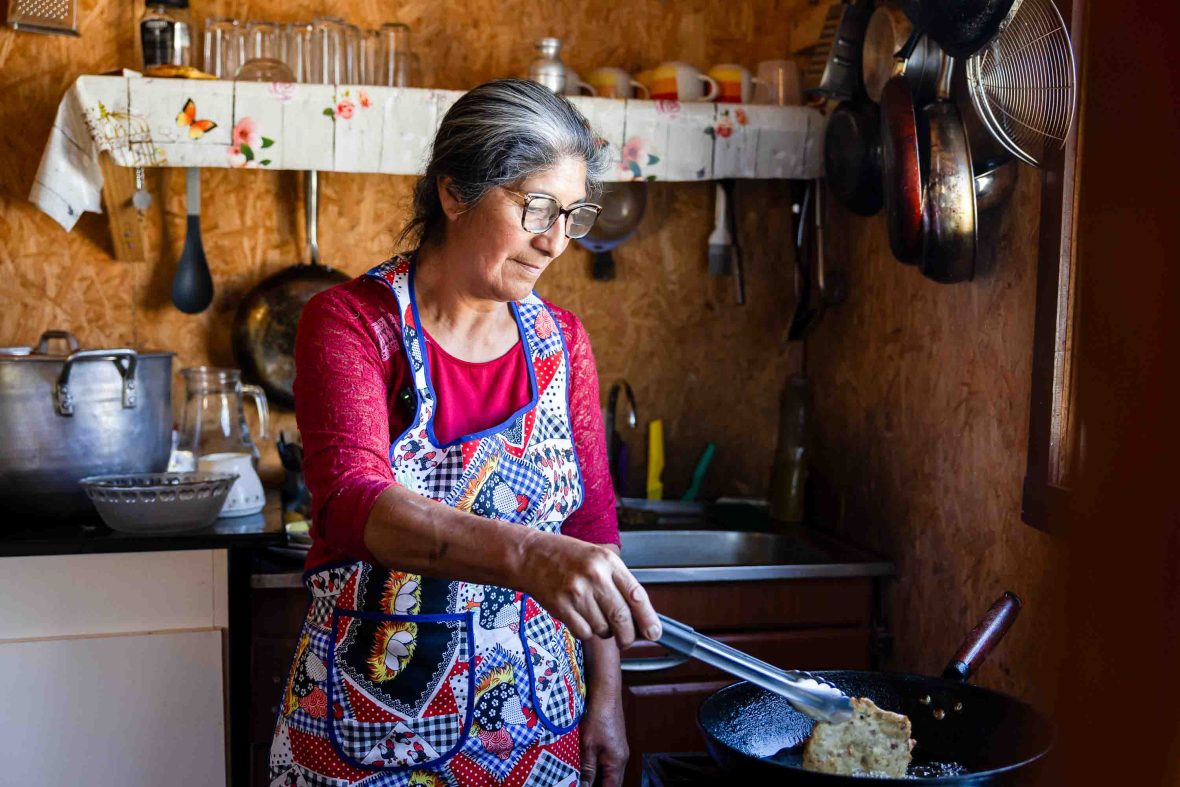
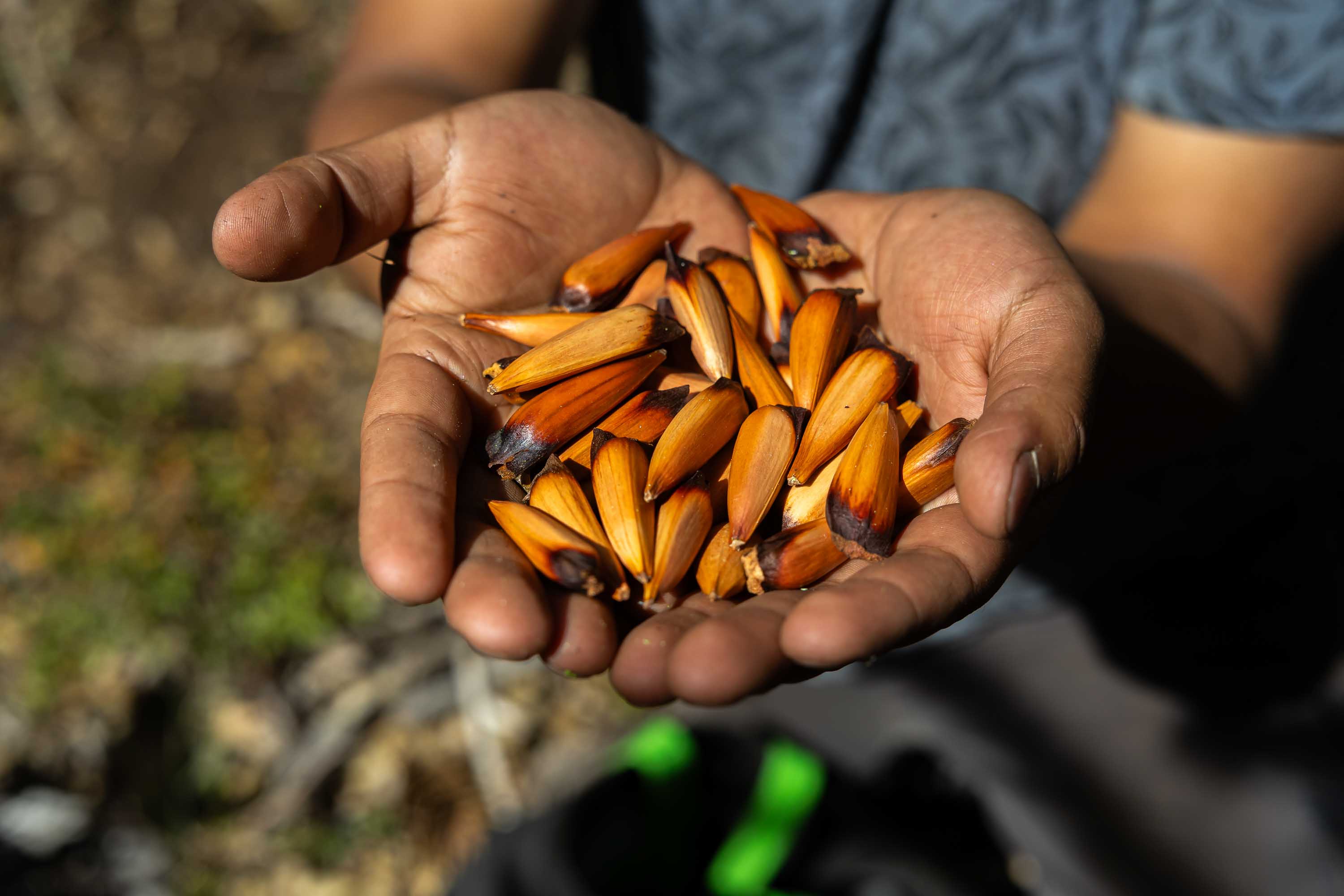
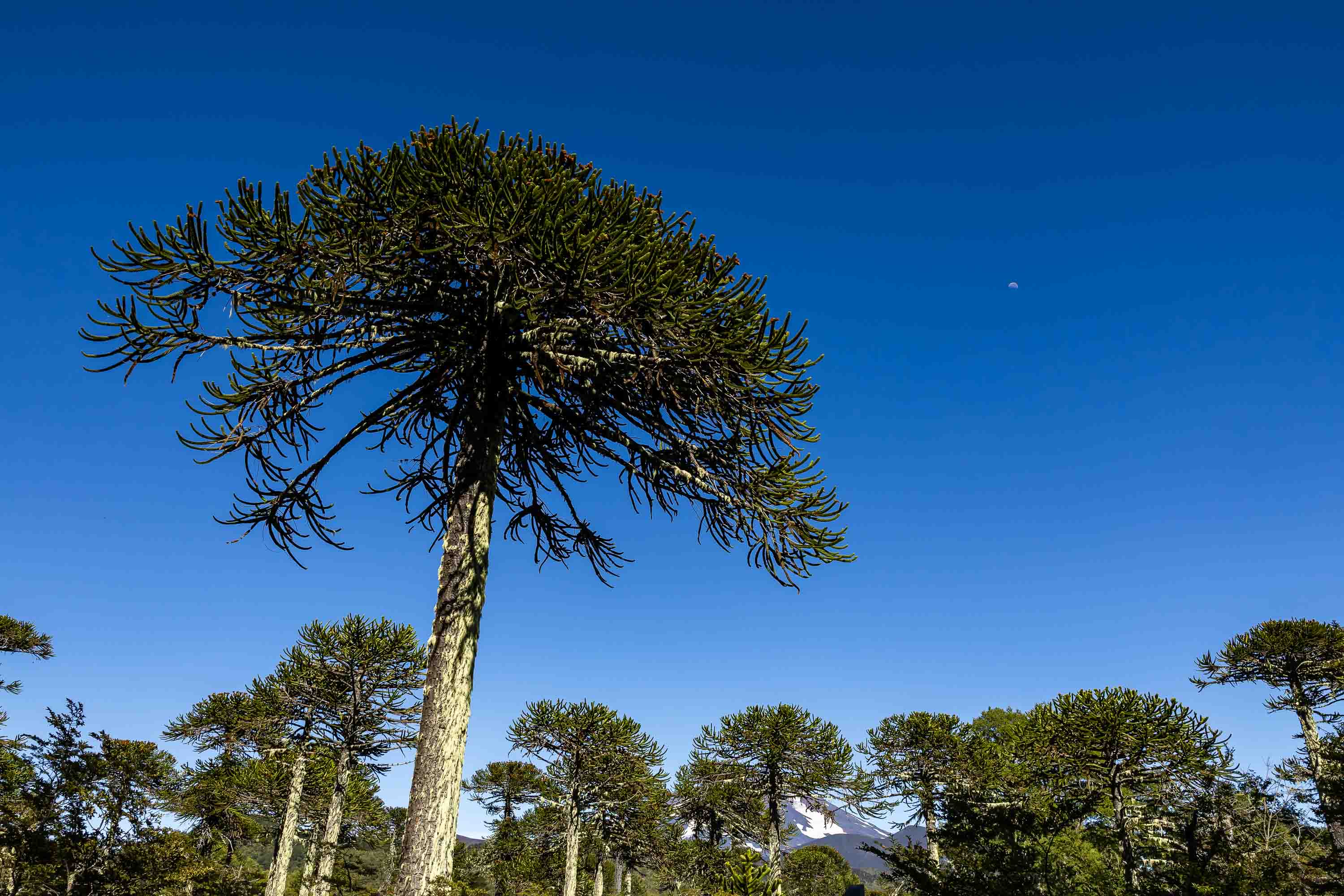
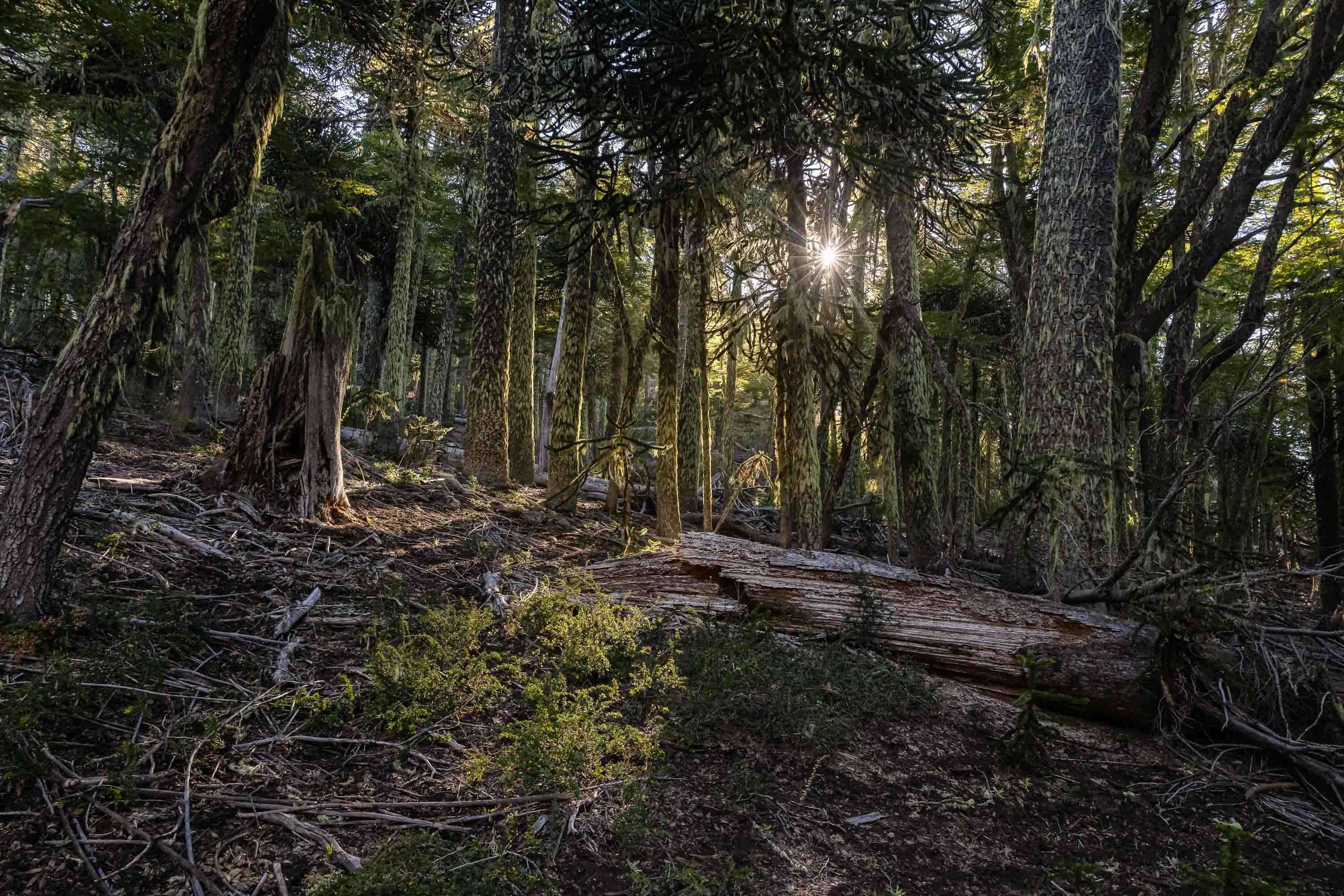
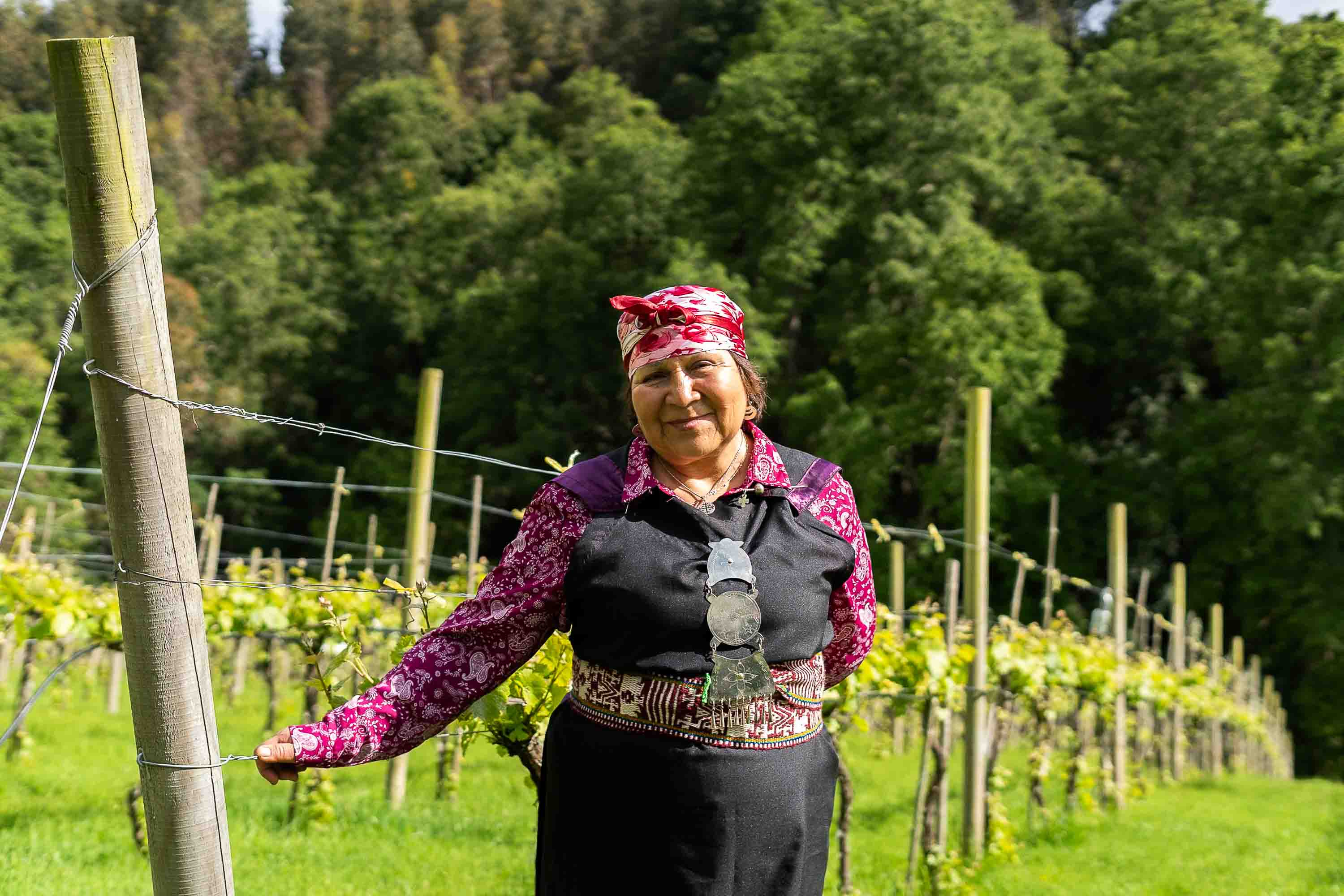
“We take good care of the trees because we see them like a mother that gives us food,” Matilde Domihual tells me inside her homely restaurant, Ruka Mawida, as she prepares piñónes. These seeds of the araucania tree (known in English as the monkey puzzle tree) are the length of my thumb, covered with a pinky-brown shell, and have a waxy texture and smoky, nutty flavor, similar to chestnuts.
Matilde boils and peels the piñónes, before grinding them to make chuchoca, a coarse flour used in sopapillas (a delicious, savory deep-fried dough), catuto (an unleavened bread), polenta-like mash, and even sweet desserts. The piñón is the sacred seed of the Mapuche, the most populous Indigenous group in Chile, Argentina, and wider South America. Most of Chile’s 1.8 million Mapuche live in scattered farming settlements in the central Araucanía and Bíobío regions, their ancestral territory pitted by lakes and rivers, and sandwiched between the Andes Mountains and the icy Pacific waters. But few foreign visitors to Chile are aware of their existence.