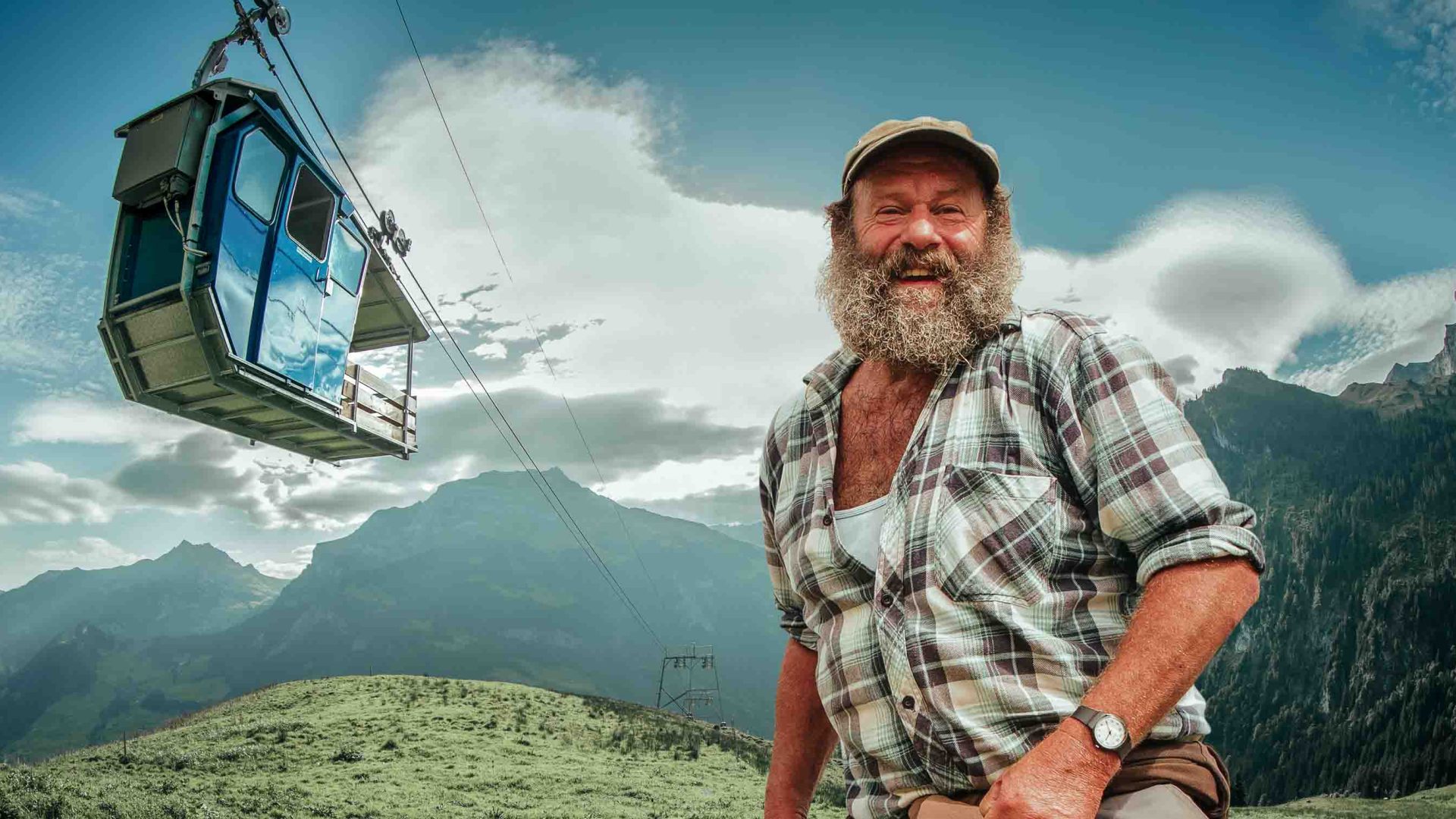
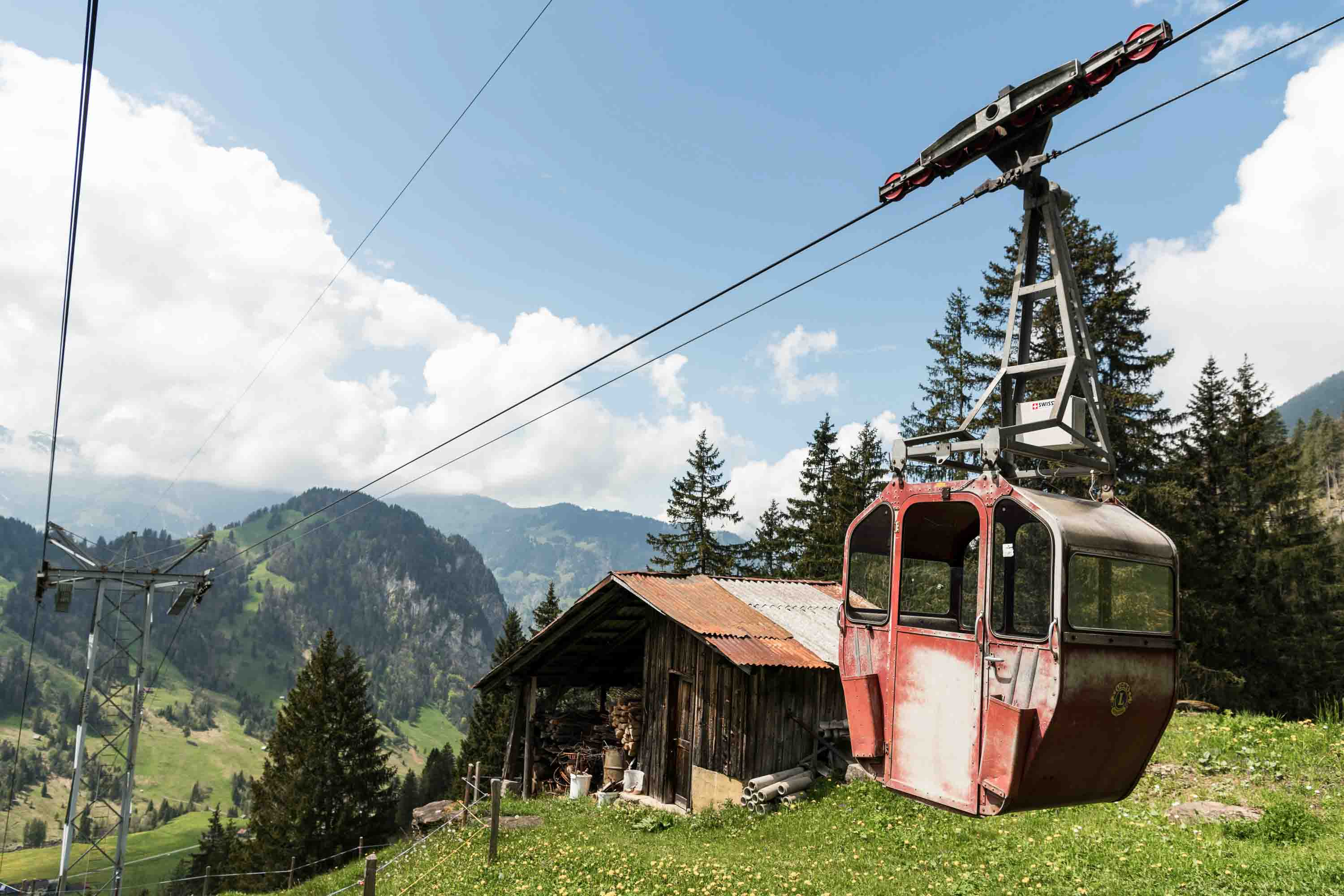
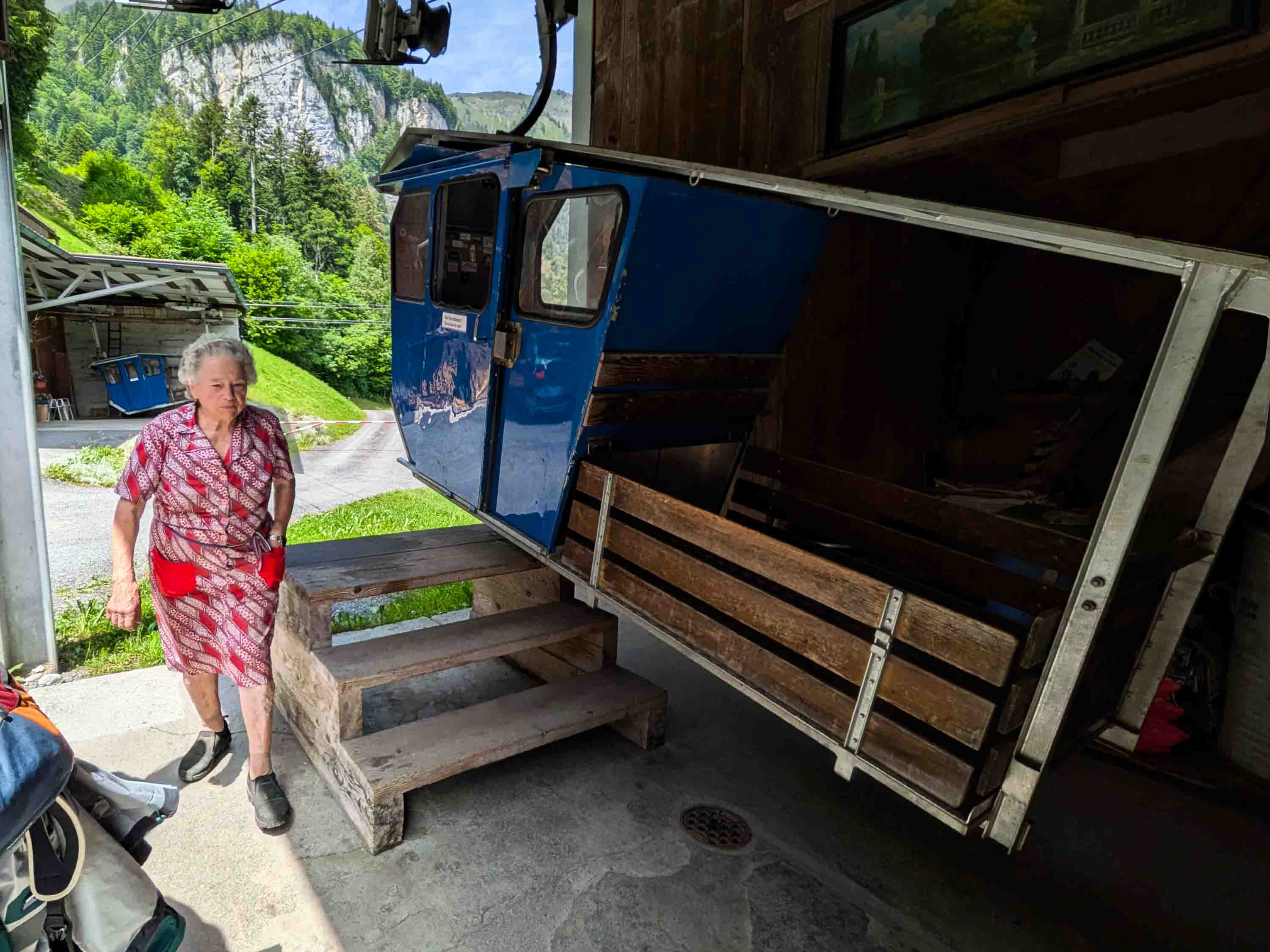
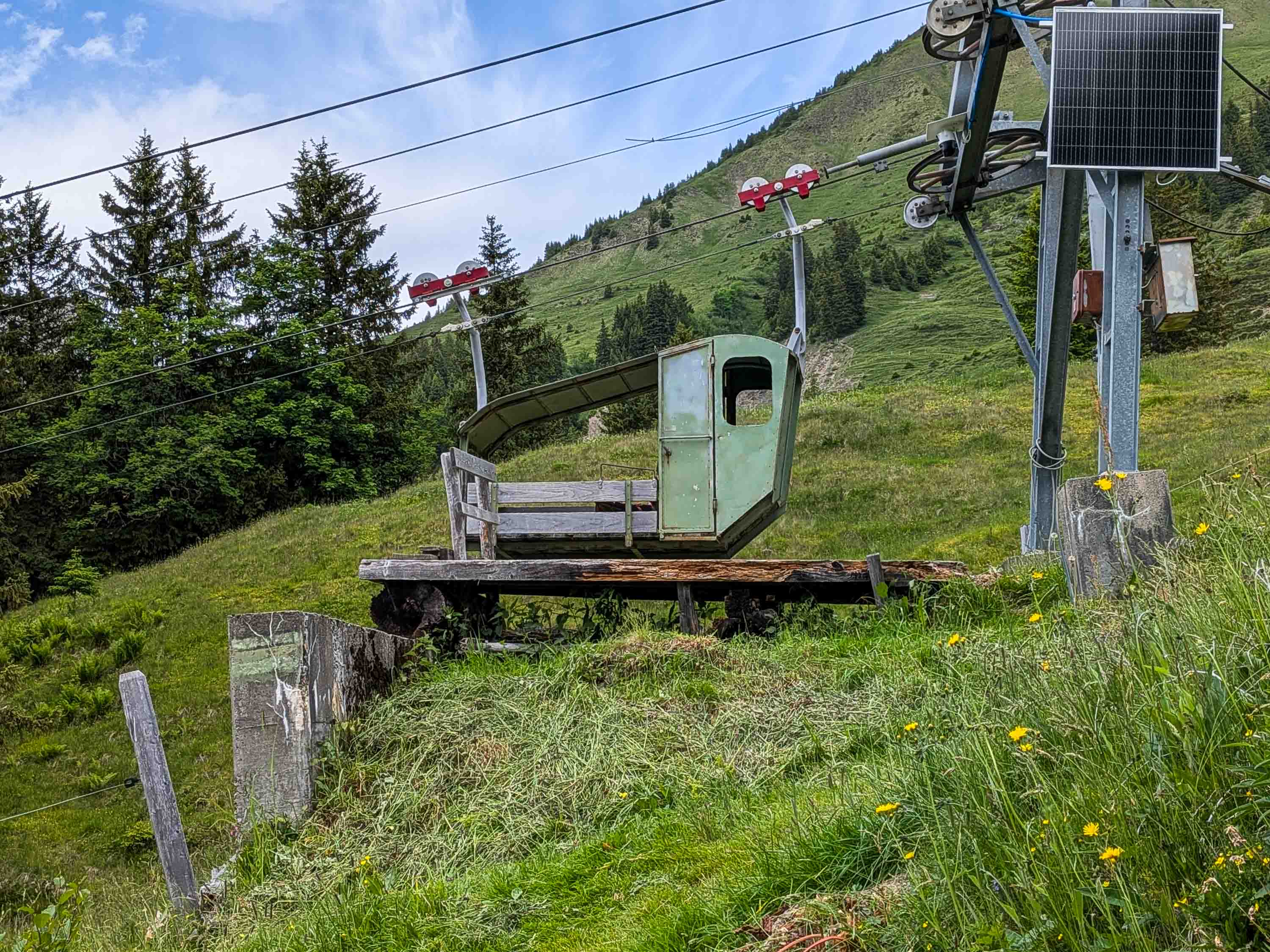
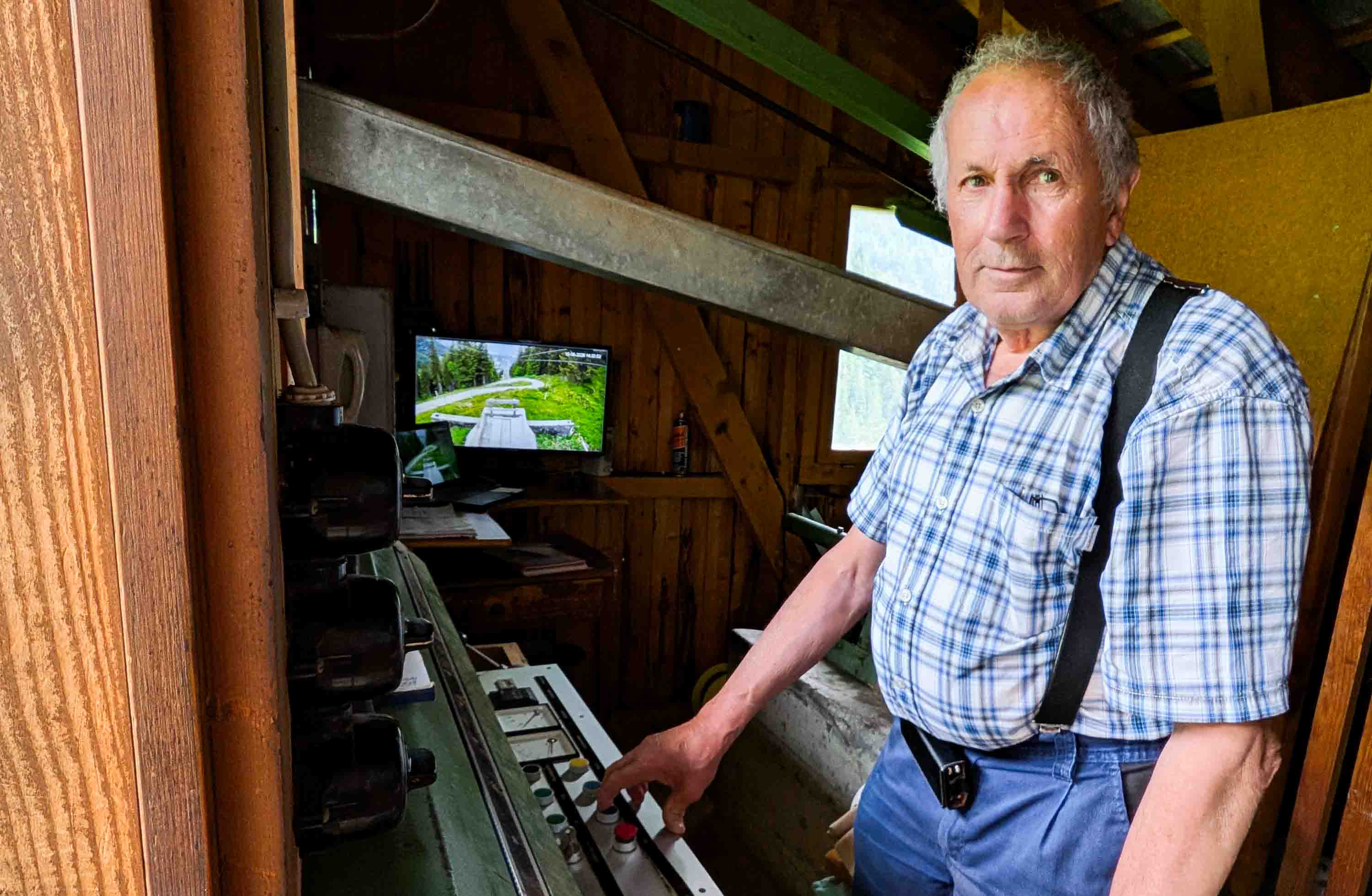
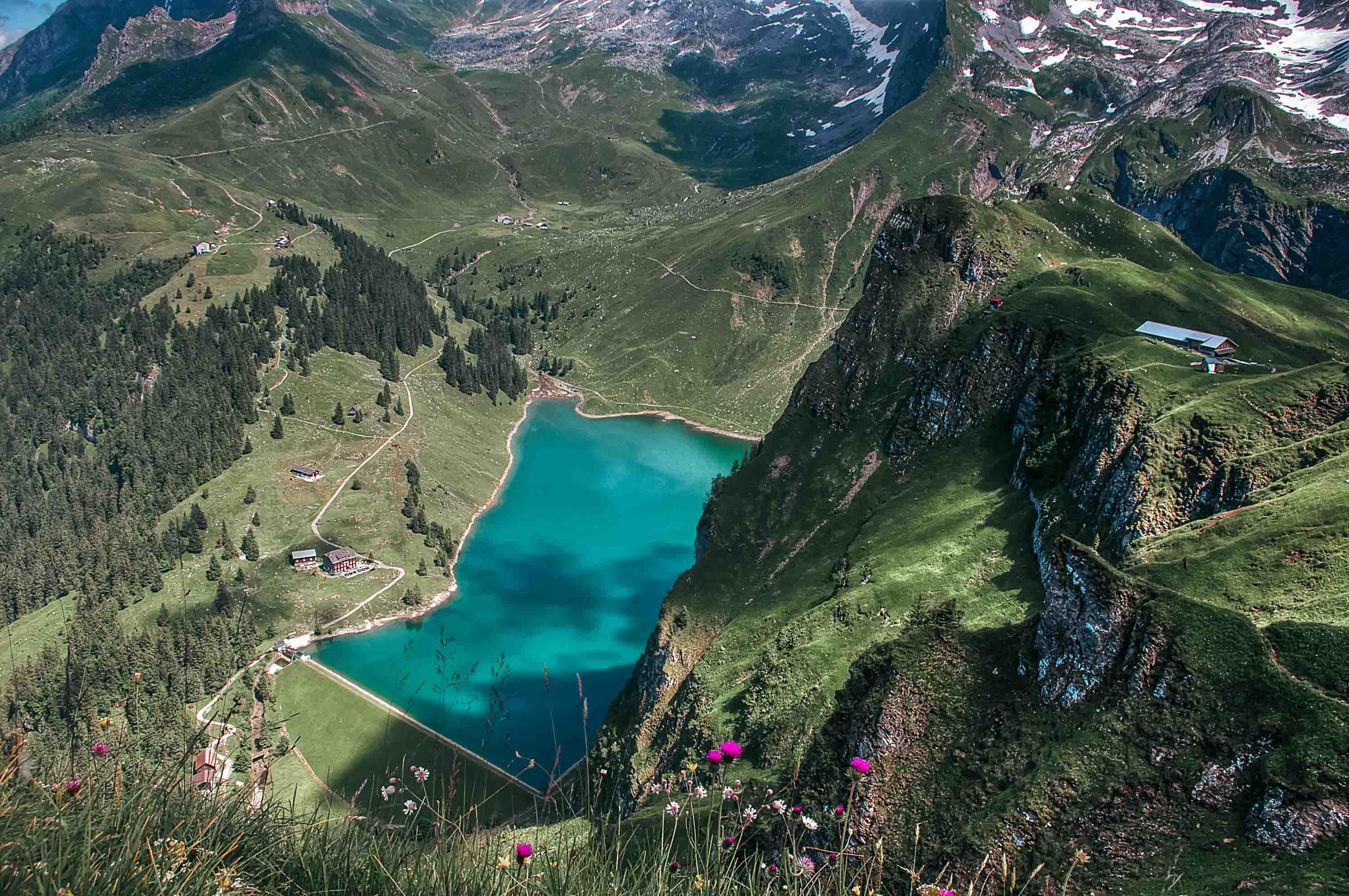
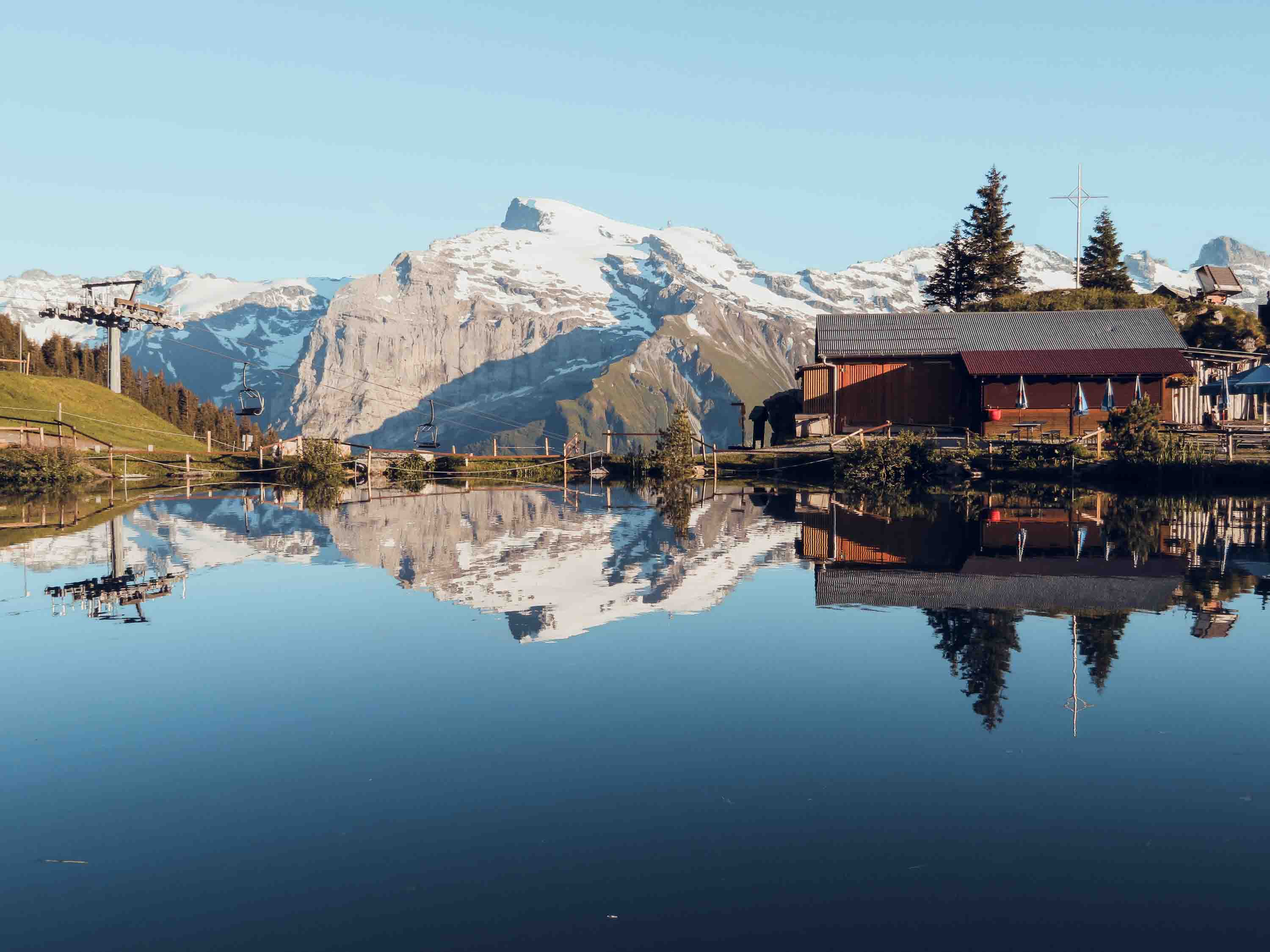
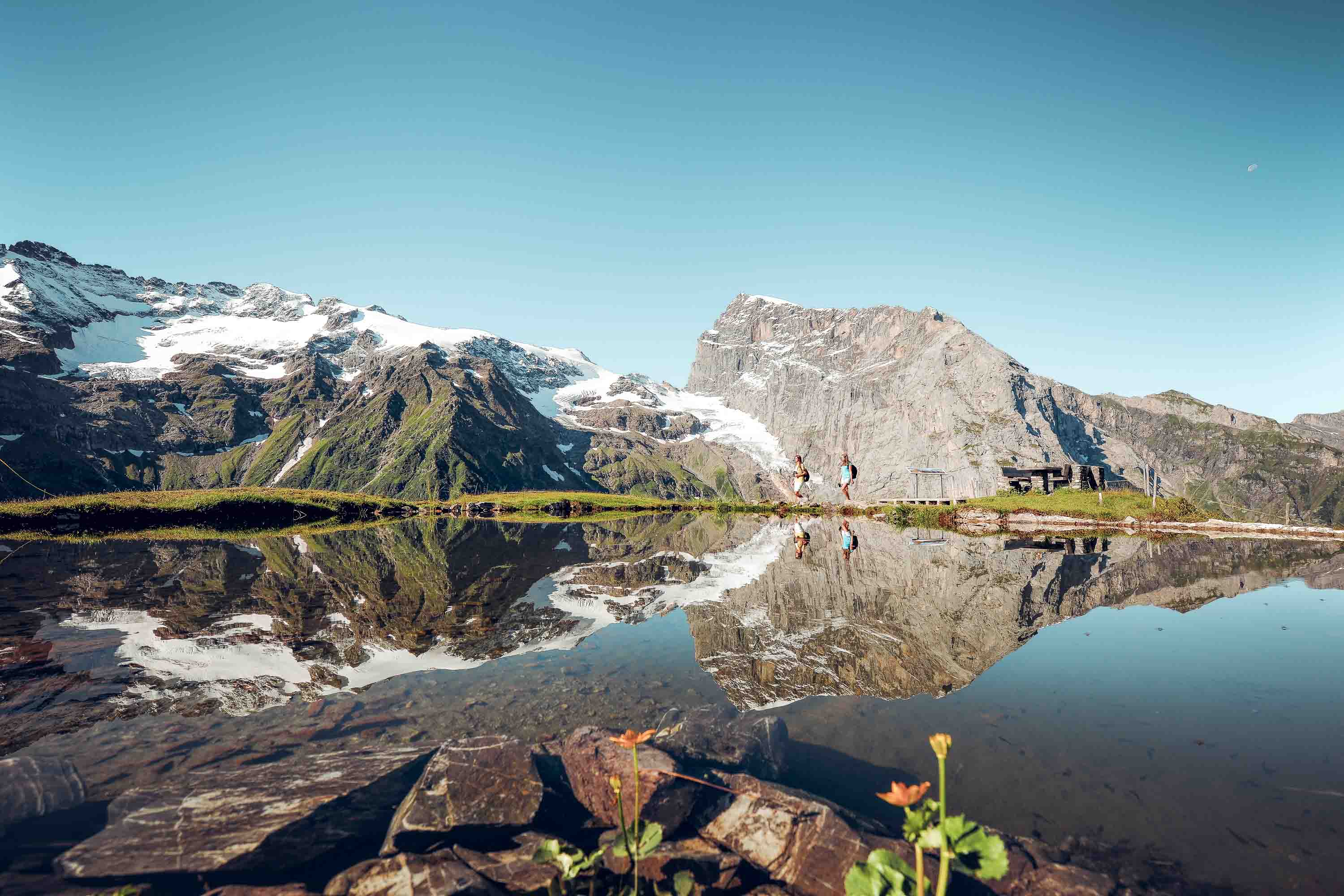
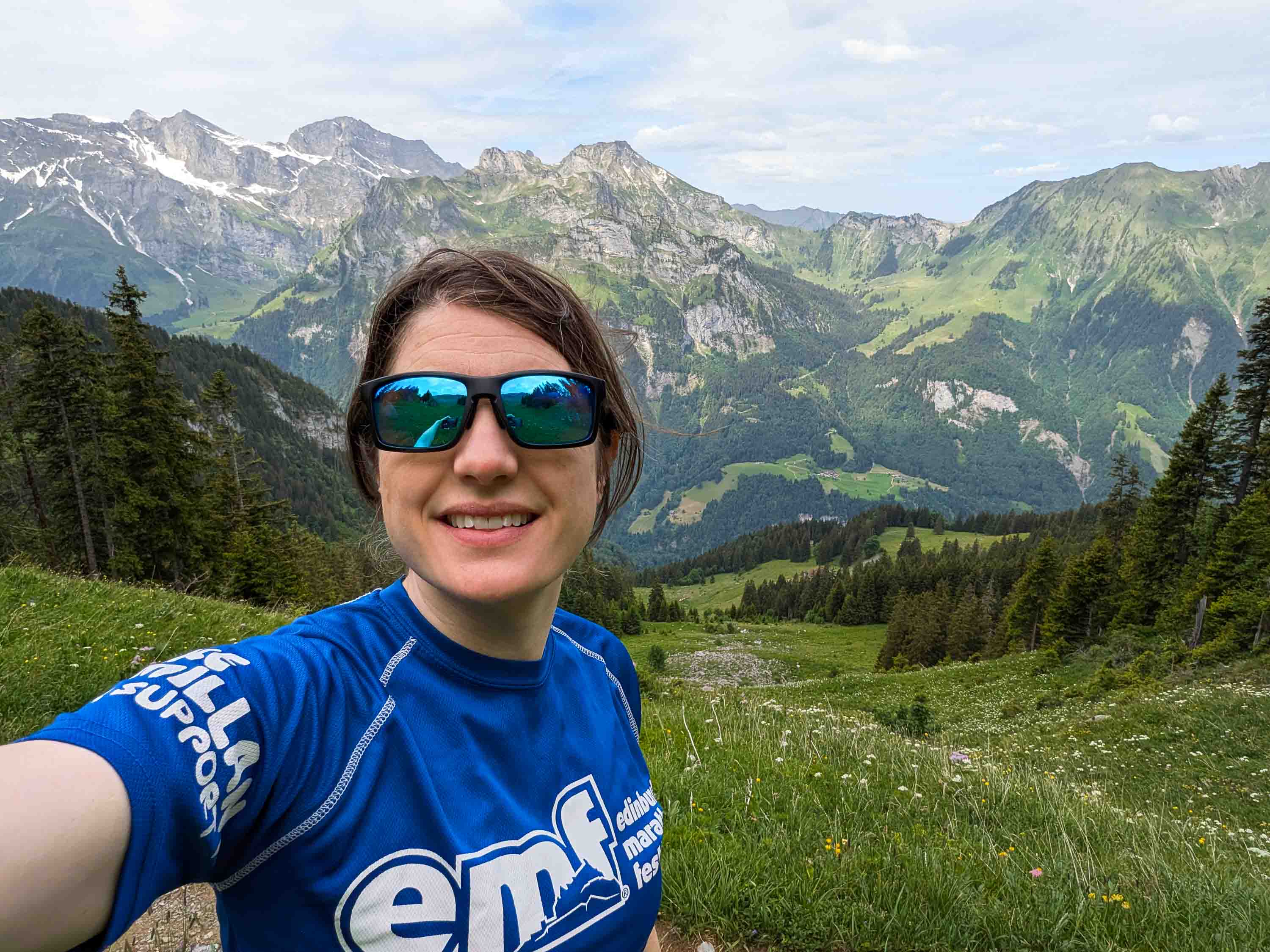
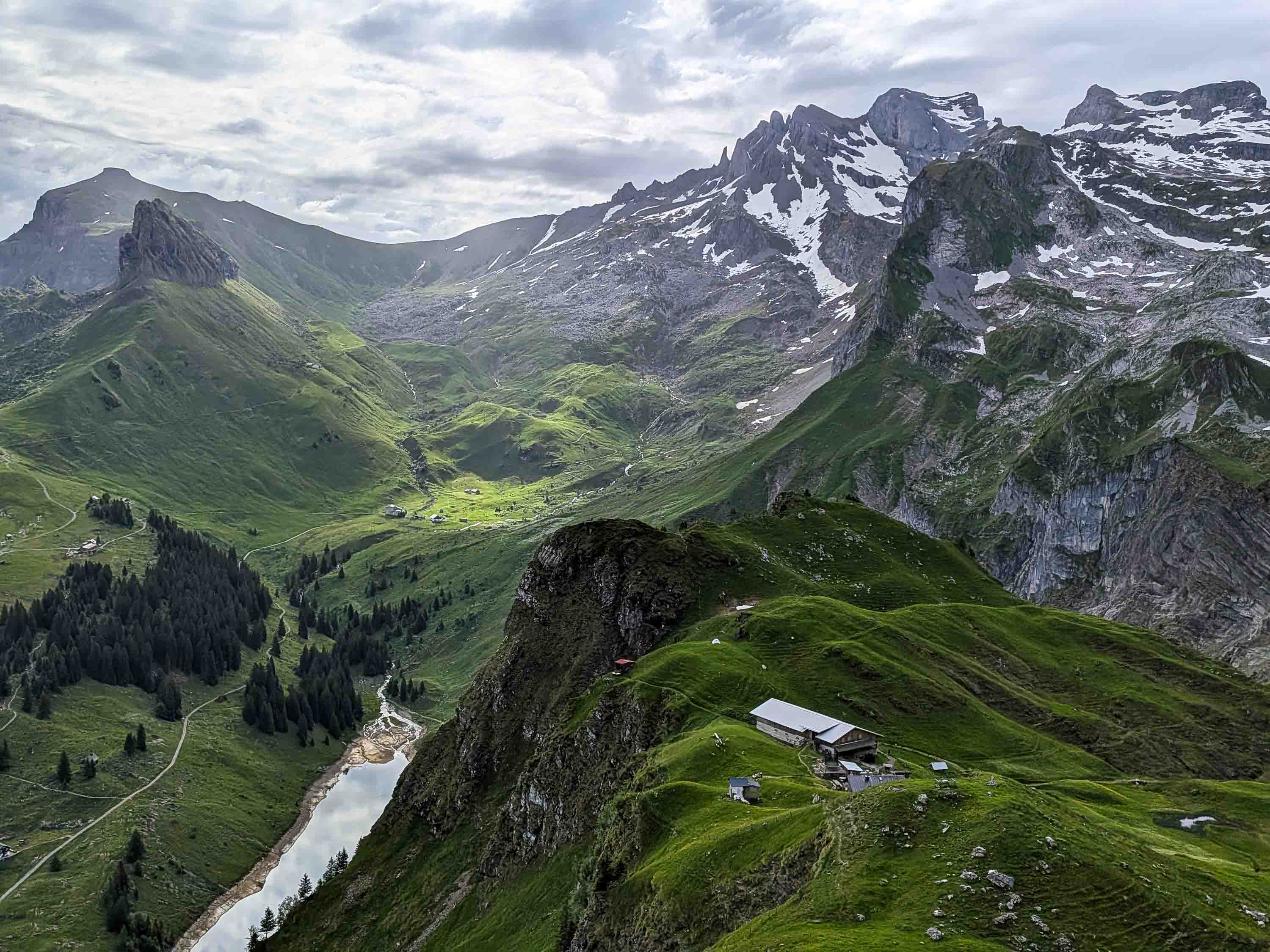
At the hamlet of Fell, a larger, more modern cable car leads up the mountain to Bannalpse, a popular hiking spot. But we follow a rough track to climb aboard another Buiräbähnli, this one almost entirely open to the elements. We’re welcomed at the top by Josef Durrer in his checked shirt and braces, and a reassuring smile.
Durrer grew up at Spis on his family farm 3,940 feet (1,200 meters) above sea level “I’ve been living within the cable car station for 76 years now,” he says, “Growing up, I’d have to take the cable car down to get to school. When it was bad weather, you would have to walk, and in the worst case, you couldn’t go to school.” The Buiräbähnli are essential to live and work here: “The way to get groceries is via the cable car. I grew up like this, so I don’t know any other way to live.”
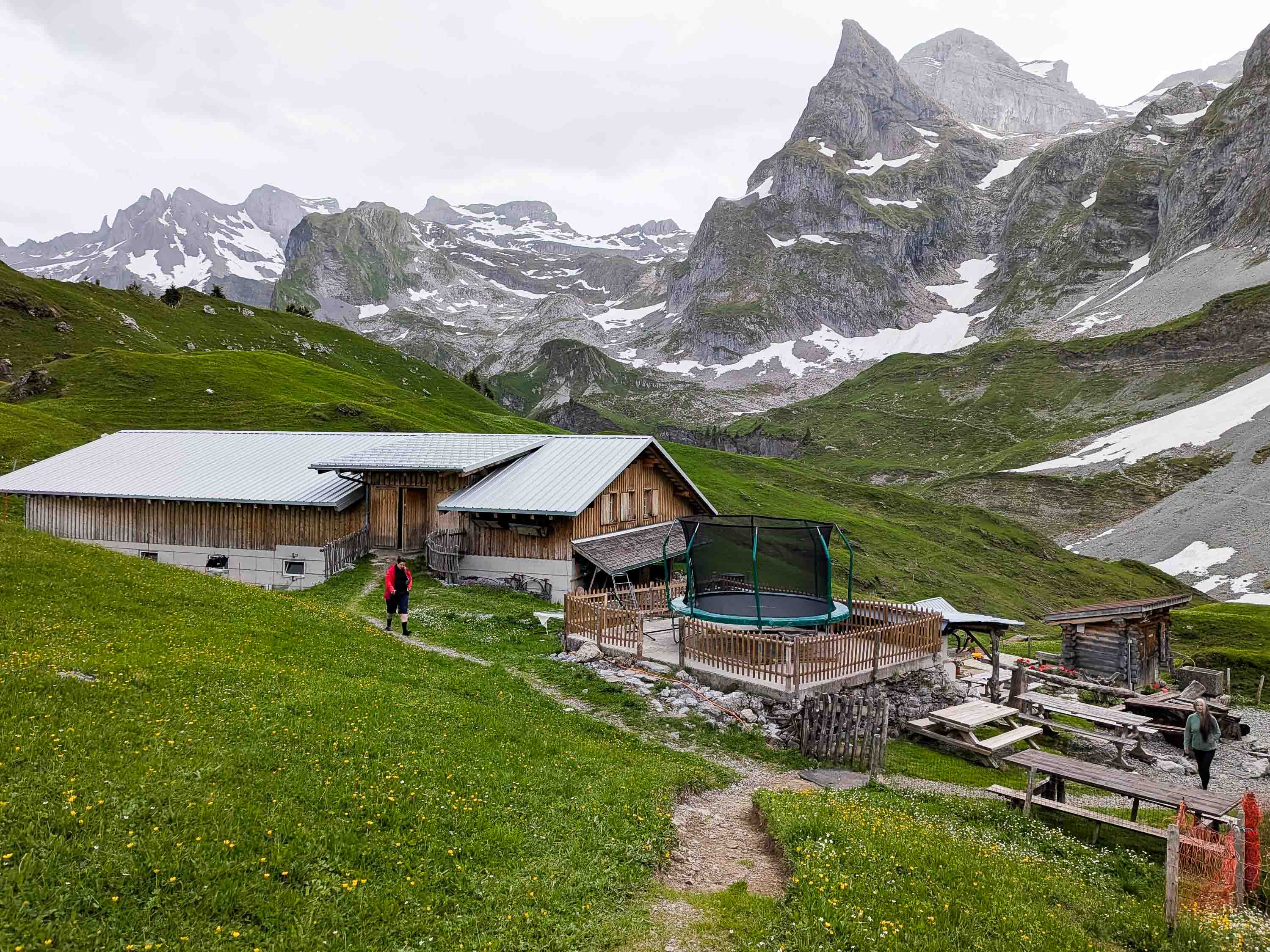
After decades farming these high pastures, Durrer now leases out his land. Today, he’s the cable car operator on both the Fell to Spis route, which he owns, and the upper section from Spis to Sinsgäu. Each stop is an individual farm, a tiny dot on the map with no access road.