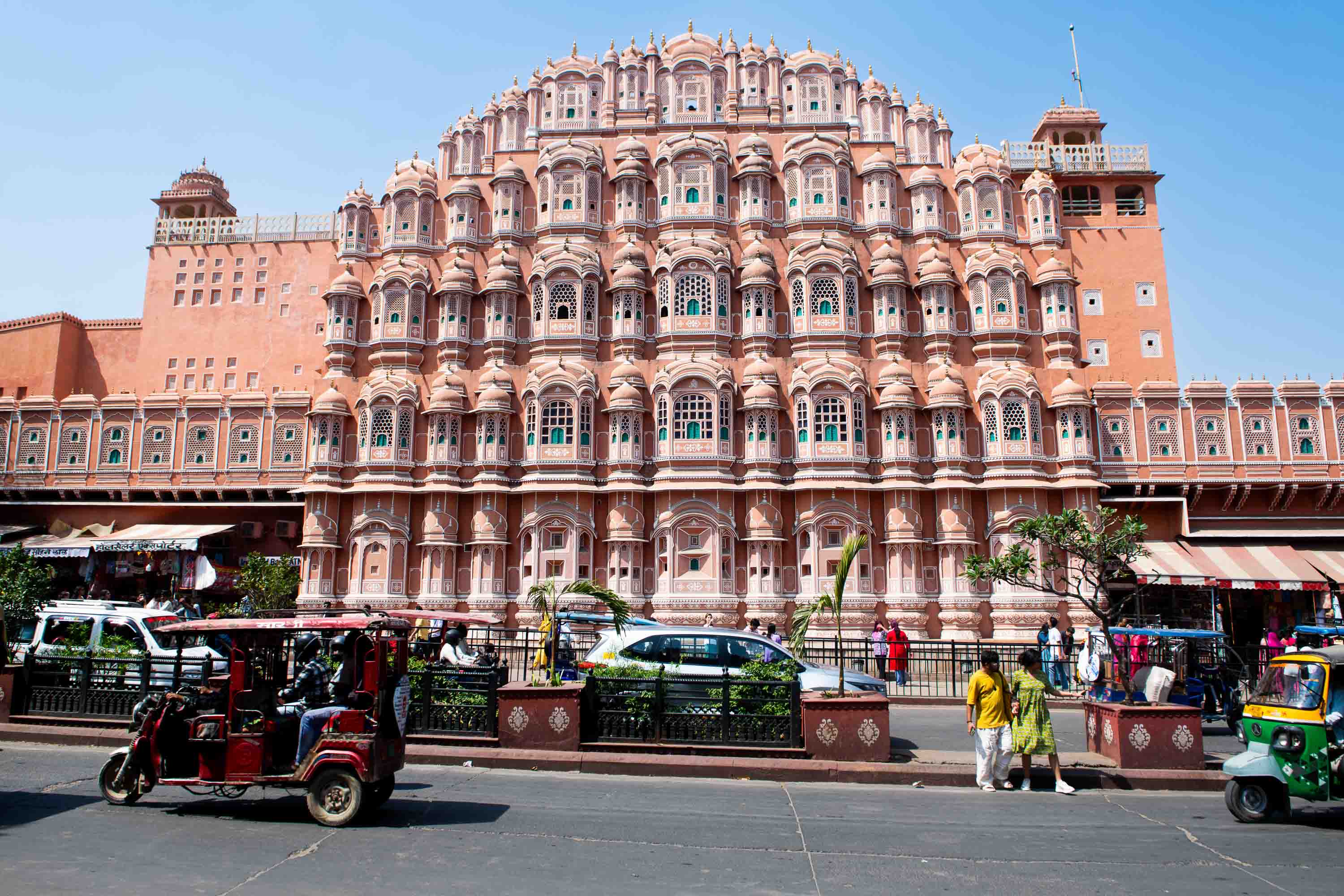
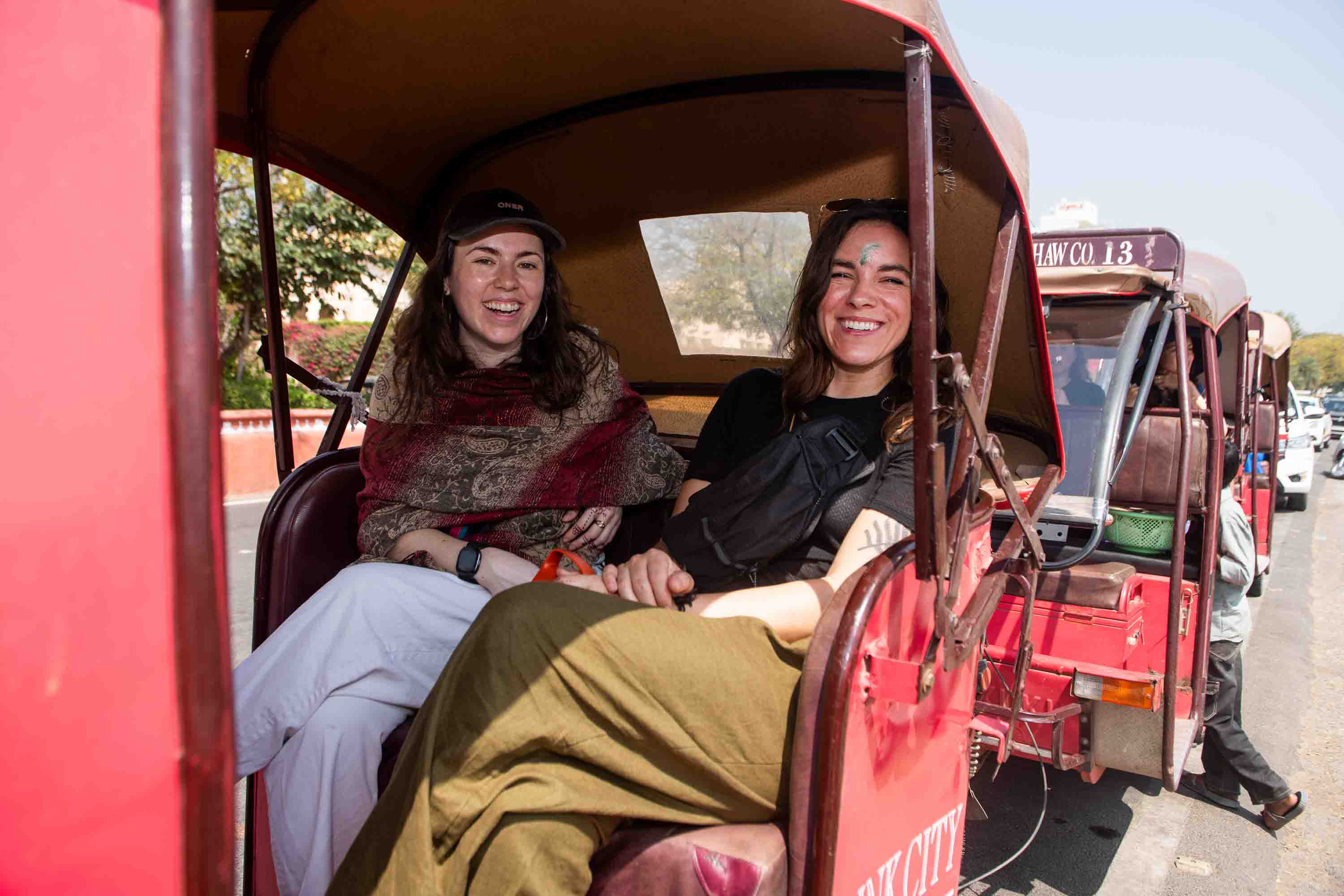
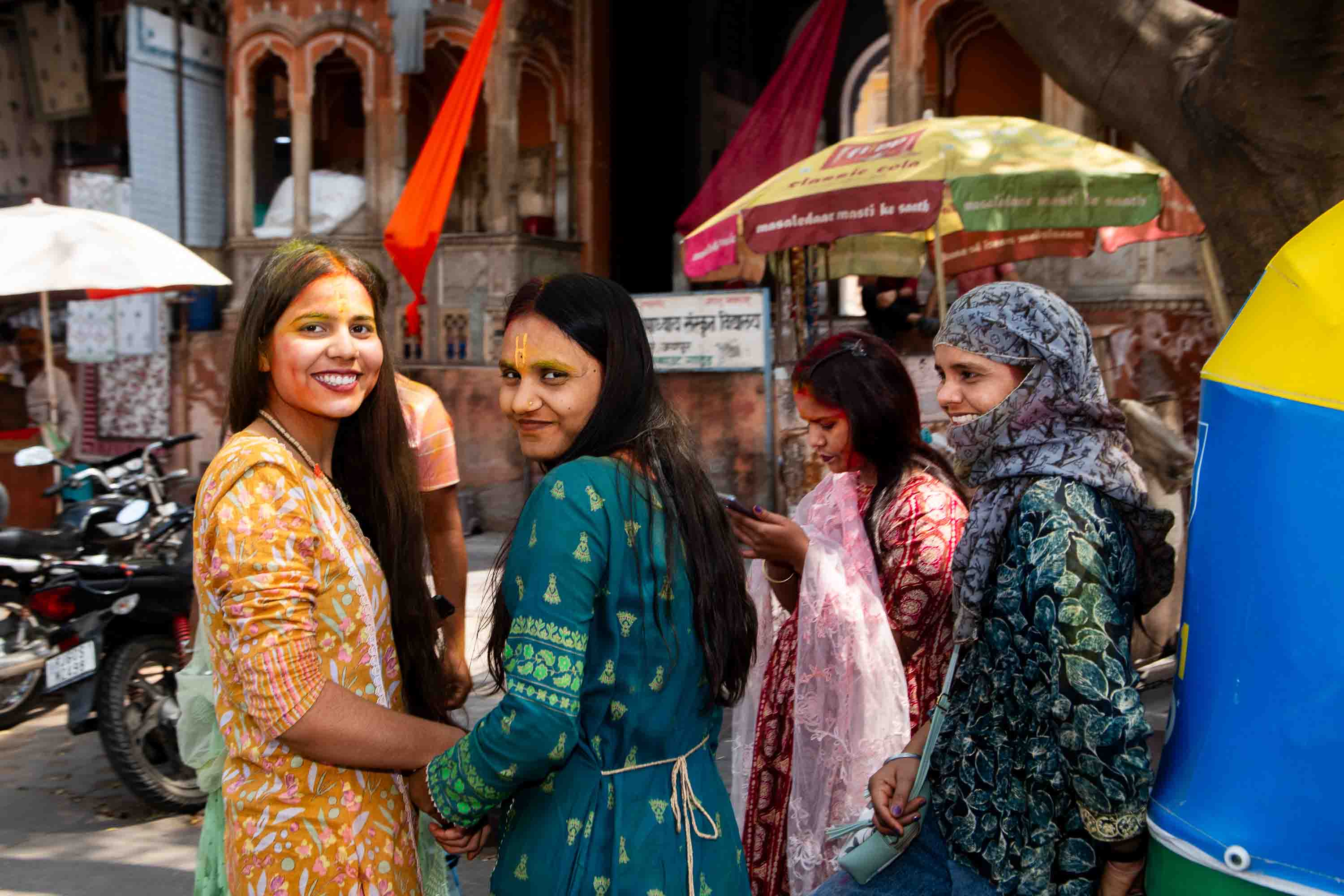
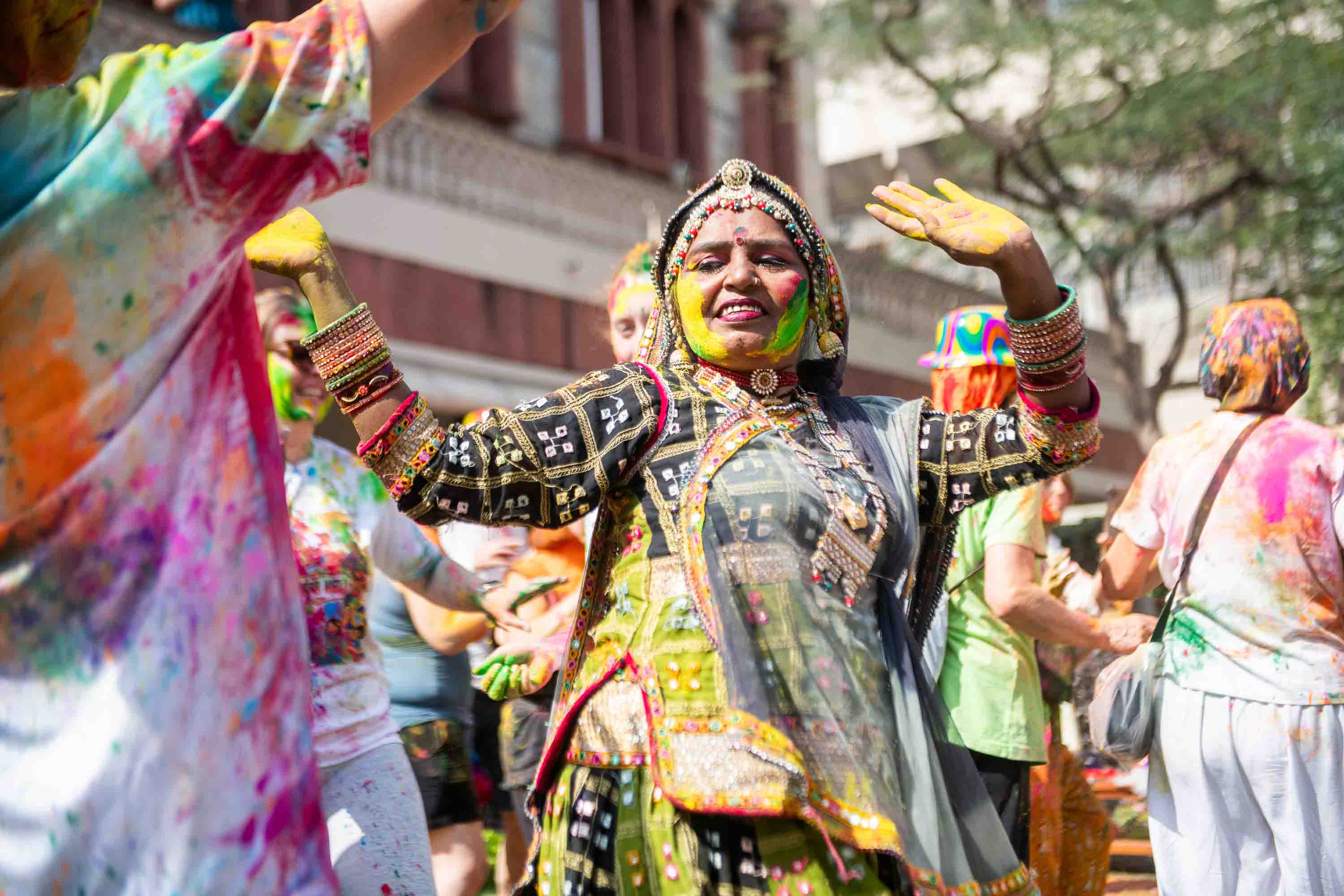
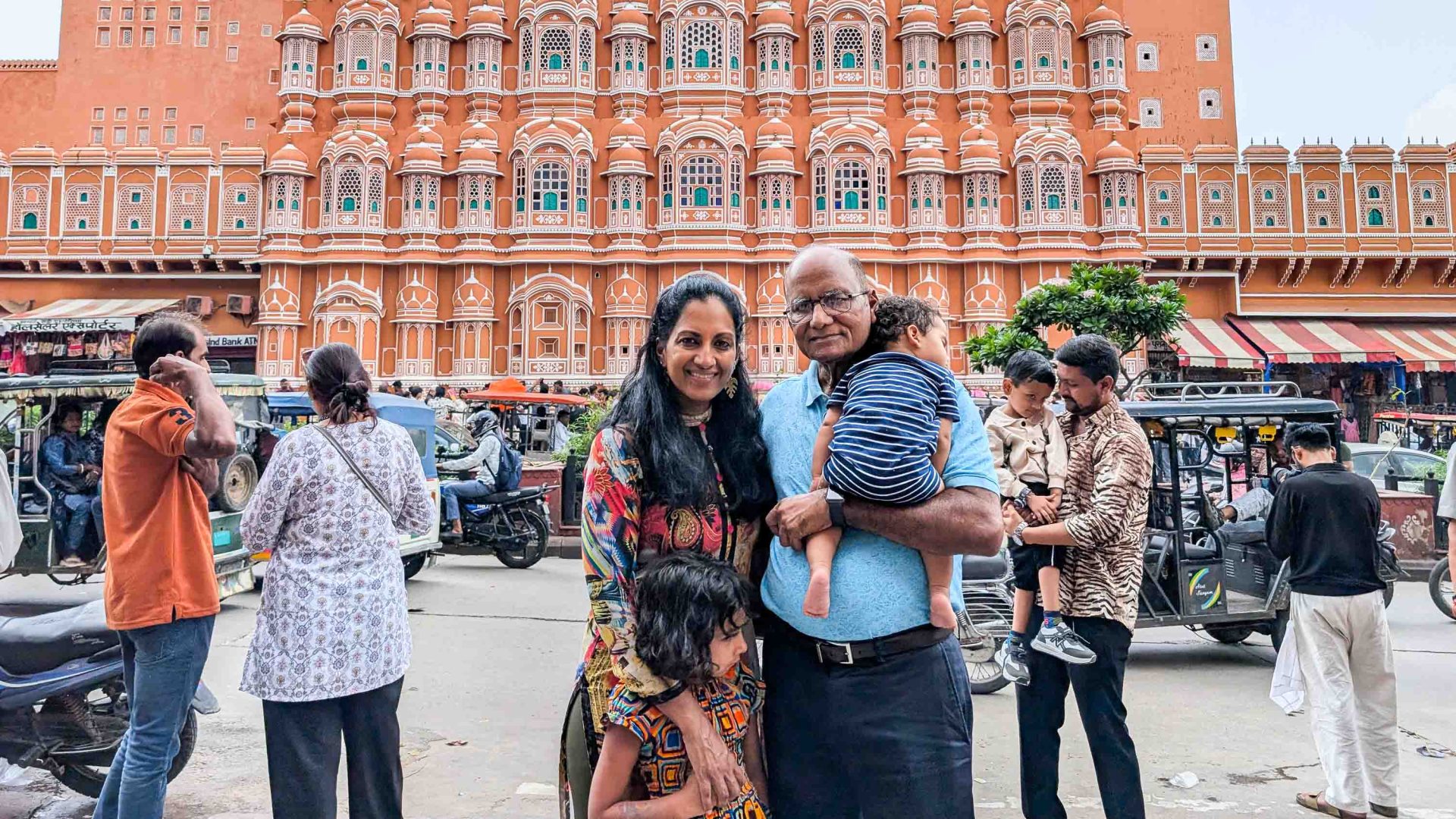
Sitting in the back of a rickshaw, I hold on as my driver navigates between motorbikes and pedestrians in Jaipur’s busy streets. The ride is surprisingly calm, but city life passes by in a blur: The terracotta façade of Hawa Mahal glowing in the sun, marigold garlands strung above market stalls, the sweet scent of chai bubbling in a pot, rainbow powders piled high in preparation for Holi festival.
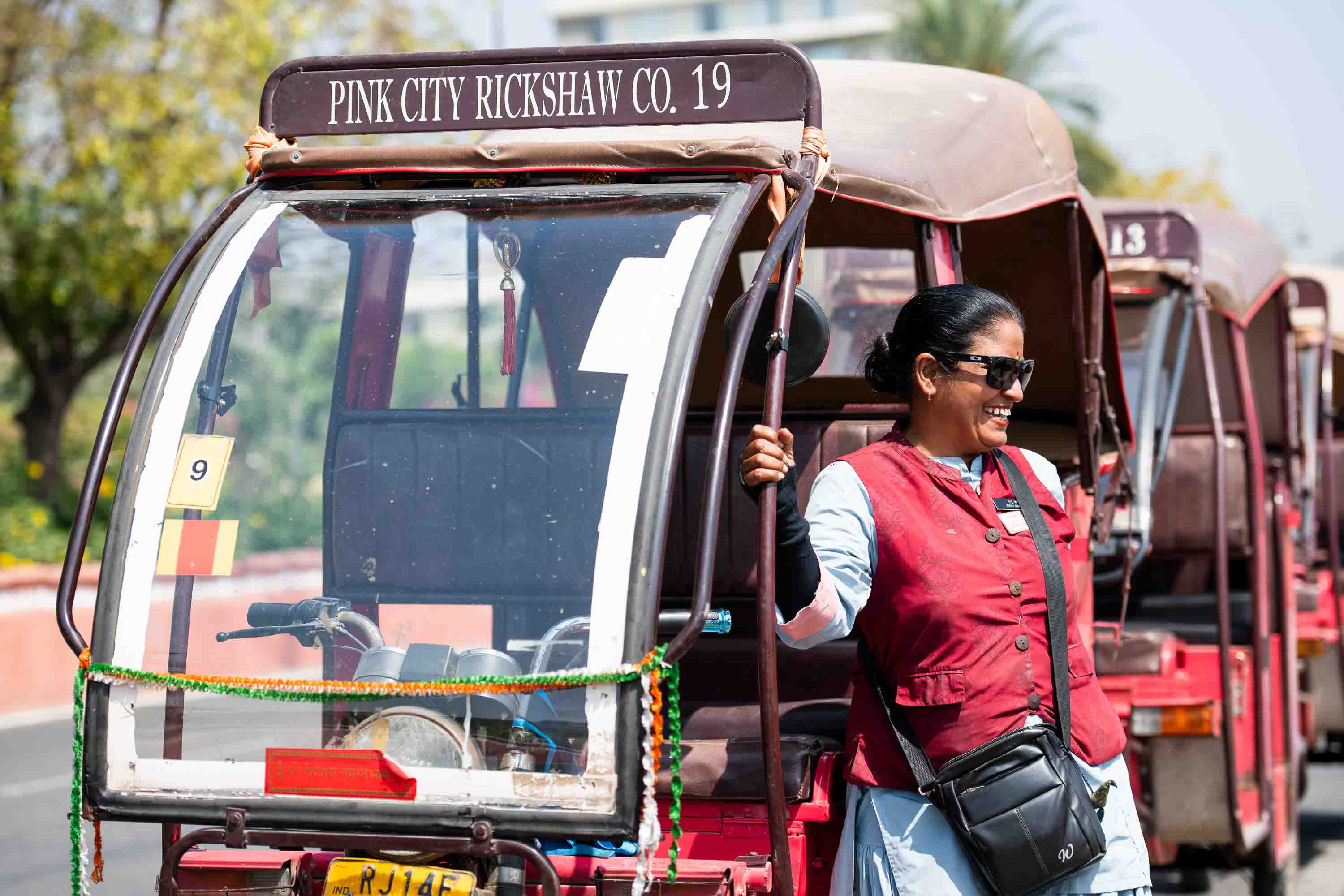
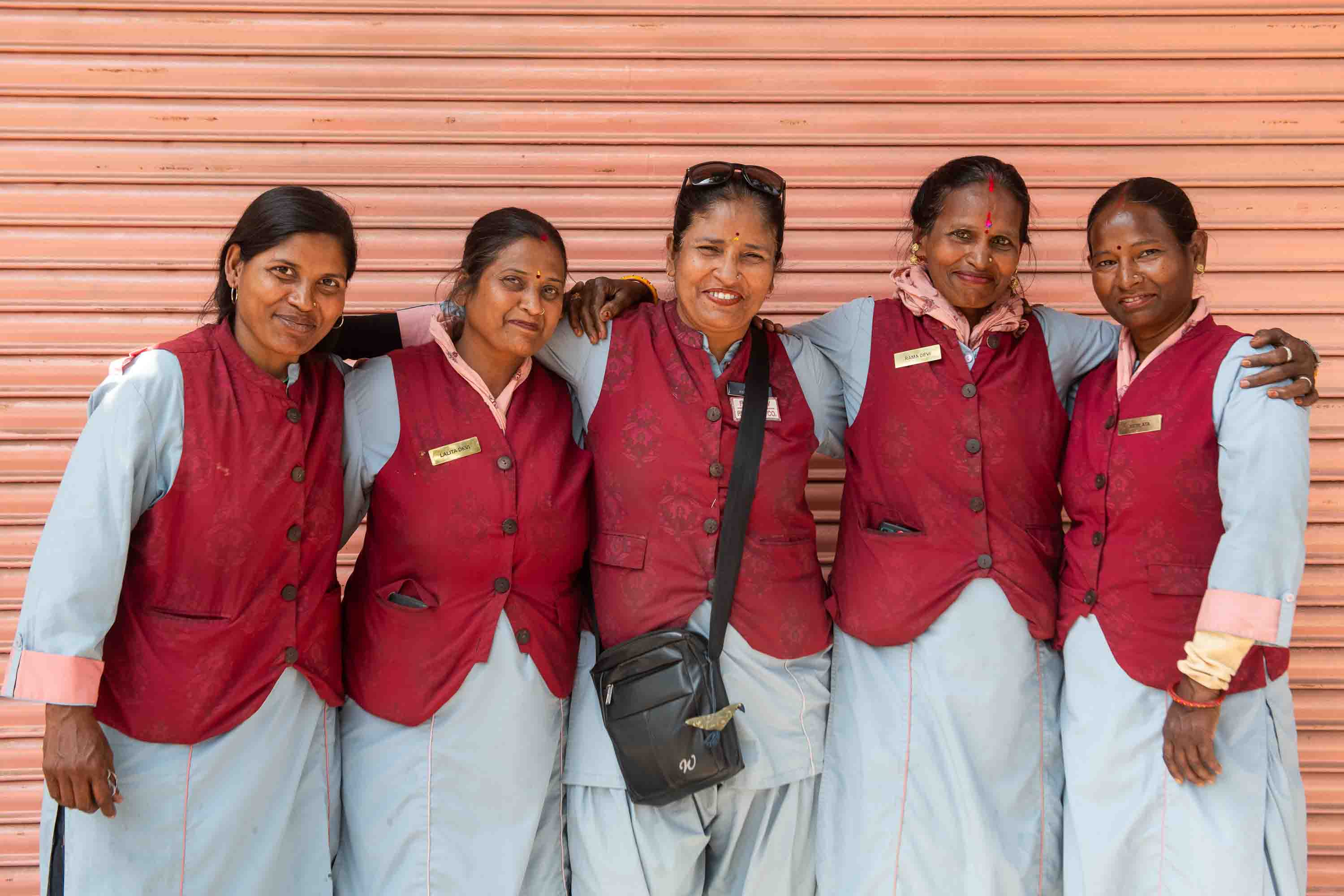
As we weave our way, men stare for so long it makes me uncomfortable. A young girl points to the rickshaw, her mouth hanging open. See, women don’t typically drive rickshaws in India. But at the helm of mine is Renu Sharma, driver and chairwoman of Pink City Rickshaw Company, a women-led non-profit that employs more than 30 women to drive the pink vehicles. She joined the company 10 years ago, leading over 1,300 tours and inspiring other women to follow in her footsteps. Many of the women have gone on to purchase their own rickshaws and now run their own businesses.
India’s tourism industry employs millions, and women account for nearly half of that workforce. But traditionally, those roles have been concentrated in lower-paid or behind-the-scenes jobs like housekeeping, handicrafts, and food preparation. The visible jobs—like guiding tourists, leading expeditions, and managing operations—have largely belonged to men. But a new generation of women, including Renu, is changing that.