Influencers have deemed 2026 the ‘year of analog.’ Does that mean it’s time to put down your phones and pick up your swords?


Influencers have deemed 2026 the ‘year of analog.’ Does that mean it’s time to put down your phones and pick up your swords?
It’s official: 2026 is the year we’re done with the Internet, according to the Internet.
Depending on how you read these viral trend pieces, you could see it as either hopeful—we’re finally bored of screens and turning to in-person connection—or depressingly ironic: The hot new social media trend is for you to put your offline experiences… online.
It’s not all just for the sake of virality, however. At least one North American craft chain, Michael’s, has noticed that searches for “analog crafts” on their site have more than doubled in the last six months, according to a CNN feature about the Year of Analog.
How far could our screen rejection go? One former tech executive has posed an interesting question as we embark on the Year of Analog: Could Gen Z embrace the Renaissance fair?

“People spend all day in front of screens, so spending their vacation time playing dress-up and swinging swords is a great antidote to that,” says George Appling, who co-founded the Sherwood Forest Faire outside Austin, Texas, after spending many years selling screens to people as the CEO of a cell phone distribution company.
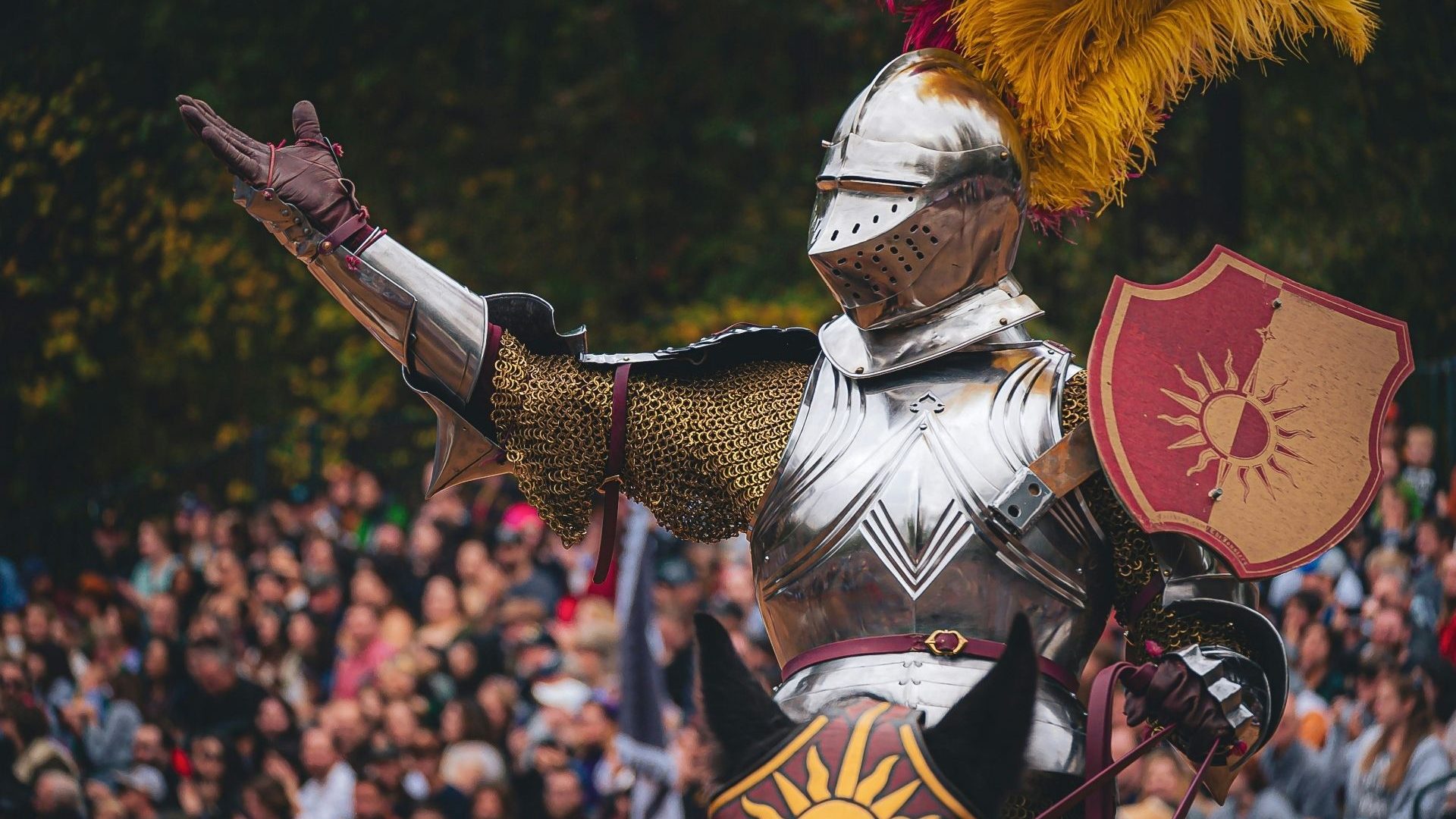
So, what exactly is a ‘ren fair,’ as they’re often called? These weekend fairs (or ‘faires,’ as in, ‘ye olde’) are kind-of like pop-up, cos-play theme parks, where people dress like princesses, peasants, jesters, jousters, and knights and pretend that they’ve gone back 500 to 1,000 years. Back to a time when bad news was delivered on a scroll by a guy on a horse (i.e. “don’t kill the messenger”) and ‘highway robbery’ was an actual life-or-death affair and not just whatever they’re charging for lattes these days.
“For me, it’s the totality of the experience that brings me such joy,” Appling tells Adventure.com. “That is, it’s not one or two things. It’s all of it: Music, art, jousting, falconry, juggling, the smells, the food, the mead, the clothing, the swordplay. And perhaps most importantly, the escape.”
As a concept, the ‘ren fair’ is almost shockingly young. The first one in the US was held in California in the 1960s, making clever use of actors blacklisted for suspected communism to create a one-off immersive experience. But it was a hit, and the idea later took on a life of its own. There are now hundreds of ‘ren fairs’ across the US every year, far outnumbering those in European cities who have actual castles for backdrops.
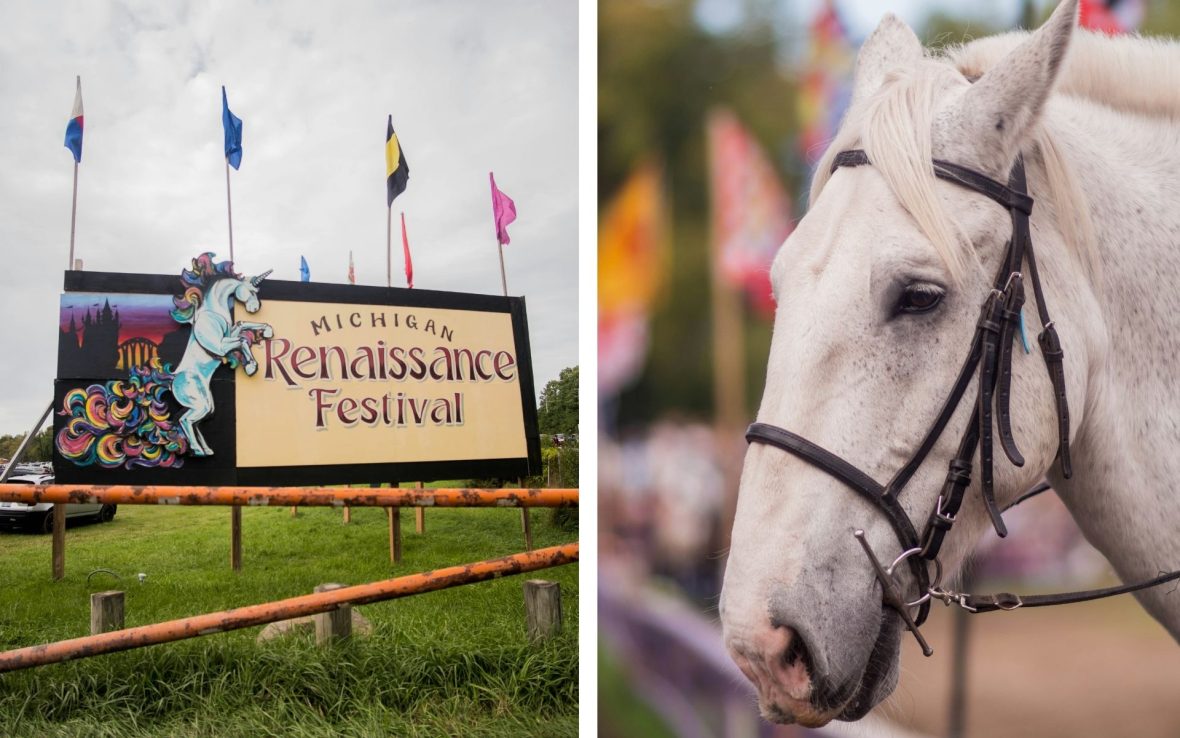
I’ve never personally been to one, but I still remember begging my parents to take me every time we passed the bright yellow billboard for King Richard’s Faire, which is held in Massachusetts every year. An informal (and deeply unscientific) poll of friends and Instagram followers revealed many of my fellow millennials in a similar position: Always having wanted to go to the Faire, never having gone.
Perhaps something is indeed shifting. A few months ago, a friend mentioned, by chance, that he and his partner would be going to the Faire that weekend. Just a few weeks prior, the Ohio Renaissance Festival had to cap its attendance because of rising popularity. That Gen Z, a generation embracing film photography, physical books, and vinyl records, might also find joy in immersing themselves in the fantasy of the distant, screen-free past, is not so hard to believe.
Renaissance fairs are far from the only old-timey events that have caught our attention since the start of this year. I’ve also seen a surge of phone-free cafes and pop-up events designed to get people to put down their screens and pick up paper, pens, and jigsaw puzzles.
Sunday Papers Live, for example, is a semi-regular London event designed like a live, immersive Sunday newspaper. Journalists, analysts, artists, and comedians give a range of short talks for the ‘Politics Section,’ ‘Environment Section,’ “‘Culture Section,’ and so on, and there’s even a live version of the crossword puzzle.
At the Offline Club, which pops up monthly in European capitals including Berlin, Amsterdam, London, and Paris, people meet up for a few hours of phone-forbidden reading, writing, crafts and games. Unplugged, specializing in digital detox weekends across the UK and Spain, draws screen-weary cityslickers into remote countryside cabins outfitted with cassette players, board games, and woodstoves that need tending.
Just last fall, a new phone-free bar called Hush Harbor opened in Washington, D.C., and resulted in a slew of headlines about a trend in new phone-free venues. Hush Harbor is serious about the rule: When you arrive, you have to put your devices into special boxes.

The irony of deeming 2026 the Year of Analog is, of course, that such a declaration is also clickbait that keeps us scrolling on our digital screens. But maybe this year really will be different. I know I’ve certainly been feeling the digital overwhelm more than usual: In the last two weeks, I’ve registered for an in-person improv comedy course and an Offline Club event, attended an in-person author Q&A and book signing, subscribed to the hardcover Book of the Month Club, joined in-person writers meet-ups, and made it halfway through a 1,000-piece jigsaw puzzle.
I’ve also now got two Renaissance fairs on my calendar for late summer.
The only question is, could a screen-trodden yet very-online millennial such as myself make it through a whole weekend of Medieval dress up without taking at least one selfie? That remains to be seen. Or does it?
***
Adventure.com strives to be a low-emissions travel publication. We are powered by, but editorially independent of, Intrepid Travel, the world’s largest travel B Corp, who help ensure Adventure.com maintains high standards of sustainability in our work and activities. You can visit our sustainability page or read our Contributor Impact Guidelines for more information.
Kassondra Cloos is a travel journalist from Rhode Island living in London, and Adventure.com's news and gear writer. Her work focuses on slow travel, urban outdoor spaces and human-powered adventure. She has written about kayaking across Scotland, dog sledding in Sweden and road tripping around Mexico. Her latest work appears in The Guardian, Backpacker and Outside, and she is currently section-hiking the 2,795-mile England Coast Path.